For doctors aiming to build a successful surgical career in the UK or internationally, the Membership of the Royal Colleges of Surgeons (MRCS) examination is a major milestone. Among its stages, MRCS Part A is the first challenge candidates must overcome before progressing toward clinical and practical assessments. Although the exam is known for its vast syllabus and demanding preparation, a structured study plan and the right guidance can make the journey much smoother.
MRCS Part A tests a candidate’s understanding of basic sciences and principles related to surgery. It is designed to assess whether aspiring surgeons possess the foundational knowledge required for higher surgical training. Thousands of international medical graduates and UK trainees appear for this examination every year, making it one of the most competitive postgraduate medical exams in surgery.
This complete guide covers everything you need to know about MRCS Part A, including exam format, syllabus, eligibility, preparation strategies, recommended resources, common mistakes, and practical tips to help you succeed.
MRCS Part A is the written component of the MRCS examination conducted by the four Royal Colleges of Surgeons in the United Kingdom and Ireland. It evaluates a candidate’s theoretical understanding of surgical sciences and applied clinical knowledge.
The exam serves as the entry point into the MRCS qualification pathway and is usually attempted by doctors who wish to pursue a surgical career in specialties such as general surgery, orthopaedics, ENT, plastic surgery, neurosurgery, and more.
Passing MRCS Part A demonstrates that the candidate has acquired the scientific knowledge expected of a core surgical trainee.
MRCS Part A questions
To gain an understanding of the knowledge and skills assessed as part of the MRCS exam, you should familiarise yourself with the MRCS syllabus. The ‘competence based’ curriculum identifies the applied and theoretical knowledge and practical skills, and professional behaviours, you’ll be required to demonstrate within the MRCS exam.
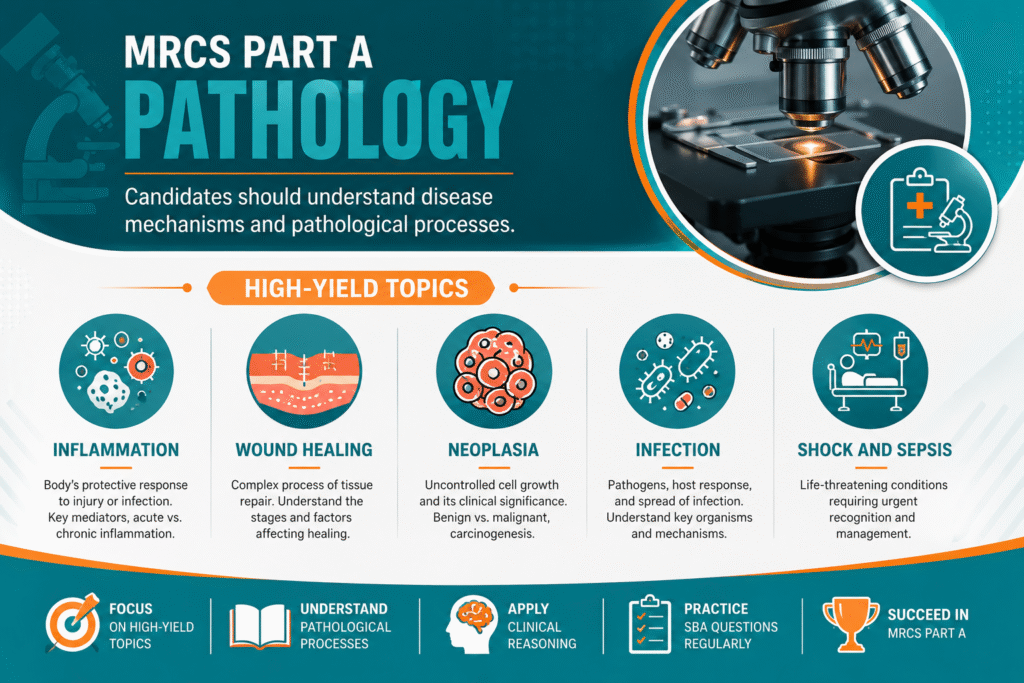
The syllabus is divided into the following ten modules, which you’ll be assessed on during the MRCS exam:
Eligibility Criteria for MRCS Part A
One of the advantages of MRCS Part A is its accessibility to both UK graduates and international medical graduates.
To apply for the exam, candidates generally need:
- A recognised primary medical qualification
- Full or provisional medical registration in their home country
- Internship completion or equivalent clinical experience
Unlike many postgraduate examinations, candidates do not necessarily need formal surgical training before appearing for MRCS Part A. However, some clinical exposure to surgery can significantly help during preparation.
MRCS Part A Exam Format
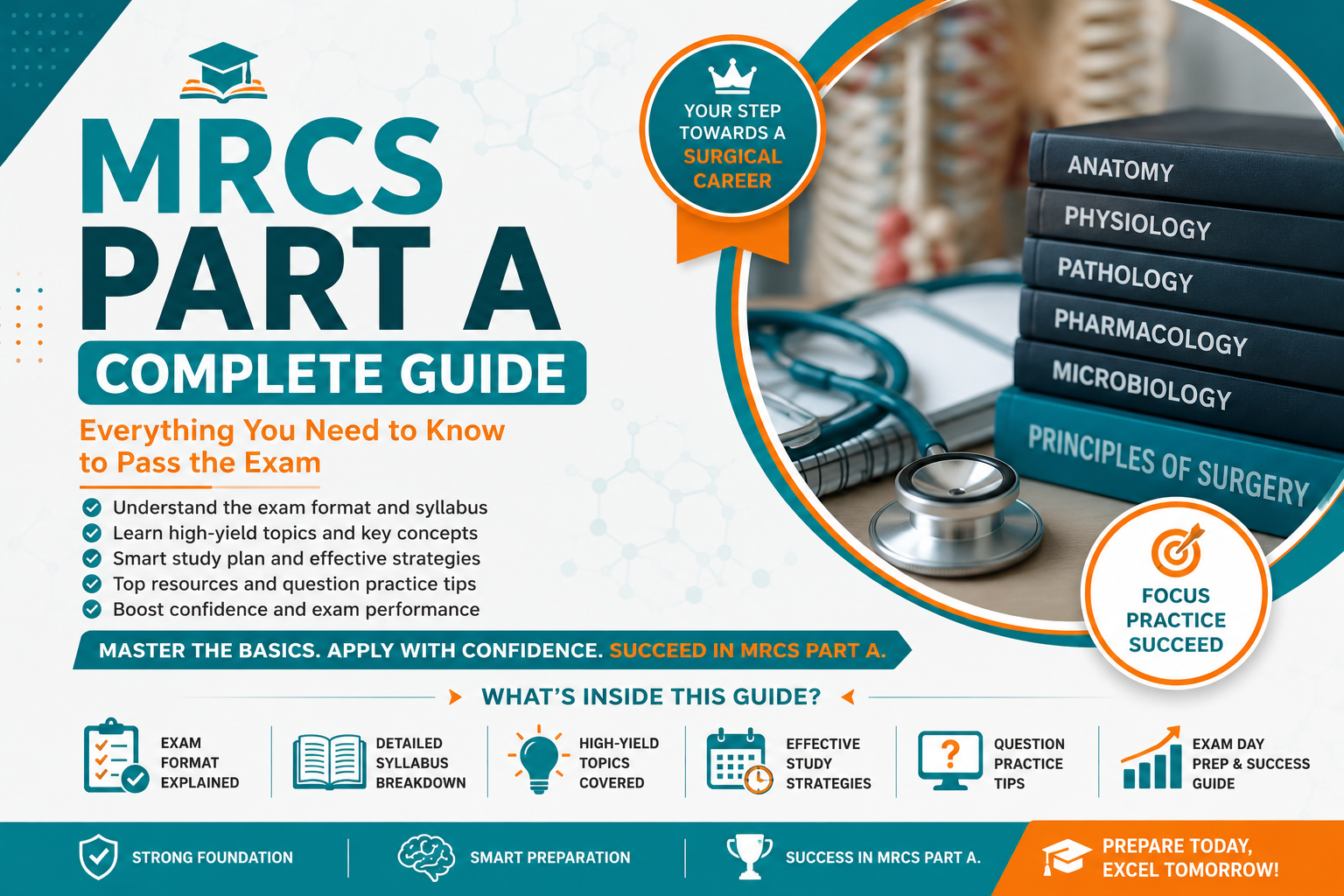
The MRCS Part A examination is a computer-based written exam designed to assess a candidate’s understanding of the basic sciences and principles essential for surgical training. The exam consists of two separate papers conducted on the same day, each containing Single Best Answer (SBA) multiple-choice questions. Paper 1 primarily focuses on applied basic sciences, including anatomy, physiology, pathology, pharmacology, and microbiology. Paper 2 concentrates on the principles of surgery in general, covering topics such as trauma, critical care, surgical management, perioperative care, and clinical application of surgical knowledge. The questions are designed not only to test factual recall but also to evaluate clinical reasoning and problem-solving skills. Candidates must demonstrate a strong understanding of both theoretical concepts and their practical application in surgical practice.
MRCS Part A Syllabus
The MRCS Part A syllabus is designed to assess the core scientific knowledge and surgical principles required for safe and effective surgical practice. It covers a wide range of subjects that form the foundation of modern surgery, including anatomy, physiology, pathology, pharmacology, microbiology, and applied surgical sciences. In addition to basic sciences, the syllabus also includes principles of surgery in general, such as trauma management, critical care, wound healing, infection control, perioperative care, and fluid and electrolyte balance. The examination focuses heavily on the clinical application of knowledge, meaning candidates must understand not only theoretical concepts but also how they relate to real-life surgical scenarios. Because the syllabus is extensive, candidates are encouraged to follow a structured study plan and prioritise high-yield topics during preparation.
How Difficult is MRCS Part A?
MRCS Part A is considered challenging because of its wide syllabus and detailed scientific concepts. Many candidates underestimate the exam due to its theoretical nature, but success requires consistent preparation over several months.
The exam tests both recall and application of knowledge. Candidates often struggle with:
- Managing the large syllabus
- Balancing work and study
- Memorising anatomy
- Answering questions under time pressure
However, with disciplined preparation and regular practice, passing the exam on the first attempt is achievable.
Best Preparation Strategy for MRCS Part A
The best preparation strategy for MRCS Part A involves a combination of structured study, consistent revision, and regular question practice. Since the syllabus is extensive, candidates should begin preparation early and create a realistic study timetable that covers all major subjects, including anatomy, pathology, physiology, and principles of surgery. High-yield topics should be prioritised, especially anatomy and clinically relevant surgical concepts that are frequently tested in the exam. Daily practice with Single Best Answer (SBA) questions is essential because it helps improve clinical reasoning, exam technique, and time management skills. Candidates should also revise topics regularly using summary notes, flashcards, and mock exams to strengthen long-term retention. Attempting full-length practice tests under timed conditions can help build confidence and identify weak areas that require further improvement. A disciplined and consistent approach, rather than last-minute cramming, is the key to successfully passing MRCS Part A.
Revise Regularly
Regular revision is one of the most important factors in succeeding in competitive medical exams like MRCS Part A. Without consistent revision, it becomes difficult to retain the vast amount of information covered in the syllabus. Revisiting topics regularly strengthens long-term memory, improves recall speed, and helps identify weak areas before the exam. A good revision strategy should include short daily reviews, weekly consolidation sessions, and full-topic revisions at regular intervals. Using tools such as flashcards, summary notes, mind maps, and question banks can make revision more effective and time-efficient. Repeated exposure to high-yield concepts also boosts confidence and reduces exam stress, allowing candidates to perform better under timed conditions.
Attempt Mock Exams
Mock exams are an essential part of effective MRCS Part A preparation because they simulate the real examination environment and help candidates develop exam stamina, time management, and question-solving skills. Regularly attempting timed mock tests allows students to identify strengths and weaknesses while becoming familiar with the exam format and pressure conditions. Mock exams also improve accuracy by teaching candidates how to avoid common mistakes and manage difficult questions strategically. After each test, reviewing incorrect answers is equally important, as it helps reinforce concepts and highlights areas requiring further revision. Consistent mock exam practice builds confidence, reduces anxiety, and significantly improves overall exam performance.
Recommended Books for MRCS Part A
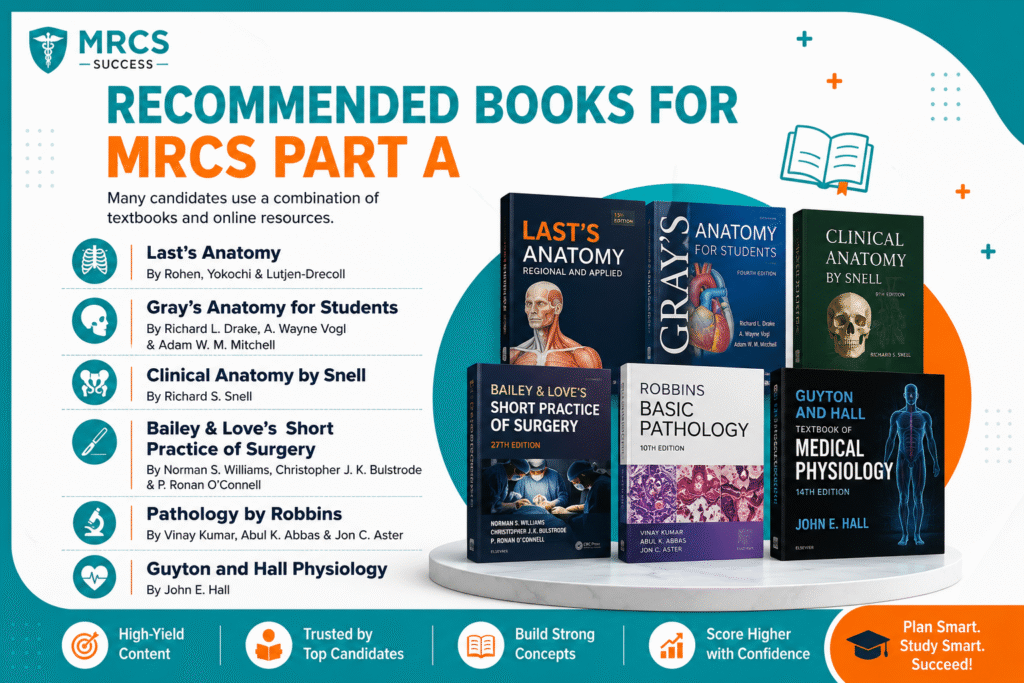
Candidates should avoid using too many resources at once. Choosing a few reliable books and revising them thoroughly is more effective.
Importance of Online Question Banks
Online question banks have become a crucial part of MRCS preparation. They provide:
- Topic-wise practice questions
- Detailed explanations
- Performance analysis
- Mock exams
Repeated question practice helps candidates identify recurring patterns and commonly tested concepts.
Tips to Pass MRCS Part A on the First Attempt
Passing the MRCS Part A exam on the first attempt requires a combination of smart planning, consistent study habits, and effective exam practice. Candidates should begin preparation early with a structured study timetable that covers all major subjects systematically. Focusing on high-yield topics such as anatomy, physiology, pathology, and principles of surgery can significantly improve scoring potential. Regular question practice using reliable MRCS question banks helps build familiarity with exam-style questions and improves clinical reasoning skills. Attempting timed mock exams is equally important for developing speed, accuracy, and confidence under pressure. Consistent revision, especially of weak areas, ensures better long-term retention of important concepts. Maintaining discipline, avoiding last-minute cramming, and balancing study with adequate rest can greatly enhance performance and increase the chances of passing the exam successfully on the first attempt.
Career Opportunities After MRCS
Passing MRCS Part A is the first step toward obtaining the full MRCS qualification. After completing Part B successfully, candidates can progress toward higher surgical training and specialty careers in:
- General Surgery
- Orthopaedics
- ENT
- Plastic Surgery
- Cardiothoracic Surgery
- Neurosurgery
- Urology
The MRCS qualification is recognised internationally and can significantly strengthen a doctor’s surgical career profile.
Conclusion
MRCS Part A is a demanding yet rewarding examination for aspiring surgeons. Although the syllabus is extensive, the exam becomes manageable with a clear strategy, disciplined preparation, and regular MCQ practice. Building strong foundations in anatomy, pathology, and surgical principles is the key to success.
Candidates should focus on consistency, structured revision, and practical application of knowledge rather than relying solely on memorisation. With the right preparation approach, passing MRCS Part A on the first attempt is entirely achievable.
Whether you are a recent medical graduate or a working doctor balancing clinical duties, careful planning and dedication can help you confidently move one step closer to your surgical career goals.