Preparing for the Membership of the Royal Colleges of Surgeons examination is a major step in every surgical aspirant’s journey. The MRCS exam is known for its challenging syllabus, intense competition, and high expectations. Many candidates spend months studying, attending courses, and practicing questions, yet some still fail to achieve their desired results. In most cases, the problem is not a lack of intelligence or dedication, but common preparation mistakes that reduce performance on exam day.
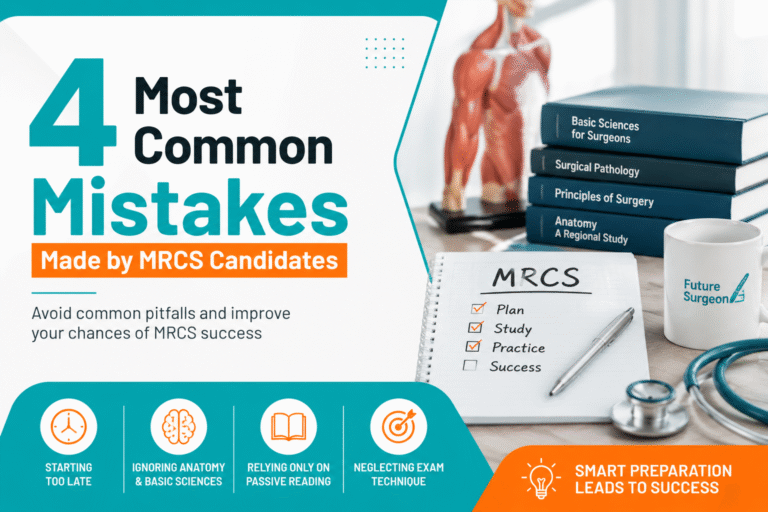
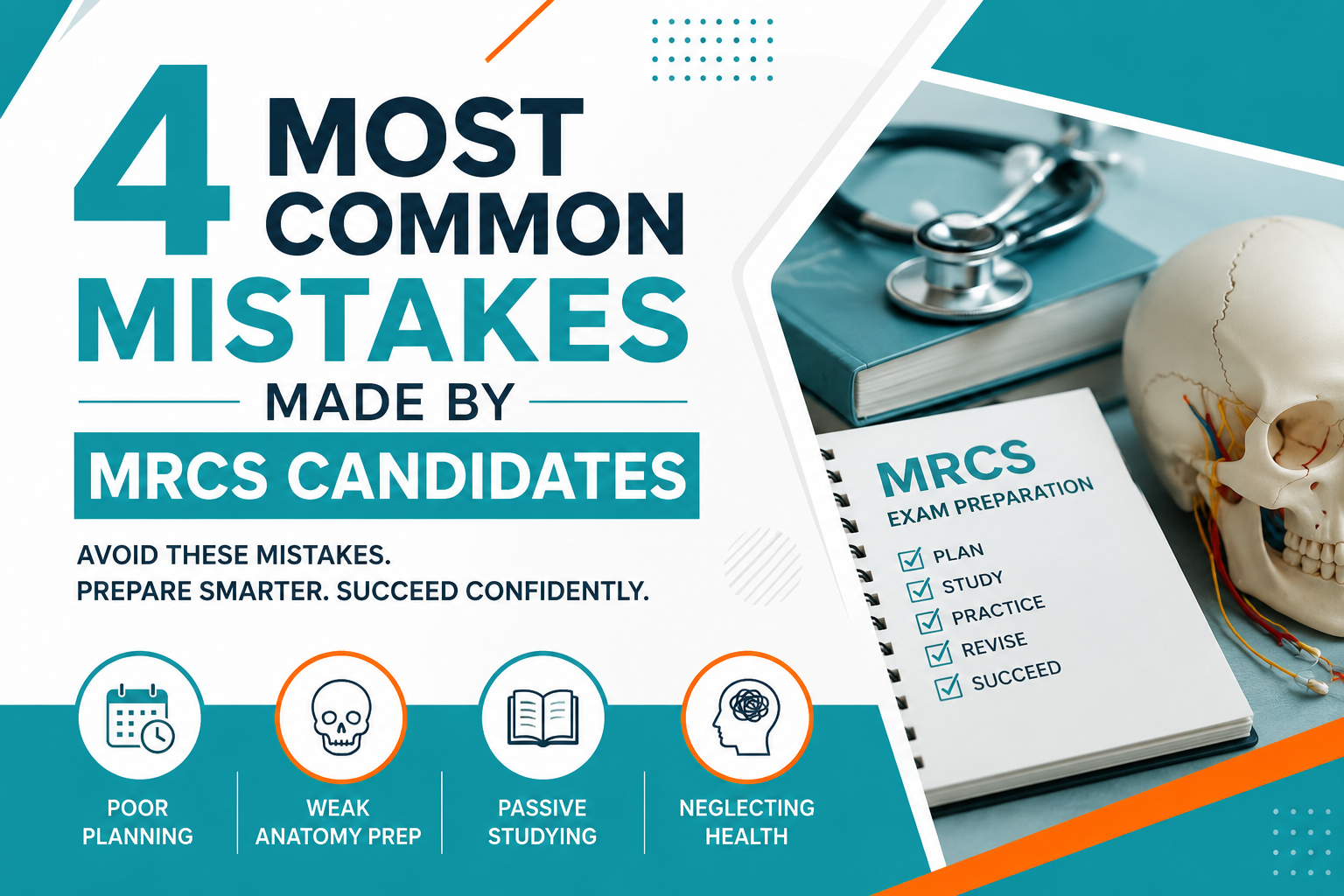
Understanding these mistakes early can help candidates improve their preparation strategy and avoid unnecessary stress. Here are the four most common mistakes made by MRCS candidates and how to avoid them.
Studying Without a Proper Plan
One of the biggest mistakes candidates make is starting preparation without a structured study plan. The MRCS syllabus is vast and includes anatomy, pathology, physiology, surgical principles, critical care, and clinical management. Without proper scheduling, students often spend too much time on easy topics while ignoring difficult subjects.
Many candidates begin enthusiastically but lose consistency after a few weeks. Some focus only on reading textbooks and forget revision, while others attempt random question banks without understanding concepts. This unorganized approach creates confusion and increases anxiety closer to the exam.
A well-planned timetable is essential for MRCS success. Divide subjects into weekly targets, allocate time for revision, and include regular mock tests. Consistency is more important than studying for long hours occasionally. Even 3–4 focused hours daily can produce excellent results when done systematically.
Ignoring Anatomy Preparation
Anatomy is one of the most important sections of the MRCS examination, yet many candidates underestimate it. Since anatomy requires detailed understanding and long-term memory retention, last-minute preparation rarely works.
Candidates often rely only on short notes or question banks without revising diagrams, relations, nerve supply, vascular structures, and surgical anatomy. This becomes a serious problem because anatomy questions in MRCS are clinically oriented and require conceptual understanding rather than memorization alone.
Using anatomy atlases, diagrams, and visual learning methods can significantly improve retention. Regular revision is essential because anatomy is easy to forget if not practiced repeatedly. Candidates should especially focus on head and neck anatomy, upper limb, lower limb, thorax, abdomen, and neuroanatomy, as these areas are frequently tested.
Combining textbooks with online anatomy videos and clinical correlations can make preparation easier and more effective.
Depending Too Much on Passive Reading
Another common mistake is spending most of the preparation time reading books passively instead of actively testing knowledge. Many candidates believe that repeatedly reading textbooks is enough to pass MRCS. However, the examination is designed to test application of knowledge, not just memory.
Passive reading creates a false sense of confidence. Candidates may feel familiar with topics while studying but struggle to answer questions during exams. Without practicing MCQs and mock exams, it becomes difficult to develop exam techniques and time management skills.
Active learning methods are far more effective. Candidates should solve question banks daily, review explanations carefully, and analyze incorrect answers. Mock exams help identify weak areas and improve speed and accuracy.
Revision should also include flashcards, self-testing, group discussions, and teaching concepts to others. These methods strengthen understanding and improve long-term retention.
Neglecting Mental and Physical Health
MRCS preparation is mentally demanding, and many candidates ignore their health during the process. Long study hours, lack of sleep, stress, and poor eating habits can reduce concentration and productivity.
Some candidates study continuously without breaks, believing this increases efficiency. In reality, burnout decreases memory retention and motivation. Anxiety before the exam can also negatively affect performance if stress is not managed properly.
Maintaining a healthy routine is essential for successful preparation. Adequate sleep improves memory consolidation and focus. Regular exercise, proper hydration, and balanced nutrition help maintain energy levels during long study sessions.
Taking short breaks, spending time with family, and practicing stress-management techniques such as meditation or deep breathing can improve mental well-being. A healthy mind performs far better under exam pressure.
Exam structure
The MRCS assesses whether you have the relevant knowledge, skills, clinical competence and experience expected at the end of core surgical training and for entry onto specialty training (ST3).
The exam consists of two parts:
MRCS Part A- a written paper
MRCS Part B- an objective structured clinical examination (OSCE)
Planning
Making a solid revision plan – and sticking to it – is invaluable for any exam preparation. However, considering the following will also help you to plan for and execute your MRCS preparations effectively:
Plan when you intend to take the exam – will help you to plan when it may be the best time.
Ensure that you have an understanding of the test format and what’s required of you first. You may find it useful to plan this into your revision time, preferably before commencing any reading or practice questions, so that you can tackle these more efficiently.
How much revision time
The length of time required to prepare for the MRCS will depend largely on how much time you can dedicate to your revision during this period. For the MRCS Part A, candidates generally find that at least three months is required to prepare thoroughly, and that includes a packed revision timetable. However, if you have less time to regularly revise, you’re more likely to need in the region of six to twelve months. For MRCS Part B, approximately three months should be sufficient time, but again, this will depend on how much time you can dedicate to it.
Our MRCS Part A and MRCS Part B question banks offer different subscription options so you can choose the plan that is right for you and how much time you have to revise.
Likewise, explore what content is covered and what resources will support your preparations; this will help you to plan your revision time. They will give you an idea of resources, and you can find more guidance.
MRCS parts
The MRCS Part A – the written paper – is a five-hour multiple choice exam, comprising of two papers, completed on the same day (one AM and one PM).
The two papers are as follows:
- Paper 1 – applied basic sciences
- When: AM
- Duration: three hours – divided into two 90-minute sections with a 10-minute comfort break in between
- Number of questions: 180
- Paper 2 – principles of surgery in general
- When: PM
- Duration: two hours
- Number of questions: 120
Conclusion
The MRCS examination is challenging, but avoiding common mistakes can greatly improve the chances of success. Lack of planning, poor anatomy preparation, passive studying, and neglecting health are some of the most frequent reasons candidates struggle during preparation.
Success in MRCS requires discipline, consistency, smart study techniques, and a balanced lifestyle. Candidates who prepare strategically, revise regularly, practice questions actively, and take care of their physical and mental health are more likely to perform confidently on exam day.
Learning from these common mistakes can save valuable time and help candidates move one step closer to achieving their surgical career goals.