Preparing for the MRCS exam is a demanding journey that tests not only your medical knowledge but also your consistency, discipline, and exam strategy. Every year, thousands of surgical trainees attempt the Membership of the Royal Colleges of Surgeons examination with the hope of advancing their surgical careers. While many candidates focus heavily on studying harder, success in MRCS often depends on studying smarter and avoiding common preparation mistakes.
Many candidates fail not because they lack intelligence or dedication, but because they underestimate the structure of the exam, follow ineffective study methods, or ignore the practical aspects of preparation. Understanding these common pitfalls early can save valuable time, reduce stress, and significantly improve your chances of passing both MRCS Part A and Part B.
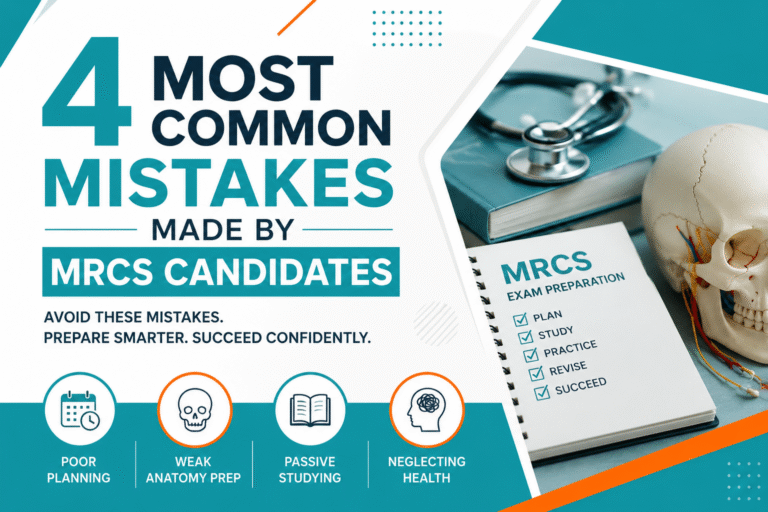
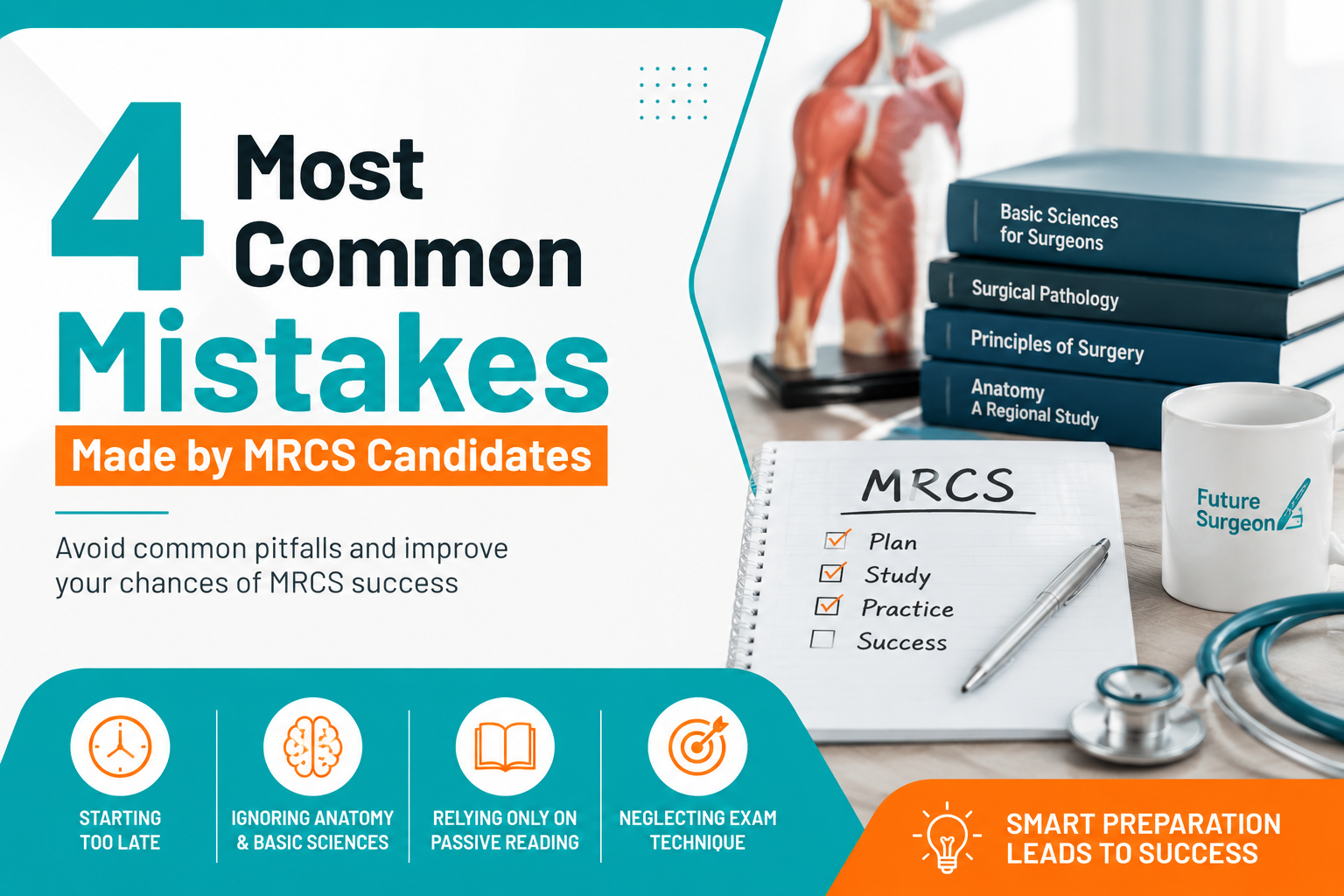
Here are the four most common mistakes made by MRCS candidates and how you can avoid them.
Starting Preparation Too Late
One of the biggest mistakes candidates make is underestimating the vast MRCS syllabus and delaying preparation until a few weeks before the exam. MRCS is not an exam that can be mastered through last-minute revision. The syllabus covers anatomy, physiology, pathology, surgical principles, clinical management, and applied basic sciences, all requiring long-term understanding and repetition.
Many trainees attempt to balance hospital duties, on-calls, and personal commitments while preparing. As a result, delayed preparation often leads to burnout, incomplete revision, and poor confidence closer to the exam date.
A successful preparation strategy usually involves several months of structured study. Candidates who begin early have enough time to revise multiple times, practice question banks thoroughly, and identify weak areas before the exam.
How to avoid this mistake
- Start preparing at least 4–6 months before the exam
- Create a realistic weekly study schedule
- Divide subjects into manageable sections
- Reserve the final weeks for revision and mock exams
Consistency matters far more than occasional long study sessions.
Ignoring Anatomy and Basic Sciences
Many MRCS candidates focus heavily on clinical topics while neglecting anatomy and basic sciences. However, anatomy remains one of the highest-yield subjects in the MRCS examination, especially in Part A and Part B vivas.
A weak understanding of anatomy can seriously affect performance, particularly in areas such as:
- Upper and lower limb anatomy
- Head and neck anatomy
- Neuroanatomy
- Embryology
- Surgical pathology
Candidates often memorize facts without understanding clinical application. The MRCS exam tests applied surgical knowledge rather than isolated textbook definitions.
For Part B candidates, anatomy knowledge becomes even more important during OSCE stations and surgical discussions. Examiners expect candidates to explain anatomy confidently in relation to procedures, complications, and clinical scenarios.
Strong fundamentals build confidence across all sections of the exam.
Lack of a Structured Study Plan
One of the most common mistakes made by MRCS candidates is starting preparation without a clear study plan. Many trainees underestimate the vast syllabus and begin studying randomly without setting goals or timelines. This often leads to incomplete revision, poor time management, and last-minute panic before the exam.
A proper study schedule is essential for covering anatomy, physiology, pathology, surgical principles, and clinical sciences systematically. Successful candidates usually divide the syllabus into smaller sections and assign weekly targets. A balanced plan should include daily study sessions, regular revision, question practice, and mock exams.
Without a structured approach, candidates may spend too much time on familiar topics while neglecting weaker areas. Consistency and discipline are far more effective than studying intensively only a few weeks before the examination.
Relying Only on Passive Reading
Another major mistake is spending excessive time reading textbooks without actively testing knowledge. Passive reading creates the illusion of learning but often results in poor retention during exams.
MRCS is an exam that rewards active recall and repeated question practice. Candidates who only read notes may struggle with:
- Time management
- Single Best Answer (SBA) interpretation
- Clinical reasoning
- Exam pressure
Question banks and mock exams help candidates become familiar with the exam pattern and identify recurring concepts. They also improve speed and accuracy, which are essential for success in MRCS Part A.
Similarly, Part B candidates who avoid communication practice or clinical simulations may find OSCE stations stressful despite strong theoretical knowledge.
Active learning is one of the most effective ways to improve exam performance.
Ignoring Anatomy and Basic Sciences
Anatomy remains one of the most heavily tested and difficult sections of the MRCS examination, yet many candidates fail to give it enough attention. Some focus mainly on clinical surgery and underestimate the importance of basic sciences such as anatomy, physiology, and pathology.
MRCS examiners expect candidates to have a strong understanding of surgical anatomy and its clinical relevance. Poor anatomical knowledge can significantly reduce scores, especially in viva-style and scenario-based questions.
To avoid this mistake, candidates should use anatomical diagrams, atlases, cadaver-based resources, and clinical correlations during preparation. Revising anatomy regularly instead of leaving it until the final weeks is essential. Combining textbook study with question banks and anatomy discussions can greatly improve retention and understanding.
Neglecting Exam Technique and Mental Preparation
Many candidates prepare academically but ignore the importance of exam strategy and mental readiness. Anxiety, poor time management, and lack of confidence can negatively impact performance even when knowledge is adequate. for part A, some candidates spend too much time on difficult questions and fail to complete the paper. Others change answers unnecessarily due to panic. For Part B, nervousness during OSCE stations can affect communication, examination flow, and decision-making. Candidates sometimes rush stations, miss instructions, or fail to demonstrate confidence in front of examiners.
Mental preparation is just as important as academic preparation.
How to avoid this mistake
Success in the MRCS examination is not only about knowledge but also about exam technique and mental preparation. Candidates should practice under real exam conditions by attempting timed mock tests regularly, as this helps improve speed, accuracy, and confidence. Mock exams also teach effective time management, allowing candidates to allocate appropriate time to each question without feeling rushed. Developing a calm and structured answering approach is equally important, especially during stressful clinical and viva-style scenarios. Strong communication skills, clear explanations, and confidence can significantly improve performance in both written and practical components of the exam. In addition, maintaining proper sleep, a healthy diet, and regular routines before the examination helps improve concentration, memory retention, and overall mental performance on exam day.
Building familiarity with exam pressure can significantly improve performance on the actual day.
Final Thoughts
The MRCS examination is challenging, but many common mistakes can be avoided with the right preparation strategy. Starting early, strengthening anatomy and basic sciences, practicing actively, and improving exam technique can dramatically increase your chances of success.
Rather than focusing only on how much you study, focus on how effectively you prepare. A balanced study plan, regular practice, and consistent revision are the keys to performing well in both MRCS Part A and Part B.
Every successful MRCS candidate once faced the same challenges. Avoiding these common mistakes can help you prepare with greater confidence, reduce unnecessary stress, and move one step closer to achieving your surgical career goals.