Introduction
The Membership of the Royal College of Surgeons (MRCS) Part B examination is the final step toward becoming a member of one of the prestigious Surgical Royal Colleges in the UK and Ireland. Unlike Part A, which focuses mainly on theoretical knowledge, MRCS Part B is a practical Objective Structured Clinical Examination (OSCE) designed to assess clinical competence, communication skills, surgical judgment, and professionalism.
For many surgical trainees and international medical graduates, MRCS Part B is considered one of the most challenging milestones in surgical training. Success requires not only strong theoretical understanding but also confidence, structured communication, practical skills, and effective exam techniques.
This complete guide covers everything you need to know about MRCS Part B, including exam structure, syllabus, stations, marking scheme, preparation strategies, recommended resources, common mistakes, and expert tips for passing on your first attempt.
The MRCS Part B exam is a station-based OSCE that evaluates applied knowledge, clinical skills, and professional behavior expected from a surgeon in training.
What is MRCS Part B?
MRCS Part B is the second and final component of the MRCS qualification. Candidates can apply only after successfully passing MRCS Part A.
The exam assesses whether a trainee surgeon has the appropriate clinical skills, communication abilities, surgical knowledge, and professionalism required to progress into higher surgical training.
The examination follows an OSCE format, where candidates rotate through multiple stations and complete different clinical and practical tasks under time pressure.
MRCS Part B Exam Format
The MRCS Part B examination usually consists of 17–18 examined stations, with each station lasting 9 minutes.
Key Features of the Exam
- OSCE-based practical examination
- Approximately 3.5 hours duration
- 9 minutes per station
- One-minute reading time before each station
- Assesses both applied knowledge and applied skills
- Includes interaction with examiners, patients, or actors
Broad Content Areas (BCAs)
The stations are divided into two major categories:
1. Applied Knowledge
This section includes:
- Anatomy and surgical pathology
- Applied surgical science
- Critical care
Usually covers 8 stations worth approximately 160 marks.
2. Applied Skills
This section includes:
- Clinical examination
- Procedural skills
- Communication skills
- History taking
Usually covers 10 stations worth approximately 200 marks.
Candidates must pass BOTH broad content areas in the same sitting to pass the examination.
Important Skills Tested in MRCS Part B
The exam evaluates several core competencies expected from surgical trainees:
Clinical Knowledge
You must demonstrate safe and accurate surgical understanding.
Communication Skills
Candidates are tested on patient interaction, empathy, consent-taking, and explanation skills.
Practical Skills
Basic surgical procedures and examination techniques are commonly assessed.
Professionalism
Professional attitude, patient safety, and ethical behavior are observed throughout the exam.
Decision-Making
Examiners assess how you prioritize and manage surgical problems.
Common MRCS Part B Stations
Although stations vary between exam sittings, common station themes include:
Anatomy Viva
- Upper limb anatomy
- Lower limb anatomy
- Head and neck
- Thorax and abdomen
- Neuroanatomy
Clinical Examination Stations
- Abdominal examination
- Vascular examination
- Breast examination
- Thyroid examination
- Joint examination
Communication Stations
- Breaking bad news
- Obtaining consent
- Explaining procedures
- Handling angry relatives
- Postoperative counseling
Procedural Skills
- Suturing techniques
- Catheterization
- Chest drain insertion
- Basic life support
- Wound management
Critical Care & Surgical Science
- Sepsis management
- Fluid balance
- Shock
- Trauma scenarios
- ICU management principles
MRCS Part B Marking Scheme
Each station is generally marked out of 20 points. Examiners assess candidates using structured mark sheets and global ratings such as:
- Pass
- Borderline
- Fail
The final score is calculated using standardized methods such as borderline regression methodology.
You must achieve passing marks in:
- Applied Knowledge
- Applied Skills
Failing one section means failing the entire exam, even if your total overall score is high.
Eligibility Criteria
To apply for MRCS Part B, candidates must:
- Pass MRCS Part A
- Meet eligibility requirements set by the Intercollegiate Committee for Basic Surgical Examinations (ICBSE)
- Complete required documentation and registration
International candidates should carefully check eligibility updates from the Royal Colleges before booking.
MRCS Part B Preparation Strategy
Preparing for MRCS Part B requires a completely different approach compared to Part A.
1. Practice Daily
The exam is performance-based. Reading alone is not enough.
You should:
- Practice clinical examinations aloud
- Rehearse viva answers
- Improve communication structure
- Practice under timed conditions
2. Join Study Groups
Practicing with peers is extremely valuable because:
- You receive feedback
- You improve confidence
- You learn station flow
- You identify weak areas
Many successful candidates recommend regular group OSCE practice.
3. Focus on Exam Technique
Many candidates fail because of poor structure rather than poor knowledge.
Important techniques include:
- Introducing yourself properly
- Speaking confidently
- Maintaining eye contact
- Using systematic examination approaches
- Summarizing findings clearly
4. Learn Time Management
Nine minutes pass very quickly during stations.
Practice:
- Completing examinations efficiently
- Delivering concise answers
- Avoiding unnecessary details
5. Improve Communication Skills
Communication stations carry significant weight in the exam.
Practice:
- Breaking bad news
- Consent discussions
- Explaining risks and complications
- Handling emotional patients
Best Resources for MRCS Part B
Popular preparation resources include:
Books
- Get Through MRCS Part B OSCE
- DrExam MRCS Notes
- Basic Surgical Skills handbook
- Anatomy viva guides
Online Platforms
- eMRCS
- PasTest
- Doctors Academy courses
- Online viva practice sessions
Courses
Many candidates benefit from:
- Intensive OSCE bootcamps
- Anatomy revision courses
- Communication skills workshops
Candidates on Reddit and discussion forums often emphasize the value of structured courses and mock examinations.
Common Mistakes Made by MRCS Part B Candidates
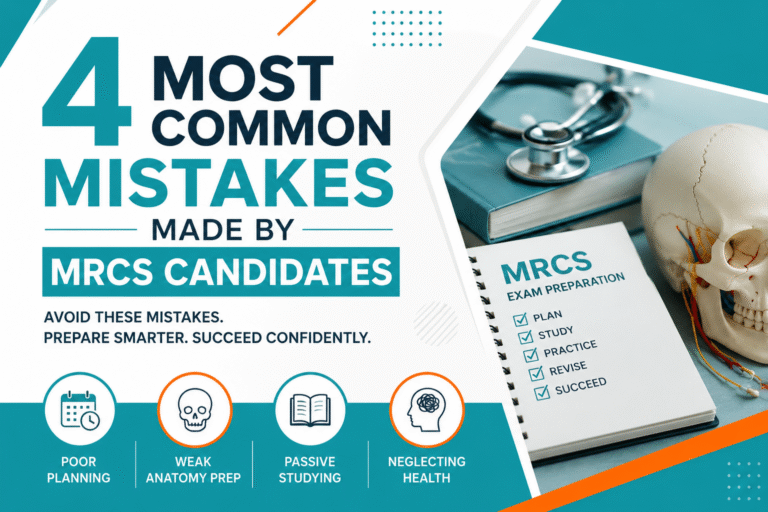
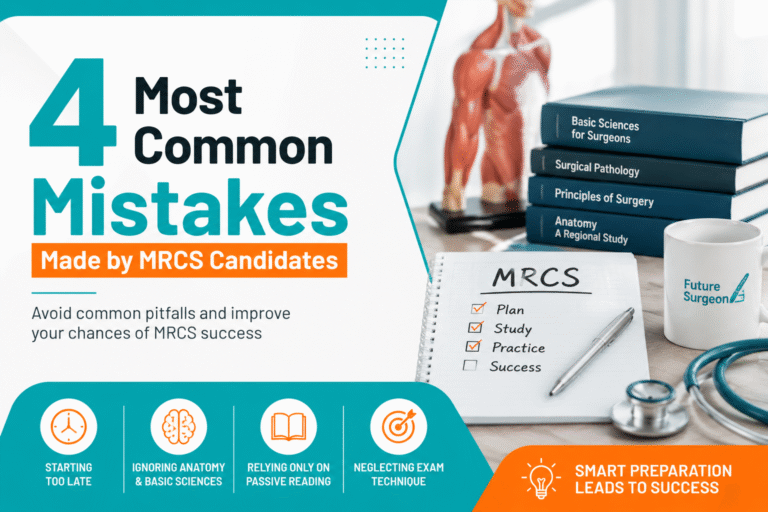
Lack of Practice
Reading without active practice is one of the biggest reasons for failure.
Poor Communication
Candidates may have strong knowledge but fail to communicate clearly.
Weak Anatomy Preparation
Anatomy remains a major scoring area and should never be ignored.
Ignoring Professionalism
Professional behavior is assessed throughout the examination.
Poor Time Management
Running out of time during stations can significantly reduce scores.
Tips to Pass MRCS Part B on First Attempt
Start Early
Begin preparation immediately after passing Part A while knowledge is still fresh.
Practice Realistic OSCE Scenarios
Simulate exam conditions regularly.
Record Yourself
Listening to your communication style can improve clarity and confidence.
Attend Mock Exams
Mocks help reduce anxiety and improve station familiarity.
Stay Calm During Stations
Confidence and composure create a positive impression on examiners.
Focus on Safe Practice
Examiners value patient safety and structured thinking more than overly complex answers.
MRCS Part B Exam Day Tips
Before the Exam
- Sleep well
- Reach early
- Carry required documents
- Stay hydrated
During the Exam
- Read instructions carefully
- Stay composed after difficult stations
- Do not dwell on mistakes
- Maintain professionalism throughout
Remember: every station is independent. A poor performance in one station does not determine your final result.
Is MRCS Part B Difficult?
Yes, MRCS Part B is challenging because it tests practical application rather than memorization. However, candidates who prepare systematically, practice consistently, and improve communication skills have a strong chance of passing successfully.
Many trainees consider it more manageable than Part A once they adapt to the OSCE style.
You must demonstrate an understanding of the four key content areas of anatomy, surgical pathology, applied surgical science and critical care. In addition to this, you will be required to show a range of applied skills across various topics. To successfully pass MRCS Part B, you must complete both the knowledge and skill components of the exam. You will have a maximum of four attempts to pass Part B of the MRCS exam. However, given the expense of the exam, you want to avoid resits where possible. Dedicating time to effective preparation can help you pass the MRCS Part B first time.
Guidelines
MRCS Part B consists of 17 examined stations, each lasting 9 minutes. In total, the exam takes approximately 3.5 hours. An examiner overlooks every station, with some stations requiring two examiners, while others only need one. For stations with two examiners, each examiner will assess different aspects of your performance.
The various stations will examine your knowledge and skills of the following topic areas:
- Applied knowledge: anatomy, surgical pathology, applied surgical science and critical care.
- Applied skills: communication skills in giving and receiving information, history taking and clinical and procedural skills.
Conclusion
MRCS Part B is a demanding but rewarding examination that represents your readiness to progress in surgical training. Success requires much more than theoretical knowledge — it demands confidence, professionalism, communication ability, clinical judgment, and practical competence.
The key to passing MRCS Part B is structured preparation, repeated OSCE practice, focused anatomy revision, and strong communication skills. Candidates who combine clinical knowledge with consistent hands-on practice usually perform best.
With proper planning, disciplined preparation, and regular mock practice, clearing MRCS Part B on your first attempt is absolutely achievable.
For aspiring surgeons, passing MRCS Part B is not just another exam milestone — it is a major step toward a successful surgical career.