The MRCS Part A exam is one of the most important milestones for aspiring surgeons aiming to progress in their surgical careers in the UK and internationally. It tests a strong foundation in applied basic sciences and principles relevant to surgery. Success requires not just hard work, but a strategic and well-planned approach.
This guide will help you understand how to prepare effectively, what to focus on, and how to maximise your chances of passing MRCS Part A on your first attempt.More about the MRCS A exam
The Membership of the Royal College of Surgeons (MRCS Part A) is a five-hour, 180-question 2-part written exam for surgical trainees who want to become a member of one of the four surgical royal colleges in the UK and Ireland. The AM paper is three hours and the PM paper is two hours in duration. The MRCS Part A is an intercollegiate exam, therefore the papers taken are the same regardless of which college you sit the exam with.
Applications for the MRCS Part A (and subsequently, Part B) exam are made through one of the four Royal Surgical Colleges:
Understanding the MRCS Part A Exam
MRCS Part A is a written examination consisting of two papers:
- Paper 1: Applied basic sciences (anatomy, physiology, and pathology)
- Paper 2: Principles of surgery in general, including critical care, ethics, and clinical scenarios
Both papers are multiple-choice based and require a deep understanding of concepts rather than rote memorisation.
MRCS exam resources
There are several online question bank subscriptions that provide assistance in studying towards the MRCS Part A exam. Pastest has the largest bank of SBA questions on the market – with over 4300+ SBA questions covering every speciality in the exam – as well as Past Papers that allow you to simulate recent exams.
Answering questions is a great way to ensure that you’re learning to recognise patterns. It’s a key skill that you’ll need in order to pass the exam. However, pattern recognition alone will only get you so far. If you know WHAT the answer is, but don’t fully understand WHY, then you may not be in a position to work out a similar, but differently worded question.
While answering questions, make sure that you’re engaging in active learning; that is to say, make sure you take the time to understand WHY a question is right or wrong. Pastest’s Dynamic Explanations are a great tool to achieve this, as each possible answer has its own explanation, unique to the context of the vignette. Supplement your learning by doing further reading. Pastest’s Expanded Explanation feature offers a topic overview, as well as information on Clinical Presentation, Differential Diagnosis, Diagnosis/Intervention, Management and Prognosis, and links out to external resources, all available as further reading after each question.
During the exam
The MRCS Part A exam is a computer-based test, so you’ll need to be comfortable using a computer to navigate the exam content. Make sure you read each question carefully and take your time to consider your answers before submitting them. Don’t rush through the exam, even if you feel like you’re running out of time.
You must also have a valid passport as a form of ID to sit the examination, or an alternative qualifying photographic ID from the country in which you are testing.
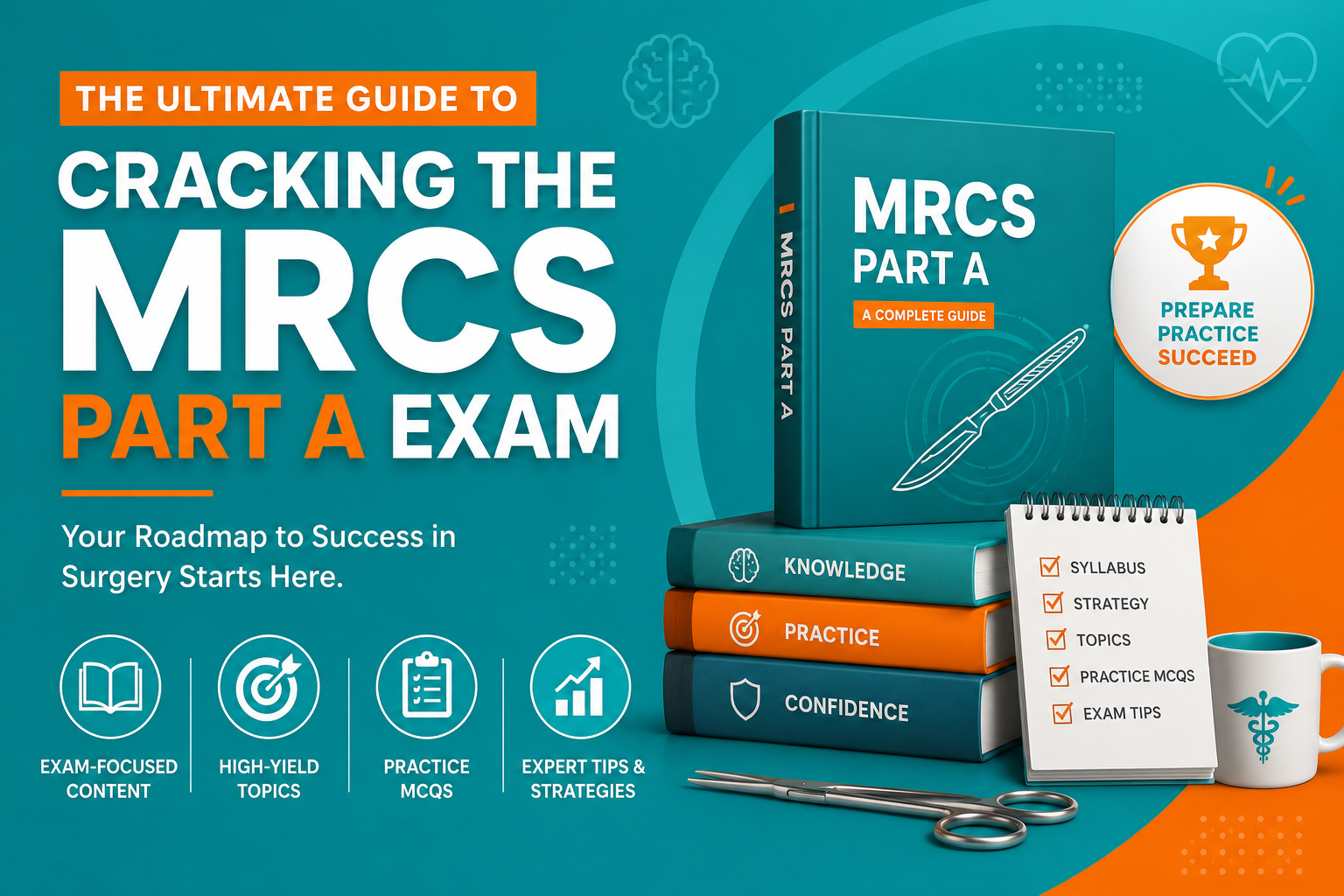
Cracking the MRCS Part A- exam requires a structured approach, disciplined preparation, and a clear understanding of the exam’s depth and style. The exam, conducted by the Royal Colleges of Surgeons, is designed to test a candidate’s applied basic science knowledge relevant to surgical practice, including anatomy, physiology, and pathology. Success in MRCS Part A is not about rote memorisation alone but about developing conceptual clarity and the ability to apply scientific principles to clinical scenarios. Most successful candidates begin their preparation 4–6 months in advance, creating a realistic study timetable that balances daily learning with weekly revision and consistent question practice. High-quality question banks such as Pastest or similar resources are essential because they help simulate exam conditions and improve time management skills. Special emphasis should be placed on high-yield topics like anatomy of the abdomen, neuroanatomy, cardiovascular physiology, and surgical pathology, as these areas are frequently tested. Regular mock exams are crucial for identifying weak areas and improving accuracy under timed conditions. Additionally, revision should be iterative—meaning candidates must revisit topics multiple times rather than studying them only once. Another key strategy is integrating visual learning tools such as diagrams and flowcharts, which help in retaining complex anatomical relationships and physiological processes. Ultimately, success in MRCS Part A comes from consistency, strategic preparation, and repeated self-assessment rather than last-minute cramming, making a well-planned study strategy the most powerful tool for passing the exam on the first attempt.
How to study for the MRCS A exam
Preparing for the MRCS Part A exam requires a structured and consistent study approach. Most successful candidates spend around 4–6 months preparing, combining textbook study with extensive question practice. Begin by creating a realistic study timetable that covers all major subjects, including anatomy, physiology, pathology, surgical principles, and critical care. Focus heavily on high-yield topics and revise them regularly to improve retention. Solving multiple-choice questions daily is essential because it helps you understand the exam pattern, improve speed, and identify weak areas. Anatomy is particularly important in MRCS Part A, so using diagrams, atlases, and clinical correlations can strengthen your understanding. Mock exams should be attempted regularly under timed conditions to build exam stamina and confidence. Alongside studying theory, reviewing explanations for incorrect answers is equally important, as it helps avoid repeating mistakes. Consistency, active revision, and disciplined question practice are the key factors that help candidates succeed in the MRCS Part A exam.
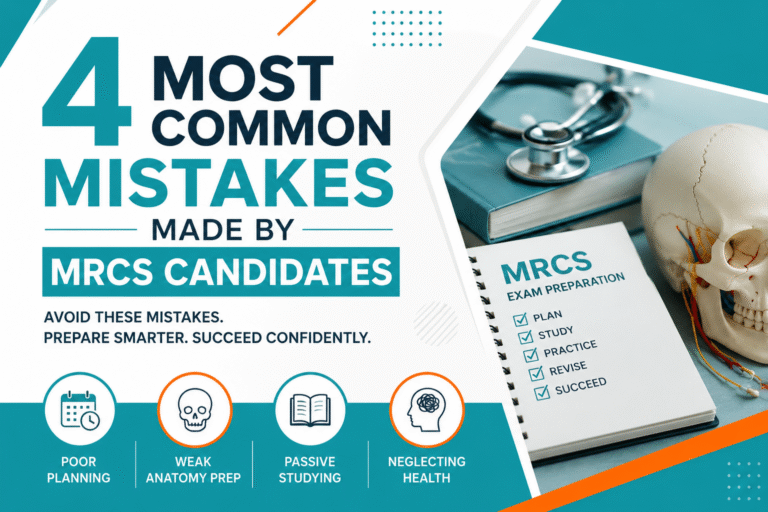
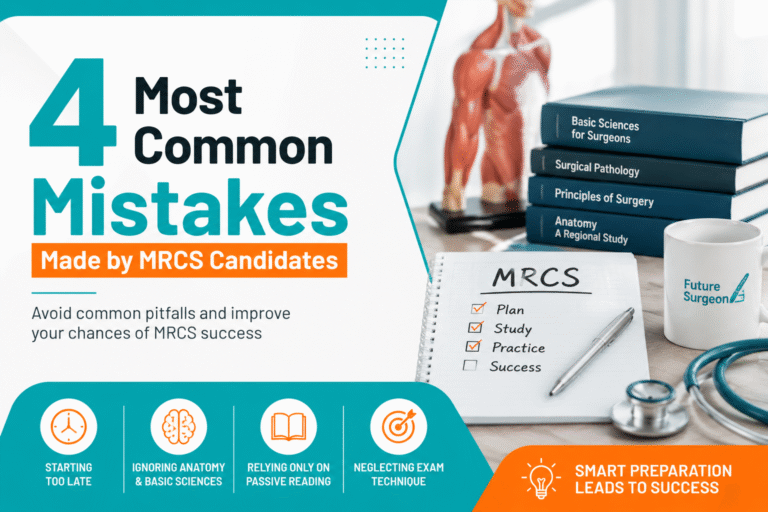
As the old saying goes – failing to plan is planning to fail. Developing a well-organised study plan is essential for doing well in the MRCS Part A exams. This exam covers a wide range of subjects, and without a strategic approach, it can be overwhelming to manage the vast amount of information.
Start by dividing the syllabus into manageable sections, allocating dedicated time for each subject based on its complexity and your personal strengths and weaknesses. Set realistic and achievable goals for yourself – such as the number of topics or chapters you aim to cover each week. Regularly review and adjust your plan as needed, ensuring you stay on track while maintaining a healthy study-life balance.
Active learning
Active learning is one of the most effective strategies for preparing for the MRCS Part A exam because it improves understanding, memory retention, and exam performance. Instead of passively reading textbooks for long hours, active learning involves engaging directly with the material through methods such as solving MCQs, using flashcards, teaching concepts to others, creating summary notes, and practicing recall without looking at books. Regular question practice helps candidates identify weak areas and understand how topics are tested in the exam. Techniques like spaced repetition and self-testing are especially useful for memorising anatomy, pathology, and surgical principles. Discussing clinical scenarios with study partners or participating in group discussions can also strengthen conceptual understanding. By actively interacting with the syllabus every day, candidates develop better critical thinking skills and improve their ability to apply knowledge under exam conditions.
Master anatomy and surgical principles
Mastering anatomy and surgical principles is essential for success in the MRCS Part A exam, as these subjects form a major portion of the syllabus and are heavily tested. Anatomy should be studied in a clinically relevant way, focusing on surgical applications, nerve supply, vascular structures, anatomical relations, and common operative scenarios. Using diagrams, atlases, cadaver images, and clinical case discussions can make complex anatomical concepts easier to understand and remember. Surgical principles require a strong understanding of wound healing, infection control, fluid management, trauma care, perioperative management, and basic operative techniques. Rather than memorising isolated facts, candidates should aim to understand how these principles apply in real clinical situations. Regular revision, active recall, and consistent MCQ practice are crucial for strengthening both subjects and improving performance in the exam.
Conclusion
Cracking the MRCS Part A exam is completely achievable with the right strategy, discipline, and consistent practice. Focus on high-yield topics, use quality resources, and practice MCQs regularly. With structured preparation, you can confidently clear the exam and move forward in your surgical career. Cracking the MRCS Part A exam is not about last-minute effort—it is the result of consistent planning, focused preparation, and disciplined revision. With a clear understanding of the syllabus, a strong grasp of high-yield topics, and regular practice using MCQs and mock exams, you can steadily build the confidence needed to succeed.
Remember, the exam is designed to test applied surgical science rather than rote memorisation. This means your preparation should focus on understanding concepts, recognising patterns in questions, and improving your speed and accuracy under timed conditions.
Most importantly, stay consistent. Even on busy days, short but focused revision sessions can make a significant difference over time. Track your progress, learn from your mistakes, and refine your strategy as you go.
Success in the MRCS Part A Exam comes down to preparation, persistence, and smart revision—not just hard work. Stay focused, trust your plan, and approach the exam with confidence.