The Membership of the Royal Colleges of Physicians (MRCP) remains one of the most prestigious postgraduate medical qualifications for physicians worldwide. As we move through 2026, several important updates have reshaped the MRCP pathway, reflecting the evolving demands of modern medicine, technological integration, and global healthcare standards. These changes aim to ensure that candidates are not only clinically competent but also adaptable, digitally literate, and patient-centered in their approach.
Evolution of the MRCP Examination Structure
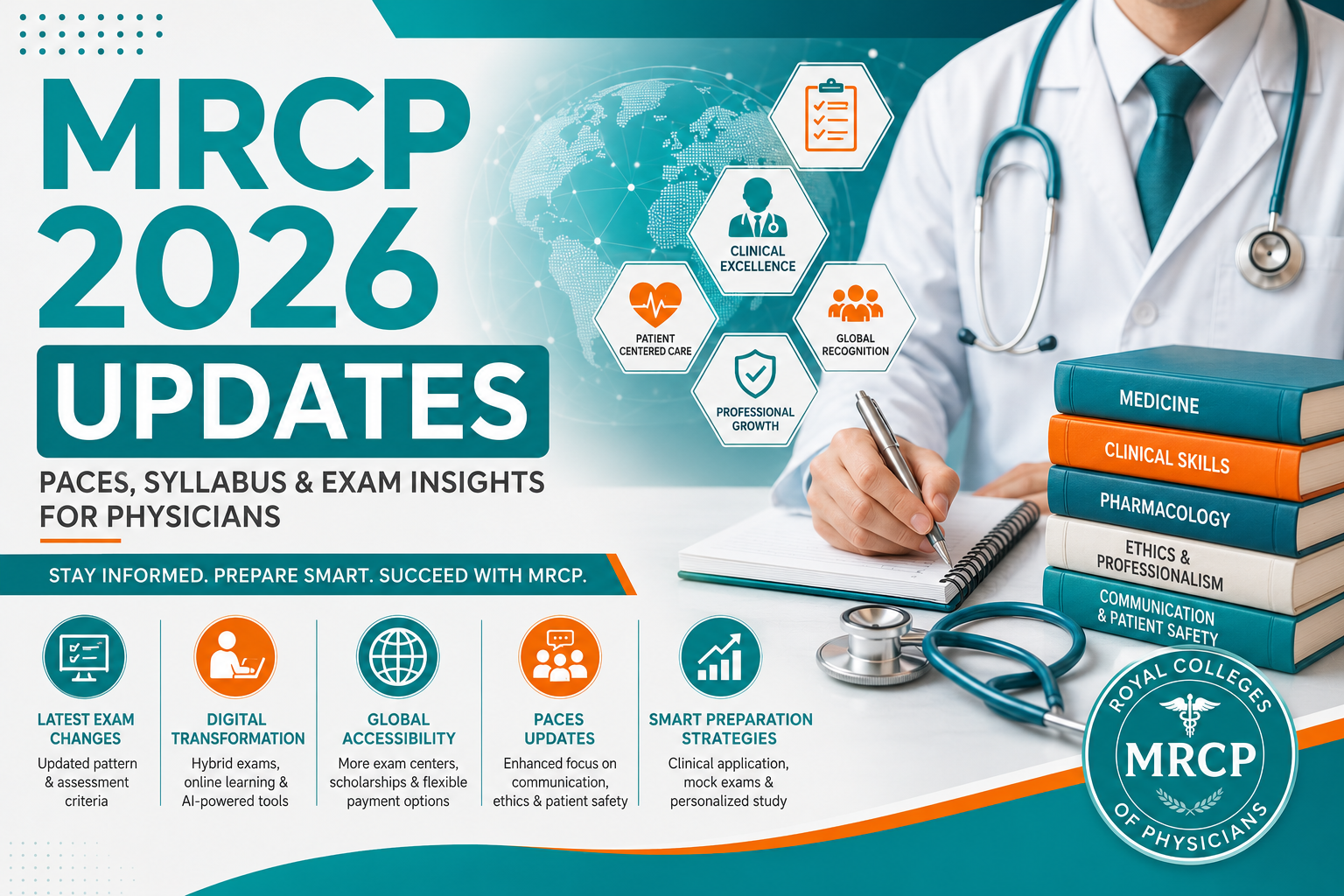
One of the most notable updates in 2026 is the refinement of the MRCP examination structure. While the traditional three-part format—Part 1, Part 2 Written, and PACES (Practical Assessment of Clinical Examination Skills)—remains intact, there have been subtle but impactful modifications.
MRCP Part 1 now places greater emphasis on applied basic sciences. Candidates are expected to demonstrate a deeper understanding of physiology, pathology, and pharmacology in clinical contexts rather than rote memorization. Questions increasingly integrate real-world scenarios, testing analytical thinking.
MRCP Part 2 Written has evolved to include more case-based discussions. The exam now reflects complex patient presentations involving multimorbidity, mirroring real clinical environments. This shift ensures candidates are prepared for decision-making in situations where guidelines may overlap or conflict.
PACES, the clinical component, has undergone the most transformation. In 2026, communication skills, ethical reasoning, and patient safety have been given heightened importance. Stations now frequently include simulated digital health tools, such as interpreting electronic health records or teleconsultation scenarios.
Digital Transformation and Remote Accessibility
The COVID-19 pandemic accelerated the adoption of digital tools in medical education, and MRCP has continued to build on this momentum. In 2026, hybrid examination options have been expanded.
Some written components are now available in secure online formats, allowing candidates in remote or underserved regions to participate without extensive travel. While PACES remains largely in-person due to its hands-on nature, certain preparatory modules and mock exams are now delivered through virtual platforms.
Artificial intelligence has also been introduced in exam preparation tools. Adaptive learning systems analyze candidate performance and tailor study recommendations accordingly. This personalized approach helps candidates focus on weaker areas, improving efficiency and outcomes.
Updated Curriculum and Competency Focus
The MRCP curriculum has been revised to align with contemporary healthcare challenges. In 2026, there is a stronger focus on:
- Geriatric medicine: With aging populations globally, candidates must be proficient in managing frailty, polypharmacy, and chronic disease.
- Mental health integration: Physicians are now expected to recognize and manage common psychiatric conditions alongside physical illnesses.
- Global health awareness: Topics such as emerging infectious diseases, climate change, and health inequities are increasingly represented.
- Digital health literacy: Understanding telemedicine, data privacy, and clinical informatics is now essential.
These updates ensure that MRCP-qualified physicians are well-equipped for modern clinical practice, where interdisciplinary knowledge is crucial.
Changes in PACES Assessment Criteria
The PACES exam in 2026 has shifted toward a more holistic evaluation of candidates. Rather than focusing solely on physical examination techniques, examiners assess how candidates integrate findings into clinical reasoning.
Communication has become a cornerstone of assessment. Candidates must demonstrate empathy, clarity, and cultural sensitivity when interacting with patients. Additionally, ethical scenarios—such as breaking bad news or obtaining informed consent—are now more frequently tested.
Another key update is the inclusion of patient safety scenarios. Candidates may be asked to identify potential errors in clinical management or suggest improvements in care delivery. This reflects the growing emphasis on quality improvement in healthcare systems.
Increased Global Recognition and Accessibility
MRCP continues to expand its global footprint. In 2026, more international centers have been accredited, making the exam accessible to candidates in Asia, Africa, and the Middle East.
Collaborations with international medical boards have also strengthened the value of MRCP as a globally recognized qualification. Many countries now consider MRCP as part of their specialist training pathways, reducing redundancy and encouraging mobility among physicians.
Financial accessibility has also been addressed. Scholarships, subsidized exam fees, and flexible payment options have been introduced to support candidates from low- and middle-income countries.
Preparation Strategies in 2026
Given these updates, candidates must adapt their preparation strategies. Traditional textbook learning is no longer sufficient. Instead, a multifaceted approach is required:
- Clinical application: Focus on understanding concepts rather than memorizing facts.
- Practice questions: Use updated question banks that reflect the new exam format.
- Simulation training: Engage in mock PACES exams, especially those incorporating communication and ethics.
- Digital tools: Leverage AI-based platforms for personalized study plans.
- Peer learning: Group discussions and case-based learning can enhance understanding.
Time management remains critical, especially with the increased complexity of questions. Candidates should practice under timed conditions to build confidence.
Challenges and Criticisms
While the updates have been largely welcomed, they are not without challenges. Some candidates have expressed concerns about the increased difficulty level, particularly in Part 2 and PACES.
The integration of digital tools, while beneficial, may disadvantage candidates with limited access to technology. Additionally, the subjective nature of communication assessments in PACES has raised questions about consistency and fairness.
However, the MRCP boards have emphasized ongoing evaluation and feedback mechanisms to address these concerns. Regular updates and examiner training aim to maintain transparency and standardization.
The Future of MRCP
Looking ahead, MRCP is likely to continue evolving in response to advancements in medicine and education. Potential future developments include:
- Greater use of virtual reality in clinical assessments
- Enhanced AI-driven evaluation systems
- Broader integration of interdisciplinary topics
- Continued expansion of global examination centers
These innovations will further strengthen MRCP as a benchmark for excellence in physician training.
Conclusion
The MRCP updates in 2026 reflect a significant shift toward a more holistic, practical, and globally relevant assessment system. By emphasizing clinical reasoning, communication, digital literacy, and patient-centered care, the examination now aligns more closely with the realities of modern healthcare.
While these changes present new challenges for candidates, they also offer an opportunity to develop skills that are essential for effective medical practice. Success in MRCP today requires adaptability, critical thinking, and a commitment to continuous learning.
Ultimately, the 2026 updates reinforce the MRCP’s role as not just an examination, but a comprehensive standard for excellence in medicine. Physicians who achieve this qualification can be confident in their ability to meet the demands of an ever-changing healthcare landscape.