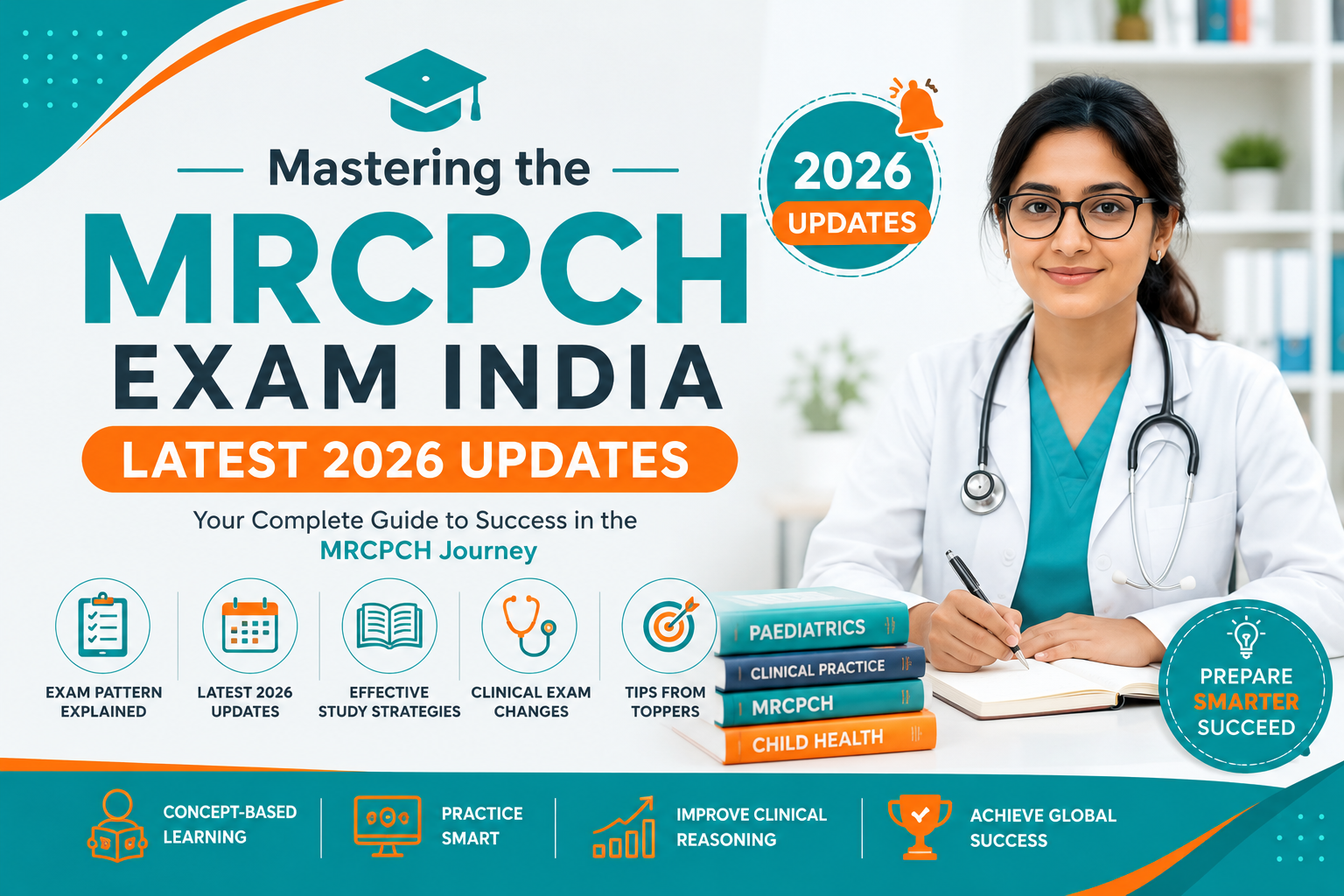
The Membership of the Royal College of Paediatrics and Child Health (MRCPCH) examination is one of the most prestigious international qualifications for paediatricians worldwide. In recent years, thousands of Indian medical graduates and paediatric trainees have actively pursued the MRCPCH pathway to strengthen their clinical knowledge, improve career opportunities, and gain international recognition in paediatrics. With several important changes and updates introduced for 2026, candidates preparing for the MRCPCH examination in India must stay informed about the latest exam formats, application timelines, preparation strategies, and clinical assessment expectations.
The MRCPCH qualification is awarded by the Royal College of Paediatrics and Child Health (RCPCH), UK, and is widely respected across the United Kingdom, Middle East, Asia, and several international healthcare systems. The examination pathway consists of three theory examinations — Foundation of Practice (FOP), Theory and Science (TAS), and Applied Knowledge in Practice (AKP) — followed by the MRCPCH Clinical examination. According to the latest official updates, the theory exams continue to be computer-based and can be taken in any order, giving candidates greater flexibility in planning their preparation journey.
Why MRCPCH is Becoming Popular in India
The demand for MRCPCH in India has increased significantly because of the growing interest in global paediatric careers and UK training opportunities. Indian candidates are increasingly choosing MRCPCH because it enhances clinical understanding, improves evidence-based practice, and opens pathways for fellowships, NHS jobs, and international paediatric training programs. Unlike traditional exam preparation that focuses heavily on memorisation, the MRCPCH examination emphasizes clinical reasoning, patient safety, communication skills, and practical paediatric decision-making.
Many postgraduate trainees pursuing MD Pediatrics or DNB Pediatrics now begin MRCPCH preparation early during residency. Since the theory exams are non-sequential, candidates can strategically attempt FOP and TAS together while preparing for AKP separately at a later stage. This flexible structure has made the exam more accessible for busy clinicians and residents.
MRCPCH Exam Structure 2026
Foundation of Practice (FOP)
The FOP exam evaluates basic paediatric knowledge and understanding of fundamental clinical concepts. Topics commonly covered include child development, genetics, neonatology, immunology, pharmacology, epidemiology, and patient safety. Candidates are expected to demonstrate strong conceptual understanding rather than factual memorisation alone.
Theory and Science (TAS)
The TAS examination assesses the scientific basis of paediatrics and clinical application of medical sciences. It focuses on physiology, pathology, anatomy, infectious diseases, nutrition, metabolic disorders, and evidence-based medicine. Many candidates consider TAS slightly more challenging because of its analytical and interpretation-based questions.
Applied Knowledge in Practice (AKP)
AKP is designed to assess clinical decision-making and practical paediatric management. Questions are usually case-based and test diagnostic reasoning, investigations, ethics, safeguarding, and emergency management skills. Candidates often require extensive question-bank practice and mock exams to perform well in AKP.
MRCPCH Clinical Examination
The MRCPCH Clinical exam is the final stage of the membership pathway and evaluates real-world clinical competence. Candidates rotate through multiple stations involving communication skills, history taking, clinical examination, ethics, data interpretation, and patient management scenarios.
Major MRCPCH 2026 Updates
One of the biggest developments for 2026 is the ongoing review of the MRCPCH Clinical examination format. The RCPCH is currently evaluating changes aimed at improving reliability, sustainability, and standardisation across international centres. Proposed changes include a more structured OSCE-style assessment using trained role players instead of relying heavily on real patients. Greater focus is expected on communication, clinical reasoning, professionalism, and patient-centred decision-making.
Another important update is the increasing demand for MRCPCH Clinical seats in India. Due to limited clinical slots and high competition, candidates are advised to complete documentation and sponsorship requirements well in advance. Overseas clinical application windows often remain open for only a short duration, making early preparation extremely important.
The RCPCH has also reinforced regulations regarding exam attempts and validity periods. Candidates must pass the MRCPCH Clinical examination within seven years of passing all theory examinations. Additionally, international candidates are now also covered under updated attempt regulations introduced in recent years.
A Look at the MRCPCH Exam Structure
The MRCPCH qualification requires candidates to demonstrate proficiency across four distinct assessment components. Notably, these exams evaluate clinical knowledge, scientific principles, and complex decision-making skills. The three computer-based theory exams include Foundation of Practice (FOP), Theory and Science (TAS), and Applied Knowledge in Practice (AKP). Candidates can choose to sit for these theory papers in any order. However, you must successfully pass all three theory parts before you can apply for the final Clinical component. Moreover, the RCPCH utilizes the TestReach platform for all digital theory assessments globally. This digital transition ensures a standardized experience for all Indian applicants.
Eligibility Criteria for Indian Doctors
The General Medical Council in the UK must recognize your Primary Medical Qualification to begin this journey. Most Indian MBBS graduates meet this fundamental requirement without undergoing additional verification steps. Additionally, the RCPCH recommends that candidates complete at least two and a half years of postgraduate paediatric training before the clinical assessment. You should also ideally possess 12 months of experience in emergency paediatric care. This practical background significantly improves your success rate during the rigorous multi-station clinical exam. Initially, you must register for an online RCPCH account to receive your unique candidate number.
Latest MRCPCH Exam India Theory Dates and Timelines (2025-2027)
The RCPCH maintains a rigorous annual schedule for all theory examinations to accommodate global demand. As of late May 2026, the application windows for the 2026.2 theory diets have officially concluded. Specifically, registration for the June FOP/TAS exam in India closed on April 6, 2026. Consequently, candidates must now focus on the late-year 2026.3 diets to continue their progress. You should monitor the official booking windows closely to secure your preferred testing center. Furthermore, the college typically releases the 2027 examination schedule during the final quarter of the current year. Early preparation for these future diets allows for a better work-life balance.
MRCPCH 2026 Exam Dates in India
The MRCPCH examination is conducted multiple times each year across major Indian cities including Bengaluru, Chennai, Hyderabad, Kolkata, Mumbai, Navi Mumbai, Pune, Kochi, and New Delhi. The 2026 examination calendar includes multiple diets for FOP/TAS and AKP examinations, allowing candidates flexibility in scheduling their attempts. Recent updates indicate that FOP/TAS exams are scheduled in February, June, and October 2026, while AKP exams are expected in January, May, and September.
Clinical examinations are expected to continue in major Indian centres such as Bengaluru, Chennai, Kolkata, Navi Mumbai, and Pune. Due to extremely high demand, candidates should monitor official booking announcements closely and apply immediately when registration windows open.
Best Preparation Strategy for Indian Candidates
Start Early
Preparing for the MRCPCH examination requires a smart, structured, and clinically oriented study approach rather than simple memorisation. Indian candidates should ideally begin preparation at least four to six months before each exam diet to allow enough time for concept building, revision, and mock practice. A well-planned weekly study schedule can help divide subjects into manageable sections and prevent last-minute stress. Since the MRCPCH examination focuses heavily on clinical reasoning and application-based learning, candidates should prioritize understanding paediatric concepts thoroughly instead of relying only on factual recall. Consistent daily study, even for shorter durations, is usually more effective than irregular long study sessions.
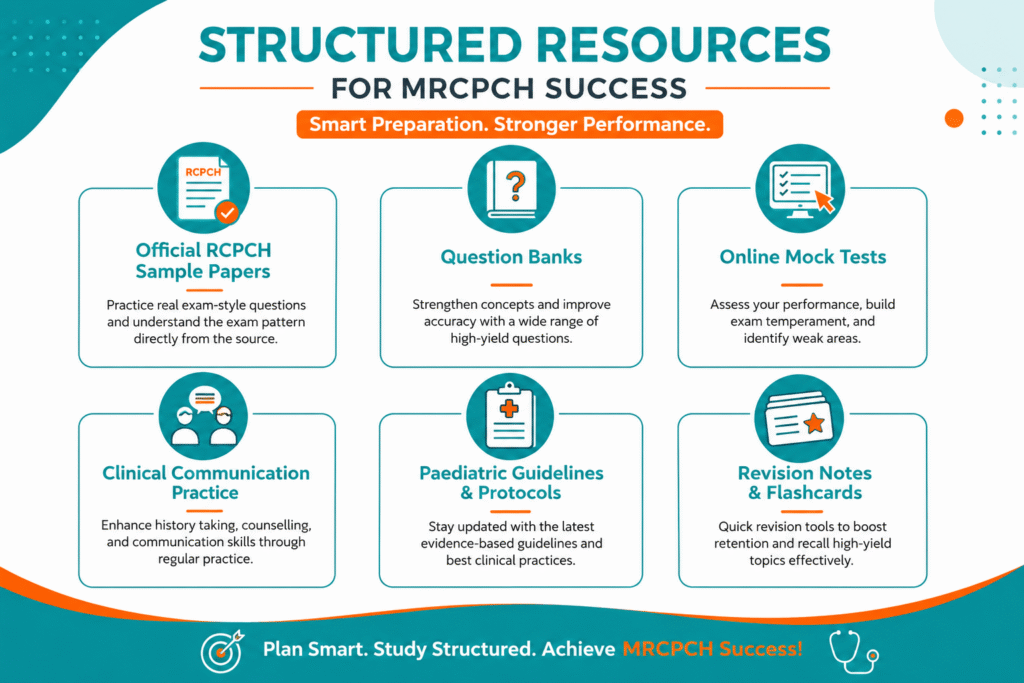
For theory papers such as Foundation of Practice (FOP), Theory and Science (TAS), and Applied Knowledge in Practice (AKP), candidates should focus on high-yield question banks, official RCPCH sample questions, clinical guidelines, and evidence-based paediatric protocols. Solving practice questions regularly helps improve time management and familiarizes candidates with the exam pattern. AKP preparation especially benefits from case-based learning and discussion of real clinical scenarios. Many successful candidates also combine revision notes, flashcards, online mock exams, and group discussions to strengthen weak areas and improve retention.
Use High-Yield Resources
Practice Clinical Scenarios
Practicing clinical scenarios is one of the most important aspects of MRCPCH preparation because the examination focuses heavily on real-life paediatric decision-making and patient interaction. Candidates should regularly work through common paediatric cases involving history taking, diagnosis, investigations, management planning, and communication with parents or caregivers. This approach helps improve clinical confidence, structured thinking, and problem-solving skills under exam conditions. Unlike theory-based learning alone, clinical scenario practice teaches candidates how to apply medical knowledge effectively in practical situations.
For the MRCPCH Clinical examination, candidates should actively participate in mock OSCE stations, bedside discussions, role-play sessions, and communication exercises with peers or mentors. Regular practice improves fluency in clinical examination techniques, counselling skills, safeguarding discussions, and emergency management scenarios. Time management is also a critical skill, and practicing under timed conditions helps candidates remain calm and organized during the actual examination.
Candidates are encouraged to focus on commonly tested paediatric topics such as ne
Focus on Clinical Reasoning
The latest MRCPCH pattern increasingly tests application-based thinking. Candidates should focus on understanding why a diagnosis or management decision is appropriate rather than simply memorising facts.Clinical reasoning is a core component of the MRCPCH examination and plays a major role in both theory and clinical assessments. Candidates are expected not only to recall medical facts but also to apply their knowledge logically in real paediatric situations. Strong clinical reasoning helps candidates analyze symptoms, interpret clinical findings, identify possible diagnoses, choose appropriate investigations, and develop safe management plans. The MRCPCH exam increasingly focuses on decision-making abilities rather than simple memorisation, making conceptual understanding extremely important for success.
To improve clinical reasoning skills, candidates should regularly practice case-based discussions and analyze why certain diagnoses or treatment approaches are correct. Instead of memorising isolated facts, candidates should focus on understanding disease mechanisms, patient presentation patterns, differential diagnoses, and evidence-based management strategies. Reviewing paediatric guidelines alongside clinical cases helps strengthen analytical thinking and improves confidence in handling complex scenarios.
Common Challenges Faced by Indian Candidates
Many Indian candidates struggle initially with time management, exam pattern adaptation, and interpretation-style questions. Unlike some traditional postgraduate exams, MRCPCH focuses heavily on applied clinical judgment and patient-centred communication. The Clinical exam may also feel challenging because of its structured station-based format and international assessment standards.
However, with consistent preparation, regular practice, and smart revision planning, Indian candidates continue to achieve excellent success rates in MRCPCH examinations every year.
Career Opportunities After MRCPCH
Completing MRCPCH provides multiple career advantages, including:
- Eligibility for paediatric training opportunities abroad
- Better fellowship and subspecialty options
- Enhanced academic and clinical credibility
- Improved opportunities in NHS hospitals
- Stronger foundation for evidence-based paediatric practice
- International recognition in child healthcare
For many Indian paediatricians, MRCPCH acts as a gateway toward advanced global medical careers and specialised paediatric training pathways.
Final Thoughts
The MRCPCH examination continues to evolve in 2026 with updated assessment strategies, increasing international participation, and stronger emphasis on clinical reasoning and communication skills. For Indian candidates, success in MRCPCH requires early preparation, disciplined study planning, consistent question practice, and strong clinical understanding. Staying updated with official RCPCH announcements, exam schedules, and changing clinical formats will play a crucial role in exam success.
With the right preparation strategy and dedication, Indian paediatric trainees can successfully clear the MRCPCH pathway and build rewarding careers in paediatrics both in India and internationally.