
Diploma in opthamology
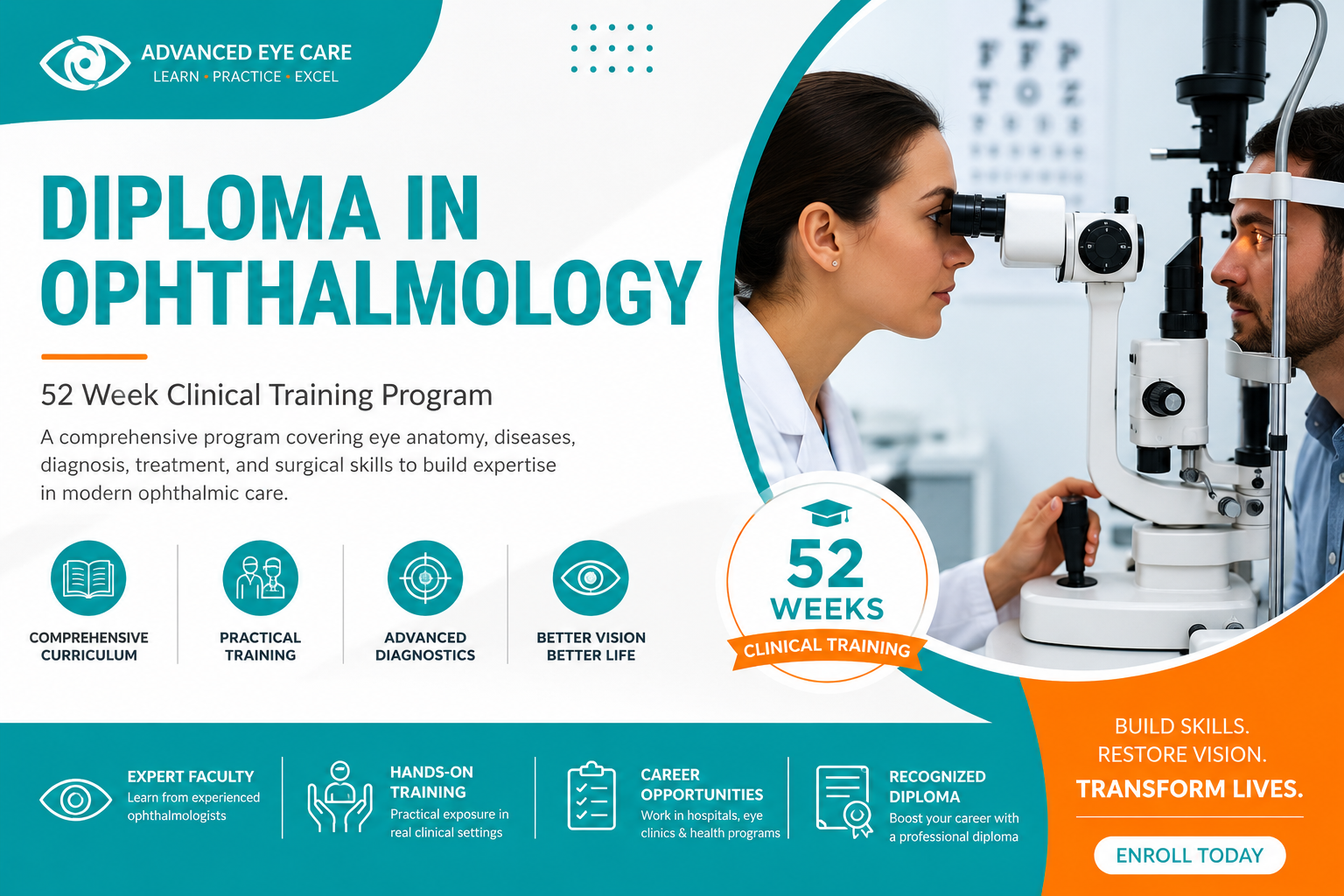

The Diploma in Ophthalmology is a comprehensive 52-week program designed to build strong clinical and theoretical foundations in eye care. The curriculum covers essential topics including ocular anatomy, pharmacology, corneal and retinal diseases, glaucoma, pediatric ophthalmology, ocular trauma, and surgical techniques. It also emphasizes diagnostic skills, emergency management, and community eye health, preparing learners for practical clinical practice and real-world ophthalmic challenges.
The Diploma in Ophthalmology is a structured, intensive 52-week professional training program designed to equip learners with comprehensive knowledge and clinical skills in the diagnosis, management, and treatment of eye diseases. This course bridges the gap between basic medical knowledge and practical ophthalmic practice, making it ideal for medical graduates and healthcare professionals who wish to specialize in eye care.
Throughout the program, learners gain a deep understanding of the anatomy and physiology of the eye, visual pathways, and common as well as complex ocular conditions. The curriculum begins with foundational concepts in ophthalmology, including clinical examination techniques, ophthalmic instruments, and patient history taking. As the course progresses, students are introduced to essential areas such as ocular pharmacology, diagnostic procedures, and interpretation of clinical findings.
A major focus of the diploma is on the study of anterior and posterior segment eye diseases. Learners explore conditions affecting the cornea, conjunctiva, lens, retina, and vitreous, along with their medical and surgical management. Special attention is given to high-prevalence conditions such as cataracts, glaucoma, diabetic retinopathy, and refractive errors, which are leading causes of visual impairment worldwide.
The program also covers pediatric ophthalmology, neuro-ophthalmology, and ocular trauma, ensuring that students are well-prepared to handle diverse and emergency clinical scenarios. Training in surgical ophthalmology introduces learners to modern procedures such as cataract surgery techniques, refractive surgeries, and basic principles of ophthalmic surgery, along with post-operative care and complication management.
In addition to clinical training, the diploma emphasizes community ophthalmology and preventive eye care. Students learn about public health strategies, blindness prevention programs, and screening methods that play a crucial role in reducing the global burden of eye diseases. This holistic approach ensures that graduates are not only clinically competent but also socially responsible healthcare providers.
By the end of the course, learners are expected to develop strong diagnostic reasoning, clinical decision-making abilities, and hands-on skills required for ophthalmic practice. The Diploma in Ophthalmology ultimately prepares candidates for roles in hospitals, eye clinics, community health programs, and further specialization in advanced ophthalmic fields.
- 12 Sections
- 70 Lessons
- 52 Weeks
- Foundations of OphthalmologyThis module introduces learners to the basics of ophthalmology, including eye anatomy, physiology, and basic clinical examination techniques. It builds the foundation for understanding ocular diseases and clinical practice.6
- Ocular Pharmacology & DiagnosticsFocuses on drugs used in eye care and essential diagnostic tools used in ophthalmology practice.6
- Cornea and External Eye DiseasesCovers diseases affecting the cornea, conjunctiva, and external eye structures including infections and inflammations.6
- Lens and Cataract DisordersThis module focuses on lens anatomy, cataract formation, and modern cataract management techniques.5
- GlaucomaDedicated to understanding glaucoma, its diagnosis, progression, and management strategies.6
- Retina and Vitreous DisordersCovers diseases of the retina and vitreous including diabetic retinopathy and retinal detachment.6
- Neuro-OphthalmologyFocuses on visual pathway disorders and neurological conditions affecting vision.6
- Pediatric OphthalmologyDeals with eye diseases in children including congenital and developmental conditions.6
- Ocular Trauma & EmergenciesCovers emergency eye conditions and trauma management techniques.6
- Surgical OphthalmologyIntroduces surgical procedures and perioperative care in ophthalmology.6
- Community Ophthalmology & Public HealthFocuses on prevention of blindness, screening programs, and public health strategies.6
- Revision, Case Studies & Clinical PracticeFinal revision module focused on case discussions, OSCE preparation, and clinical decision-making.5
You might be intersted in
-
87 Students
-
52 Weeks
-
77 Students
-
52 Weeks
-
34 Students
-
52 Weeks
-
53 Students
-
52 Weeks