
Fellowship in Optic Pathology
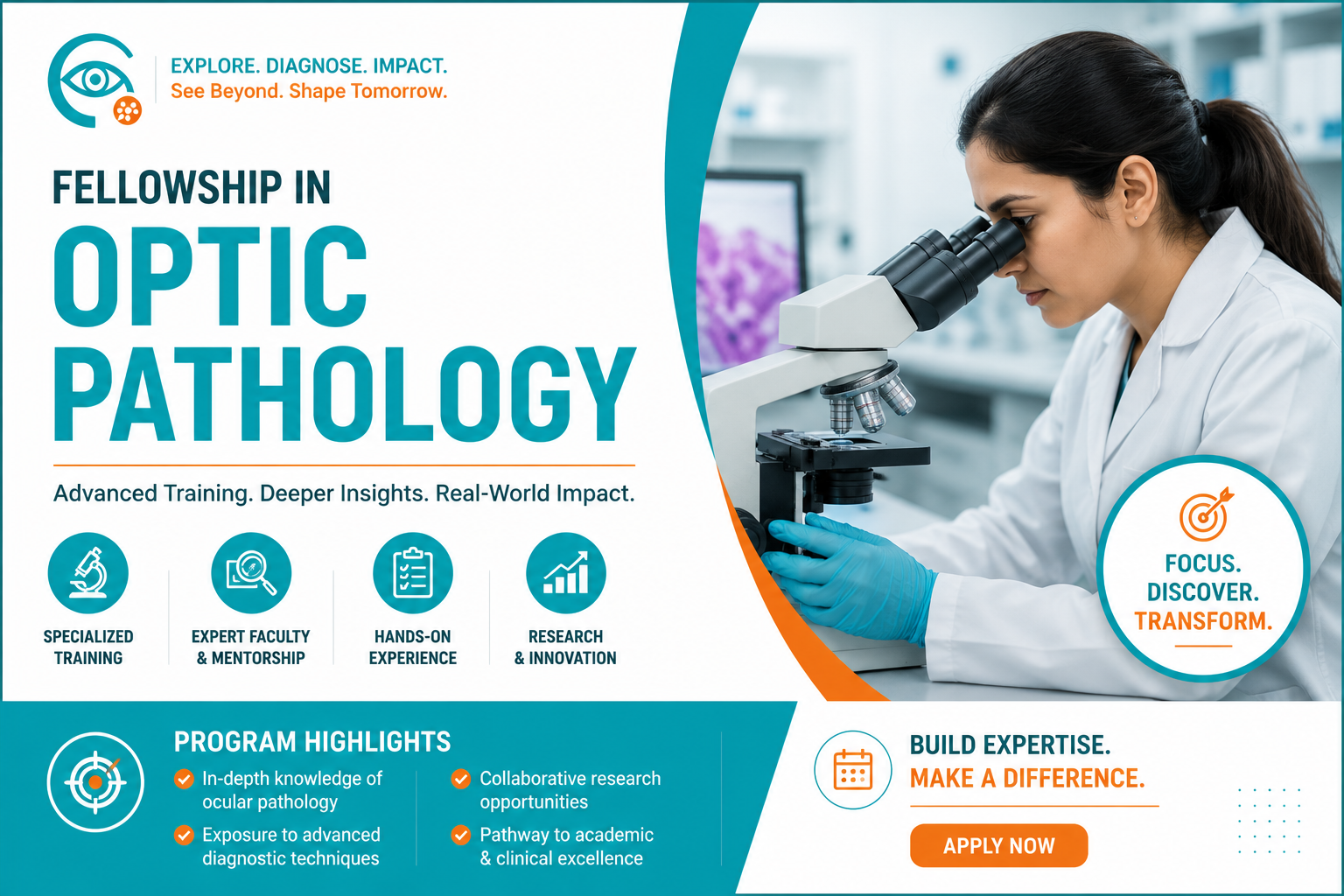

The Fellowship in Optic Pathology is a comprehensive 52-week advanced training program designed to develop expertise in the diagnosis and evaluation of ocular and optic nerve diseases. The course covers ocular anatomy, histopathology, retinal and optic nerve disorders, ocular oncology, inflammatory diseases, laboratory techniques, molecular diagnostics, and research methodology. Through case-based learning, microscopic interpretation, and clinical-pathological correlation, participants gain the skills required for specialized practice and research in ophthalmic pathology.
The Fellowship in Optic Pathology is a comprehensive 52-week advanced academic and professional training program designed for medical graduates, pathologists, ophthalmologists, laboratory professionals, and healthcare practitioners seeking specialized expertise in the diagnosis and pathological evaluation of ocular and optic nerve diseases. The program provides in-depth knowledge of the structural, cellular, molecular, and clinical aspects of eye disorders, enabling learners to develop advanced diagnostic and research competencies in ophthalmic pathology.
The curriculum begins with a strong foundation in ocular anatomy, physiology, embryology, and histology, ensuring participants understand the normal structure and function of the eye and optic nerve. Learners are then introduced to essential histopathological techniques, including specimen collection, tissue processing, staining methods, microscopy, immunohistochemistry, and quality assurance practices that form the cornerstone of accurate pathological diagnosis.
Throughout the fellowship, participants explore a wide spectrum of ocular diseases affecting the cornea, conjunctiva, lens, retina, optic nerve, uveal tract, orbit, eyelids, and lacrimal system. The program covers common and complex pathological conditions such as cataracts, diabetic retinopathy, age-related macular degeneration, optic neuropathies, glaucoma, ocular infections, inflammatory disorders, hereditary eye diseases, and degenerative conditions. Special emphasis is placed on recognizing histopathological patterns and correlating microscopic findings with clinical presentations.
A significant component of the fellowship is dedicated to ocular oncology, where learners study benign and malignant tumors of the eye and orbit, including retinoblastoma, uveal melanoma, ocular surface neoplasia, and orbital tumors. Participants gain expertise in tumor classification, staging, molecular pathology, and diagnostic reporting, preparing them to contribute effectively to multidisciplinary ophthalmic care teams.
The program also introduces advanced diagnostic technologies such as digital pathology, molecular diagnostics, genetic testing, and artificial intelligence applications in ophthalmic pathology. These emerging tools enhance diagnostic accuracy and provide insights into personalized treatment approaches for ocular diseases. Learners are trained to interpret complex diagnostic data and integrate laboratory findings into evidence-based clinical decision-making.
Research and scholarly development are integral to the fellowship experience. Participants learn research methodology, biostatistics, scientific writing, literature review techniques, and publication ethics. Under faculty supervision, each learner completes a research project focused on a relevant area of optic pathology, fostering analytical thinking, innovation, and scientific contribution to the field.
The fellowship employs a combination of lectures, virtual microscopy sessions, case-based discussions, laboratory demonstrations, clinical-pathological conferences, and independent research activities. This multidisciplinary approach ensures that learners gain both theoretical knowledge and practical skills necessary for specialized practice in ophthalmic pathology laboratories, academic institutions, research centers, and healthcare organizations.
Upon successful completion of the Fellowship in Optic Pathology, graduates will be able to accurately evaluate ocular tissue specimens, diagnose a broad range of eye diseases, apply advanced histopathological and molecular techniques, prepare professional pathology reports, conduct independent research, and contribute to the advancement of ophthalmic diagnostic services. The program serves as an excellent pathway for healthcare professionals seeking advanced specialization in the rapidly evolving field of ocular and optic pathology.
- 12 Sections
- 72 Lessons
- 52 Weeks
- Foundations of Optic PathologyThis module introduces learners to the fundamental principles of optic pathology, including the anatomy, physiology, embryology, and histology of the eye and optic nerve. Participants will gain a strong foundation in ocular tissue structure, pathological terminology, disease mechanisms, and diagnostic approaches essential for advanced study in optic pathology.6
- Ocular Histopathology TechniquesThis module focuses on laboratory methods used in optic pathology. Learners will develop competency in specimen handling, fixation, tissue processing, staining methods, microscopy, and quality assurance procedures required for accurate histopathological diagnosis.6
- Corneal and Conjunctival PathologyThis module examines pathological disorders affecting the cornea and conjunctiva. Students will learn the histopathological features, etiologies, clinical manifestations, and diagnostic criteria of inflammatory, degenerative, infectious, and neoplastic conditions.6
- Lens and Cataract PathologyThis module explores lens development, aging changes, and cataract pathology. Participants will study congenital and acquired lens disorders, molecular mechanisms of cataract formation, and microscopic diagnostic findings.6
- Retinal PathologyLearners will gain comprehensive knowledge of retinal diseases and their pathological features. Emphasis is placed on vascular, inflammatory, degenerative, hereditary, and neoplastic retinal disorders and their clinical correlations.6
- Optic Nerve PathologyThis module provides an in-depth study of diseases affecting the optic nerve. Participants will evaluate inflammatory, ischemic, hereditary, traumatic, and neoplastic optic nerve conditions through histopathological and clinical perspectives.6
- Glaucoma and Anterior Segment PathologyThis module focuses on pathological changes associated with glaucoma and anterior segment disorders. Students will study aqueous humor dynamics, trabecular meshwork pathology, and disease progression mechanisms.6
- Uveal Tract PathologyThis module covers pathological conditions of the iris, ciliary body, and choroid. Learners will explore inflammatory diseases, systemic associations, vascular abnormalities, and tumors affecting the uveal tract.6
- Ocular Infections and Inflammatory DiseasesParticipants will examine infectious and immune-mediated ocular disorders. The module emphasizes microbiological diagnosis, tissue response patterns, and pathological manifestations of ocular infections.6
- Ocular OncologyThis module provides comprehensive training in the pathology of ocular tumors. Students will study benign and malignant neoplasms, tumor classification systems, molecular pathology, and diagnostic reporting standards.6
- Orbital and Adnexal PathologyThis module focuses on diseases of the orbit, eyelids, lacrimal apparatus, and associated structures. Participants will learn diagnostic criteria for inflammatory, infectious, congenital, and neoplastic conditions.6
- Advanced Diagnostics, Research and Fellowship ProjectThe final module integrates advanced diagnostic technologies, digital pathology, molecular testing, research methodology, and evidence-based practice. Learners will complete a supervised fellowship project demonstrating competency in optic pathology diagnosis and research.6
You might be intersted in

-
167 Students
-
52 Weeks
-
132 Students
-
52 Weeks
-
133 Students
-
52 Weeks
-
123 Students
-
52 Weeks