
Diploma in Hematology
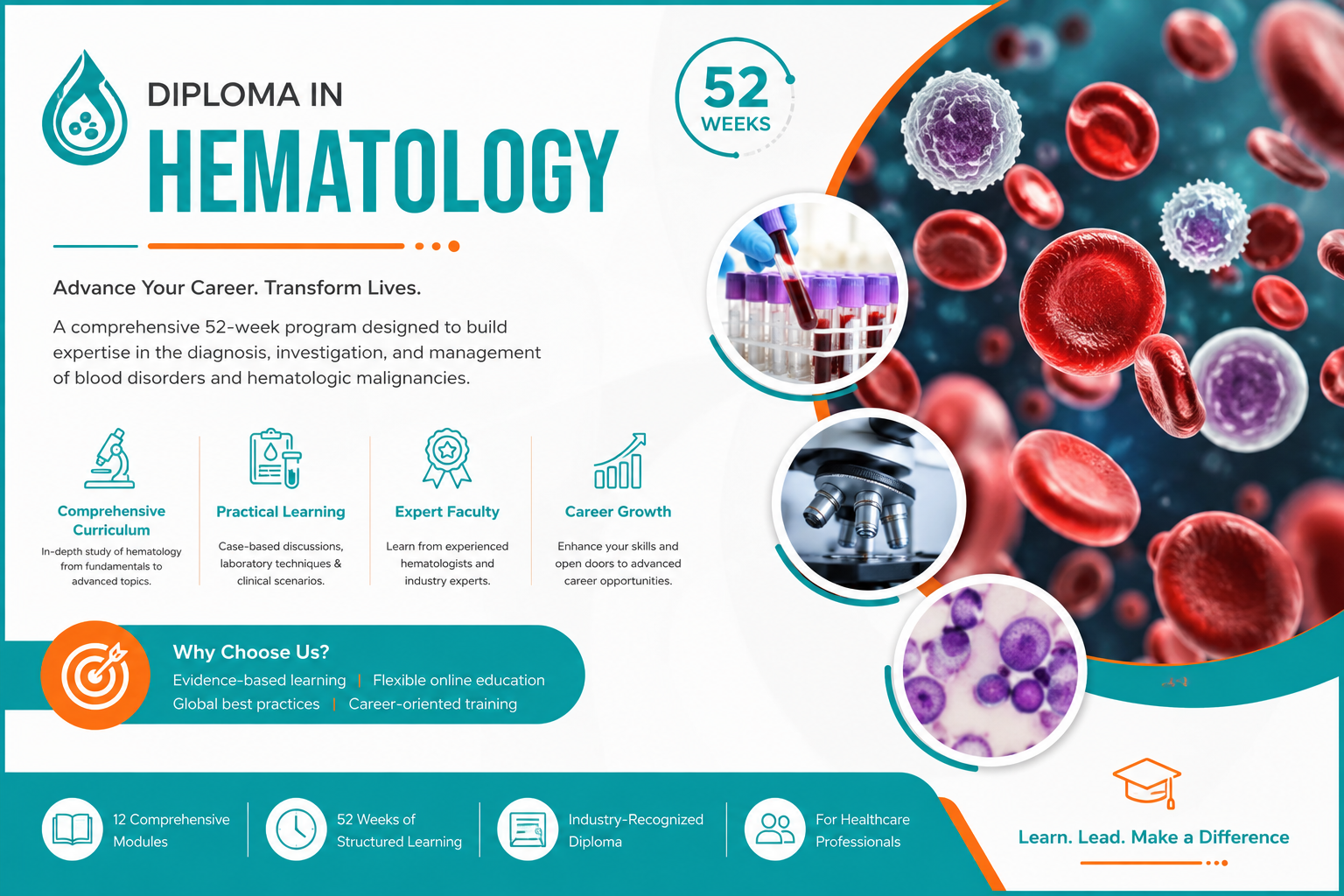

The Diploma in Hematology is a comprehensive 52-week online program designed for healthcare professionals seeking advanced knowledge in blood disorders, hematologic malignancies, transfusion medicine, and laboratory diagnostics. The course covers essential topics including anemia, leukemia, lymphoma, coagulation disorders, stem cell transplantation, and modern molecular hematology. Through structured modules, case-based learning, and evidence-based clinical practice, learners will develop the skills needed to diagnose, investigate, and manage a wide range of hematological conditions in both clinical and laboratory settings. This program provides a strong foundation for career advancement in hematology, internal medicine, pathology, oncology, and related healthcare specialties.
The Diploma in Hematology is a comprehensive 52-week advanced training program designed for physicians, medical graduates, laboratory professionals, and healthcare practitioners who wish to develop specialized expertise in the diagnosis, investigation, and management of blood disorders. Hematology is a rapidly evolving field that encompasses the study of blood, bone marrow, lymphatic tissues, and disorders affecting red blood cells, white blood cells, platelets, coagulation pathways, and hematologic malignancies. This diploma provides a structured and clinically relevant learning experience that bridges foundational knowledge with modern hematology practice.
The program begins with a thorough understanding of hematopoiesis, blood cell physiology, bone marrow function, and hematological laboratory investigations. Participants will gain in-depth knowledge of complete blood count interpretation, peripheral blood smear examination, bone marrow analysis, flow cytometry, cytogenetics, and molecular diagnostic techniques. These essential skills form the basis for accurate diagnosis and effective clinical decision-making in hematology.
A major focus of the curriculum is the study of anemia and red blood cell disorders. Learners will explore iron deficiency anemia, megaloblastic anemia, hemolytic anemias, aplastic anemia, thalassemia, sickle cell disease, and other inherited and acquired hematologic conditions. The course emphasizes diagnostic approaches, laboratory interpretation, differential diagnosis, and evidence-based treatment strategies that can be applied in everyday clinical practice.
The diploma also provides extensive coverage of white blood cell disorders and hematologic cancers. Participants will study acute and chronic leukemias, Hodgkin and non-Hodgkin lymphomas, multiple myeloma, myelodysplastic syndromes, and myeloproliferative neoplasms. Advanced topics such as molecular genetics, cytogenetic abnormalities, targeted therapies, immunotherapy, and precision medicine are integrated throughout the curriculum to ensure learners remain current with contemporary hematology advancements.
Coagulation disorders and hemostasis represent another critical component of the program. Students will gain expertise in platelet disorders, thrombocytopenia, hemophilia, von Willebrand disease, thrombophilia, disseminated intravascular coagulation, and thrombotic conditions. The curriculum includes practical training in coagulation testing, interpretation of laboratory results, and management of bleeding and clotting disorders across various clinical settings.
The program also offers detailed instruction in transfusion medicine and blood banking. Participants will learn about blood group systems, compatibility testing, blood component therapy, transfusion reactions, hemovigilance, patient blood management, and the safe administration of blood products. These competencies are essential for healthcare professionals involved in hospital-based and critical care services.
Specialized modules in pediatric hematology, hematologic emergencies, and critical care hematology prepare learners to recognize and manage complex cases involving children and critically ill patients. The curriculum covers neonatal and childhood blood disorders, febrile neutropenia, tumor lysis syndrome, severe bleeding emergencies, hyperleukocytosis, and other life-threatening hematologic conditions that require rapid assessment and intervention.
To ensure graduates are prepared for future developments in the field, the program explores cutting-edge topics such as hematopoietic stem cell transplantation, CAR-T cell therapy, gene therapy, cellular therapies, and emerging targeted treatments. Learners will also develop skills in clinical research, evidence-based medicine, biostatistics, and critical appraisal of scientific literature, enabling them to contribute to advancements in hematology and patient care.
Delivered through a flexible online learning format, the Diploma in Hematology combines expert-led lectures, case discussions, clinical scenarios, interactive assessments, and self-directed study. This approach allows healthcare professionals to continue their education while balancing clinical responsibilities. By the end of the program, participants will possess the knowledge, clinical reasoning abilities, and practical competencies required to evaluate hematologic disorders, interpret complex laboratory findings, manage patients effectively, and collaborate within multidisciplinary healthcare teams.
The Diploma in Hematology serves as an excellent pathway for career advancement in hematology, internal medicine, pathology, oncology, transfusion medicine, laboratory medicine, and academic research. Graduates will be equipped with the expertise needed to provide high-quality patient care and meet the growing demand for specialized hematology services in modern healthcare systems.
- 12 Sections
- 107 Lessons
- 52 Weeks
- Fundamentals of HematologyThis module introduces the foundations of hematology, including blood composition, hematopoiesis, bone marrow structure, and the physiological functions of blood cells. Learners will gain a strong understanding of normal hematological processes and laboratory parameters.8
- 1.1Introduction to Hematology
- 1.2Structure and Functions of Blood
- 1.3Hematopoiesis and Stem Cell Biology
- 1.4Bone Marrow Anatomy and Physiology
- 1.5Red Blood Cell Development and Function
- 1.6White Blood Cell Development and Function
- 1.7Platelet Production and Function
- 1.8Blood Group Systems and Transfusion Basics
- Hematology Laboratory TechniquesThis module focuses on essential hematology laboratory procedures, specimen handling, blood film interpretation, and quality control measures required for accurate diagnosis.8
- 2.1Hematology Laboratory Safety and Quality Assurance
- 2.2Blood Sample Collection and Processing
- 2.3Complete Blood Count (CBC) Interpretation
- 2.4Peripheral Blood Smear Examination
- 2.5Reticulocyte Count and Significance
- 2.6Bone Marrow Aspiration Techniques
- 2.7Bone Marrow Biopsy Interpretation
- 2.8Flow Cytometry Fundamentals
- Red Blood Cell Disorders and AnemiasStudents will explore the pathophysiology, diagnosis, and management of various anemia types and red blood cell disorders.12
- 3.1Classification of Anemias
- 3.2Iron Deficiency Anemia
- 3.3Megaloblastic Anemia
- 3.4Hemolytic Anemias
- 3.5Aplastic Anemia
- 3.6Anemia of Chronic Disease
- 3.7Sideroblastic Anemia
- 3.8Thalassemia Syndromes
- 3.9Sickle Cell Disease
- 3.10Red Cell Membrane Disorders
- 3.11Red Cell Enzyme Deficiencies
- 3.12Diagnostic Approach to Anemia
- White Blood Cell DisordersThis module covers benign and malignant disorders affecting leukocytes, including infections, leukemias, and immune-mediated conditions.9
- Platelet Disorders and HemostasisLearners will study platelet physiology, coagulation pathways, bleeding disorders, and thrombotic diseases.11
- 5.1Physiology of Hemostasis
- 5.2Platelet Structure and Function
- 5.3Coagulation Cascade
- 5.4Thrombocytopenia
- 5.5Immune Thrombocytopenic Purpura (ITP)
- 5.6Platelet Function Disorders
- 5.7Hemophilia A and B
- 5.8von Willebrand Disease
- 5.9Disseminated Intravascular Coagulation (DIC)
- 5.10Thrombophilia Disorders
- 5.11Laboratory Evaluation of Bleeding Disorders
- Acute and Chronic LeukemiasThis module provides detailed knowledge of leukemia classification, molecular diagnostics, and modern treatment strategies.10
- 6.1Introduction to Leukemias
- 6.2Acute Myeloid Leukemia (AML)
- 6.3Acute Lymphoblastic Leukemia (ALL)
- 6.4Chronic Myeloid Leukemia (CML)
- 6.5Chronic Lymphocytic Leukemia (CLL)
- 6.6Cytogenetics in Leukemia
- 6.7Molecular Diagnostics
- 6.8Targeted Therapies in Leukemia
- 6.9Monitoring Treatment Response
- 6.10Relapsed and Refractory Leukemia
- Lymphomas and Plasma Cell DisordersStudents will learn about lymphoid malignancies, plasma cell dyscrasias, diagnostic workup, and treatment approaches.10
- Myeloproliferative and Myelodysplastic DisordersThis module focuses on bone marrow disorders characterized by abnormal proliferation or ineffective hematopoiesis.8
- Transfusion MedicineLearners will understand blood banking principles, transfusion practices, compatibility testing, and transfusion-related complications.8
- Pediatric HematologyThis module examines hematologic disorders unique to neonates, children, and adolescents.6
- Hematologic Emergencies and Critical CareStudents will develop skills to recognize and manage life-threatening hematological emergencies.7
- Advanced Hematology, Research and Clinical PracticeThe final module focuses on advanced therapies, stem cell transplantation, research methodology, and professional practice in hematology.10
- 12.1Hematopoietic Stem Cell Transplantation
- 12.2CAR-T Cell Therapy
- 12.3Precision Medicine in Hematology
- 12.4Gene Therapy Applications
- 12.5Clinical Trials in Hematology
- 12.6Research Methodology and Biostatistics
- 12.7Evidence-Based Hematology Practice
- 12.8Case-Based Clinical Discussions
- 12.9Multidisciplinary Hematology Care
- 12.10Capstone Project and Final Assessment
You might be intersted in
-
167 Students
-
52 Weeks
-
132 Students
-
52 Weeks
-
124 Students
-
52 Weeks
-
133 Students
-
52 Weeks