
diploma in Optic Pathology
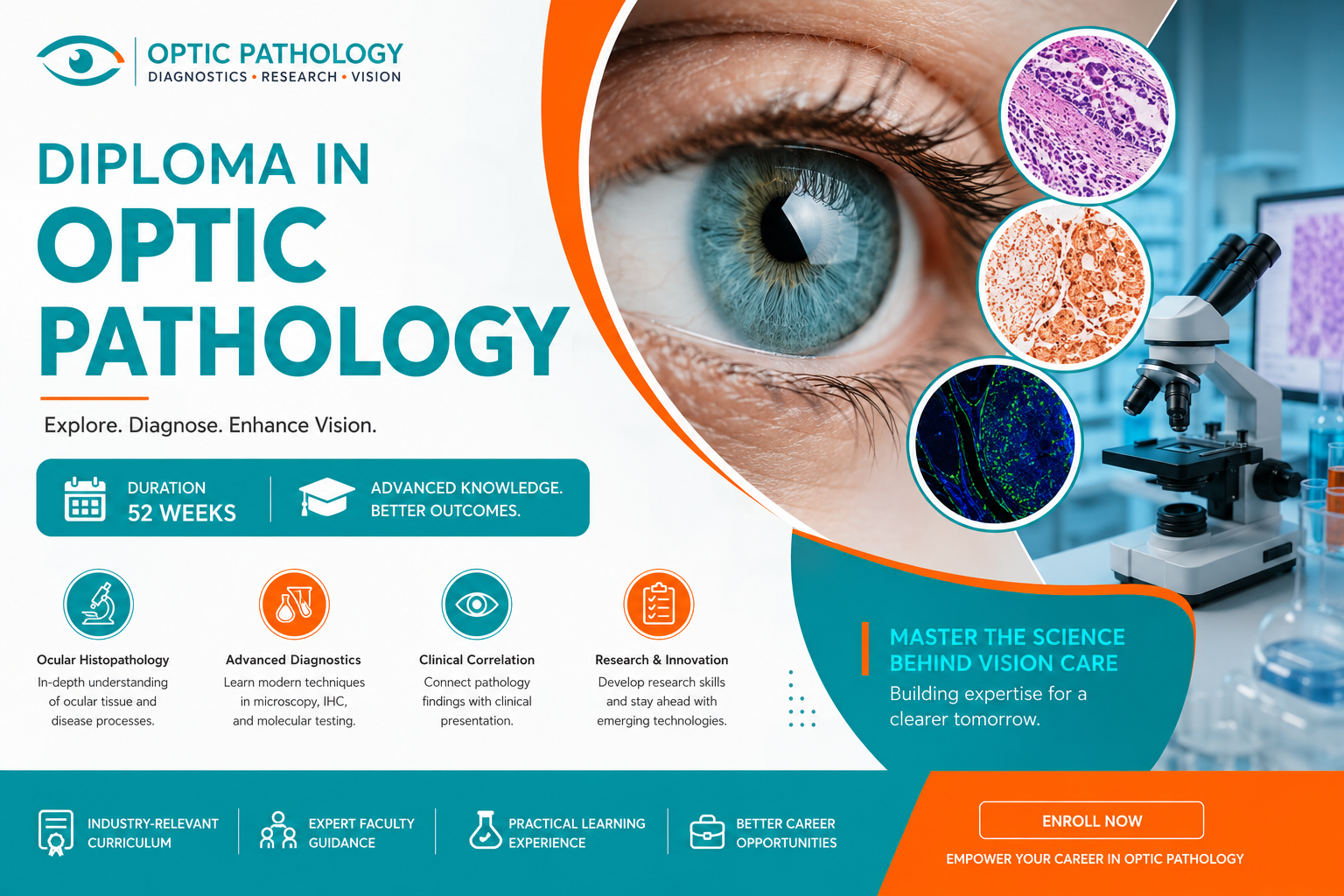

The Diploma in Optic Pathology is a comprehensive 52-week program designed to provide in-depth knowledge of ocular diseases, histopathology, diagnostic techniques, and clinical-pathological correlations. The course covers ocular anatomy, retinal and optic nerve disorders, glaucoma, ocular infections, tumors, genetic eye diseases, and advanced laboratory diagnostics. Ideal for healthcare professionals and aspiring pathology specialists, this program develops the skills required to diagnose, analyze, and manage pathological conditions affecting the eye and visual system through evidence-based practice and research-oriented learning.
The Diploma in Optic Pathology is a comprehensive 52-week advanced training program designed to provide healthcare professionals, laboratory specialists, pathology practitioners, and medical graduates with specialized knowledge in the diagnosis and evaluation of diseases affecting the eye and visual system. The program combines foundational sciences, ocular histopathology, laboratory diagnostics, and clinical-pathological correlation to equip learners with the expertise required to understand, investigate, and interpret a wide range of ocular disorders.
The curriculum begins with an in-depth study of ocular anatomy, physiology, and histology, enabling learners to develop a strong understanding of the normal structure and function of the eye. Students then progress to the pathological changes associated with diseases affecting the cornea, conjunctiva, lens, retina, optic nerve, and associated ocular tissues. Special emphasis is placed on understanding disease mechanisms, tissue alterations, and microscopic findings that aid in accurate diagnosis and clinical decision-making.
Throughout the course, learners explore a broad spectrum of ocular diseases, including inflammatory conditions, infectious disorders, retinal degenerations, diabetic retinopathy, glaucoma, optic neuropathies, cataracts, and hereditary eye diseases. The program also examines pediatric ocular disorders and genetic conditions that impact vision, providing insights into modern diagnostic approaches and advances in molecular pathology.
A significant component of the diploma focuses on ophthalmic oncology and ocular neoplasia. Students gain knowledge of benign and malignant tumors affecting the eye, including retinoblastoma, uveal melanoma, conjunctival neoplasms, and orbital tumors. Detailed instruction in histopathological interpretation and tumor classification helps learners understand the role of pathology in cancer diagnosis, prognosis, and treatment planning.
The program further emphasizes modern diagnostic technologies used in optic pathology laboratories. Learners receive training in microscopy, tissue processing, special staining techniques, immunohistochemistry, molecular diagnostics, digital pathology, and quality assurance practices. These skills enable participants to accurately analyze ocular specimens and contribute effectively to multidisciplinary healthcare teams.
Clinical-pathological correlation forms an integral part of the curriculum, allowing students to connect laboratory findings with patient presentations and treatment outcomes. Through case-based learning, real-world examples, and research-oriented activities, learners develop critical thinking and diagnostic reasoning skills essential for professional practice.
The Diploma in Optic Pathology also introduces participants to research methodology, scientific literature evaluation, and evidence-based medicine. Students are encouraged to engage in scholarly activities and gain familiarity with emerging developments in ocular pathology, precision diagnostics, and translational research.
Upon successful completion of the program, graduates will possess advanced knowledge of ocular disease mechanisms, diagnostic pathology techniques, laboratory procedures, and clinical applications. They will be well-prepared for roles in pathology laboratories, ophthalmology departments, academic institutions, diagnostic centers, research organizations, and healthcare settings where specialized expertise in ocular pathology is required.
This diploma serves as an excellent pathway for professionals seeking to expand their knowledge of eye diseases, enhance diagnostic capabilities, and contribute to the advancement of ophthalmic healthcare through accurate pathological evaluation and evidence-based practice.
- 12 Sections
- 84 Lessons
- 52 Weeks
- Introduction to Optic PathologyThis module provides a comprehensive introduction to optic pathology, covering the anatomy, physiology, and histology of the eye and visual pathways. Learners will understand the role of pathology in diagnosing ocular diseases and gain familiarity with laboratory practices, specimen handling, and diagnostic methodologies used in ophthalmic pathology.7
- Ocular Anatomy and HistopathologyThis module focuses on the microscopic structure of ocular tissues and their pathological alterations. Students will learn to identify normal and abnormal histological features and understand tissue-specific disease mechanisms affecting the eye.7
- Ocular Inflammation and InfectionsStudents will study inflammatory and infectious conditions affecting ocular tissues. The module covers bacterial, viral, fungal, and parasitic infections, along with immune-mediated disorders and their pathological manifestations.7
- Corneal and Conjunctival PathologyThis module explores diseases affecting the cornea and conjunctiva. Learners will understand degenerative, inflammatory, neoplastic, and hereditary disorders and their impact on vision.7
- Lens and Cataract PathologyThis module examines pathological changes in the crystalline lens, with emphasis on cataract formation and associated metabolic, genetic, and age-related disorders.7
- Retinal PathologyStudents will learn about retinal disorders, including vascular, degenerative, inflammatory, and hereditary diseases. Emphasis is placed on correlating pathology findings with clinical manifestations.7
- Optic Nerve PathologyThis module covers diseases affecting the optic nerve and visual pathways. Learners will study ischemic, inflammatory, hereditary, and neoplastic conditions leading to visual impairment.7
- Glaucoma and Ocular Pressure DisordersThis module provides an in-depth understanding of glaucoma pathogenesis, optic nerve damage, and pathological changes associated with elevated intraocular pressure.7
- Ocular Tumors and NeoplasiaStudents will explore benign and malignant ocular tumors, their pathology, molecular characteristics, and diagnostic approaches used in ophthalmic oncology.7
- Pediatric and Genetic Ocular DisordersThis module focuses on congenital, hereditary, and developmental disorders affecting ocular structures. Students will learn genetic mechanisms and diagnostic techniques used in pediatric ophthalmic pathology.7
- Diagnostic Techniques in Optic PathologyThis module introduces advanced diagnostic methods used in ophthalmic pathology laboratories. Students will gain practical knowledge of microscopy, immunohistochemistry, molecular diagnostics, and digital pathology.7
- Research, Case Studies, and Clinical ApplicationsThe final module integrates theoretical knowledge with practical applications through case discussions, research methodology, and clinical-pathological correlation. Students will develop skills necessary for professional practice and academic research.7
You might be intersted in
-
133 Students
-
52 Weeks
-
123 Students
-
52 Weeks
-
142 Students
-
52 Weeks
-
126 Students
-
52 Weeks