
Fellowship In Oncology Nursing
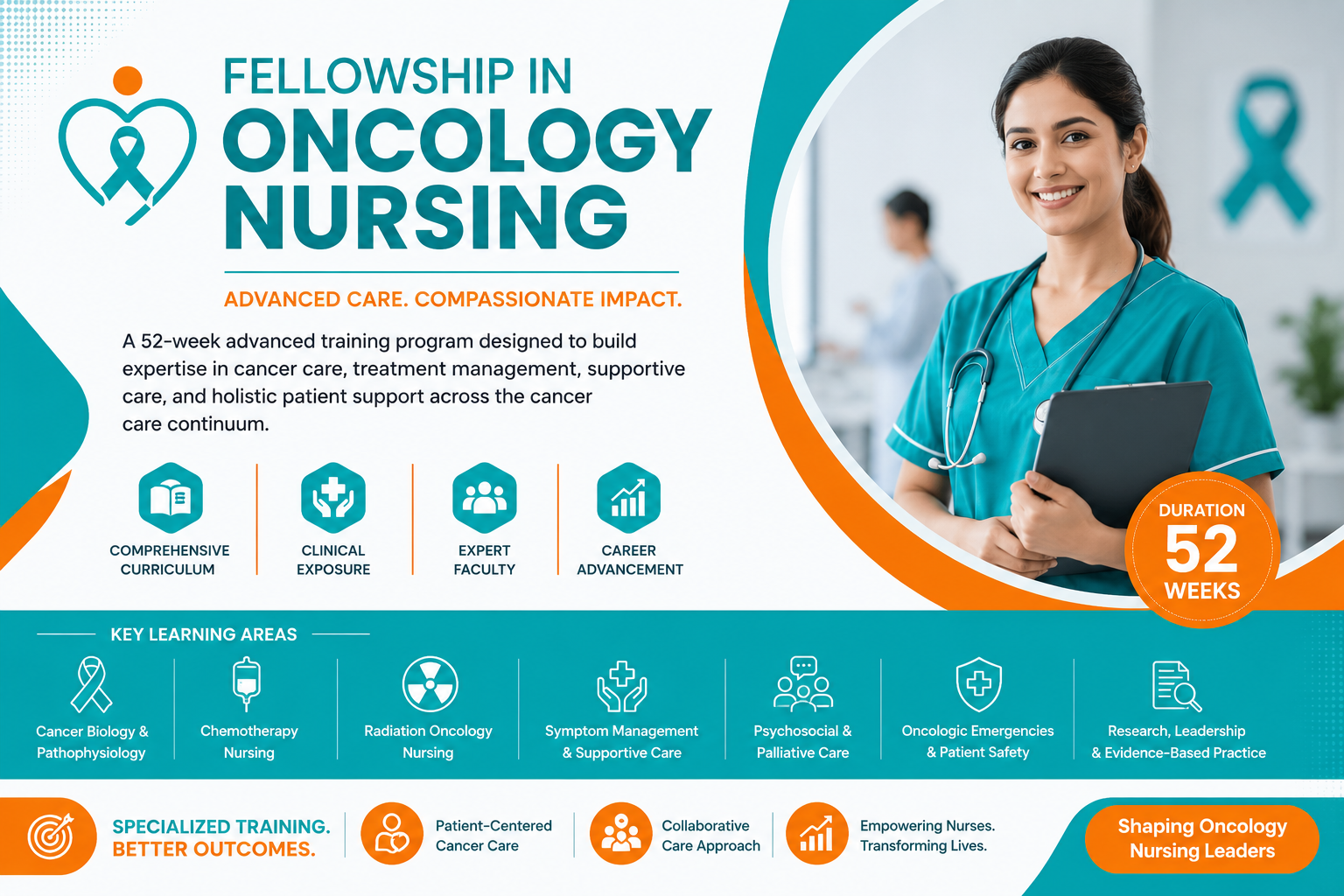

The Fellowship in Oncology Nursing is a comprehensive 52-week advanced training program designed to equip nursing professionals with specialized knowledge and clinical skills in cancer care. The course covers cancer biology, diagnosis, chemotherapy, radiation therapy, symptom management, oncologic emergencies, palliative care, psychosocial support, and evidence-based oncology practice. Through structured learning and clinical training, participants will develop the expertise required to provide safe, compassionate, and patient-centered care across the entire cancer treatment continuum. This fellowship prepares nurses to excel in oncology settings and contribute effectively to multidisciplinary cancer care teams.
Program Overview
The Fellowship in Oncology Nursing is a comprehensive 52-week advanced training program designed for registered nurses and healthcare professionals seeking specialized expertise in cancer care. With the global burden of cancer continuing to rise, the demand for highly skilled oncology nurses has become increasingly important across hospitals, cancer centers, specialty clinics, and palliative care settings. This fellowship equips participants with the knowledge, clinical competencies, and evidence-based practices required to deliver high-quality, patient-centered oncology care throughout the cancer journey.
The program provides an in-depth understanding of cancer biology, prevention, diagnosis, staging, treatment modalities, symptom management, psychosocial support, survivorship care, and palliative care. Learners gain practical insights into chemotherapy administration, radiation therapy nursing, immunotherapy management, targeted therapies, and the handling of oncology emergencies. The curriculum integrates theoretical learning with clinical applications to prepare nurses for the complexities of modern cancer treatment and care.
Throughout the fellowship, participants develop critical thinking, clinical decision-making, communication, and leadership skills necessary to function effectively within multidisciplinary oncology teams. Special emphasis is placed on patient safety, ethical practice, compassionate care, and evidence-based interventions that improve treatment outcomes and quality of life for cancer patients.
Program Objectives
The fellowship aims to:
- Develop advanced knowledge of cancer biology, pathophysiology, and disease progression.
- Strengthen competencies in oncology assessment, diagnosis, and patient monitoring.
- Train participants in safe administration and management of chemotherapy and other cancer treatments.
- Enhance understanding of radiation oncology nursing principles and patient care.
- Build expertise in managing treatment-related complications and oncologic emergencies.
- Improve symptom management skills, including pain control and supportive care.
- Foster psychosocial, emotional, and spiritual support strategies for patients and families.
- Promote evidence-based oncology nursing practice and clinical excellence.
- Develop leadership, research, and quality improvement capabilities in oncology settings.
- Prepare nurses to provide holistic care across the cancer continuum.
Key Learning Areas
Foundations of Oncology Nursing
Participants begin with a strong foundation in oncology nursing, learning about cancer epidemiology, risk factors, carcinogenesis, genetics, prevention strategies, screening programs, and the role of oncology nurses in comprehensive cancer care.
Cancer Diagnosis and Staging
The fellowship explores diagnostic procedures including laboratory investigations, imaging studies, biopsies, molecular testing, and cancer staging systems. Participants learn how diagnostic findings influence treatment planning and prognosis.
Cancer Treatment Modalities
Learners gain detailed knowledge of modern cancer therapies including surgery, chemotherapy, radiation therapy, immunotherapy, hormone therapy, stem cell transplantation, and targeted treatments. The module emphasizes treatment mechanisms, indications, contraindications, and nursing responsibilities.
Chemotherapy and Infusion Nursing
Specialized training focuses on chemotherapy administration, cytotoxic drug handling, infusion safety protocols, vascular access management, toxicity monitoring, adverse event management, and patient education.
Radiation Oncology Nursing
Participants learn nursing care principles for patients receiving radiation therapy, including treatment preparation, side effect management, radiation safety, and supportive interventions throughout treatment.
Symptom Management and Supportive Care
The program develops expertise in managing cancer-related symptoms such as pain, fatigue, nausea, vomiting, mucositis, anorexia, sleep disturbances, and psychological distress, ensuring improved patient comfort and quality of life.
Oncology Emergencies
Learners are trained to recognize and respond to oncologic emergencies including febrile neutropenia, tumor lysis syndrome, superior vena cava syndrome, spinal cord compression, hypercalcemia, and sepsis.
Specialized Cancer Care
The fellowship provides disease-specific nursing knowledge for breast cancer, lung cancer, gastrointestinal cancers, hematological malignancies, gynecologic cancers, genitourinary cancers, head and neck cancers, and pediatric oncology.
Psychosocial Oncology
Participants develop skills in counseling, communication, emotional support, survivorship planning, family-centered care, and addressing the psychosocial challenges associated with cancer diagnosis and treatment.
Palliative and End-of-Life Care
Comprehensive training is provided in symptom control, hospice care, advance care planning, ethical decision-making, end-of-life communication, and bereavement support for patients and families.
Leadership and Research
The fellowship encourages professional growth through training in evidence-based practice, quality improvement initiatives, clinical audits, research methodologies, healthcare leadership, and professional ethics.
Clinical Training and Practical Exposure
A major strength of the fellowship is its emphasis on clinical application. Participants gain exposure to various oncology care environments, including:
- Medical oncology units
- Chemotherapy infusion centers
- Radiation oncology departments
- Surgical oncology wards
- Hematology and bone marrow transplant units
- Palliative care and hospice services
- Cancer screening and prevention clinics
- Outpatient oncology services
Clinical training helps learners develop practical competencies in patient assessment, treatment monitoring, symptom management, emergency response, patient counseling, and interdisciplinary collaboration.
Career Opportunities
Upon successful completion of the Fellowship in Oncology Nursing, graduates can pursue rewarding roles such as:
- Oncology Nurse Specialist
- Chemotherapy Nurse
- Radiation Oncology Nurse
- Cancer Care Coordinator
- Oncology Case Manager
- Infusion Therapy Nurse
- Palliative Care Nurse
- Hospice Nurse
- Clinical Research Nurse
- Oncology Nurse Educator
- Nurse Navigator
- Cancer Screening Program Coordinator
- Oncology Quality Improvement Specialist
- Advanced Practice Oncology Nurse
Graduates may find employment opportunities in hospitals, cancer institutes, specialty oncology centers, academic medical centers, research organizations, community healthcare settings, and palliative care facilities.
Skills Gained
By the end of the program, participants will be able to:
- Perform comprehensive oncology patient assessments.
- Safely administer and monitor cancer therapies.
- Manage treatment-related toxicities and complications.
- Respond effectively to oncologic emergencies.
- Deliver patient-centered supportive and palliative care.
- Educate patients and caregivers about treatment and self-management.
- Provide psychosocial and emotional support throughout the cancer journey.
- Apply evidence-based nursing interventions in oncology practice.
- Collaborate effectively with multidisciplinary cancer care teams.
- Contribute to research, quality improvement, and leadership initiatives in oncology healthcare.
Program Outcome
The Fellowship in Oncology Nursing prepares healthcare professionals to become competent and compassionate oncology nursing specialists capable of delivering high-quality cancer care across prevention, treatment, survivorship, and end-of-life settings. Through a combination of advanced theoretical knowledge, clinical skill development, and evidence-based practice, graduates emerge ready to meet the growing challenges of modern oncology care while improving patient outcomes, safety, and quality of life.
- 12 Sections
- 96 Lessons
- 52 Weeks
- Foundations of Oncology NursingThis module introduces learners to the fundamental principles of oncology nursing, including the epidemiology of cancer, cancer biology, tumor development, and the role of oncology nurses across the cancer care continuum. Students will gain a comprehensive understanding of cancer prevention, screening, diagnosis, treatment modalities, and multidisciplinary care approaches that form the foundation of evidence-based oncology nursing practice.8
- Cancer Diagnosis and StagingThis module focuses on diagnostic procedures and cancer staging systems used in oncology practice. Learners will understand laboratory investigations, imaging techniques, biopsy methods, and staging classifications that guide treatment planning and prognosis assessment.8
- Principles of Cancer TreatmentThis module provides an overview of major cancer treatment modalities including surgery, chemotherapy, radiation therapy, immunotherapy, targeted therapy, and hormone therapy. Students will learn treatment indications, mechanisms of action, benefits, risks, and nursing considerations associated with each modality.8
- Chemotherapy Nursing ManagementThis module develops expertise in chemotherapy administration, monitoring, and patient management. Learners will understand chemotherapy protocols, safe handling procedures, toxicity management, and patient education to ensure optimal treatment outcomes and patient safety.8
- Radiation Oncology NursingThis module covers radiation therapy principles, treatment planning, side effect management, and patient support. Learners will gain skills in monitoring patients undergoing radiation treatment and addressing treatment-related complications.8
- Symptom Management and Supportive CareThis module emphasizes assessment and management of common cancer-related symptoms. Learners will develop skills in controlling pain, fatigue, nausea, mucositis, and other complications that significantly impact quality of life.8
- Hematologic and Oncologic EmergenciesThis module prepares nurses to recognize and manage life-threatening oncologic emergencies. Emphasis is placed on rapid assessment, intervention, and interdisciplinary collaboration in emergency situations.8
- Specialized Oncology Nursing CareThis module explores nursing care requirements for patients with various cancer types and specialized treatment needs. Learners will understand disease-specific management strategies and individualized patient care planning.8
- Psychosocial Oncology and Patient CounselingThis module addresses the psychological, emotional, social, and spiritual dimensions of cancer care. Learners will develop communication skills necessary to support patients and families throughout the cancer journey.8
- Palliative and End-of-Life CareThis module focuses on palliative care principles and end-of-life management. Learners will develop competencies in symptom relief, comfort measures, communication, and compassionate support for patients with advanced cancer.8
- Oncology Nursing Leadership and ResearchThis module develops leadership, quality improvement, and research competencies in oncology nursing. Learners will explore evidence-based practice, healthcare policies, and professional development opportunities.8
- Clinical Practicum and Capstone ProjectThe final module provides extensive clinical exposure in oncology settings. Learners will integrate theoretical knowledge with hands-on practice, participate in multidisciplinary care, complete case studies, and develop a capstone project demonstrating advanced oncology nursing competencies.8
You might be intersted in
-
78 Students
-
52 Weeks
-
134 Students
-
52 Weeks
-
67 Students
-
52 Weeks
-
53 Students
-
52 Weeks