
Fellowship in Emergency Nursing
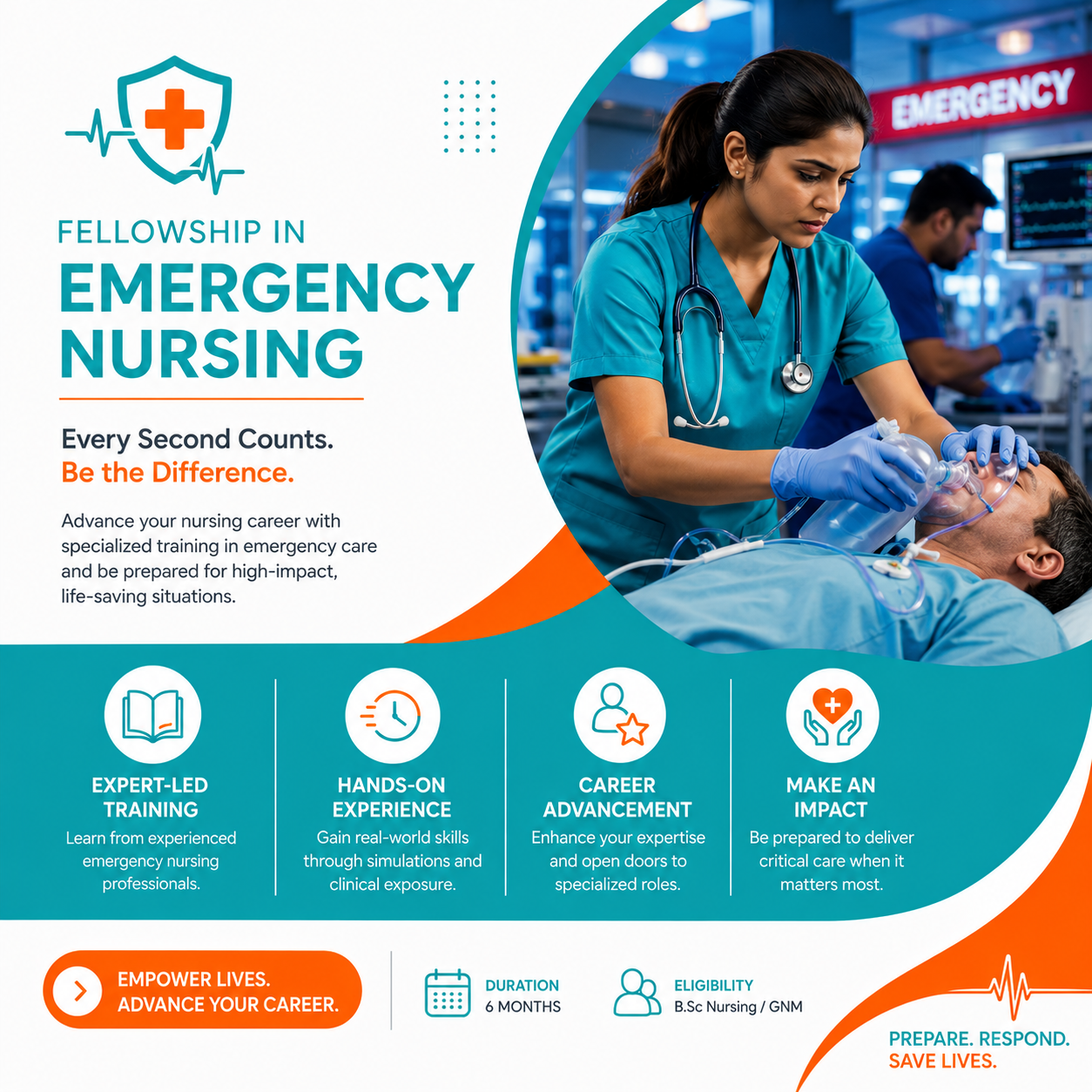

The Fellowship in Emergency Nursing is a comprehensive 52-week advanced training program designed to equip nurses with the knowledge, clinical skills, and critical decision-making abilities required in emergency and trauma care settings. The course covers emergency assessment, triage, trauma management, cardiovascular and respiratory emergencies, pediatric and obstetric emergencies, disaster preparedness, and critical care procedures. Through a blend of theoretical learning, simulation-based training, and supervised clinical practice, participants gain the expertise needed to deliver high-quality, evidence-based care to patients experiencing acute illness, injury, and life-threatening conditions in fast-paced healthcare environments.
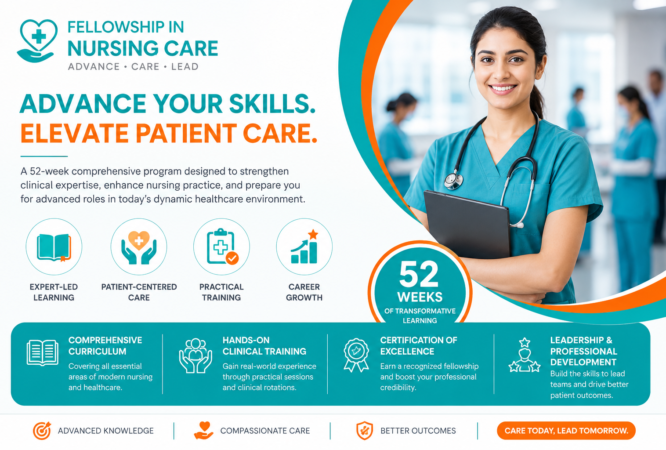
The Fellowship in Emergency Nursing is a comprehensive 52-week advanced training program designed for registered nurses who aspire to build expertise in emergency and acute care settings. Emergency departments are among the most dynamic and challenging healthcare environments, requiring nurses to make rapid clinical decisions, prioritize patient care, and manage life-threatening conditions effectively. This fellowship equips learners with the specialized knowledge, practical skills, and professional competencies necessary to deliver high-quality emergency care across a wide range of clinical situations.
The program provides an in-depth understanding of emergency nursing principles, patient assessment, triage systems, trauma management, and critical care interventions. Participants learn how to assess, stabilize, and manage patients presenting with acute illnesses, traumatic injuries, cardiovascular emergencies, respiratory distress, neurological crises, and other urgent medical conditions. The curriculum emphasizes evidence-based practice, patient safety, interdisciplinary collaboration, and effective communication in high-pressure healthcare environments.
Throughout the fellowship, learners gain advanced competencies in airway management, oxygen therapy, emergency pharmacology, cardiac monitoring, resuscitation techniques, and hemodynamic stabilization. Special attention is given to trauma nursing, including the management of head injuries, spinal trauma, fractures, burns, and multi-system injuries. Nurses are trained to recognize early signs of deterioration and implement timely interventions that improve patient outcomes.
The program also addresses specialized areas of emergency care such as pediatric emergencies, obstetric and gynecological emergencies, toxicological emergencies, mental health crises, and disaster response. Participants develop the ability to provide age-appropriate, culturally sensitive, and patient-centered care while managing diverse populations in emergency settings. Through case-based discussions and clinical scenarios, learners enhance their critical thinking and decision-making skills required for complex emergency situations.
A key feature of the fellowship is its focus on practical learning and clinical application. Participants engage in simulation-based training, skills workshops, and supervised clinical rotations that mirror real-world emergency department experiences. These hands-on learning opportunities strengthen clinical confidence and prepare nurses to perform effectively in fast-paced healthcare environments where timely interventions can save lives.
The fellowship also emphasizes leadership, teamwork, and quality improvement in emergency nursing practice. Learners explore strategies for coordinating care, managing emergency teams, maintaining patient safety standards, and contributing to continuous healthcare improvement initiatives. The program encourages the application of research and evidence-based practices to support clinical excellence and professional growth.
Upon successful completion of the Fellowship in Emergency Nursing, graduates will be able to perform comprehensive emergency assessments, prioritize care using triage principles, manage critically ill and injured patients, participate in emergency resuscitation efforts, and collaborate effectively with multidisciplinary healthcare teams. They will possess the advanced clinical knowledge and practical expertise required to excel in emergency departments, trauma centers, urgent care facilities, critical care units, ambulance services, disaster response teams, and other acute care settings.
Key Learning Outcomes
- Master emergency patient assessment and triage techniques.
- Develop expertise in trauma and critical care nursing.
- Perform rapid stabilization of patients with life-threatening conditions.
- Understand advanced airway, breathing, and circulation management.
- Interpret vital signs, ECG findings, and emergency diagnostic results.
- Manage cardiovascular, respiratory, neurological, and toxicological emergencies.
- Deliver specialized care for pediatric and obstetric emergency patients.
- Apply evidence-based practices in emergency nursing care.
- Strengthen communication, leadership, and teamwork skills.
- Participate effectively in disaster preparedness and mass casualty management.
- Enhance clinical decision-making in high-pressure environments.
- Demonstrate competency in emergency procedures and resuscitation techniques.
Career Opportunities
Graduates of this fellowship may pursue roles such as:
- Emergency Nurse
- Trauma Nurse
- Critical Care Nurse
- Emergency Department Coordinator
- Acute Care Nurse
- Triage Nurse
- Disaster Response Nurse
- Ambulance and Prehospital Care Nurse
- Emergency Services Educator
- Clinical Nurse Specialist in Emergency Care
This fellowship provides a strong foundation for nurses seeking to advance their careers in emergency medicine and become highly skilled professionals capable of delivering exceptional care during medical emergencies and critical situations.
- 14 Sections
- 84 Lessons
- 52 Weeks
- Foundations of Emergency NursingThis module introduces learners to the core principles, scope, and responsibilities of emergency nursing practice. Participants will explore the structure of emergency departments, professional standards, ethical considerations, legal responsibilities, communication techniques, and patient-centered care approaches. The module establishes a strong foundation for managing critically ill and injured patients in fast-paced emergency settings.6
- Emergency Assessment and TriageThis module focuses on rapid patient assessment and triage principles used in emergency departments. Learners will develop skills to prioritize care based on patient acuity, identify life-threatening conditions, and implement evidence-based triage systems to optimize patient outcomes.6
- Airway, Breathing, and Circulation ManagementThis module provides comprehensive training in managing airway, breathing, and circulation emergencies. Participants will learn techniques for airway maintenance, oxygen therapy, ventilation support, and hemodynamic stabilization in critically ill patients.6
- Trauma and Injury ManagementThis module covers the assessment and management of trauma patients across various injury mechanisms. Learners will understand trauma protocols, stabilization techniques, and multidisciplinary coordination required for effective trauma care.6
- Cardiovascular EmergenciesThis module focuses on recognizing and managing acute cardiovascular emergencies. Participants will gain knowledge of emergency cardiac care, ECG interpretation, pharmacological interventions, and advanced life support principles.6
- Respiratory EmergenciesThis module develops competencies in managing respiratory distress and failure. Learners will assess respiratory conditions, implement emergency interventions, and monitor patient responses to treatment.6
- Neurological EmergenciesThis module equips learners with the skills required to identify and manage neurological emergencies. Emphasis is placed on rapid assessment, early intervention, and neurological monitoring.6
- Medical and Toxicological EmergenciesThis module explores common medical emergencies and toxicological conditions encountered in emergency settings. Learners will develop competencies in rapid diagnosis, stabilization, and treatment planning.6
- Pediatric Emergency NursingThis module focuses on the specialized care of pediatric patients in emergency situations. Learners will understand age-specific assessment techniques, emergency interventions, and family-centered care approaches.6
- Obstetric and Gynecological EmergenciesThis module covers emergency conditions affecting pregnant women and gynecological patients. Participants will learn rapid assessment and stabilization strategies to ensure maternal and fetal safety.6
- Mental Health and Behavioral EmergenciesThis module prepares nurses to safely manage patients experiencing psychiatric crises, behavioral disturbances, and substance-related emergencies while maintaining a therapeutic and secure environment.6
- Disaster Management and Emergency PreparednessThis module introduces principles of disaster nursing, emergency preparedness, and mass casualty management. Learners will understand coordinated responses to natural disasters, pandemics, and public health emergencies.6
- Critical Care Procedures in Emergency NursingThis module provides practical exposure to emergency procedures commonly performed in emergency departments. Participants will develop procedural competencies and clinical decision-making skills.6
- Leadership, Research, and Clinical PracticumThis final module integrates leadership, evidence-based practice, quality improvement, and supervised clinical experience. Learners will demonstrate competence in managing emergency situations while applying professional and research principles.6
You might be intersted in
-
130 Students
-
52 Weeks
-
126 Students
-
52 Weeks
-
134 Students
-
52 Weeks
-
223 Students
-
52 Weeks