
Fellowship in Pediatric Gastroenterology
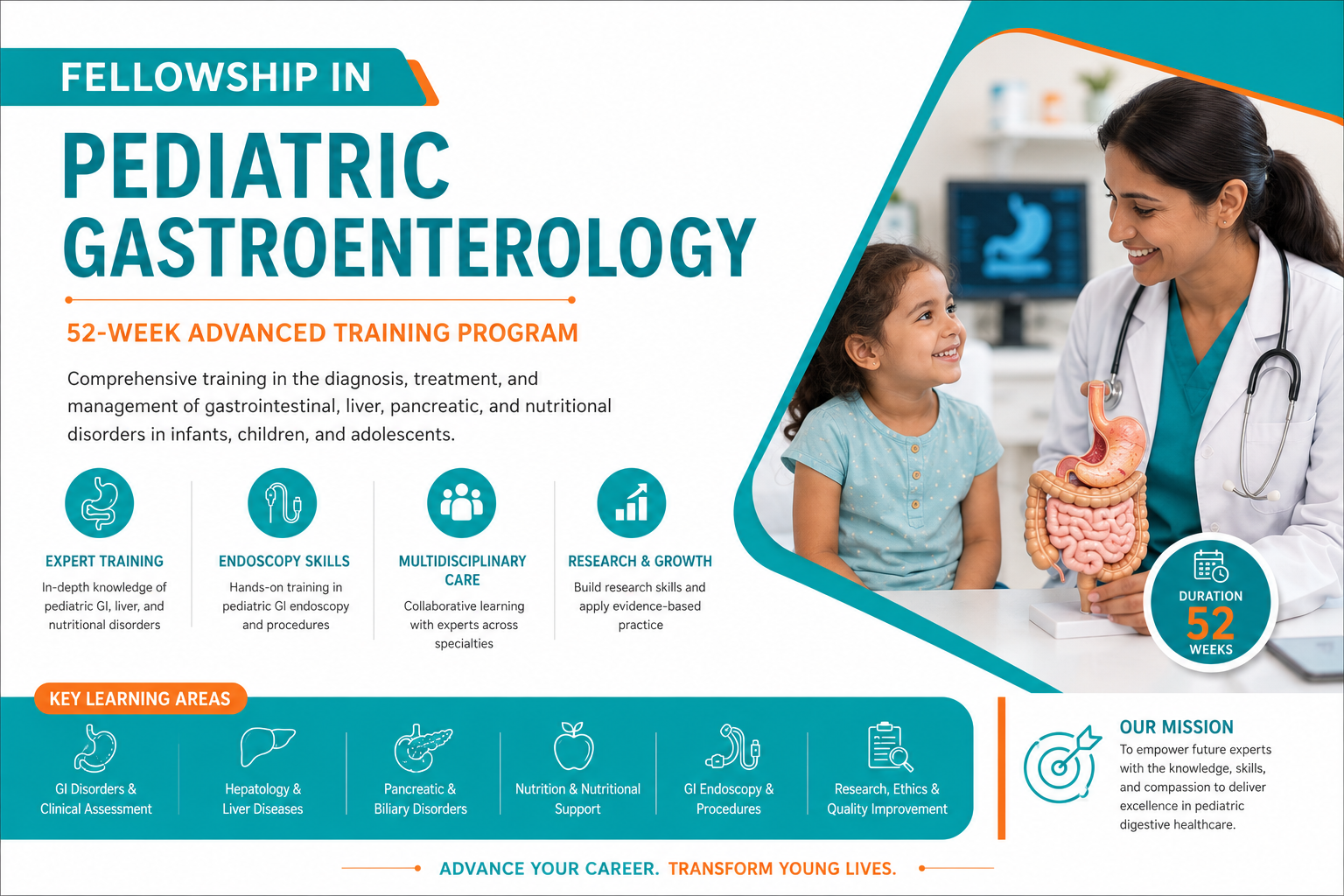

The Fellowship in Pediatric Gastroenterology is a comprehensive 52-week advanced training program designed for healthcare professionals seeking expertise in the diagnosis, management, and treatment of gastrointestinal, liver, pancreatic, and nutritional disorders in children. The program combines evidence-based clinical knowledge, pediatric endoscopy training, hepatology, inflammatory bowel disease management, nutrition support, and research methodology to prepare participants for specialized practice in pediatric gastroenterology. Through structured modules, case-based learning, and multidisciplinary collaboration, fellows develop the skills required to deliver high-quality, patient-centered care for infants, children, and adolescents with digestive health conditions.
Program Overview
The Fellowship in Pediatric Gastroenterology is a comprehensive 52-week advanced training program designed for physicians and healthcare professionals seeking specialized expertise in the diagnosis, treatment, and long-term management of gastrointestinal, hepatobiliary, pancreatic, and nutritional disorders in infants, children, and adolescents. The program provides a strong foundation in pediatric digestive health while equipping participants with the clinical, diagnostic, procedural, and research skills required for modern pediatric gastroenterology practice.
Pediatric gastrointestinal diseases can significantly affect growth, development, nutrition, and overall quality of life. As the prevalence of conditions such as inflammatory bowel disease, celiac disease, food allergies, functional gastrointestinal disorders, and pediatric liver diseases continues to rise, there is an increasing demand for clinicians with advanced training in this specialized field. This fellowship addresses that need by offering a structured curriculum that integrates evidence-based medicine, multidisciplinary care, and practical clinical applications.
Throughout the program, fellows gain an in-depth understanding of gastrointestinal anatomy, physiology, and pathology in children. The curriculum emphasizes the evaluation and management of common and complex gastrointestinal symptoms, including abdominal pain, chronic diarrhea, constipation, vomiting, gastrointestinal bleeding, feeding difficulties, malabsorption syndromes, and growth-related concerns. Participants learn to develop comprehensive diagnostic and treatment plans tailored to the unique physiological and developmental needs of pediatric patients.
A major focus of the fellowship is pediatric nutrition, which is fundamental to gastrointestinal health and disease management. Fellows explore nutritional assessment, growth monitoring, enteral and parenteral nutrition, micronutrient deficiencies, obesity, and nutritional interventions for children with chronic gastrointestinal conditions. The program highlights the critical role of nutrition in optimizing clinical outcomes and supporting healthy development.
The fellowship also provides extensive training in pediatric hepatology, covering a wide spectrum of liver diseases including neonatal cholestasis, viral hepatitis, autoimmune liver disorders, metabolic liver diseases, acute liver failure, and chronic liver conditions. Participants gain knowledge of advanced diagnostic techniques and current therapeutic approaches, including liver transplantation principles and post-transplant care considerations.
Specialized instruction in inflammatory bowel disease (IBD) prepares fellows to manage pediatric Crohn’s disease and ulcerative colitis using contemporary treatment strategies. Fellows learn disease monitoring, nutritional management, immunomodulatory therapies, biologic treatments, and long-term patient follow-up. The curriculum also addresses emerging therapies and evolving clinical guidelines in pediatric IBD care.
The program includes dedicated training in pancreatic and biliary disorders, helping participants understand conditions such as acute and chronic pancreatitis, pancreatic insufficiency, gallstone disease, choledochal cysts, and biliary tract abnormalities. Fellows learn to interpret laboratory findings, imaging studies, and specialized diagnostic tests to support accurate clinical decision-making.
An important component of the fellowship is pediatric gastrointestinal endoscopy. Participants gain knowledge of upper gastrointestinal endoscopy, colonoscopy, biopsy techniques, procedural indications, patient preparation, sedation protocols, safety measures, complication management, and interpretation of endoscopic findings. The curriculum ensures that fellows understand the role of endoscopy in both diagnosis and therapeutic interventions.
The fellowship promotes a multidisciplinary approach to patient care by emphasizing collaboration with pediatric surgeons, nutritionists, radiologists, pathologists, psychologists, transplant teams, and primary care providers. Participants learn how coordinated care improves outcomes for children with complex gastrointestinal and hepatobiliary disorders while supporting families through chronic disease management.
Research and academic development are integral components of the program. Fellows receive training in research methodology, biostatistics, critical appraisal of scientific literature, clinical audits, quality improvement initiatives, and evidence-based practice. Through a capstone project, participants apply their knowledge to investigate clinically relevant topics and contribute to advancing pediatric gastroenterology practice.
Key Learning Areas
- Pediatric gastrointestinal anatomy and physiology
- Clinical assessment of pediatric GI disorders
- Pediatric nutrition and nutritional support
- Gastroesophageal reflux disease and esophageal disorders
- Celiac disease and malabsorption syndromes
- Food allergies and gastrointestinal manifestations
- Functional gastrointestinal disorders
- Pediatric inflammatory bowel disease
- Pediatric hepatology and liver disorders
- Pancreatic and biliary diseases
- Pediatric gastrointestinal endoscopy
- Intestinal failure and complex GI conditions
- Multidisciplinary patient management
- Research methodology and evidence-based practice
- Quality improvement and clinical leadership
Who Should Enroll?
This fellowship is ideal for:
- Pediatricians
- Pediatric Gastroenterologists seeking advanced training
- General Physicians with an interest in pediatric digestive health
- Pediatric Residents and Fellows
- Academic Clinicians
- Healthcare Professionals involved in pediatric gastrointestinal care
Career Opportunities
Upon successful completion of the Fellowship in Pediatric Gastroenterology, participants may pursue roles such as:
- Pediatric Gastroenterologist
- Pediatric Hepatology Specialist
- Pediatric Nutrition Specialist
- Pediatric Endoscopy Practitioner
- Consultant Pediatrician with GI Expertise
- Academic Faculty and Clinical Educator
- Research Associate in Pediatric Gastroenterology
- Clinical Lead in Pediatric Digestive Health Services
Program Outcomes
By the end of the fellowship, participants will be able to independently evaluate and manage a broad range of pediatric gastrointestinal, liver, pancreatic, and nutritional disorders. They will be equipped to utilize evidence-based diagnostic and therapeutic approaches, interpret specialized investigations, contribute to multidisciplinary care teams, perform and understand pediatric endoscopic procedures, and engage in clinical research and quality improvement initiatives. Graduates will possess the advanced competencies required to deliver high-quality, patient-centered care and improve health outcomes for children with digestive diseases.
- 12 Sections
- 96 Lessons
- 52 Weeks
- Foundations of Pediatric GastroenterologyThis module introduces fellows to the fundamentals of pediatric gastroenterology, including gastrointestinal anatomy, physiology, embryology, growth and development, nutritional requirements, and common gastrointestinal disorders in children. Fellows will develop a strong foundation for understanding pediatric digestive health and disease management.8
- 1.1Introduction to Pediatric Gastroenterology
- 1.2Gastrointestinal Anatomy and Physiology
- 1.3Embryology of the Digestive System
- 1.4Growth and Development in Children
- 1.5Pediatric Nutrition Basics
- 1.6Clinical Evaluation of GI Disorders
- 1.7Laboratory and Diagnostic Approaches
- 1.8Evidence-Based Practice in Pediatric GI
- Pediatric Gastrointestinal Symptoms and Clinical AssessmentThis module focuses on the systematic evaluation of common gastrointestinal symptoms encountered in pediatric practice. Fellows will learn to assess abdominal pain, vomiting, diarrhea, constipation, feeding difficulties, and gastrointestinal bleeding through comprehensive history taking, examination, and diagnostic investigations.8
- Pediatric Nutrition and Nutritional DisordersNutrition plays a central role in pediatric gastroenterology. This module covers nutritional assessment, malnutrition, enteral and parenteral nutrition, micronutrient deficiencies, obesity, and specialized nutritional support for children with gastrointestinal disorders.8
- Esophageal and Upper Gastrointestinal DisordersThis module examines disorders affecting the esophagus, stomach, and upper gastrointestinal tract. Fellows will gain expertise in diagnosing and managing gastroesophageal reflux disease, eosinophilic esophagitis, peptic ulcer disease, and motility disorders.8
- Small Intestinal DisordersThis module focuses on diseases of the small intestine, including malabsorption syndromes, celiac disease, food allergies, and infectious enteropathies. Fellows will learn evidence-based diagnostic and therapeutic strategies.8
- Colorectal Disorders and Functional GI DiseasesThis module explores disorders of the colon and rectum, emphasizing functional gastrointestinal disorders and inflammatory conditions. Fellows will develop skills in diagnosing and managing chronic constipation, irritable bowel syndrome, and colorectal diseases.8
- Pediatric Inflammatory Bowel DiseaseThis module provides in-depth training in inflammatory bowel disease (IBD), including Crohn’s disease and ulcerative colitis. Fellows will learn diagnostic criteria, disease monitoring, nutritional therapy, biologic treatments, and long-term care.8
- Hepatology and Liver DisordersThis module introduces pediatric hepatology, focusing on liver function, jaundice, hepatitis, cholestatic disorders, metabolic liver diseases, and liver failure. Fellows will learn comprehensive approaches to diagnosis and management.8
- Pancreatic and Biliary DisordersThis module covers diseases affecting the pancreas and biliary system. Fellows will develop expertise in pancreatitis, pancreatic insufficiency, biliary obstruction, and congenital biliary abnormalities.8
- Pediatric GI Endoscopy and Diagnostic ProceduresThis module provides practical training in diagnostic and therapeutic gastrointestinal procedures. Fellows will gain experience in endoscopic indications, procedural safety, sedation, biopsy techniques, and interpretation of findings.8
- Advanced Pediatric Gastroenterology and Multidisciplinary CareThis module focuses on complex gastrointestinal conditions requiring multidisciplinary management. Fellows will learn collaborative approaches involving surgeons, nutritionists, radiologists, psychologists, and transplant teams.8
- 11.1Complex Feeding Disorders
- 11.2Intestinal Failure Management
- 11.3GI Manifestations of Systemic Diseases
- 11.4Pediatric GI Emergencies
- 11.5Surgical Considerations in GI Disorders
- 11.6Multidisciplinary Team Approach
- 11.7Psychosocial Aspects of Chronic GI Disease
- 11.8Quality Improvement in Pediatric GI Care
- Research, Clinical Practice, and Fellowship ProjectThe final module prepares fellows for independent clinical practice through research training, quality improvement projects, academic presentations, and comprehensive case management. Fellows will complete a capstone project demonstrating their expertise in pediatric gastroenterology.8
You might be intersted in
-
124 Students
-
52 Weeks
-
145 Students
-
52 Weeks
-
89 Students
-
52 Weeks
-
87 Students
-
52 Weeks