
Fellowship in Infectious Diseases
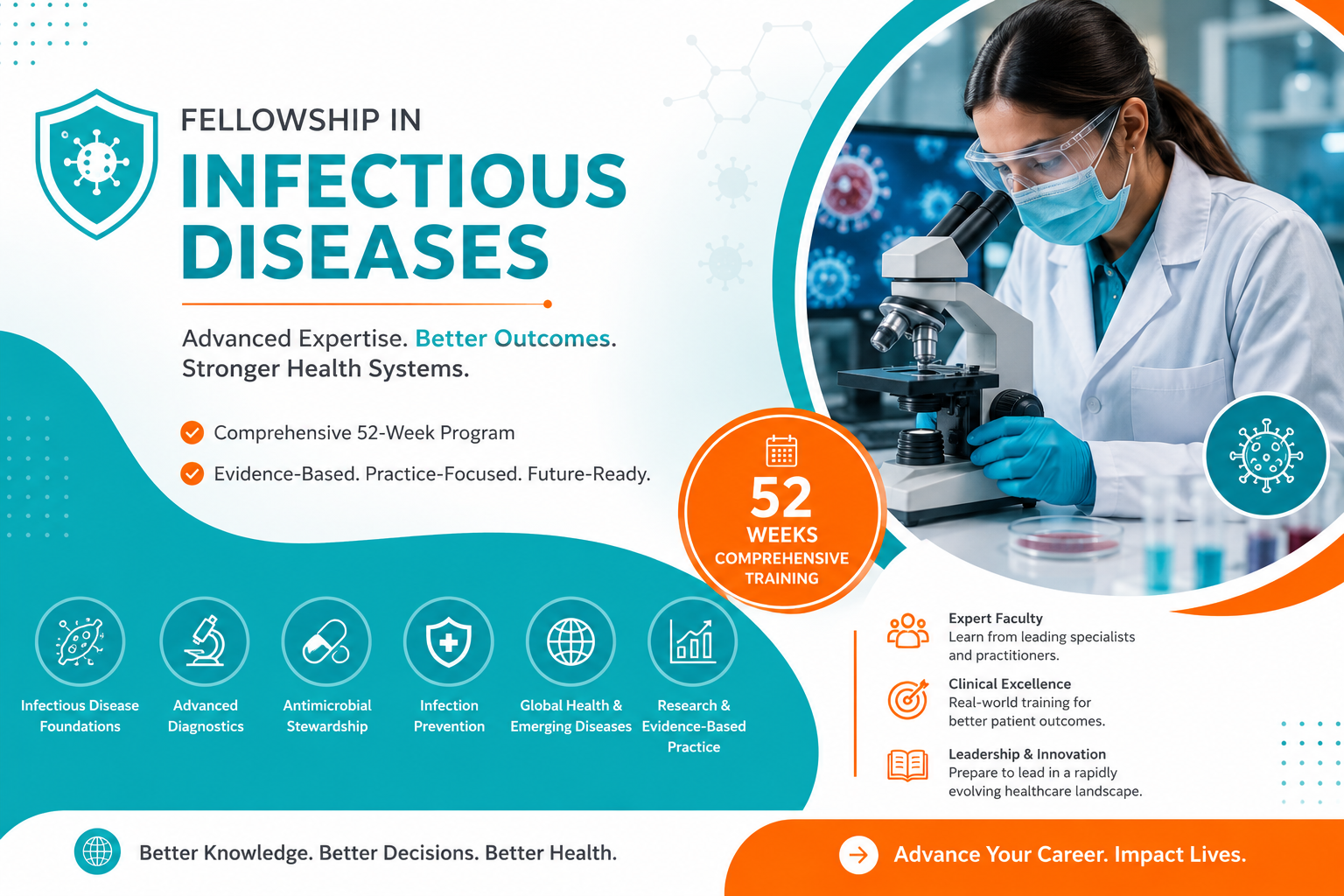

The Fellowship in Infectious Diseases is a comprehensive 52-week advanced training program designed for healthcare professionals seeking expertise in the diagnosis, treatment, prevention, and control of infectious diseases. The curriculum covers microbiology, antimicrobial stewardship, bacterial and viral infections, HIV, tuberculosis, fungal and parasitic diseases, infection prevention, public health, vaccinology, travel medicine, and clinical research, preparing learners for leadership roles in clinical practice, healthcare institutions, and public health organizations.
The Fellowship in Infectious Diseases is a comprehensive 52-week advanced training program designed for physicians, microbiologists, healthcare professionals, and clinical practitioners seeking specialized expertise in the prevention, diagnosis, treatment, and management of infectious diseases. With the growing global burden of emerging infections, antimicrobial resistance, healthcare-associated infections, and pandemic threats, infectious disease specialists play a critical role in modern healthcare systems. This fellowship equips learners with the knowledge, clinical skills, and research competencies required to address complex infectious disease challenges across diverse patient populations and healthcare settings.
The program begins with a strong foundation in infectious disease principles, including host-pathogen interactions, medical microbiology, immunology, epidemiology, and infection transmission. Participants gain an in-depth understanding of how microorganisms cause disease, how the immune system responds to infection, and how infectious diseases spread within communities and healthcare environments. These foundational concepts prepare learners for advanced clinical decision-making and evidence-based practice.
A significant component of the fellowship focuses on diagnostic microbiology and laboratory medicine. Learners develop expertise in specimen collection, microscopy, culture techniques, molecular diagnostics, serology, antimicrobial susceptibility testing, and laboratory result interpretation. The curriculum emphasizes the integration of laboratory findings with clinical presentations to ensure accurate diagnosis and timely treatment of infectious diseases.
The fellowship provides extensive training in antimicrobial pharmacology and stewardship. Participants learn the mechanisms of action, indications, adverse effects, and resistance patterns associated with antibacterial, antiviral, antifungal, and antiparasitic agents. Special emphasis is placed on antimicrobial stewardship programs, rational prescribing practices, and strategies to combat the growing threat of antimicrobial resistance, a major public health concern worldwide.
Comprehensive modules on bacterial, viral, fungal, and parasitic infections enable learners to develop advanced diagnostic and therapeutic skills. Topics include respiratory infections, gastrointestinal infections, skin and soft tissue infections, sepsis, viral hepatitis, HIV, herpesvirus infections, systemic mycoses, protozoal diseases, helminthic infections, and tropical infectious diseases. Participants gain practical knowledge of disease pathogenesis, clinical manifestations, diagnostic approaches, and evidence-based treatment protocols.
The fellowship also offers specialized training in tuberculosis and mycobacterial diseases, including multidrug-resistant tuberculosis, as well as infections affecting immunocompromised populations such as transplant recipients, oncology patients, and individuals living with HIV. Learners explore complex cases involving opportunistic infections and acquire the skills necessary to manage high-risk patient populations effectively.
Infection prevention and hospital epidemiology form another key pillar of the curriculum. Participants learn surveillance methodologies, outbreak investigation techniques, healthcare-associated infection prevention strategies, environmental infection control measures, and quality improvement initiatives. These competencies prepare graduates to lead infection prevention programs within healthcare institutions and contribute to patient safety initiatives.
The program further explores travel medicine, emerging infectious diseases, zoonotic infections, pandemic preparedness, and global health challenges. Learners gain insights into international disease surveillance systems, traveler risk assessment, preventive healthcare strategies, and public health responses to infectious disease outbreaks. This global perspective is essential for addressing rapidly evolving infectious threats in an interconnected world.
A dedicated module on vaccinology and public health highlights vaccine development, immunization strategies, disease prevention programs, and community-based infectious disease control measures. Participants learn how vaccination programs contribute to reducing disease burden and improving population health outcomes.
The final phase of the fellowship focuses on clinical practice integration, research methodology, biostatistics, evidence-based medicine, and scholarly activity. Learners engage in case-based discussions, critical appraisal of medical literature, quality improvement projects, and a capstone research project. These experiences strengthen analytical thinking, research capabilities, and leadership skills required for academic, clinical, and public health careers.
Upon successful completion of the Fellowship in Infectious Diseases, graduates will be equipped to diagnose and manage complex infectious diseases, implement antimicrobial stewardship initiatives, lead infection prevention programs, contribute to public health interventions, and participate in clinical research. The program prepares healthcare professionals for advanced roles in hospitals, academic institutions, public health agencies, research organizations, and specialized infectious disease practices, enabling them to make meaningful contributions to patient care and global health.
- 12 Sections
- 100 Lessons
- 52 Weeks
- Foundations of Infectious DiseasesThis module introduces the fundamental principles of infectious diseases, including host-pathogen interactions, microbial pathogenesis, epidemiology, infection transmission, and immune responses. Learners will develop a strong understanding of the biological and clinical foundations necessary for diagnosing, managing, and preventing infectious diseases in diverse healthcare settings.8
- Diagnostic Microbiology and Laboratory MedicineThis module focuses on laboratory methods used in infectious disease diagnosis. Participants will learn specimen collection, microbiological testing, molecular diagnostics, serology, antimicrobial susceptibility testing, and interpretation of laboratory reports to support clinical decision-making.8
- Antimicrobial Pharmacology and StewardshipThis module covers antimicrobial pharmacology, mechanisms of action, resistance patterns, therapeutic monitoring, and stewardship strategies. Learners will understand the rational use of antimicrobials and methods to combat antimicrobial resistance.8
- Bacterial InfectionsThis module provides comprehensive knowledge of common and complex bacterial infections. Learners will study pathogenesis, clinical presentation, diagnosis, treatment, and prevention of bacterial diseases affecting various organ systems.8
- Viral InfectionsThis module explores viral pathogens, their epidemiology, clinical manifestations, diagnostic approaches, and management strategies. Emphasis is placed on both common and emerging viral diseases of public health significance.8
- Fungal and Parasitic DiseasesThis module examines fungal and parasitic infections affecting immunocompetent and immunocompromised individuals. Participants will gain expertise in diagnosis, management, and prevention of these often-complex infectious diseases.8
- Tuberculosis and Mycobacterial DiseasesThis module focuses on tuberculosis and non-tuberculous mycobacterial infections. Learners will understand disease epidemiology, diagnosis, treatment regimens, multidrug-resistant tuberculosis, and public health control strategies.8
- HIV and Immunocompromised Host InfectionsThis module provides specialized training in the care of immunocompromised patients. Topics include HIV management, opportunistic infections, transplant-related infections, and infectious complications associated with immunosuppressive therapies.8
- Infection Prevention and Hospital EpidemiologyThis module develops expertise in infection prevention practices and healthcare epidemiology. Learners will understand surveillance systems, outbreak investigations, healthcare-associated infection control, and quality improvement initiatives.8
- Travel Medicine and Emerging InfectionsThis module focuses on travel-related infections, global health threats, emerging pathogens, and preparedness for infectious disease outbreaks. Participants will learn risk assessment and preventive strategies for international travelers.8
- Public Health and VaccinologyThis module examines vaccination science, public health interventions, disease surveillance, and population-level infectious disease control strategies. Learners will understand the role of immunization in reducing disease burden.8
- Clinical Infectious Disease Practice and ResearchThis capstone module integrates clinical knowledge with evidence-based practice, research methodology, and leadership in infectious disease management. Learners will develop advanced diagnostic reasoning, conduct scholarly activities, and prepare for independent specialist practice.12
- 12.1Clinical Case-Based Learning
- 12.2Complex Infectious Disease Consultations
- 12.3Evidence-Based Infectious Disease Practice
- 12.4Clinical Research Methodology
- 12.5Biostatistics for Infectious Diseases
- 12.6Critical Appraisal of Medical Literature
- 12.7Quality Improvement Projects
- 12.8Capstone Research Project and Presentation
- 12.9Professional Ethics in Infectious Diseases
- 12.10Leadership and Healthcare Management
- 12.11Interdisciplinary Collaboration
- 12.12Fellowship Exit Assessment and Portfolio Review
You might be intersted in
-
167 Students
-
52 Weeks
-
132 Students
-
52 Weeks
-
124 Students
-
52 Weeks
-
133 Students
-
52 Weeks