
Fellowship in Pharmacology
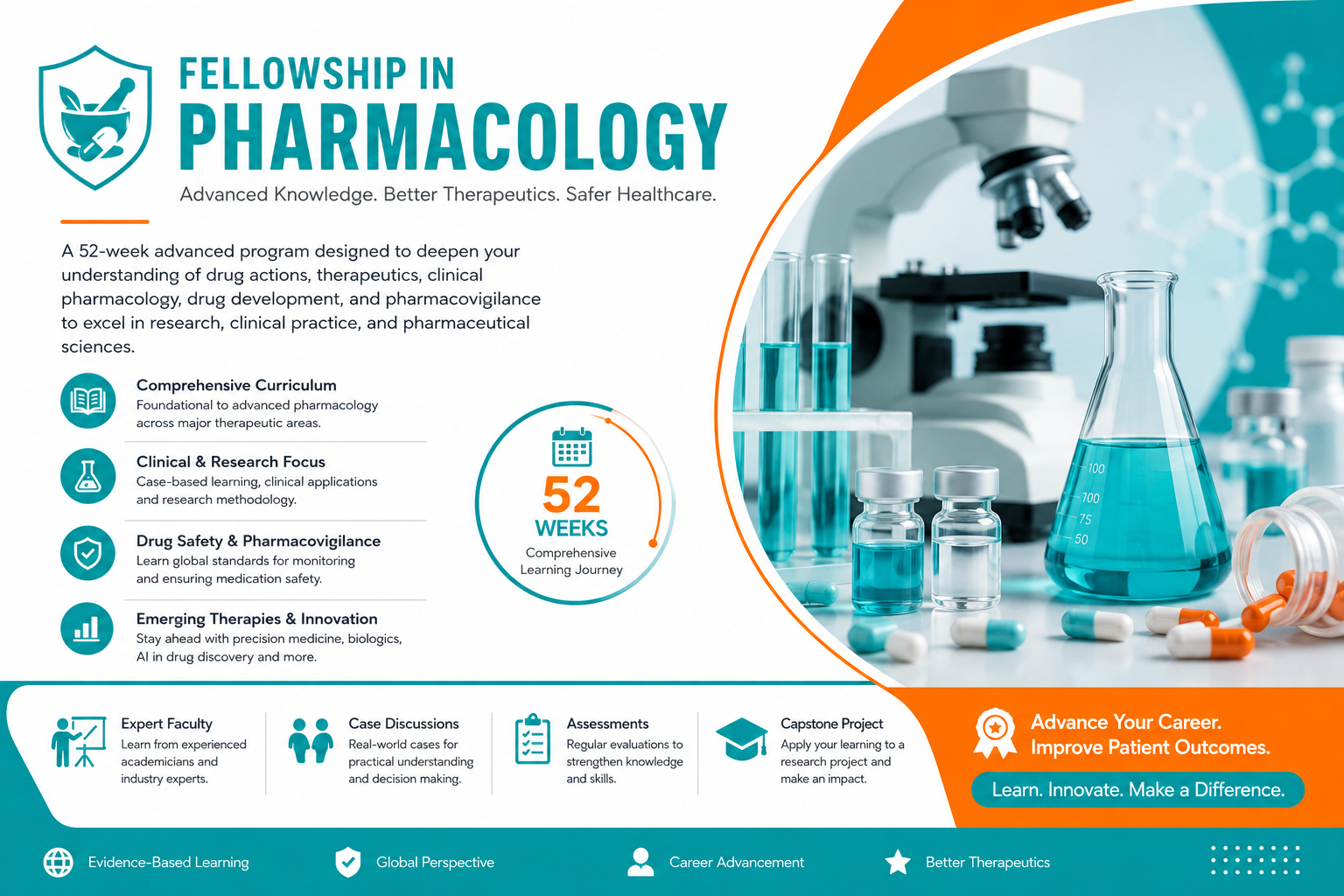

The Fellowship in Pharmacology is a comprehensive 52-week advanced training program designed to provide in-depth knowledge of drug actions, therapeutic applications, clinical pharmacology, drug development, and pharmacovigilance. The curriculum covers fundamental and advanced pharmacological concepts, including pharmacokinetics, pharmacodynamics, antimicrobial therapy, cardiovascular and CNS pharmacology, toxicology, clinical therapeutics, and emerging drug technologies. Through evidence-based learning, case discussions, and research-oriented training, participants develop the expertise required for careers in clinical practice, pharmaceutical research, academia, regulatory affairs, and healthcare innovation.
The Fellowship in Pharmacology is a comprehensive 52-week advanced academic and professional training program designed to equip healthcare professionals, medical graduates, pharmacists, researchers, and allied healthcare practitioners with in-depth knowledge of drug sciences and their clinical applications. The program provides a strong foundation in pharmacological principles while integrating modern developments in drug discovery, therapeutics, pharmacovigilance, personalized medicine, and clinical research.
Pharmacology serves as the cornerstone of modern medicine, enabling healthcare professionals to understand how drugs interact with biological systems, prevent disease progression, manage symptoms, and improve patient outcomes. As therapeutic options continue to expand and healthcare systems increasingly rely on evidence-based treatments, there is a growing demand for professionals with specialized expertise in drug development, safety monitoring, and rational prescribing practices.
This fellowship begins with fundamental concepts such as pharmacokinetics, pharmacodynamics, receptor pharmacology, and drug metabolism, providing learners with a clear understanding of how medications exert their effects within the body. Participants will explore the mechanisms of drug action at molecular, cellular, and systemic levels, enabling them to critically evaluate therapeutic interventions and optimize patient care.
The curriculum covers a broad range of pharmacological disciplines, including autonomic nervous system pharmacology, cardiovascular pharmacology, central nervous system therapeutics, endocrine pharmacology, respiratory pharmacology, gastrointestinal pharmacology, antimicrobial therapy, oncology pharmacology, and immunopharmacology. Learners will gain detailed knowledge of drug classes, indications, contraindications, adverse effects, drug interactions, and evidence-based treatment strategies used in contemporary clinical practice.
A significant focus is placed on clinical pharmacology and therapeutics, allowing participants to bridge the gap between theoretical knowledge and real-world patient management. Through case-based learning, therapeutic decision-making exercises, and medication management discussions, learners develop the skills required to select appropriate therapies, monitor treatment outcomes, and ensure medication safety across diverse patient populations.
The program also provides extensive training in drug development and pharmaceutical research. Participants will explore the complete drug development lifecycle, including target identification, preclinical testing, clinical trial design, regulatory approval pathways, and post-marketing surveillance. These components prepare learners for roles in pharmaceutical industries, clinical research organizations, regulatory agencies, and academic institutions.
Recognizing the increasing importance of patient safety, the fellowship includes dedicated modules on toxicology and pharmacovigilance. Learners will understand adverse drug reaction monitoring, risk assessment methodologies, medication error prevention, and global pharmacovigilance systems. These competencies are essential for maintaining high standards of healthcare quality and ensuring safe medication practices.
Emerging areas such as pharmacogenomics, precision medicine, biologics, gene therapies, artificial intelligence in drug discovery, and innovative therapeutic technologies are also incorporated into the curriculum. By exploring these rapidly evolving fields, participants remain current with advancements shaping the future of medicine and pharmaceutical sciences.
The fellowship emphasizes research competency through structured training in research methodology, biostatistics, scientific literature appraisal, and evidence-based medicine. Participants will learn how to critically evaluate clinical studies, interpret research findings, and contribute to scientific advancements through independent research projects and scholarly activities.
Throughout the 52-week program, learners engage in a combination of theoretical instruction, clinical case discussions, practical applications, literature reviews, and capstone project work. This multidisciplinary approach ensures the development of analytical thinking, problem-solving abilities, and professional expertise necessary for advanced pharmacological practice.
Upon successful completion of the Fellowship in Pharmacology, graduates will be able to analyze complex pharmacological concepts, optimize therapeutic regimens, evaluate drug safety profiles, participate in clinical and translational research, contribute to pharmaceutical innovation, and support evidence-based healthcare delivery. The program prepares participants for advanced roles in clinical practice, academia, pharmaceutical research and development, regulatory affairs, pharmacovigilance, healthcare administration, and medical education.
Whether seeking to enhance clinical expertise, advance a research career, or contribute to the development of safer and more effective therapies, this fellowship provides a comprehensive pathway to professional growth and excellence in the dynamic field of pharmacology.
- 13 Sections
- 104 Lessons
- 52 Weeks
- Foundations of PharmacologyThis module introduces learners to the fundamental principles of pharmacology, including drug classification, mechanisms of action, pharmacodynamics, and pharmacokinetics. Participants will develop a strong understanding of how drugs interact with biological systems and the factors influencing therapeutic outcomes. The module establishes the scientific foundation required for advanced pharmacological studies and clinical applications.8
- Molecular and Cellular PharmacologyThis module explores drug actions at the molecular and cellular levels. Learners will study receptors, signal transduction pathways, ion channels, transporters, and genetic factors affecting drug responses. The module provides insights into modern pharmacological research and precision medicine approaches.8
- Drug Development and Clinical TrialsThis module covers the complete drug development process from discovery to market approval. Learners will examine preclinical studies, clinical trial phases, regulatory requirements, and ethical considerations in pharmaceutical research.8
- Autonomic Nervous System PharmacologyThis module focuses on drugs affecting the autonomic nervous system. Learners will understand sympathetic and parasympathetic neurotransmission, therapeutic applications, adverse effects, and clinical relevance of autonomic drugs.8
- Cardiovascular and Renal PharmacologyThis module examines pharmacological agents used in cardiovascular and renal disorders. Learners will study antihypertensives, antiarrhythmics, diuretics, and drugs used in heart failure and renal disease management.8
- Central Nervous System PharmacologyThis module provides comprehensive knowledge of drugs affecting the central nervous system. Topics include neurotransmitter systems, psychiatric medications, analgesics, anesthetics, and neurodegenerative disease therapies.8
- Endocrine and Reproductive PharmacologyThis module focuses on hormone-based therapies and drugs used in endocrine and reproductive disorders. Learners will understand the pharmacological management of diabetes, thyroid diseases, and reproductive health conditions.8
- Respiratory and Gastrointestinal PharmacologyThis module explores pharmacological treatments for respiratory and gastrointestinal diseases. Learners will examine bronchodilators, anti-inflammatory agents, antiulcer drugs, and medications for gastrointestinal disorders.8
- Antimicrobial and Antiparasitic PharmacologyThis module provides in-depth knowledge of antimicrobial therapy. Learners will study antibiotics, antivirals, antifungals, antiparasitic agents, and strategies to combat antimicrobial resistance.8
- Oncology and ImmunopharmacologyThis module focuses on cancer therapeutics and immune-modulating drugs. Learners will explore chemotherapy, targeted therapy, immunotherapy, vaccines, and biologic agents used in clinical practice.8
- Toxicology and PharmacovigilanceThis module introduces toxicology principles and drug safety monitoring systems. Learners will develop skills in adverse event reporting, risk assessment, poisoning management, and pharmacovigilance practices.8
- Clinical Pharmacology and TherapeuticsThis module integrates pharmacological knowledge into clinical decision-making. Learners will study rational prescribing, therapeutic drug monitoring, evidence-based medicine, and patient-centered pharmacotherapy.8
- Research, Emerging Therapies, and Capstone ProjectThe final module focuses on research methodologies, emerging pharmacological innovations, and practical application of knowledge through a capstone project. Learners will critically evaluate scientific literature and develop advanced competencies in pharmacological research.8
You might be intersted in
-
167 Students
-
52 Weeks
-
132 Students
-
52 Weeks
-
124 Students
-
52 Weeks
-
133 Students
-
52 Weeks