
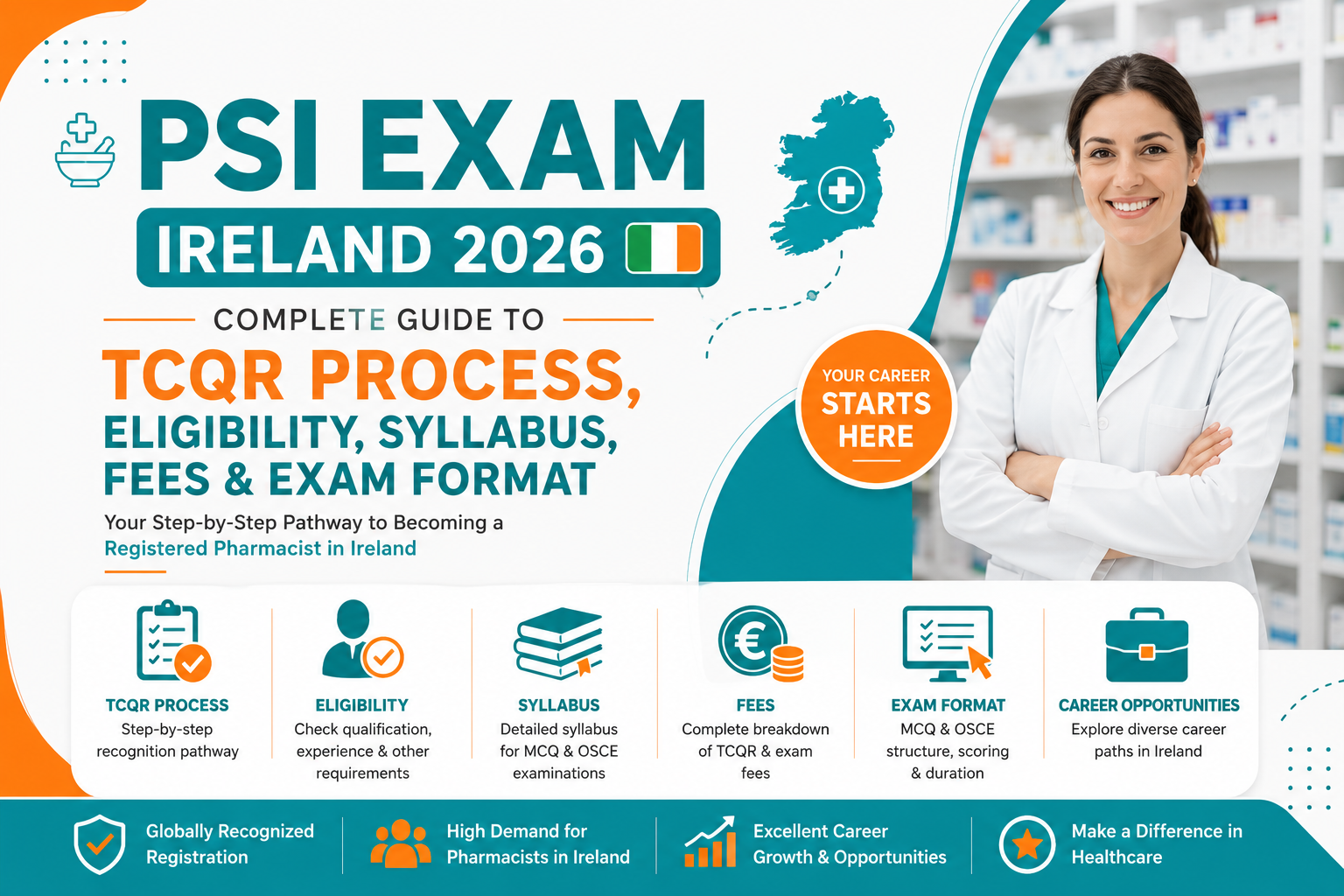
The Pharmaceutical Society of Ireland (PSI) is the regulatory body responsible for the registration and regulation of pharmacists in Ireland. For pharmacists who obtained their qualifications outside the European Union (EU), European Economic Area (EEA), or Switzerland, the Third Country Qualification Recognition (TCQR) process serves as the pathway to professional registration. The PSI Exam is an essential part of this recognition process and is designed to assess whether internationally qualified pharmacists possess the knowledge, clinical competence, and professional skills required to practice safely and effectively within the Irish healthcare system. As Ireland continues to experience a growing demand for qualified healthcare professionals, many pharmacists from countries such as India, Pakistan, Nigeria, the Philippines, and other non-EU nations are exploring the TCQR route as a gateway to career opportunities in Ireland.
The TCQR process consists of multiple stages that evaluate a candidate’s educational background, professional experience, and clinical competence. Initially, applicants must submit documentation including degree certificates, academic transcripts, internship records, proof of identity, and evidence of professional registration where applicable. Once these documents are verified, PSI conducts a holistic assessment to determine whether the candidate’s pharmacy education and training are substantially equivalent to Irish standards. Depending on the outcome of this assessment, candidates may be required to complete one or both components of the TCQR examination, which are designed to ensure that overseas pharmacists can meet the same standards expected of Irish-trained professionals.
Eligibility for the PSI TCQR process generally requires applicants to hold a recognized pharmacy qualification from their home country and to have completed the necessary internship or practical training associated with that qualification. Candidates who are already registered pharmacists in their country of practice may also need to provide certificates of good standing from their regulatory authorities. In addition, applicants are often required to demonstrate English language proficiency through accepted examinations such as IELTS Academic or the Occupational English Test (OET), ensuring they can communicate effectively with patients and healthcare professionals in Ireland.
The PSI examination is divided into two key components: a Multiple Choice Question (MCQ) examination and an Objective Structured Clinical Examination (OSCE). The MCQ examination assesses theoretical knowledge and professional judgment across a broad range of pharmacy subjects. It typically includes pharmaceutical calculations, clinical pharmacy, pharmacology, therapeutics, pharmacy law, ethics, and patient safety. Candidates are expected to demonstrate a strong understanding of medication management, disease treatment, and evidence-based pharmacy practice. Pharmaceutical calculations form a particularly important section, as accuracy in dosing and medication preparation is fundamental to patient safety.
The OSCE component focuses on practical and clinical competencies through a series of structured stations that simulate real-life pharmacy scenarios. Candidates may be asked to counsel patients, review prescriptions, identify medication-related problems, communicate with healthcare professionals, or respond to ethical and professional challenges. The purpose of the OSCE is to evaluate not only clinical knowledge but also communication skills, professionalism, decision-making ability, and patient-centered care. Success in the OSCE requires candidates to apply their knowledge effectively while demonstrating confidence and professionalism in a clinical setting.
The PSI exam syllabus is comprehensive and reflects the competencies expected of pharmacists practicing in Ireland. Key subject areas include clinical pharmacy, pharmacology, therapeutics, pharmaceutical calculations, pharmacy law and ethics, public health, patient counseling, and professional practice. Candidates are expected to understand the management of common disease states such as cardiovascular disorders, diabetes, respiratory diseases, gastrointestinal conditions, infectious diseases, and endocrine disorders. The syllabus also emphasizes safe medication use, adverse drug reactions, drug interactions, and the legal responsibilities associated with pharmacy practice in Ireland.
The cost of completing the TCQR process is an important consideration for international pharmacists. Applicants must pay fees at various stages of the recognition pathway, including the initial application, holistic assessment, and examination stages. Additional expenses may include English language testing fees, document verification costs, study materials, and registration fees upon successful completion of the process. As a result, candidates should budget carefully and prepare financially for the entire registration journey. Despite these costs, many pharmacists view the investment as worthwhile due to the strong career prospects and professional growth opportunities available in Ireland.
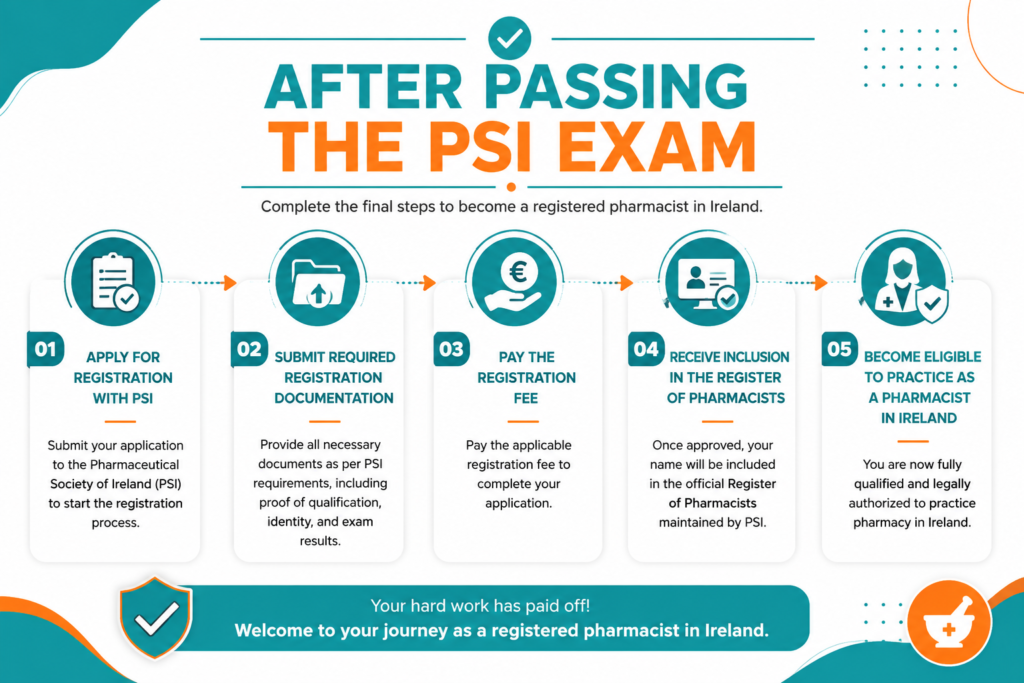
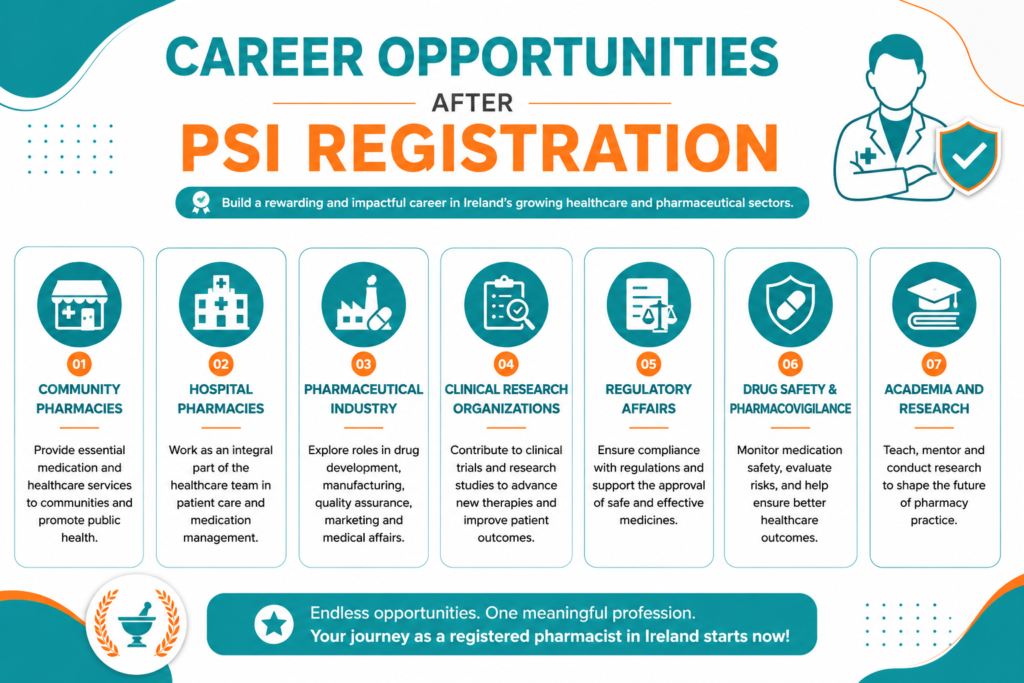
After successfully completing the TCQR process and passing all required assessments, candidates become eligible to apply for registration with the Pharmaceutical Society of Ireland. Once registered, pharmacists can pursue careers in community pharmacies, hospital pharmacies, pharmaceutical companies, regulatory affairs, clinical research organizations, academia, and healthcare management. Ireland’s expanding healthcare sector and globally recognized pharmaceutical industry provide numerous opportunities for career advancement and professional development.
Preparing effectively for the PSI examination requires a structured study plan and a strong understanding of Irish pharmacy practice. Candidates should focus on strengthening their pharmaceutical calculations, reviewing clinical pharmacy concepts, practicing patient counseling scenarios, and familiarizing themselves with Irish legislation and professional standards. Utilizing mock examinations, study guides, and competency-based learning resources can significantly improve confidence and examination performance. With dedicated preparation and a clear understanding of the TCQR process, internationally qualified pharmacists can successfully navigate the pathway to registration and build rewarding careers in Ireland’s healthcare system.
What is the PSI Exam?
The PSI Exam is a professional assessment conducted as part of the Third Country Qualification Recognition (TCQR) process for pharmacists who have obtained their pharmacy qualifications outside the European Union (EU), European Economic Area (EEA), or Switzerland and wish to practice in Ireland. Administered under the authority of the Pharmaceutical Society of Ireland (PSI), the exam is designed to evaluate whether internationally qualified pharmacists possess the knowledge, clinical competence, communication skills, and professional judgment required to meet Irish pharmacy practice standards. The assessment ensures that all pharmacists entering the Irish healthcare system can provide safe, effective, and patient-centered pharmaceutical care.
The PSI Exam typically consists of a Multiple Choice Question (MCQ) examination and, where required, an Objective Structured Clinical Examination (OSCE). These assessments cover a wide range of topics, including clinical pharmacy, therapeutics, pharmacology, pharmaceutical calculations, pharmacy law, ethics, patient safety, and professional practice. Through these examinations, candidates demonstrate their ability to apply pharmacy knowledge in real-world clinical situations, communicate effectively with patients and healthcare professionals, and make informed decisions that support optimal patient outcomes.
Passing the PSI Exam is a crucial step toward registration as a pharmacist in Ireland. Successful candidates who complete the TCQR process and meet all registration requirements can apply to join the register of pharmacists maintained by the Pharmaceutical Society of Ireland. Once registered, they become eligible to work in various pharmacy settings across Ireland, including community pharmacies, hospitals, pharmaceutical companies, research organizations, and regulatory agencies. The PSI Exam therefore serves as an important gateway for internationally trained pharmacists seeking professional recognition and career opportunities in Ireland.
Who Needs to Take the PSI Exam?
The PSI Exam is intended for internationally qualified pharmacists who wish to practice pharmacy in Ireland but obtained their pharmacy degree and professional training outside the European Union (EU), European Economic Area (EEA), or Switzerland. These candidates are generally required to undergo the Third Country Qualification Recognition (TCQR) process to demonstrate that their education, training, and professional competencies meet the standards expected of pharmacists practicing in Ireland. The examination serves as a key assessment tool to ensure that overseas pharmacists can provide safe, effective, and patient-centered pharmaceutical care within the Irish healthcare system.
Pharmacists from countries such as India, Pakistan, Bangladesh, Nepal, Nigeria, the Philippines, Egypt, South Africa, the United Arab Emirates, and many other non-EU nations typically need to complete the TCQR pathway before becoming eligible for registration with the Pharmaceutical Society of Ireland (PSI). Even if an applicant has several years of professional experience or holds registration in their home country, they may still be required to undergo assessment and examination to verify that their qualifications and competencies align with Irish pharmacy practice standards.
The requirement to take the PSI Exam is determined after PSI evaluates an applicant’s educational qualifications, practical training, professional registration status, and work experience through the TCQR process. Depending on the outcome of this assessment, candidates may be required to complete one or more examination components before progressing to registration. By requiring internationally trained pharmacists to demonstrate their competence through a standardized assessment process, PSI helps maintain high standards of pharmacy practice and patient safety throughout Ireland.
PSI TCQR Process 2026 – Step-by-Step
The Pharmaceutical Society of Ireland (PSI) follows a structured Third Country Qualification Recognition (TCQR) process to assess pharmacists who obtained their qualifications outside the European Union (EU), European Economic Area (EEA), or Switzerland. This multi-stage pathway is designed to ensure that internationally qualified pharmacists possess the knowledge, skills, and professional competencies required to practice safely and effectively in Ireland. The process involves document verification, educational and professional assessment, and, where necessary, competency-based examinations before candidates can become eligible for pharmacist registration.
Stage 1: Initial Application
The first step in the TCQR process is the submission of an initial application to the PSI. During this stage, applicants are required to provide comprehensive documentation supporting their pharmacy education and professional background. This typically includes pharmacy degree certificates, academic transcripts, internship or practical training records, proof of identity, professional registration documents, and regulatory certificates where applicable. The PSI carefully reviews and verifies these documents to confirm their authenticity and determine whether the applicant meets the basic requirements for progression through the recognition pathway. This stage forms the foundation of the assessment process and ensures that only suitably qualified candidates proceed to further evaluation. The fee for Stage 1 of the TCQR process is €500.
Stage 2: Holistic Assessment
Once the initial application has been successfully reviewed, candidates move to the holistic assessment stage. During this phase, the PSI conducts a detailed evaluation of the applicant’s pharmacy education, professional training, internship experience, scope of practice, and overall competency profile. The purpose of this assessment is to determine whether the candidate’s qualifications and professional experience are substantially equivalent to those of a pharmacist trained in Ireland. The evaluation considers not only academic achievements but also practical experience and professional development. Based on the outcome of this comprehensive review, PSI decides whether additional assessment is required before registration can be considered. The fee for the holistic assessment stage is €1,000.
Stage 3: TCQR Examination
Following the holistic assessment, some applicants may be required to undertake the TCQR Examination to demonstrate their competency against Irish pharmacy standards. The examination requirements vary depending on the results of the previous assessment. Candidates may be required to complete a Multiple Choice Question (MCQ) examination, an Objective Structured Clinical Examination (OSCE), or both. The MCQ examination assesses theoretical knowledge across key areas of pharmacy practice, including clinical pharmacy, therapeutics, pharmacology, pharmaceutical calculations, pharmacy law, and ethics. The OSCE evaluates practical and clinical skills through simulated patient interactions and professional scenarios, focusing on communication, clinical decision-making, patient counseling, and professional judgment. Successful completion of the required examinations demonstrates that the candidate possesses the competencies necessary for safe and effective pharmacy practice in Ireland. The examination stage carries a fee of €3,000.
Together, these three stages form the PSI TCQR pathway, providing a rigorous and transparent process for assessing internationally qualified pharmacists and ensuring that all registered pharmacists meet the high professional standards expected within the Irish healthcare system.
PSI Exam Eligibility Criteria 2026
To apply for the Third Country Qualification Recognition (TCQR) process in Ireland, candidates must meet specific educational, professional, and language proficiency requirements established by the Pharmaceutical Society of Ireland (PSI). These requirements are designed to ensure that internationally qualified pharmacists possess the necessary qualifications and competencies to practice safely and effectively within the Irish healthcare system.
Educational Requirements
Applicants must hold a pharmacy qualification that is officially recognized in the country where it was awarded. The qualification should be obtained through a recognized pharmacy degree program that provides the academic foundation required for professional pharmacy practice. In addition to the degree itself, candidates must provide evidence of completing the mandatory practical training, internship, or supervised professional experience associated with their pharmacy education. The PSI reviews these academic credentials carefully to determine whether the applicant’s educational background aligns with the standards expected of pharmacy graduates in Ireland.
Professional Requirements
Candidates who are currently registered or have previously been registered with a pharmacy regulatory authority must demonstrate that they are in good professional standing. This generally involves submitting certificates of good standing or equivalent documentation from the relevant regulatory body. Applicants must also have a professional record free from serious disciplinary actions, ethical violations, or regulatory sanctions that could affect their suitability to practice pharmacy. The PSI places significant emphasis on professional conduct and integrity, as these are essential components of safe healthcare practice.
English Language Requirements
Since effective communication is a fundamental aspect of pharmacy practice, applicants may be required to demonstrate their English language proficiency as part of the TCQR process. Accepted language assessments commonly include the International English Language Testing System (IELTS Academic) and the Occupational English Test (OET). These examinations assess the candidate’s ability to communicate with patients, healthcare professionals, and regulatory authorities in a clinical environment. The specific score requirements may vary and should be confirmed directly with the PSI at the time of application, as language proficiency standards can be updated periodically.
PSI Exam Format 2026
The PSI TCQR Examination is designed to assess both the theoretical knowledge and practical competencies of internationally qualified pharmacists. The examination typically consists of two main components: the Multiple Choice Question (MCQ) Examination and the Objective Structured Clinical Examination (OSCE). Together, these assessments evaluate whether candidates possess the clinical knowledge, professional judgment, communication skills, and practical abilities required to meet Irish pharmacy practice standards.
Part 1: Multiple Choice Question (MCQ) Examination
The MCQ examination is a comprehensive written assessment that evaluates a candidate’s understanding of pharmacy practice, clinical knowledge, and pharmaceutical calculations. The examination is divided into two separate sections, both of which must be passed independently to demonstrate competence across the required subject areas.
Part A – Pharmaceutical Calculations
The Pharmaceutical Calculations section focuses on the mathematical and analytical skills that pharmacists use in everyday practice. Candidates are expected to demonstrate accuracy and competence in dosage calculations, concentration calculations, infusion rate calculations, unit conversions, and pediatric dose calculations. These skills are critical for ensuring patient safety and the accurate preparation, dispensing, and administration of medications. A strong understanding of pharmaceutical mathematics is essential, as calculation errors can have significant clinical consequences.
Part B – Applied Pharmacy Practice
The Applied Pharmacy Practice section assesses a candidate’s ability to apply pharmacy knowledge in real-world clinical and professional settings. Topics covered include clinical pharmacy, therapeutics, pharmacy law, patient safety, professional ethics, and evidence-based practice. Candidates are expected to demonstrate an understanding of medication management, disease treatment, legal and ethical responsibilities, and the principles of safe pharmaceutical care. This section evaluates not only factual knowledge but also the ability to make sound professional decisions in complex healthcare situations.
Part 2: Objective Structured Clinical Examination (OSCE)
The Objective Structured Clinical Examination (OSCE) is a practical assessment designed to evaluate the professional and clinical competencies of pharmacy candidates through a series of simulated healthcare scenarios. During the examination, candidates rotate through multiple stations where they are required to interact with simulated patients, assess prescriptions, resolve medication-related issues, and demonstrate effective communication skills. The OSCE assesses key areas such as patient counseling, clinical decision-making, prescription assessment, medication review, professional judgment, ethical practice, and communication with both patients and healthcare professionals.
Each OSCE station is carefully designed to replicate realistic pharmacy practice situations that pharmacists commonly encounter in community, hospital, and clinical settings. The examination focuses on how candidates apply their knowledge, communicate information, solve problems, and uphold professional standards under practical conditions. By evaluating both technical competence and interpersonal skills, the OSCE ensures that candidates are fully prepared to deliver safe, patient-centered care within the Irish healthcare system.
PSI Exam Syllabus 2026
The PSI Examination syllabus is designed to assess the knowledge, skills, and professional competencies expected of pharmacists practicing in Ireland. The syllabus covers a broad range of clinical, pharmaceutical, legal, and professional topics that reflect the responsibilities of pharmacists working in community, hospital, and other healthcare settings. Candidates are expected not only to demonstrate theoretical knowledge but also to apply that knowledge effectively in patient care and clinical decision-making scenarios. A thorough understanding of the syllabus is essential for success in both the Multiple Choice Question (MCQ) examination and the Objective Structured Clinical Examination (OSCE).
Clinical Pharmacy
Clinical Pharmacy forms a significant component of the PSI Examination and focuses on the pharmacist’s role in the management of common medical conditions. Candidates are expected to understand the pathophysiology, diagnosis, treatment, and monitoring of various disease states encountered in everyday practice. Key therapeutic areas include cardiovascular diseases such as hypertension and heart failure, diabetes mellitus, respiratory disorders including asthma and chronic obstructive pulmonary disease (COPD), infectious diseases, gastrointestinal disorders, and endocrine conditions. Applicants should be familiar with treatment guidelines, medication selection, patient monitoring, and strategies to optimize therapeutic outcomes while ensuring patient safety.
Pharmacology
The pharmacology section evaluates a candidate’s understanding of how medicines work within the body and their role in disease management. Topics include drug mechanisms of action, pharmacokinetics, pharmacodynamics, adverse drug reactions, side effects, drug interactions, and therapeutic monitoring. Candidates should understand how different medications affect various organ systems and be able to identify potential risks associated with medicine use. Knowledge of therapeutic drug monitoring and the safe use of medicines in special patient populations is also important for this area of the syllabus.
Pharmacy Practice
Pharmacy Practice focuses on the practical application of pharmaceutical knowledge within healthcare settings. Candidates are expected to understand the roles and responsibilities of pharmacists in both community and hospital pharmacy environments. The syllabus emphasizes patient-centered care, medication management, pharmaceutical care planning, dispensing procedures, and the pharmacist’s role in promoting the safe and effective use of medicines. Candidates should also be familiar with healthcare systems, multidisciplinary teamwork, and the importance of providing high-quality pharmaceutical services that support positive patient outcomes.
Pharmaceutical Calculations
Pharmaceutical calculations are a critical component of pharmacy practice and play a major role in the PSI Examination. Candidates must demonstrate proficiency in performing accurate dose calculations, dilution calculations, infusion rate calculations, and concentration calculations. These mathematical skills are essential for ensuring the correct preparation, dispensing, and administration of medications. The examination assesses a candidate’s ability to solve practical calculation problems accurately and efficiently, reflecting the real-world responsibilities of practicing pharmacists.
Pharmacy Law and Ethics
A comprehensive understanding of Irish pharmacy law and professional ethics is essential for pharmacists seeking registration in Ireland. This section of the syllabus covers Irish pharmacy legislation, regulatory requirements, professional responsibilities, patient confidentiality, consent, record keeping, and ethical decision-making. Candidates should be familiar with the legal framework governing pharmacy practice in Ireland and understand how ethical principles guide professional conduct. The ability to manage ethical dilemmas while maintaining patient safety and professional integrity is a key competency assessed within this area.
Communication Skills
Effective communication is a fundamental requirement for modern pharmacy practice and is assessed throughout the PSI Examination process. Candidates are expected to demonstrate strong patient counseling skills, including the ability to explain medication use, discuss potential side effects, and provide clear healthcare advice. The syllabus also includes interprofessional communication, emphasizing collaboration with doctors, nurses, and other healthcare professionals to support patient care. In addition, candidates should understand the importance of accurate clinical documentation and record keeping, as these are essential components of safe and effective healthcare delivery.
Overall, the PSI Exam Syllabus 2026 is designed to ensure that internationally qualified pharmacists possess the clinical knowledge, professional competence, legal awareness, and communication skills necessary to meet the high standards of pharmacy practice in Ireland. Comprehensive preparation across all syllabus areas significantly improves a candidate’s readiness for both the MCQ and OSCE components of the examination.
PSI Exam Fees 2026
| Fee Category | Amount |
|---|---|
| TCQR Stage 1 Application | €500 |
| TCQR Stage 2 Holistic Assessment | €1,000 |
| TCQR Stage 3 Examination | €3,000 |
| Stage 2 Appeal Fee | €300 |
| First Registration Fee (from May 2026) | €698 |
Total Estimated Cost
A candidate completing the full TCQR pathway can expect to spend:
| Expense | Approximate Cost |
|---|---|
| TCQR Fees | €4,500 |
| Registration Fee | €698 |
| English Test | €150–300 |
| Documentation & Verification | €100–300 |
| Preparation Materials | Variable |
Estimated overall investment: €5,000–€7,000+, depending on individual circumstances.
After Passing the PSI Exam
Career Opportunities After PSI Registration
Tips for PSI Exam Preparation
Preparing for the PSI Examination requires a strategic and structured approach that focuses on both theoretical knowledge and practical pharmacy skills. Since the examination is designed to assess the competencies required for safe and effective pharmacy practice in Ireland, candidates should prioritize understanding concepts and applying them in real-world clinical situations rather than relying solely on memorization. Developing a study plan that covers all major syllabus areas while incorporating regular practice and self-assessment can significantly improve examination performance and confidence.
Start with the Competency Framework
One of the most effective ways to prepare for the PSI Examination is to begin by reviewing the competency framework that underpins Irish pharmacy practice. This framework outlines the knowledge, skills, behaviors, and professional standards expected of pharmacists in Ireland. Rather than focusing only on remembering facts, candidates should concentrate on understanding how pharmacy principles are applied in patient care, medication management, and clinical decision-making. A competency-based approach helps candidates prepare for both the MCQ and OSCE components of the examination by ensuring they can demonstrate practical and professional competence in addition to academic knowledge.
Strengthen Pharmaceutical Calculations
Pharmaceutical calculations are a vital part of the PSI MCQ examination and should receive special attention during preparation. Candidates should practice dosage calculations, concentration calculations, infusion rate calculations, dilution problems, and unit conversions regularly. Accuracy and speed are equally important, as calculation errors can have serious implications for patient safety. Consistent practice with a variety of calculation scenarios helps build confidence and ensures that candidates can solve mathematical problems efficiently under examination conditions.
Practice Clinical Scenarios
Success in the Objective Structured Clinical Examination (OSCE) depends largely on a candidate’s ability to apply clinical knowledge in practical situations. Regularly practicing clinical scenarios can help improve communication skills, patient counseling techniques, and clinical reasoning abilities. Candidates should work through common pharmacy cases involving prescription review, medication counseling, adverse drug reactions, and therapeutic recommendations. Role-playing with colleagues or participating in mock OSCE sessions can be particularly beneficial, as it allows candidates to become comfortable interacting with patients and healthcare professionals in simulated clinical environments.
Study Irish Pharmacy Practice
A thorough understanding of Irish pharmacy practice is essential for international candidates. Preparation should include studying Irish pharmacy legislation, professional guidelines, ethical standards, and the structure of the Irish healthcare system. Familiarity with local regulations governing prescription medicines, controlled drugs, patient confidentiality, and professional responsibilities can help candidates perform better in both written and practical assessments. Understanding how pharmacy services are delivered in Ireland also provides valuable context for answering scenario-based questions and managing OSCE stations effectively.
Use Mock Tests
Mock examinations are one of the most valuable tools for PSI Exam preparation. Regular practice with mock MCQs and simulated OSCE stations helps candidates assess their strengths and identify areas that require further improvement. Mock tests also provide experience with examination timing, allowing candidates to develop effective time-management strategies and reduce exam-related stress. By replicating actual exam conditions, practice tests build familiarity with the examination format and improve overall confidence, enabling candidates to perform more effectively on the day of the assessment.
Overall, successful PSI Exam preparation requires a combination of clinical knowledge, practical application, communication skills, and familiarity with Irish pharmacy standards. Candidates who dedicate time to understanding the competency framework, strengthening calculation skills, practicing clinical scenarios, studying Irish pharmacy regulations, and completing regular mock tests are better positioned to achieve success in the TCQR examination process and progress toward pharmacist registration in Ireland.
Frequently Asked Questions (FAQs)
Is the PSI Exam difficult?
The PSI Exam is generally considered challenging because it assesses both theoretical pharmacy knowledge and practical professional competencies. Candidates are expected to demonstrate a strong understanding of clinical pharmacy, pharmacology, therapeutics, pharmaceutical calculations, pharmacy law, ethics, and patient-centered care. In addition to the written MCQ examination, candidates may also need to complete an OSCE, which evaluates communication skills, clinical reasoning, and professional judgment in real-world scenarios. However, with a structured study plan, thorough preparation, and a good understanding of Irish pharmacy practice standards, candidates can significantly improve their chances of success.
Can Indian pharmacists apply for the PSI Exam?
Yes, Indian pharmacists can apply for the PSI Exam through the Third Country Qualification Recognition (TCQR) pathway. Pharmacists who have obtained their pharmacy qualifications in India and meet the eligibility requirements established by the Pharmaceutical Society of Ireland (PSI) may begin the recognition process. Applicants must provide evidence of their academic qualifications, internship or practical training, and professional registration status where applicable. The PSI will assess their qualifications and determine whether further examinations are required before registration can be granted.
Is IELTS mandatory?
English language proficiency is an important requirement for pharmacists seeking registration in Ireland. Many applicants are required to demonstrate their English communication skills through recognized language examinations such as IELTS Academic or the Occupational English Test (OET). The specific requirements may vary depending on an applicant’s educational background, training, and individual circumstances. Candidates should always review the latest PSI guidelines to confirm the current language requirements and minimum score criteria applicable to their application.
How much does the PSI process cost?
The TCQR process involves several stages, each with associated fees. The total cost of the recognition process is approximately €4,500, which includes the initial application fee, holistic assessment fee, and examination fee. However, candidates should also budget for additional expenses such as English language testing, document verification, credential assessment services, preparation materials, travel costs, and pharmacist registration fees upon successful completion of the process. The overall investment may therefore be higher depending on individual circumstances and preparation needs.
What is included in the PSI Exam?
The PSI Examination typically consists of two main components: the Multiple Choice Question (MCQ) examination and the Objective Structured Clinical Examination (OSCE). The MCQ assesses theoretical knowledge in areas such as clinical pharmacy, pharmacology, therapeutics, pharmaceutical calculations, pharmacy law, ethics, and patient safety. The OSCE focuses on practical skills and professional competencies through simulated clinical scenarios involving patient counseling, prescription assessment, medication reviews, communication, and clinical decision-making. Together, these assessments ensure that candidates meet the standards required for pharmacy practice in Ireland.
Can I work in Ireland after passing the PSI Exam?
Yes, successfully passing the required PSI assessments is a major step toward becoming a registered pharmacist in Ireland. After completing the TCQR process and fulfilling all registration requirements set by the Pharmaceutical Society of Ireland, candidates can apply for inclusion on the Irish Register of Pharmacists. Once registered, they become eligible to work in a variety of pharmacy settings, including community pharmacies, hospital pharmacies, pharmaceutical companies, regulatory organizations, research institutions, and other healthcare sectors throughout Ireland. Registration opens the door to a wide range of professional opportunities and career growth within the Irish healthcare system.
Conclusion
The PSI Exam and the Third Country Qualification Recognition (TCQR) process serve as the official pathway for internationally qualified pharmacists seeking registration and employment opportunities in Ireland. While the process involves multiple stages, including document verification, holistic assessment, and competency-based examinations, it is designed to ensure that all pharmacists practicing in Ireland meet the high professional, clinical, and ethical standards required within the Irish healthcare system. The journey may seem demanding, particularly for candidates who must adapt to a new regulatory environment and healthcare framework, but it ultimately provides a clear and structured route toward professional recognition and career advancement in one of Europe’s most respected healthcare sectors.
Success in the PSI Exam requires a comprehensive understanding of pharmacy practice, strong clinical knowledge, proficiency in pharmaceutical calculations, effective communication skills, and familiarity with Irish pharmacy legislation and professional standards. Candidates who invest time in understanding the examination format, studying the syllabus thoroughly, practicing clinical scenarios, and developing their patient-centered care skills are better positioned to perform confidently in both the MCQ and OSCE assessments. Equally important is maintaining a disciplined preparation strategy, utilizing mock examinations, and staying informed about any updates to PSI requirements throughout the application process.
For pharmacists from countries such as India and other non-EU nations, the TCQR pathway offers a valuable opportunity to build a rewarding international career. Ireland’s healthcare sector continues to grow, creating strong demand for qualified pharmacy professionals across community pharmacies, hospitals, pharmaceutical industries, clinical research organizations, regulatory agencies, and academic institutions. In addition to competitive salaries and excellent professional development opportunities, Ireland offers a high quality of life, a welcoming multicultural environment, and potential pathways for long-term career growth and residency. Although the recognition process requires commitment, financial investment, and dedicated preparation, the benefits of becoming a registered pharmacist in Ireland can be substantial. By understanding the TCQR process, meeting the eligibility requirements, preparing strategically for the examinations, and staying focused on professional goals, internationally qualified pharmacists can successfully navigate the registration journey and establish a successful future in Ireland’s dynamic healthcare landscape.