
Fellowship In Male & Female Infertility
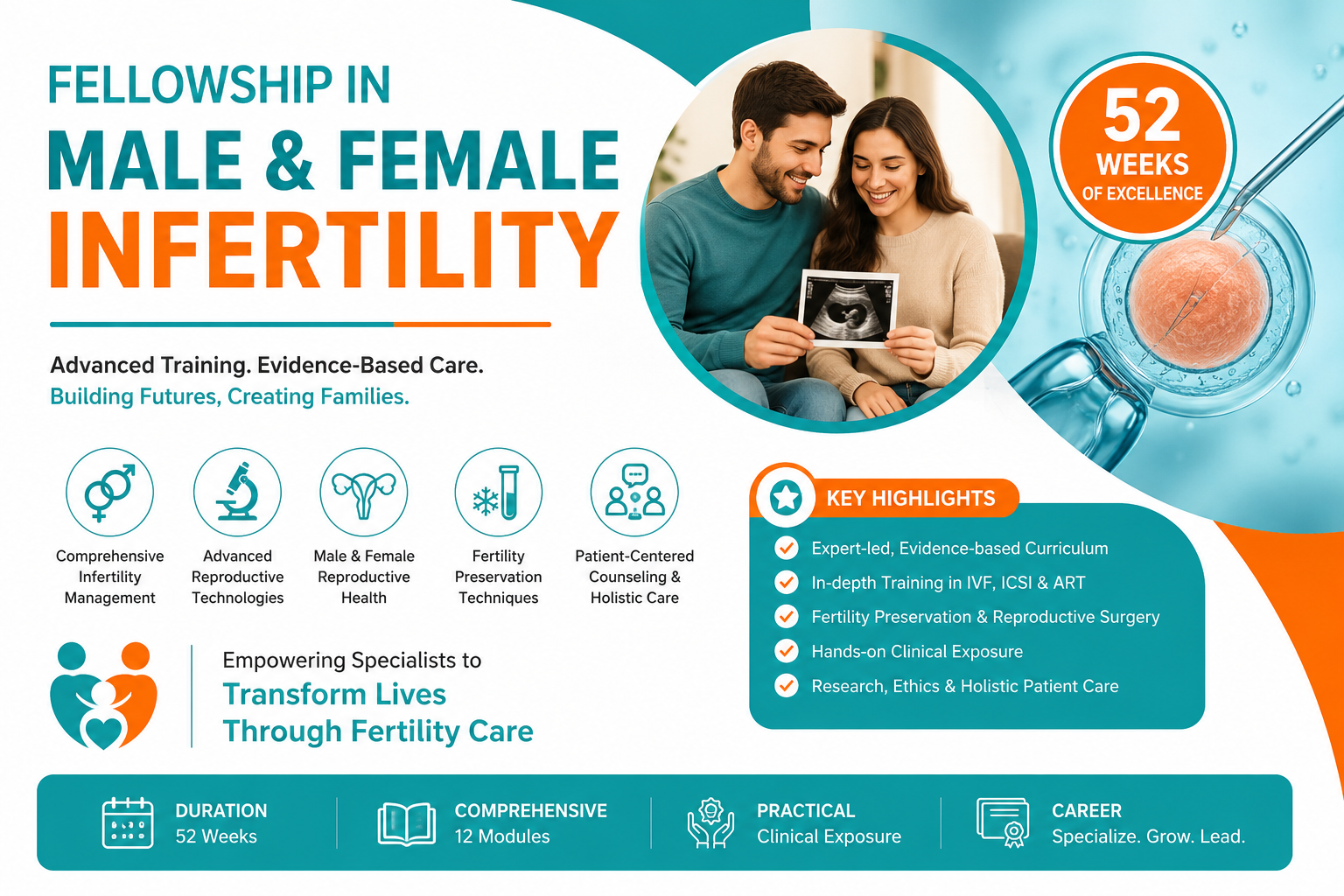

The Fellowship in Male & Female Infertility is a comprehensive 52-week advanced training program designed for healthcare professionals seeking expertise in reproductive medicine and fertility care. The program covers the evaluation, diagnosis, and management of male and female infertility, reproductive endocrinology, assisted reproductive technologies (ART), IVF, ICSI, fertility preservation, reproductive surgery, and patient counseling. Through evidence-based learning, clinical case discussions, and practical exposure, participants develop the skills required to provide holistic fertility care and improve reproductive outcomes for individuals and couples facing infertility challenges.
Program Overview
The Fellowship in Male & Female Infertility is a comprehensive 52-week advanced training program designed for medical professionals who wish to develop specialized expertise in reproductive medicine and infertility management. Infertility affects millions of couples worldwide and has become an increasingly important area of healthcare, requiring clinicians to possess a thorough understanding of both male and female reproductive health, advanced diagnostic techniques, and modern fertility treatments.
This fellowship provides an evidence-based and clinically focused curriculum that equips learners with the knowledge and practical skills required to assess, diagnose, and manage infertility in both men and women. The program integrates reproductive endocrinology, fertility evaluation, assisted reproductive technologies (ART), reproductive surgery, fertility preservation, patient counseling, and emerging innovations in fertility care. Participants will gain a holistic understanding of infertility while learning to deliver compassionate, patient-centered care.
Why Choose This Fellowship?
Infertility is a complex medical condition influenced by hormonal, genetic, anatomical, environmental, and lifestyle factors. Successful management requires a multidisciplinary approach involving reproductive medicine specialists, embryologists, endocrinologists, surgeons, counselors, and laboratory professionals.
This fellowship enables healthcare professionals to:
- Develop expertise in diagnosing male and female infertility.
- Understand reproductive anatomy, physiology, and endocrinology.
- Interpret fertility investigations and laboratory results.
- Master evidence-based infertility treatment protocols.
- Gain in-depth knowledge of IVF, ICSI, IUI, and ART procedures.
- Learn fertility preservation techniques for diverse patient populations.
- Understand reproductive surgery and minimally invasive interventions.
- Provide effective counseling and psychological support to patients.
- Apply current guidelines and best practices in fertility care.
- Enhance career opportunities in reproductive medicine and fertility clinics.
Program Objectives
Upon successful completion of the fellowship, participants will be able to:
- Understand the physiology and pathology of human reproduction.
- Conduct comprehensive infertility evaluations for individuals and couples.
- Diagnose common and complex causes of infertility.
- Develop individualized treatment plans based on patient needs.
- Manage ovulatory disorders, PCOS, endometriosis, and tubal diseases.
- Evaluate and treat male infertility conditions.
- Interpret hormonal assessments and fertility investigations.
- Perform evidence-based fertility management.
- Understand IVF laboratory procedures and embryo development.
- Apply fertility preservation strategies.
- Address ethical, legal, and psychosocial issues in reproductive medicine.
- Critically evaluate research and integrate evidence into clinical practice.
Key Areas of Study
Foundations of Reproductive Medicine
Participants begin by exploring the fundamentals of reproductive biology, including male and female reproductive anatomy, physiology, fertilization, implantation, and hormonal regulation. This foundation provides the essential knowledge needed for advanced infertility management.
Comprehensive Infertility Assessment
The fellowship emphasizes systematic infertility evaluation through detailed history-taking, physical examination, laboratory investigations, imaging studies, and specialized fertility testing. Learners gain expertise in identifying the underlying causes of infertility and developing appropriate diagnostic pathways.
Female Infertility Management
Participants study a wide range of female infertility conditions, including:
- Ovulatory dysfunction
- Polycystic Ovary Syndrome (PCOS)
- Endometriosis
- Tubal factor infertility
- Uterine abnormalities
- Diminished ovarian reserve
- Premature ovarian insufficiency
- Age-related infertility
- Unexplained infertility
Evidence-based treatment approaches and individualized patient management strategies are thoroughly discussed.
Male Infertility Management
The program provides extensive training in male reproductive health and infertility, covering:
- Semen abnormalities
- Hormonal disorders
- Varicocele
- Azoospermia
- Genetic factors
- Sexual dysfunction
- Infectious causes
- Lifestyle-related infertility
Participants learn advanced diagnostic techniques and treatment options for optimizing male fertility outcomes.
Reproductive Endocrinology
A strong focus is placed on reproductive endocrinology and hormonal regulation. Learners develop expertise in evaluating hormonal profiles, understanding endocrine disorders affecting fertility, and implementing medical therapies for infertility treatment.
Topics include:
- Hypothalamic-pituitary-gonadal axis
- Ovulation induction
- Gonadotropin therapy
- Thyroid disorders
- Hyperprolactinemia
- Hormonal management in men and women
Assisted Reproductive Technologies (ART)
One of the core components of the fellowship is advanced training in assisted reproductive technologies.
Participants gain detailed knowledge of:
- Intrauterine Insemination (IUI)
- In Vitro Fertilization (IVF)
- Intracytoplasmic Sperm Injection (ICSI)
- Ovarian stimulation protocols
- Oocyte retrieval
- Embryo culture
- Embryo transfer
- ART outcome assessment
The program also explores patient selection, treatment planning, risk management, and optimization of clinical outcomes.
Advanced Fertility Treatments and Preservation
As fertility preservation becomes increasingly important, participants learn modern preservation techniques for patients facing age-related fertility decline, cancer treatments, and other fertility-threatening conditions.
Topics include:
- Egg freezing
- Sperm cryopreservation
- Embryo freezing
- Fertility preservation counseling
- Oncofertility
- Preimplantation Genetic Testing (PGT)
- Donor gamete programs
- Gestational surrogacy
Reproductive Surgery
The fellowship introduces surgical interventions commonly used in infertility management.
Participants study:
- Hysteroscopy
- Laparoscopy
- Endometriosis surgery
- Myomectomy
- Tubal reconstructive procedures
- Male infertility surgery
- Microsurgical sperm retrieval techniques
The curriculum emphasizes appropriate patient selection and evidence-based surgical decision-making.
Pregnancy Following Fertility Treatment
Learners develop competencies in managing pregnancies resulting from fertility treatments and ART procedures.
Topics include:
- Early pregnancy monitoring
- IVF pregnancies
- Multiple gestations
- Recurrent pregnancy loss
- Ectopic pregnancy
- High-risk pregnancy management
- Maternal and fetal surveillance
Psychological and Ethical Aspects of Infertility
Infertility can significantly impact emotional well-being and quality of life. This fellowship highlights the importance of compassionate communication and psychosocial support.
Participants learn:
- Fertility counseling techniques
- Emotional support strategies
- Mental health considerations
- Relationship and sexual health counseling
- Ethical issues in reproductive medicine
- Legal and regulatory frameworks
- Shared decision-making practices
Research and Evidence-Based Practice
The program encourages academic excellence and lifelong learning through research-focused training.
Participants gain knowledge in:
- Clinical research methodology
- Biostatistics
- Critical appraisal of literature
- Evidence-based medicine
- Quality improvement initiatives
- Clinical audits
- Patient safety practices
- Scientific writing and publication
Clinical Training and Practical Exposure
Throughout the fellowship, participants engage in case-based discussions, clinical assessments, fertility treatment planning, multidisciplinary collaboration, and supervised practical learning experiences. Exposure to real-world infertility cases enhances clinical competence and decision-making skills.
Career Opportunities
Upon completion, graduates may pursue opportunities in:
- Fertility and IVF Centers
- Reproductive Medicine Clinics
- Women’s Health Centers
- Andrology Clinics
- Assisted Reproductive Technology Programs
- Academic and Teaching Institutions
- Research Organizations
- Fertility Counseling Services
- Multispecialty Hospitals
- Reproductive Endocrinology Practices
Conclusion
The Fellowship in Male & Female Infertility is a rigorous and industry-relevant program that prepares healthcare professionals to address the growing global burden of infertility. By combining scientific knowledge, clinical expertise, reproductive technologies, and patient-centered care, this fellowship equips participants to become skilled fertility specialists capable of delivering high-quality reproductive healthcare and improving outcomes for individuals and couples seeking to build families.
- 12 Sections
- 101 Lessons
- 52 Weeks
- Foundations of Reproductive Medicine and InfertilityThis module introduces learners to the fundamentals of reproductive medicine, including reproductive anatomy, physiology, endocrinology, and the epidemiology of infertility. Participants will develop a strong understanding of normal reproductive processes and the biological mechanisms underlying male and female infertility. The module also covers current definitions, classifications, and global trends in infertility care.8
- 1.1Introduction to Reproductive Medicine
- 1.2Epidemiology of Infertility
- 1.3Male Reproductive Anatomy and Physiology
- 1.4Female Reproductive Anatomy and Physiology
- 1.5Reproductive Endocrinology Basics
- 1.6Fertilization and Implantation Physiology
- 1.7Classification of Infertility
- 1.8Ethical and Legal Aspects in Fertility Care
- Evaluation and Diagnosis of InfertilityThis module focuses on comprehensive infertility assessment, including history-taking, physical examination, laboratory investigations, and diagnostic imaging. Learners will gain expertise in identifying underlying causes of infertility and formulating evidence-based diagnostic pathways for couples presenting with reproductive challenges.9
- 2.1Comprehensive Infertility History Taking
- 2.2Physical Examination in Infertility
- 2.3Female Fertility Assessment
- 2.4Male Fertility Assessment
- 2.5Hormonal Evaluation and Interpretation
- 2.6Semen Analysis and Advanced Testing
- 2.7Ultrasound in Infertility Evaluation
- 2.8Hysterosalpingography and Tubal Assessment
- 2.9Diagnostic Hysteroscopy and Laparoscopy
- Female Infertility DisordersThis module explores the major causes of female infertility and their clinical management. Participants will learn to diagnose and treat ovulatory disorders, tubal disease, endometriosis, uterine abnormalities, and age-related fertility decline through evidence-based approaches.9
- 3.1Ovulatory Dysfunction and Anovulation
- 3.2Polycystic Ovary Syndrome (PCOS)
- 3.3Endometriosis and Fertility
- 3.4Tubal Factor Infertility
- 3.5Uterine Abnormalities and Infertility
- 3.6Ovarian Reserve Assessment
- 3.7Premature Ovarian Insufficiency
- 3.8Age-Related Female Infertility
- 3.9Unexplained Female Infertility
- Male Infertility DisordersThis module provides an in-depth understanding of male infertility, including hormonal, genetic, anatomical, infectious, and lifestyle-related factors. Learners will develop skills in interpreting male fertility investigations and designing individualized treatment plans.9
- 4.1Etiology of Male Infertility
- 4.2Spermatogenesis and Sperm Function
- 4.3Hormonal Disorders in Men
- 4.4Varicocele and Male Infertility
- 4.5Genetic Causes of Male Infertility
- 4.6Obstructive and Non-Obstructive Azoospermia
- 4.7Sexual Dysfunction and Fertility
- 4.8Infections Affecting Male Fertility
- 4.9Lifestyle Factors and Male Reproductive Health
- Reproductive Endocrinology and Hormonal ManagementThis module examines endocrine regulation of reproduction and hormonal therapies used in fertility treatment. Participants will understand hormone testing, ovulation induction protocols, and individualized endocrine management strategies for both male and female infertility.8
- Assisted Reproductive Technologies (ART)This module introduces assisted reproductive technologies and their role in infertility treatment. Learners will understand patient selection, treatment planning, laboratory procedures, and clinical outcomes associated with modern ART techniques.9
- 6.1Overview of Assisted Reproductive Technologies
- 6.2Intrauterine Insemination (IUI)
- 6.3In Vitro Fertilization (IVF)
- 6.4Intracytoplasmic Sperm Injection (ICSI)
- 6.5Ovarian Stimulation Protocols
- 6.6Oocyte Retrieval Techniques
- 6.7Embryo Culture and Development
- 6.8Embryo Transfer Procedures
- 6.9ART Success Rates and Outcome Measures
- Advanced Reproductive TechnologiesThis module focuses on advanced fertility interventions and emerging reproductive technologies. Participants will gain knowledge of fertility preservation, genetic testing, donor programs, and innovative laboratory techniques used in modern fertility practice.9
- Reproductive Surgery in InfertilityThis module covers surgical procedures used in infertility management. Learners will develop an understanding of indications, techniques, outcomes, and postoperative care related to reproductive surgery in both men and women.8
- Pregnancy After Infertility TreatmentThis module addresses conception outcomes and pregnancy care following infertility treatment. Participants will learn to manage early pregnancy, monitor complications, and optimize maternal and fetal outcomes after ART and fertility interventions.8
- Psychological, Ethical, and Social Aspects of InfertilityThis module highlights the emotional and psychosocial impact of infertility on individuals and couples. Learners will explore counseling techniques, ethical dilemmas, cultural considerations, and patient-centered communication strategies in fertility care.8
- 10.1Psychological Impact of Infertility
- 10.2Counseling Couples with Infertility
- 10.3Stress Management and Mental Health
- 10.4Sexual Health and Relationships
- 10.5Ethical Issues in ART
- 10.6Cultural and Social Considerations
- 10.7Legal Regulations in Reproductive Medicine
- 10.8Shared Decision-Making in Fertility Care
- Research, Evidence-Based Practice, and Quality ImprovementThis module develops skills in critical appraisal, clinical research, and quality assurance within fertility practice. Participants will learn to interpret scientific literature and apply evidence-based principles to improve patient outcomes.8
- 11.1Principles of Clinical Research
- 11.2Research Methodology in Reproductive Medicine
- 11.3Biostatistics for Fertility Specialists
- 11.4Evidence-Based Infertility Management
- 11.5Clinical Audits and Quality Improvement
- 11.6ART Laboratory Quality Standards
- 11.7Patient Safety in Fertility Clinics
- 11.8Writing Research Proposals
- Clinical Practicum and Capstone ProjectThe final module integrates theoretical knowledge with supervised clinical practice. Learners will participate in infertility consultations, treatment planning, ART procedures, and case discussions while completing a capstone project demonstrating competency in fertility medicine.8
You might be intersted in
-
167 Students
-
52 Weeks
-
124 Students
-
52 Weeks
-
133 Students
-
52 Weeks
-
123 Students
-
52 Weeks