
Fellowship in Fetal Medicine
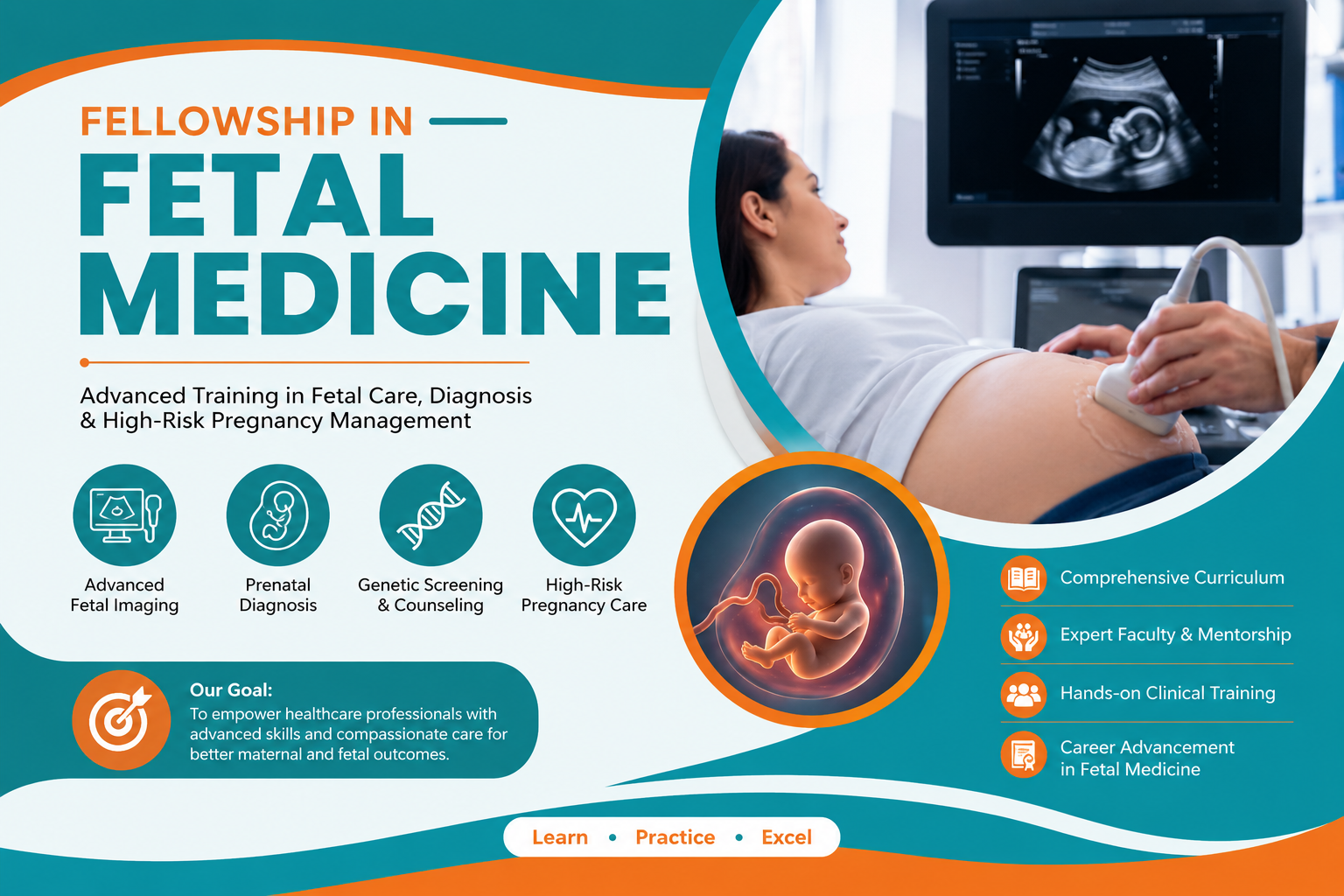

The Fellowship in Fetal Medicine is a comprehensive 52-week advanced training program designed for obstetricians, gynecologists, radiologists, and maternal-fetal medicine professionals who wish to develop expertise in the diagnosis, monitoring, and management of fetal health. The program provides an in-depth …
The Fellowship in Fetal Medicine is a comprehensive 52-week advanced training program designed for obstetricians, gynecologists, radiologists, and maternal-fetal medicine professionals who wish to develop expertise in the diagnosis, monitoring, and management of fetal health. The program provides an in-depth understanding of fetal development, prenatal screening, advanced obstetric ultrasound, fetal anomalies, genetic disorders, and evidence-based management of high-risk pregnancies. It combines theoretical knowledge with practical clinical training to prepare healthcare professionals for specialized fetal care.
Throughout the fellowship, participants gain extensive knowledge of embryology, fetal physiology, placental function, maternal adaptations during pregnancy, and the latest advances in fetal medicine. The curriculum focuses on early pregnancy assessment, first, second, and third trimester ultrasound examinations, fetal biometry, growth assessment, Doppler studies, and comprehensive anomaly scans. Learners develop the skills required to identify congenital malformations, chromosomal abnormalities, multiple pregnancies, fetal growth restriction, and other complex fetal conditions using modern diagnostic techniques.
The program also emphasizes prenatal genetic screening and diagnostic procedures, including non-invasive prenatal testing (NIPT), chorionic villus sampling (CVS), amniocentesis, and fetal blood sampling. Participants learn the principles of genetic counseling, risk assessment, and ethical considerations associated with prenatal diagnosis, enabling them to support expectant parents in making informed decisions.
A significant component of the fellowship is the management of maternal conditions affecting fetal well-being, such as hypertension, diabetes, autoimmune disorders, infections, and other high-risk pregnancy complications. Learners gain expertise in fetal surveillance techniques, interpretation of fetal monitoring, Doppler velocimetry, and individualized pregnancy management plans aimed at improving maternal and fetal outcomes.
The fellowship also introduces advanced concepts in fetal therapy and fetal interventions, including intrauterine transfusion, fetal shunting procedures, laser therapy for twin-to-twin transfusion syndrome, fetal surgery principles, and multidisciplinary management of complex fetal disorders. Participants understand the indications, limitations, benefits, and risks associated with these procedures while learning the importance of collaboration with neonatologists, pediatric surgeons, geneticists, and anesthesiologists.
Clinical training is a core aspect of the program. Fellows participate in supervised ultrasound sessions, fetal assessment clinics, multidisciplinary meetings, case discussions, simulation-based learning, and evidence-based clinical practice. They gain practical experience in performing fetal imaging, interpreting diagnostic findings, counseling patients, documenting clinical reports, and developing individualized management strategies for various fetal conditions.
Research and academic development form another important pillar of the fellowship. Participants learn research methodology, critical appraisal of medical literature, clinical audit, biostatistics, and scientific writing. They are encouraged to participate in case presentations, journal clubs, quality improvement projects, and research activities that promote evidence-based fetal medicine practice.
The curriculum also focuses on communication skills, ethical decision-making, medico-legal considerations, and compassionate patient counseling. Fellows learn to effectively communicate complex prenatal diagnoses, discuss available treatment options, provide emotional support to families, and coordinate multidisciplinary care throughout pregnancy and the postnatal period.
Upon successful completion of the Fellowship in Fetal Medicine, graduates will possess advanced clinical competencies in prenatal diagnosis, fetal imaging, genetic screening, fetal surveillance, and the management of fetal abnormalities and high-risk pregnancies. They will be prepared to work in tertiary care hospitals, fetal medicine centers, maternal-fetal medicine units, academic institutions, diagnostic imaging centers, and research organizations.
This fellowship equips healthcare professionals with the specialized knowledge, technical expertise, and clinical confidence required to deliver high-quality, evidence-based fetal care. By integrating advanced diagnostic technologies, multidisciplinary collaboration, and patient-centered care, the program prepares graduates to contribute significantly to improving maternal and fetal health outcomes while advancing excellence in fetal medicine.
- 13 Sections
- 78 Lessons
- 52 Weeks
- Introduction to Fetal Medicine and Maternal-Fetal PhysiologyThis module introduces the principles of fetal medicine, emphasizing the physiology of pregnancy, fetal growth and development, placental function, and maternal adaptations. Learners will understand the role of fetal medicine specialists, prenatal care pathways, ethical considerations, and the multidisciplinary approach required for managing high-risk pregnancies. The module establishes a strong foundation for advanced fetal assessment and clinical decision-making.6
- Fetal Anatomy and Ultrasound FundamentalsThis module provides comprehensive training in obstetric ultrasound, including fetal anatomical surveys, normal fetal development, biometric measurements, and systematic image acquisition. Students gain proficiency in performing first, second, and third-trimester scans while recognizing normal and abnormal fetal anatomy.6
- Prenatal Screening and Genetic DiagnosisThis module focuses on prenatal screening methods, genetic counseling, chromosomal abnormalities, and diagnostic testing. Learners develop expertise in interpreting screening results, counseling families, and selecting appropriate invasive and non-invasive diagnostic techniques.6
- Fetal Congenital AnomaliesStudents learn to identify, classify, and manage congenital fetal anomalies involving all major organ systems. The module emphasizes systematic anomaly detection, differential diagnosis, prognosis, and multidisciplinary counseling.6
- Fetal Growth and Placental DisordersThis module explores fetal growth restriction, macrosomia, placental abnormalities, and disorders affecting fetal well-being. Learners understand diagnosis, surveillance strategies, Doppler assessment, and evidence-based management.6
- Fetal Doppler and Hemodynamic AssessmentThis module develops competency in fetal Doppler studies, enabling learners to evaluate fetal circulation, placental function, and cardiovascular status for high-risk pregnancy management.6
- Fetal EchocardiographyLearners gain specialized knowledge of fetal cardiac anatomy, screening protocols, congenital heart disease, and fetal cardiac function through comprehensive fetal echocardiographic evaluation.6
- Multiple Pregnancy and Twin ComplicationsThis module covers twin and higher-order pregnancies, chorionicity determination, fetal surveillance, and complications unique to multiple gestations.6
- Maternal Disorders Affecting the FetusStudents study maternal medical disorders and their impact on fetal development, emphasizing collaborative care and fetal surveillance.6
- Fetal Infections and TeratologyThis module addresses congenital infections, teratogenic exposures, prenatal diagnosis, and preventive strategies for fetal health.6
- Fetal Therapy and Invasive ProceduresLearners gain exposure to fetal interventions, invasive procedures, indications, complications, and post-procedure care in modern fetal medicine.6
- High-Risk Pregnancy ManagementThis module focuses on comprehensive management of high-risk pregnancies requiring intensive fetal monitoring, multidisciplinary collaboration, and individualized care planning.6
- Labor Planning and Neonatal OutcomesStudents learn delivery planning for fetal anomalies and high-risk pregnancies while coordinating neonatal care and postnatal management.6
You might be intersted in
-
0 Students
-
52 Weeks
-
133 Students
-
52 Weeks
-
129 Students
-
52 Weeks
-
139 Students
-
52 Weeks