
Fellowship in Paediatric Dermatology
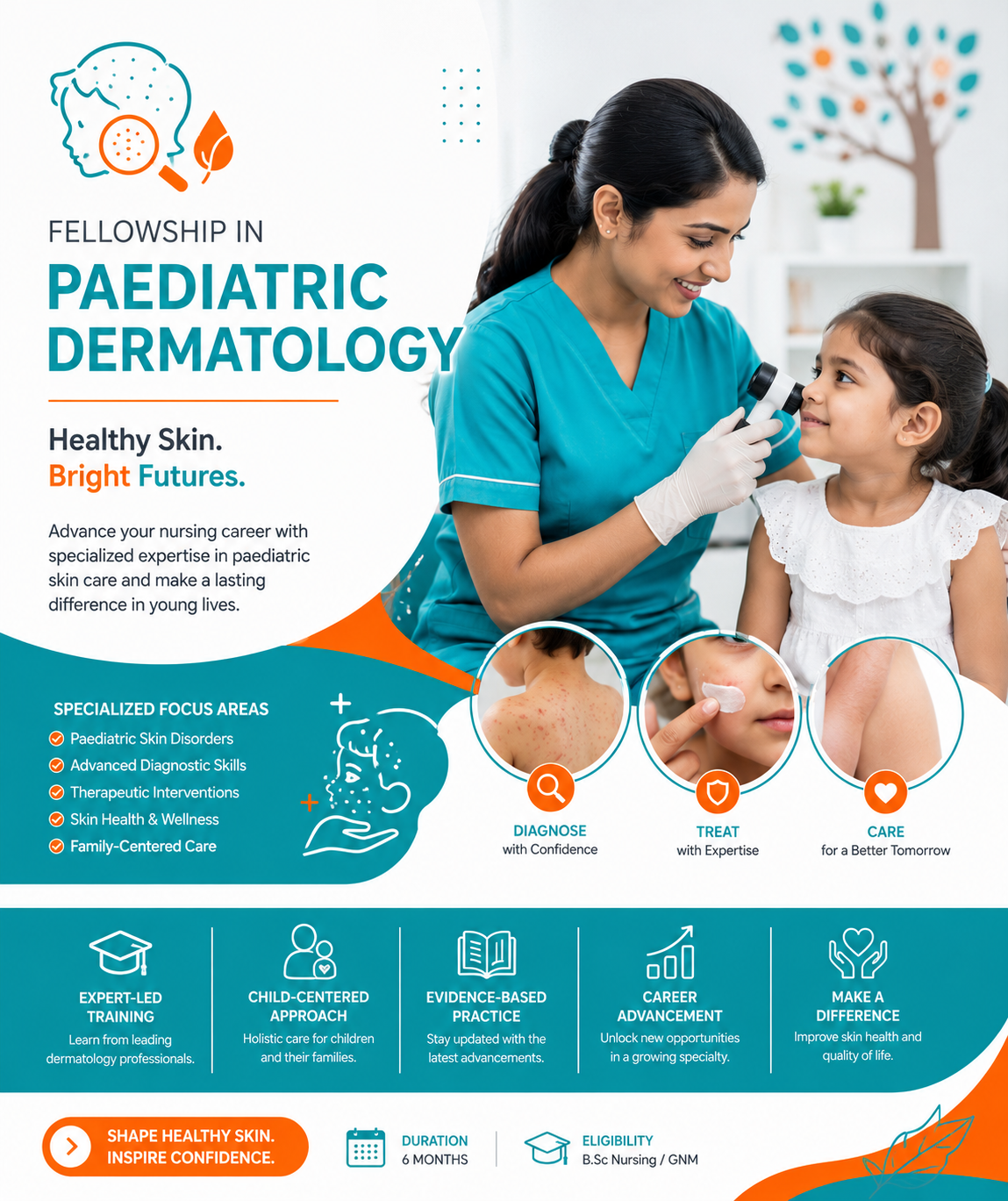

The Fellowship in Paediatric Dermatology is a comprehensive 52-week advanced training program designed for healthcare professionals seeking expertise in the diagnosis, treatment, and management of skin disorders in infants, children, and adolescents. The curriculum covers neonatal dermatology, inflammatory and infectious skin diseases, genetic disorders, pigmentary conditions, vascular anomalies, dermatological emergencies, procedural dermatology, and evidence-based therapeutic approaches, preparing learners for specialized clinical practice in paediatric dermatology.
The Fellowship in Paediatric Dermatology is a comprehensive 52-week advanced training program designed for medical professionals seeking specialized expertise in the diagnosis, treatment, and long-term management of skin disorders affecting infants, children, and adolescents. As paediatric skin diseases often present differently from adult dermatological conditions and require age-specific approaches to assessment and treatment, this fellowship equips learners with the knowledge and clinical skills necessary to provide high-quality, evidence-based care for young patients.
The program begins with a strong foundation in paediatric skin anatomy, physiology, embryology, and developmental dermatology. Participants gain an in-depth understanding of normal skin variations across different age groups and learn structured approaches to dermatological history taking, clinical examination, lesion identification, and differential diagnosis. The curriculum emphasizes the unique biological and psychosocial aspects of skin diseases in children, enabling clinicians to deliver patient-centered and family-focused care.
Throughout the fellowship, learners explore a broad spectrum of paediatric dermatological conditions, including neonatal skin disorders, inflammatory dermatoses, infectious diseases, pigmentary abnormalities, hair and nail disorders, vascular anomalies, and genetic skin conditions. Particular focus is placed on common conditions such as atopic dermatitis, psoriasis, urticaria, viral exanthems, fungal infections, and vitiligo, as well as rare and complex disorders such as epidermolysis bullosa, ichthyosis, neurocutaneous syndromes, and congenital skin anomalies.
The program also provides extensive training in neonatal dermatology, helping participants recognize physiological skin changes, birthmarks, congenital lesions, and dermatological emergencies that may present during the newborn period. Learners develop the ability to identify potentially serious conditions early and implement appropriate referral and management pathways.
A significant component of the fellowship is dedicated to paediatric infectious dermatology. Participants gain expertise in diagnosing and managing bacterial, viral, fungal, and parasitic skin infections commonly encountered in clinical practice. Emphasis is placed on antimicrobial stewardship, infection control measures, and evidence-based therapeutic strategies to optimize patient outcomes.
Advanced modules focus on paediatric dermatological emergencies, including Stevens-Johnson syndrome, toxic epidermal necrolysis, erythroderma, severe drug reactions, and acute skin infections requiring urgent intervention. Learners acquire the clinical judgment necessary to recognize critical presentations, initiate emergency management, and coordinate multidisciplinary care when required.
The fellowship also provides practical exposure to modern diagnostic and therapeutic techniques used in paediatric dermatology. Participants learn dermoscopy, skin biopsy procedures, laboratory investigations, allergy testing, clinical photography, and the principles of laser therapy. Training in topical therapies, systemic medications, immunosuppressive agents, biologic therapies, and phototherapy ensures that graduates are prepared to manage both common and complex skin conditions using current best practices.
Recognizing the importance of multidisciplinary collaboration, the curriculum explores the intersection of dermatology with paediatrics, allergy and immunology, rheumatology, genetics, infectious diseases, and psychology. Learners gain insight into integrated care models that support comprehensive management of chronic dermatological disorders and improve quality of life for children and their families.
The final phase of the program focuses on research methodology, evidence-based practice, clinical audit, quality improvement, and professional development. Participants critically evaluate dermatological literature, engage in case-based discussions, and complete a capstone project that demonstrates their ability to apply scientific evidence to clinical practice.
Upon successful completion of the Fellowship in Paediatric Dermatology, graduates will possess advanced competencies in diagnosing, investigating, and managing a wide range of paediatric skin diseases. They will be equipped to deliver safe, effective, and compassionate dermatological care while contributing to clinical excellence, research, and innovation in the field of paediatric dermatology. This fellowship serves as an ideal pathway for clinicians seeking to develop specialist expertise and enhance career opportunities in paediatric and dermatological healthcare settings worldwide.
- 12 Sections
- 96 Lessons
- 52 Weeks
- Foundations of Paediatric DermatologyThis module introduces learners to the principles of paediatric dermatology, including the structure and function of infant and child skin, developmental dermatology, epidemiology of paediatric skin diseases, and age-specific dermatological assessment. Participants will learn to recognize normal skin variations, conduct comprehensive dermatological examinations in children, and understand the psychosocial impact of skin disorders on children and their families.8
- 1.1Introduction to Paediatric Dermatology
- 1.2Embryology and Development of Skin
- 1.3Anatomy and Physiology of Infant and Child Skin
- 1.4Dermatological History Taking in Children
- 1.5Paediatric Skin Examination Techniques
- 1.6Diagnostic Approach to Skin Lesions
- 1.7Dermatological Terminology and Morphology
- 1.8Psychosocial Aspects of Paediatric Skin Diseases
- Neonatal DermatologyThis module focuses on common and rare dermatological conditions encountered during the neonatal period. Learners will understand physiological skin changes, birthmarks, neonatal infections, and congenital disorders. Emphasis is placed on early diagnosis, differential diagnosis, and management of neonatal skin conditions.8
- Inflammatory Skin Disorders in ChildrenThis module provides comprehensive knowledge of inflammatory dermatoses affecting children. Learners will explore pathogenesis, clinical features, diagnosis, and evidence-based management strategies for common inflammatory skin diseases.8
- Paediatric Infectious DermatologyThis module covers bacterial, viral, fungal, and parasitic skin infections in children. Participants will develop diagnostic skills and treatment strategies while understanding infection prevention and antimicrobial stewardship principles.8
- Genetic and Congenital Skin DisordersThis module examines inherited and congenital dermatological disorders, focusing on genetic mechanisms, clinical manifestations, multidisciplinary care, and long-term management approaches.8
- Pigmentary Disorders and Hair DiseasesLearners will explore disorders affecting pigmentation and hair growth in children. The module emphasizes diagnostic evaluation, dermoscopy, and therapeutic options for common and uncommon conditions.8
- Nail Disorders and Vascular AnomaliesThis module focuses on nail pathology and vascular anomalies commonly encountered in paediatric dermatology. Learners will gain expertise in diagnosis, imaging, and multidisciplinary management.8
- Paediatric Dermatological EmergenciesThis module addresses acute and life-threatening dermatological conditions requiring prompt recognition and intervention. Participants will learn emergency management protocols and referral pathways.8
- Dermatological Procedures and Diagnostic TechniquesThis module develops practical skills in dermatological procedures, laboratory investigations, and diagnostic technologies used in paediatric dermatology.8
- Paediatric Dermatological TherapeuticsLearners will gain expertise in topical, systemic, biologic, and procedural treatments for paediatric skin diseases. Safe prescribing and monitoring practices are emphasized throughout the module.8
- Multidisciplinary and Specialized Paediatric DermatologyThis module explores specialized areas of paediatric dermatology requiring multidisciplinary collaboration. Learners will understand integrated care models and management of complex skin disorders.8
- 11.1Paediatric Dermatology and Rheumatology
- 11.2Dermatology in Immunocompromised Children
- 11.3Dermatological Manifestations of Systemic Diseases
- 11.4Paediatric Allergy and Dermatology
- 11.5Dermatology in Rare Diseases
- 11.6Cosmetic Concerns in Children
- 11.7Quality of Life Assessment
- 11.8Family-Centered Dermatological Care
- Research, Clinical Practice, and Capstone ProjectThe final module consolidates clinical knowledge through research, case discussions, evidence-based practice, and a capstone project. Learners will develop leadership, academic, and professional skills necessary for advanced paediatric dermatology practice.8
You might be intersted in
-
124 Students
-
52 Weeks
-
145 Students
-
52 Weeks
-
89 Students
-
52 Weeks
-
56 Students
-
52 Weeks