
Fellowship In Head & Brain Injuries
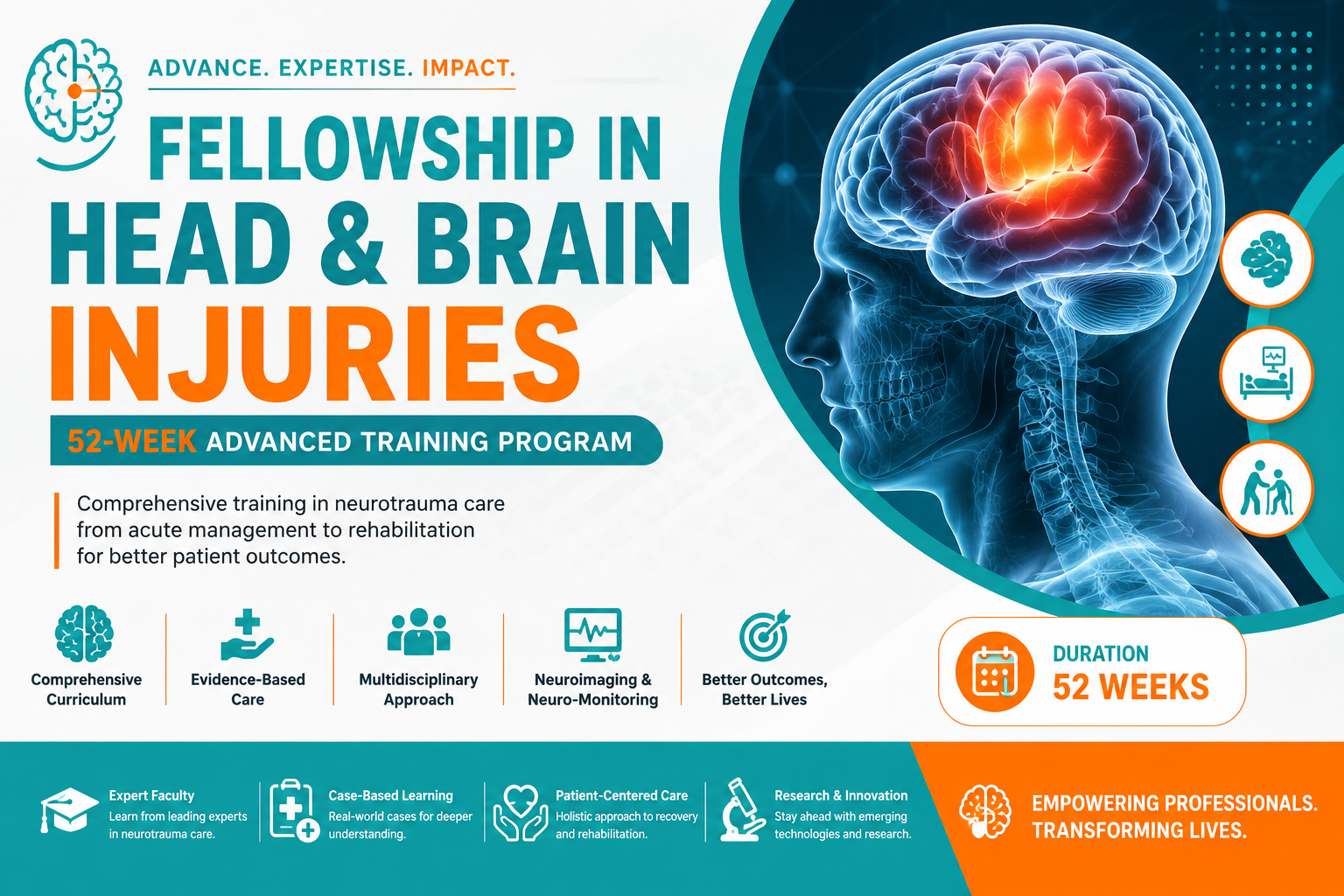

The Fellowship in Head & Brain Injuries is a comprehensive 52-week advanced training program designed for healthcare professionals seeking expertise in the assessment, diagnosis, emergency management, surgical care, neurocritical care, and rehabilitation of patients with head and brain injuries. The curriculum covers traumatic brain injury, intracranial hemorrhage, neuroimaging, critical care, rehabilitation, pediatric and geriatric neurotrauma, and emerging advances in neurotrauma management. Through evidence-based learning, case discussions, and clinical applications, participants develop the skills required to deliver high-quality multidisciplinary care and improve outcomes for patients with acute and chronic brain injuries.
The Fellowship in Head & Brain Injuries is a comprehensive 52-week advanced training program designed for physicians and healthcare professionals seeking specialized knowledge and clinical expertise in the assessment, diagnosis, treatment, and rehabilitation of patients with head and brain injuries. Head trauma remains one of the leading causes of disability and mortality worldwide, requiring healthcare providers to possess a thorough understanding of neurotrauma management, emergency interventions, neurocritical care, surgical decision-making, and long-term rehabilitation strategies.
This fellowship provides an in-depth exploration of traumatic brain injury (TBI), intracranial hemorrhage, skull fractures, concussion syndromes, diffuse axonal injuries, cerebral edema, and other neurological complications associated with head trauma. Participants gain a strong foundation in neuroanatomy, neuropathophysiology, neurological assessment, and evidence-based treatment protocols that guide modern neurotrauma care.
Throughout the program, learners will develop competencies in the initial evaluation and stabilization of patients with head injuries using established trauma care principles. The curriculum emphasizes rapid assessment techniques, airway and cervical spine management, neurological examinations, intracranial pressure monitoring, neuroprotective strategies, and emergency decision-making required in high-acuity settings. Special attention is given to early recognition of life-threatening complications and timely interventions that can significantly improve patient outcomes.
The fellowship also offers extensive training in neuroimaging and diagnostic technologies. Participants will learn to interpret CT scans, MRI studies, vascular imaging, and advanced neuro-monitoring modalities used in the diagnosis and management of traumatic brain injuries. Understanding imaging findings and correlating them with clinical presentations enables learners to make informed decisions regarding patient care and treatment planning.
A significant component of the program focuses on neurocritical care and intensive care management. Participants will explore the principles of managing severe brain injuries in critical care settings, including ventilatory support, sedation, intracranial pressure control, hemodynamic monitoring, seizure prevention, nutritional support, and the prevention of secondary brain injury. These skills are essential for optimizing neurological recovery and minimizing long-term disability.
The curriculum further addresses neurosurgical aspects of head injury management, including indications for operative intervention, decompressive craniectomy, hematoma evacuation, ventricular drainage procedures, and postoperative care. Learners gain insights into multidisciplinary collaboration between emergency physicians, intensivists, neurosurgeons, rehabilitation specialists, and allied healthcare professionals involved in neurotrauma care.
Specialized modules focus on pediatric and geriatric head injuries, recognizing the unique physiological and clinical considerations associated with these populations. Participants will learn age-specific approaches to diagnosis, treatment, rehabilitation, and family-centered care, ensuring comprehensive management across all age groups.
The fellowship also emphasizes the long-term consequences of brain injuries, including cognitive impairment, behavioral disorders, post-traumatic epilepsy, neuroendocrine dysfunction, psychological complications, and social reintegration challenges. Learners will understand how to identify, manage, and monitor these conditions while supporting patients throughout their recovery journey.
Rehabilitation forms a core pillar of the program. Participants will gain practical knowledge of multidisciplinary neurorehabilitation strategies involving physical therapy, occupational therapy, speech and language therapy, cognitive rehabilitation, vocational reintegration, and assistive technologies. The curriculum promotes a patient-centered approach aimed at maximizing functional independence and quality of life.
Emerging topics such as sports-related concussion, repetitive head trauma, military neurotrauma, telemedicine, artificial intelligence in neurotrauma, biomarkers, and precision medicine are also explored. These areas provide learners with insights into the future direction of neurotrauma research and clinical practice.
In addition to clinical training, the fellowship develops competencies in research methodology, evidence-based medicine, clinical audit, quality improvement, ethics, and medico-legal aspects of neurotrauma care. Participants are encouraged to critically evaluate scientific literature and complete a capstone project that contributes to professional growth and academic development.
Upon successful completion of the Fellowship in Head & Brain Injuries, graduates will possess advanced clinical skills and comprehensive knowledge necessary to manage patients across the continuum of neurotrauma care—from emergency stabilization and surgical intervention to rehabilitation and long-term follow-up. This program prepares healthcare professionals to deliver high-quality, evidence-based care and assume leadership roles in trauma centers, critical care units, rehabilitation facilities, and academic healthcare institutions.
Key Learning Outcomes
- Understand the epidemiology, pathophysiology, and classification of head and brain injuries.
- Perform comprehensive neurological assessments and trauma evaluations.
- Interpret neuroimaging studies relevant to traumatic brain injury.
- Apply evidence-based protocols for emergency and critical care management.
- Manage intracranial hemorrhage, cerebral edema, and raised intracranial pressure.
- Understand indications and principles of neurosurgical interventions.
- Deliver advanced neurocritical care in intensive care settings.
- Address pediatric and geriatric neurotrauma effectively.
- Identify and manage long-term neurological and psychological complications.
- Implement multidisciplinary neurorehabilitation strategies.
- Conduct research and quality improvement projects in neurotrauma care.
- Apply ethical and medico-legal principles in clinical practice.
- Integrate emerging technologies and innovations into neurotrauma management.
- Improve patient outcomes through comprehensive, patient-centered care.
- Develop leadership skills in trauma and neurological care services.
- 12 Sections
- 120 Lessons
- 52 Weeks
- Foundations of Head & Brain Injury CareThis module introduces learners to the fundamentals of head and brain injuries, including epidemiology, mechanisms of injury, neuroanatomy, pathophysiology, and classification systems. Participants will gain an understanding of traumatic brain injury (TBI) severity scales, neurological assessment methods, and the multidisciplinary approach required for effective management. The module establishes a strong foundation for advanced clinical decision-making throughout the fellowship.10
- 1.1Introduction to Head & Brain Injuries
- 1.2Epidemiology and Global Burden of TBI
- 1.3Functional Neuroanatomy for Trauma Care
- 1.4Mechanisms of Brain Injury
- 1.5Primary and Secondary Brain Injury
- 1.6Classification of Head Injuries
- 1.7Glasgow Coma Scale (GCS)
- 1.8Neurological Examination in Trauma
- 1.9Multidisciplinary Trauma Team Approach
- 1.10Documentation and Clinical Communication
- Emergency Assessment and Initial StabilizationThis module focuses on the immediate assessment and stabilization of patients presenting with head and brain injuries. Learners will develop competency in airway management, cervical spine protection, trauma resuscitation, neurological monitoring, and emergency decision-making. The module emphasizes evidence-based protocols used in emergency and critical care settings.10
- 2.1Advanced Trauma Life Support Principles
- 2.2Airway Management in Neurotrauma
- 2.3Cervical Spine Stabilization
- 2.4Initial Neurological Assessment
- 2.5Hemodynamic Stabilization
- 2.6Neuroprotective Strategies
- 2.7Management of Raised Intracranial Pressure
- 2.8Trauma Triage Systems
- 2.9Emergency Imaging Protocols
- 2.10Critical Care Transfer Principles
- Diagnostic Imaging and Neuro-MonitoringThis module provides comprehensive training in neuroimaging and monitoring techniques essential for diagnosing and managing head injuries. Learners will interpret imaging findings and understand the role of advanced monitoring tools in guiding treatment and predicting outcomes.10
- 3.1CT Brain Interpretation
- 3.2MRI in Brain Injury
- 3.3Skull Fracture Assessment
- 3.4Intracranial Hemorrhage Identification
- 3.5Diffuse Axonal Injury Imaging
- 3.6Cerebral Edema Evaluation
- 3.7Intracranial Pressure Monitoring
- 3.8Cerebral Perfusion Monitoring
- 3.9EEG in Brain Injury
- 3.10Advanced Neuroimaging Techniques
- Mild, Moderate and Severe Traumatic Brain InjuryThis module covers the clinical presentation, diagnosis, treatment, and follow-up of mild, moderate, and severe traumatic brain injuries. Learners will understand risk stratification, monitoring requirements, and evidence-based treatment strategies across the injury spectrum.10
- Surgical Neurotrauma ManagementThis module explores neurosurgical interventions for traumatic brain injuries. Learners will understand indications, timing, perioperative management, and postoperative care for common neurotrauma procedures.10
- Intracranial Hemorrhage and Vascular InjuriesThis module focuses on the diagnosis and management of intracranial bleeding and traumatic cerebrovascular injuries. Learners will develop expertise in recognizing life-threatening complications and implementing timely interventions.10
- Neurocritical Care and Intensive Care ManagementThis module develops advanced skills in the critical care management of patients with severe brain injuries. Participants will learn neurocritical care principles, ventilatory management, sedation strategies, and prevention of secondary complications.10
- 7.1Neurocritical Care Fundamentals
- 7.2Mechanical Ventilation in TBI
- 7.3Sedation and Analgesia
- 7.4Intracranial Pressure Management
- 7.5Hemodynamic Monitoring
- 7.6Fluid and Electrolyte Management
- 7.7Seizure Prevention
- 7.8Infection Control in ICU
- 7.9Nutrition in Neurocritical Care
- 7.10End-of-Life Care Discussions
- Pediatric and Geriatric Head InjuriesThis module addresses the unique clinical considerations associated with pediatric and elderly patients suffering head and brain injuries. Learners will understand age-specific injury patterns, assessment challenges, and treatment approaches.10
- Complications and Long-Term ConsequencesThis module examines the acute and chronic complications that may arise following head injuries. Participants will learn prevention, early identification, and management strategies for neurological, cognitive, and psychological sequelae.10
- Neurorehabilitation and RecoveryThis module focuses on rehabilitation principles aimed at maximizing functional recovery following brain injury. Learners will explore multidisciplinary rehabilitation strategies and patient-centered recovery pathways.10
- Special Topics in Head & Brain InjuriesThis module explores specialized and emerging areas in neurotrauma care, including sports-related concussions, military injuries, advanced therapeutics, and innovative technologies shaping future practice.10
- Research, Ethics, Quality Improvement & Fellowship ProjectThe final module integrates research methodology, ethical considerations, quality improvement initiatives, and scholarly project development. Participants will complete a capstone project demonstrating their ability to apply evidence-based practices in head and brain injury management.10
- 12.1Evidence-Based Neurotrauma Practice
- 12.2Clinical Research Methodology
- 12.3Biostatistics for Clinicians
- 12.4Critical Appraisal of Literature
- 12.5Ethics in Neurotrauma Care
- 12.6Medico-Legal Aspects of Brain Injury
- 12.7Quality Improvement Programs
- 12.8Trauma Registry Utilization
- 12.9Capstone Research Project
- 12.10Final Case Presentation and Fellowship Assessment
You might be intersted in
-
167 Students
-
52 Weeks
-
132 Students
-
52 Weeks
-
124 Students
-
52 Weeks
-
145 Students
-
52 Weeks