
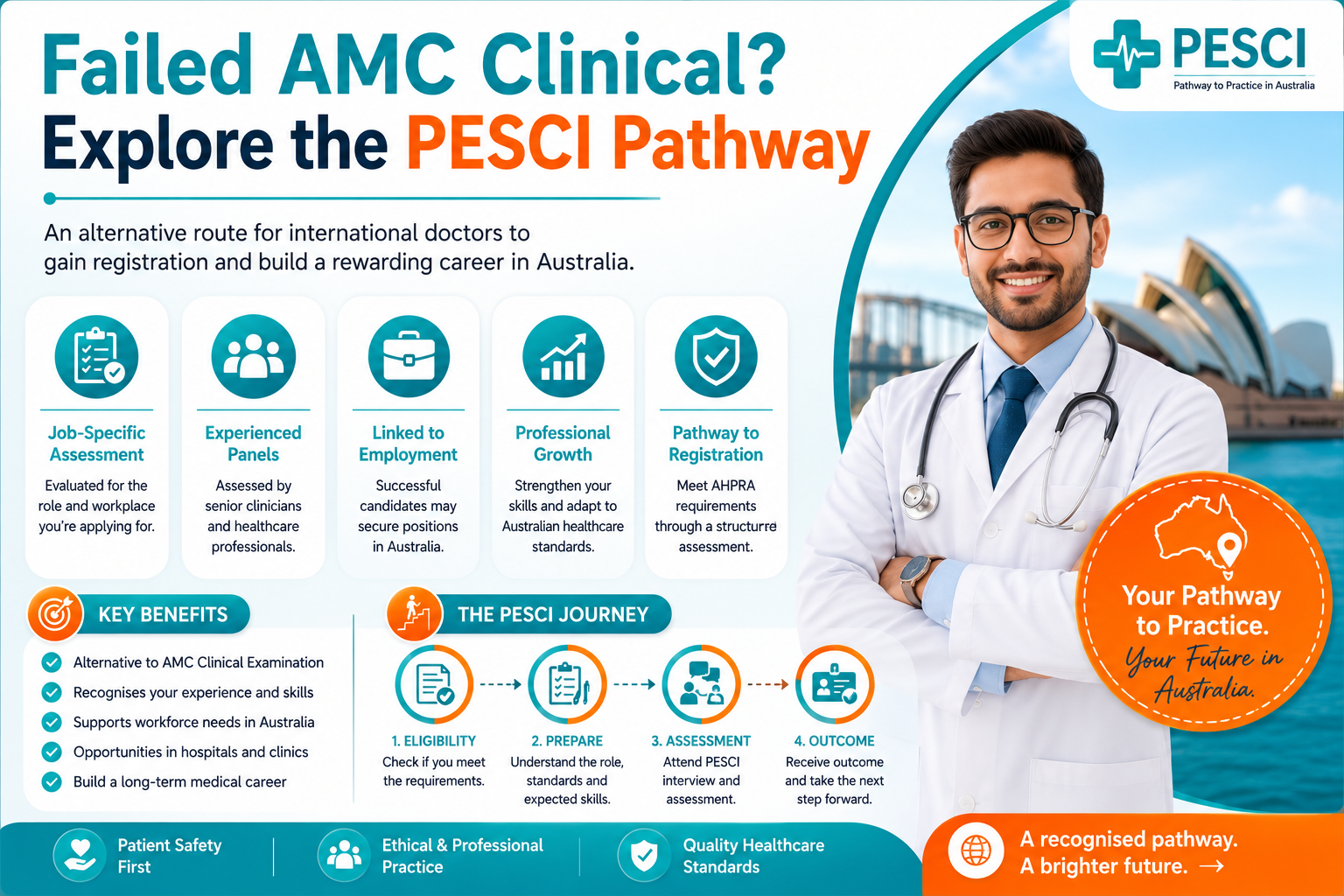
For many International Medical Graduates (IMGs), passing the Australian Medical Council (AMC) examinations is a crucial milestone toward practicing medicine in Australia. While successfully clearing the AMC Clinical Examination is a common pathway, not every candidate achieves a passing score on their first attempt. Failing the AMC Clinical exam can be disappointing, but it does not mean the end of your Australian medical career aspirations.
Fortunately, there are alternative pathways available, and one of the most promising options is the Professional Enhancement Program and Structured Clinical Interview (PESCI) pathway. This route has helped many IMGs continue their journey toward medical registration and employment in Australia, even after an unsuccessful AMC Clinical attempt.
Understanding the AMC Clinical Challenge
The AMC Clinical Examination assesses a doctor’s ability to apply medical knowledge, clinical reasoning, communication skills, and professionalism in real-world healthcare scenarios. The examination is rigorous and designed to ensure that overseas-trained doctors meet Australian healthcare standards.
Many capable doctors struggle with the AMC Clinical exam for various reasons:
- Limited familiarity with the Australian healthcare system
- Differences in communication styles and patient expectations
- Examination anxiety and time pressure
- Lack of exposure to Australian clinical practice settings
- Challenges in adapting to Objective Structured Clinical Examination (OSCE) formats
Failing the examination can be discouraging, but it is important to remember that clinical competence and exam performance are not always the same. Numerous highly skilled physicians require multiple attempts or choose alternative pathways to achieve registration.
What Is the PESCI Pathway?
The Professional Enhancement Program and Structured Clinical Interview (PESCI) pathway is designed for internationally trained doctors seeking registration through employer-sponsored or specialist pathways.
A PESCI is an assessment that evaluates whether an IMG possesses the knowledge, skills, experience, and professional attributes necessary to safely perform a specific medical role under supervision.
Unlike the AMC Clinical Examination, which assesses general clinical competency across a broad range of scenarios, PESCI focuses on a particular position and practice setting. The assessment considers the doctor’s qualifications, work experience, clinical skills, and suitability for the proposed role.
This makes PESCI an attractive option for doctors who have substantial clinical experience but may have struggled with the standardized AMC Clinical examination format.
Who Can Consider the PESCI Pathway?
The PESCI pathway may be a suitable option for international medical graduates who are looking for alternative routes to medical registration and employment in Australia. It is particularly relevant for doctors who have not successfully passed the AMC Clinical Examination but still possess the qualifications, skills, and experience required to practice safely within the Australian healthcare system. Rather than focusing solely on examination performance, the PESCI process evaluates a candidate’s suitability for a specific medical role and workplace environment.
To be eligible, candidates must hold an acceptable primary medical qualification that is recognized by the relevant Australian regulatory authorities. In many cases, doctors pursuing this pathway have either secured a job offer or are actively seeking employment with an approved Australian healthcare employer. Since the assessment is linked to a specific position, having a potential employer and a clearly defined role is often an important component of the process.
The PESCI pathway is also designed for doctors applying through particular registration pathways that require an assessment of their readiness to work in a designated clinical setting. Candidates are generally expected to have relevant clinical experience in their chosen specialty or area of practice, enabling them to demonstrate the knowledge, skills, and professional judgment necessary for the proposed position. Additionally, applicants must meet the required English language proficiency standards to ensure they can communicate effectively with patients, colleagues, and other healthcare professionals in the Australian healthcare environment.
For experienced international doctors who meet these requirements and are committed to building a medical career in Australia, the PESCI pathway can provide a practical and valuable opportunity to progress toward registration and employment.
How PESCI Differs from AMC Clinical
Understanding the differences between the two assessments can help doctors determine whether PESCI may be a suitable alternative.
AMC Clinical Examination And PESCI Assessment
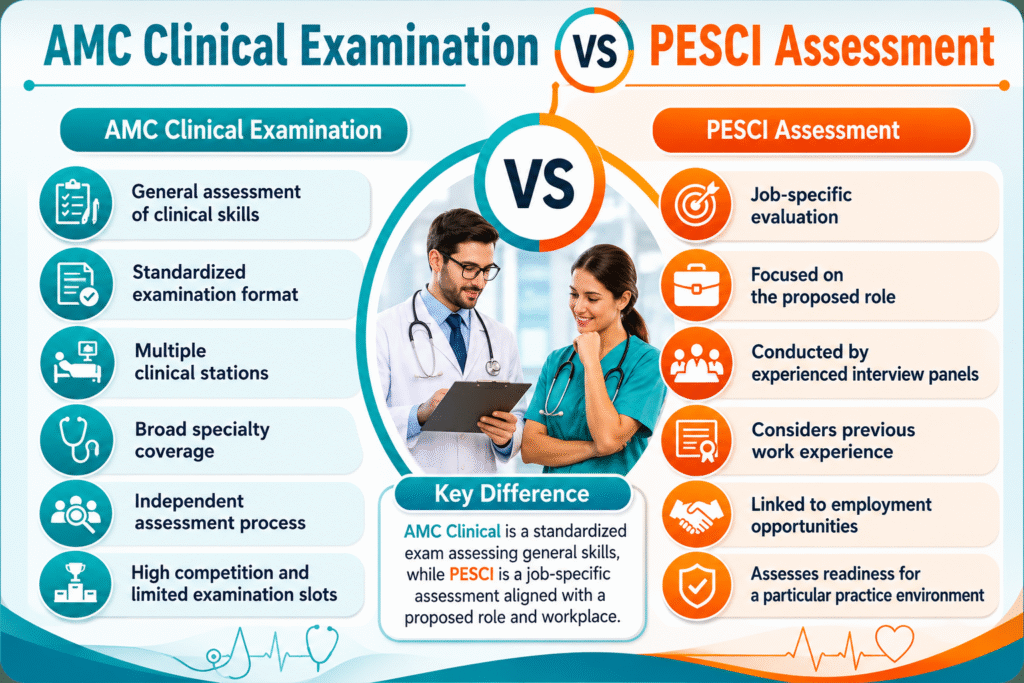
The PESCI process often feels more practical and relevant to experienced doctors because it evaluates their ability to perform in a real employment setting.
Benefits of Choosing the PESCI Pathway
Alternative Route to Registration
One of the most significant advantages of the PESCI pathway is that it offers international medical graduates an alternative route toward medical registration and employment in Australia. For doctors who have faced challenges with the AMC Clinical Examination, PESCI provides an opportunity to continue their professional journey without having to rely solely on a standardized clinical assessment. This pathway allows eligible candidates to demonstrate their suitability for specific medical roles while progressing toward their career goals in the Australian healthcare system.
Recognition of Experience
The PESCI pathway places considerable value on a doctor’s previous clinical experience and professional background. Rather than focusing exclusively on examination performance, the assessment considers a candidate’s practical skills, clinical judgment, and ability to manage patient care in real-world settings. This is particularly beneficial for experienced doctors who have spent years practicing medicine and can demonstrate competence through their work history, achievements, and professional development activities.
Job-Focused Assessment
Unlike broad clinical examinations that assess a wide range of medical scenarios, the PESCI assessment is specifically tailored to the position for which the doctor is applying. This enables candidates to focus their preparation on the responsibilities, clinical requirements, and expectations of the intended role. As a result, doctors can showcase their strengths and relevant expertise in a context that closely reflects their future workplace, making the assessment more practical and directly applicable to their career aspirations.
Opportunity to Work in Australia
Successfully completing the PESCI process can open doors to valuable employment opportunities within the Australian healthcare sector. Many healthcare facilities, particularly those located in regional and rural areas, actively seek qualified international medical graduates to address workforce shortages. Through the PESCI pathway, doctors may secure positions in hospitals, community health centers, general practices, and specialist services, allowing them to gain Australian clinical experience while contributing to the country’s healthcare needs.
Professional Development
Opportunity to Work in Australia
One of the most significant benefits of successfully completing a PESCI assessment is the opportunity to work within the Australian healthcare system. Doctors who meet the assessment requirements may secure employment in hospitals, medical practices, community health centers, and other healthcare facilities across Australia. This pathway is particularly valuable in regional, rural, and underserved areas where there is a strong demand for qualified medical professionals. By demonstrating their suitability for a specific role and workplace, candidates can take an important step toward establishing a rewarding medical career in Australia while contributing to the delivery of essential healthcare services.
Professional Development
The PESCI process serves as more than just an assessment for registration and employment; it also provides a valuable opportunity for professional growth and development. Preparing for the assessment encourages doctors to gain a deeper understanding of Australian healthcare standards, clinical governance frameworks, patient safety principles, and ethical practice requirements. Candidates are often required to familiarize themselves with local healthcare systems, workplace policies, and professional expectations, helping them develop the knowledge and skills needed to practice effectively within the Australian medical environment.
In addition, the preparation process helps strengthen communication and interpersonal skills, which are essential for delivering patient-centered care and working collaboratively within multidisciplinary healthcare teams. Doctors become more confident in discussing clinical scenarios, managing complex patient interactions, and addressing cultural diversity within healthcare settings. These competencies not only enhance performance during the PESCI assessment but also support long-term career progression, professional competence, and successful integration into the Australian healthcare workforce. Through continuous learning and adaptation, candidates are better equipped to provide safe, effective, and high-quality care while advancing their careers in Australia.
Preparing for a PESCI Assessment
Although the PESCI pathway can provide an alternative route for doctors who have not successfully completed the AMC Clinical Examination, it is still a structured and rigorous assessment that requires careful preparation. The interview panel evaluates whether a candidate has the knowledge, skills, experience, and professional attributes necessary to work safely and effectively within the specific Australian healthcare setting for which they are being assessed.
Understand the Job Description
A thorough understanding of the proposed position is essential before attending a PESCI assessment. Candidates should carefully review the job description, including the clinical responsibilities, expected scope of practice, patient population, and workplace environment. The panel will assess whether the applicant’s previous training and clinical experience align with the requirements of the role. Being able to clearly explain how your background prepares you for the position can significantly strengthen your performance during the assessment.
Learn Australian Healthcare Standards
Familiarity with Australian healthcare systems, standards, and clinical practices is a key expectation for PESCI candidates. Doctors should understand current clinical guidelines, patient safety principles, infection control measures, documentation requirements, and ethical frameworks used in Australian healthcare settings. Knowledge of professional standards and regulatory expectations demonstrates a commitment to delivering safe, high-quality patient care and helps reassure assessors that the candidate can adapt effectively to the Australian healthcare environment.
Strengthen Communication Skills
Communication is one of the most important components evaluated during a PESCI interview. Candidates must demonstrate the ability to communicate clearly and professionally with patients, families, colleagues, and multidisciplinary healthcare teams. The panel may explore topics such as informed consent, shared decision-making, managing difficult conversations, cultural sensitivity, and maintaining professional boundaries. Strong communication skills help ensure patient safety and contribute to positive healthcare outcomes.
Review Clinical Scenarios
Preparing for specialty-specific clinical scenarios is an important part of PESCI preparation. Candidates should review common presentations, diagnostic approaches, treatment pathways, and emergency situations relevant to their intended area of practice. During the interview, assessors often evaluate clinical reasoning, decision-making abilities, and the candidate’s approach to managing patient care. Practicing case discussions can help improve confidence and demonstrate sound clinical judgment.
Gather Supporting Documentation
Well-organized documentation is essential for a smooth assessment process. Candidates should ensure that all qualifications, registration documents, employment records, professional references, continuing professional development activities, and evidence of clinical experience are readily available and up to date. Accurate and comprehensive documentation helps verify professional credentials and supports the assessment of the candidate’s suitability for the proposed role.
Common PESCI Interview Topics
During a PESCI assessment, candidates can expect questions that explore a wide range of professional and clinical competencies. Assessors commonly examine how doctors approach clinical decision-making, including the evaluation of patient presentations, formulation of differential diagnoses, and development of management plans. Emergency management scenarios are frequently discussed to assess a candidate’s ability to recognize and respond appropriately to urgent or life-threatening situations.
The interview may also focus on patient communication techniques, particularly in situations involving informed consent, difficult conversations, patient education, and managing expectations. Ethical and legal responsibilities are another important area, with questions often addressing confidentiality, professional boundaries, mandatory reporting obligations, and ethical decision-making in complex clinical situations.
Candidates should also be prepared to discuss referral and escalation procedures, demonstrating an understanding of when to seek senior support, involve specialist services, or transfer patient care. Cultural competence and diversity awareness are increasingly important topics, reflecting Australia’s multicultural healthcare environment and the need to provide respectful, patient-centered care to individuals from diverse backgrounds.
Additionally, assessors may explore teamwork and multidisciplinary collaboration, evaluating how candidates work with nurses, allied health professionals, specialists, and other healthcare providers to deliver coordinated care. Discussions around the management of complex patient cases are common and allow candidates to demonstrate their clinical reasoning, risk assessment abilities, communication skills, and overall approach to safe and effective patient management within the Australian healthcare system.
Challenges to Consider
While the PESCI pathway offers an alternative route for doctors seeking employment and registration opportunities in Australia, candidates should be aware of the challenges involved in the process. A successful PESCI assessment does not guarantee unrestricted registration or permanent employment, as the assessment is specifically linked to a particular position, workplace, and scope of practice. Doctors must demonstrate that their qualifications, clinical experience, and professional competencies are suitable for the role they intend to undertake. As a result, finding an appropriate job offer and meeting the specific requirements of the employing healthcare facility can sometimes be challenging.
Another important consideration is the need to adapt to the Australian healthcare system and workplace culture. International medical graduates may encounter differences in clinical guidelines, patient expectations, documentation standards, communication styles, and multidisciplinary team practices. Developing familiarity with Australian healthcare regulations, ethical standards, patient safety principles, and cultural diversity requirements is essential for a smooth transition into practice. Candidates often need to invest significant time and effort in preparation to ensure they are ready for both the assessment and the realities of working within the Australian healthcare environment.
The PESCI process can also involve financial and administrative commitments. Assessment fees, document verification requirements, professional registration expenses, and potential relocation costs may place additional demands on candidates. Furthermore, the assessment itself is comprehensive and requires careful preparation, particularly in areas such as clinical decision-making, communication skills, professional conduct, and specialty-specific knowledge. Understanding these challenges in advance allows candidates to prepare effectively, manage expectations, and approach the PESCI pathway with a clear plan for achieving their professional goals in Australia.
Is PESCI the Right Choice After Failing AMC Clinical?
The answer depends on your qualifications, career goals, and professional experience. For doctors with substantial clinical backgrounds, a job opportunity in Australia, and a desire to demonstrate competency in a specific practice setting, PESCI can be an excellent alternative pathway.
Rather than viewing an AMC Clinical failure as a setback, many IMGs use it as an opportunity to reassess their options and identify pathways better aligned with their strengths and experience.
Final Thoughts
Failing the AMC Clinical Examination can be disappointing, but it should not define your medical career. Australia offers multiple registration pathways for qualified international medical graduates, and the PESCI pathway has become a valuable option for many experienced doctors.
With the right preparation, relevant clinical experience, and a suitable employment opportunity, PESCI can provide a practical route toward medical registration and a rewarding career in Australia. If AMC Clinical did not go as planned, exploring the PESCI pathway could be the next step that brings you closer to achieving your goal of practicing medicine in Australia.
Success in medicine is often about persistence, adaptability, and finding the pathway that best matches your professional strengths. The PESCI pathway may be exactly that opportunity.