
Fellowship in Cardiac Rehabilitation
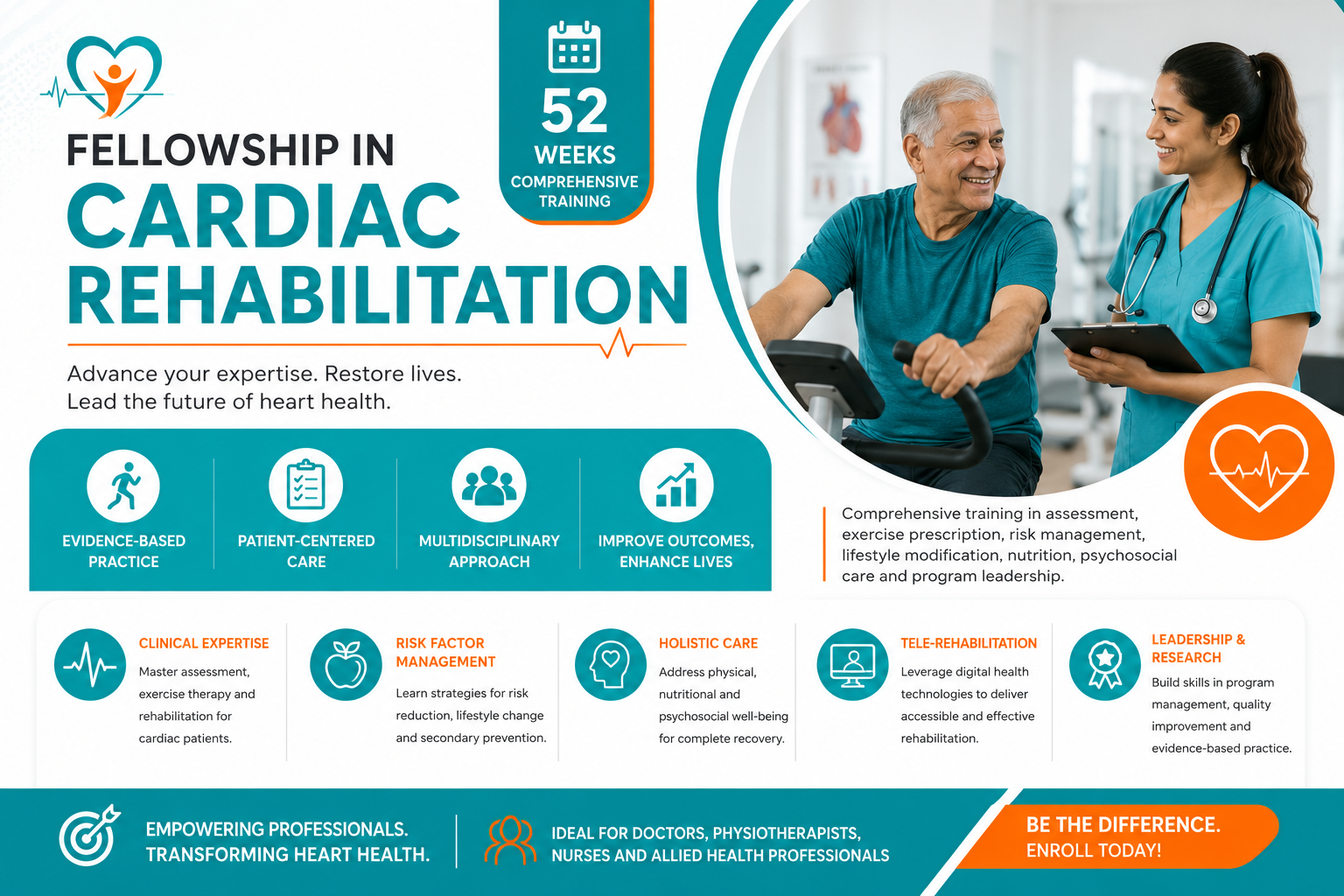

The Fellowship in Cardiac Rehabilitation is a comprehensive 52-week advanced training program designed for healthcare professionals seeking expertise in cardiovascular recovery and secondary prevention. The course covers cardiac assessment, exercise prescription, risk factor management, nutrition, psychosocial care, heart failure rehabilitation, tele-rehabilitation, and program leadership. Through evidence-based learning and clinical practice, participants develop the skills required to design, implement, and manage effective cardiac rehabilitation programs that improve patient outcomes, functional capacity, and quality of life.
Course Overview
The Fellowship in Cardiac Rehabilitation is a comprehensive 52-week advanced training program designed for healthcare professionals who wish to develop specialized expertise in cardiovascular rehabilitation, secondary prevention, and long-term cardiac care. As cardiovascular diseases remain one of the leading causes of morbidity and mortality worldwide, there is an increasing demand for skilled professionals capable of delivering evidence-based rehabilitation services that improve patient outcomes and quality of life.
This fellowship provides an in-depth understanding of the principles and practices of cardiac rehabilitation, integrating clinical knowledge with practical skills required to assess, manage, and support patients recovering from cardiovascular events and procedures. Participants will gain expertise in exercise prescription, risk stratification, lifestyle modification, nutrition counseling, psychosocial support, and multidisciplinary care coordination.
The program emphasizes a patient-centered approach to rehabilitation, enabling learners to develop individualized treatment plans for patients with coronary artery disease, heart failure, cardiac surgeries, arrhythmias, and other cardiovascular conditions. Fellows will learn to interpret diagnostic investigations, conduct functional assessments, monitor exercise sessions, and implement strategies to reduce recurrent cardiovascular events.
In addition to clinical rehabilitation practices, the fellowship explores contemporary topics such as tele-rehabilitation, digital health technologies, quality improvement initiatives, healthcare leadership, and research methodologies. Learners will be equipped to contribute to the development and management of cardiac rehabilitation programs in hospitals, rehabilitation centers, outpatient clinics, and community-based healthcare settings.
Throughout the 52-week curriculum, participants will engage in case-based learning, clinical discussions, patient assessments, and evidence-based decision-making activities. The fellowship fosters critical thinking, interdisciplinary collaboration, and professional development, preparing graduates to become leaders in the growing field of cardiac rehabilitation.
Key Learning Outcomes
Upon successful completion of the fellowship, participants will be able to:
- Understand the principles, goals, and components of comprehensive cardiac rehabilitation programs.
- Assess cardiovascular patients using clinical evaluations, diagnostic investigations, and functional testing.
- Perform risk stratification and develop individualized rehabilitation plans.
- Design and supervise safe and effective exercise programs for cardiac patients.
- Manage rehabilitation for patients recovering from myocardial infarction, coronary interventions, and cardiac surgeries.
- Apply specialized rehabilitation strategies for heart failure and advanced cardiovascular conditions.
- Implement evidence-based lifestyle modification and cardiovascular risk reduction interventions.
- Provide nutrition counseling and dietary guidance for heart health.
- Address psychosocial factors, including anxiety, depression, stress, and adherence challenges.
- Deliver rehabilitation services to special populations, including older adults and patients with multiple comorbidities.
- Utilize tele-rehabilitation and digital health technologies to improve patient engagement and access to care.
- Participate in quality improvement initiatives and program evaluation activities.
- Conduct research, critically appraise scientific literature, and apply evidence-based practices.
- Collaborate effectively within multidisciplinary healthcare teams.
- Lead and manage cardiac rehabilitation programs in diverse healthcare settings.
Who Should Enroll?
This fellowship is suitable for:
- Physicians and Cardiologists
- Internal Medicine Specialists
- Rehabilitation Medicine Physicians
- Physiotherapists and Physical Therapists
- Exercise Physiologists
- Cardiac Nurses
- Nurse Practitioners
- Occupational Therapists
- Allied Healthcare Professionals involved in cardiovascular care
- Healthcare professionals seeking specialization in cardiac rehabilitation
Career Opportunities
Graduates of the Fellowship in Cardiac Rehabilitation can pursue roles such as:
- Cardiac Rehabilitation Specialist
- Cardiac Rehabilitation Coordinator
- Cardiovascular Rehabilitation Consultant
- Cardiac Exercise Physiologist
- Preventive Cardiology Specialist
- Clinical Rehabilitation Practitioner
- Cardiac Wellness Program Manager
- Heart Failure Rehabilitation Specialist
- Rehabilitation Program Director
- Academic and Research Professional in Cardiac Rehabilitation
Program Highlights
- Comprehensive 52-week structured curriculum
- Evidence-based and clinically relevant training
- Focus on exercise therapy and cardiovascular recovery
- Advanced risk assessment and patient monitoring techniques
- Lifestyle modification and preventive cardiology training
- Nutrition and psychosocial care integration
- Exposure to tele-rehabilitation and digital healthcare solutions
- Research and quality improvement project opportunities
- Multidisciplinary approach to patient management
- Preparation for leadership roles in cardiac rehabilitation services
Why Choose This Fellowship?
Cardiac rehabilitation is a critical component of modern cardiovascular care, helping patients recover from cardiac events, improve physical function, reduce hospital readmissions, and enhance overall quality of life. This fellowship provides a balanced combination of theoretical knowledge, practical application, and professional development, ensuring graduates are prepared to meet the evolving needs of cardiovascular healthcare.
By completing this program, healthcare professionals will gain the confidence and expertise required to deliver comprehensive rehabilitation services, contribute to preventive cardiology initiatives, and support patients throughout their cardiovascular recovery journey. The fellowship serves as a valuable pathway for professionals seeking advanced specialization and career growth in the field of cardiac rehabilitation.
- 12 Sections
- 96 Lessons
- 52 Weeks
- Foundations of Cardiac RehabilitationThis module introduces learners to the principles, scope, and importance of cardiac rehabilitation in modern cardiovascular care. Participants will explore the epidemiology of cardiovascular diseases, the multidisciplinary nature of rehabilitation programs, patient-centered care models, and evidence-based guidelines. The module establishes a strong foundation for understanding how rehabilitation improves clinical outcomes, functional capacity, and quality of life.8
- 1.1Introduction to Cardiac Rehabilitation
- 1.2History and Evolution of Cardiac Rehabilitation
- 1.3Epidemiology of Cardiovascular Diseases
- 1.4Goals and Components of Rehabilitation Programs
- 1.5Multidisciplinary Team Roles and Responsibilities
- 1.6Patient-Centered Care Principles
- 1.7Evidence-Based Guidelines in Cardiac Rehabilitation
- 1.8Ethical and Professional Considerations
- Cardiovascular Anatomy, Physiology, and PathophysiologyThis module provides a comprehensive review of cardiovascular anatomy and physiology relevant to rehabilitation practice. Learners will understand the mechanisms underlying common cardiovascular diseases and how physiological changes affect exercise tolerance and recovery. Emphasis is placed on integrating pathophysiological knowledge into rehabilitation planning.8
- Clinical Assessment and Risk StratificationThis module focuses on patient evaluation techniques and risk assessment methods used in cardiac rehabilitation. Learners will gain expertise in collecting medical histories, conducting physical examinations, interpreting diagnostic investigations, and stratifying patients according to cardiovascular risk to ensure safe participation in rehabilitation programs.8
- Exercise Physiology and PrescriptionExercise is the cornerstone of cardiac rehabilitation. This module explores exercise physiology, principles of training, and evidence-based exercise prescription for patients with cardiovascular conditions. Learners will develop individualized exercise programs that optimize safety, effectiveness, and long-term adherence.8
- Rehabilitation for Coronary Artery Disease and Post-Cardiac EventsThis module addresses rehabilitation approaches for patients recovering from myocardial infarction, coronary artery bypass graft surgery, angioplasty, and other coronary interventions. Learners will understand disease-specific protocols and strategies to enhance recovery while reducing recurrence risk.8
- Heart Failure and Advanced Cardiac RehabilitationThis module focuses on rehabilitation strategies for patients with chronic heart failure and advanced cardiovascular disease. Participants will learn specialized exercise prescriptions, symptom monitoring techniques, and multidisciplinary interventions aimed at improving functional capacity and reducing hospital readmissions.8
- Lifestyle Modification and Risk Factor ManagementLifestyle modification is critical for cardiovascular disease prevention and recovery. This module equips learners with skills to address modifiable risk factors through structured interventions focused on smoking cessation, weight management, stress reduction, and behavior change.8
- Nutrition in Cardiac RehabilitationNutrition plays a vital role in cardiovascular recovery and prevention. This module explores dietary assessment, nutritional counseling, and evidence-based dietary patterns that support heart health. Learners will develop practical strategies to guide patients toward sustainable dietary improvements.8
- Psychosocial Aspects of Cardiac RehabilitationPsychological and social factors significantly influence recovery and adherence to rehabilitation programs. This module focuses on identifying psychosocial challenges, providing support, and integrating mental health interventions within cardiac rehabilitation services.8
- Special Populations in Cardiac RehabilitationThis module examines the unique needs of diverse patient populations, including older adults, women, patients with multiple comorbidities, and those with congenital heart disease. Learners will adapt rehabilitation strategies to address individual patient characteristics and clinical complexities.8
- Program Management, Quality Improvement, and Tele-RehabilitationThis module prepares fellows to design, manage, and evaluate cardiac rehabilitation programs. Participants will learn quality improvement methodologies, healthcare management principles, outcome measurement techniques, and the growing role of tele-rehabilitation technologies.8
- Research, Clinical Practice, and Capstone ProjectThe final module integrates knowledge and skills acquired throughout the fellowship. Learners will engage in research activities, evidence appraisal, clinical case presentations, and a capstone project focused on improving cardiac rehabilitation practice and patient outcomes.8
- 12.1Principles of Clinical Research
- 12.2Evidence-Based Practice
- 12.3Literature Review and Critical Appraisal
- 12.4Research Methodology in Rehabilitation
- 12.5Clinical Audit and Quality Improvement Projects
- 12.6Complex Case Presentations
- 12.7Capstone Project Development
- 12.8Final Assessment and Fellowship Portfolio
You might be intersted in
-
167 Students
-
52 Weeks
-
132 Students
-
52 Weeks
-
124 Students
-
52 Weeks
-
133 Students
-
52 Weeks