
Diploma In Neurosurgery
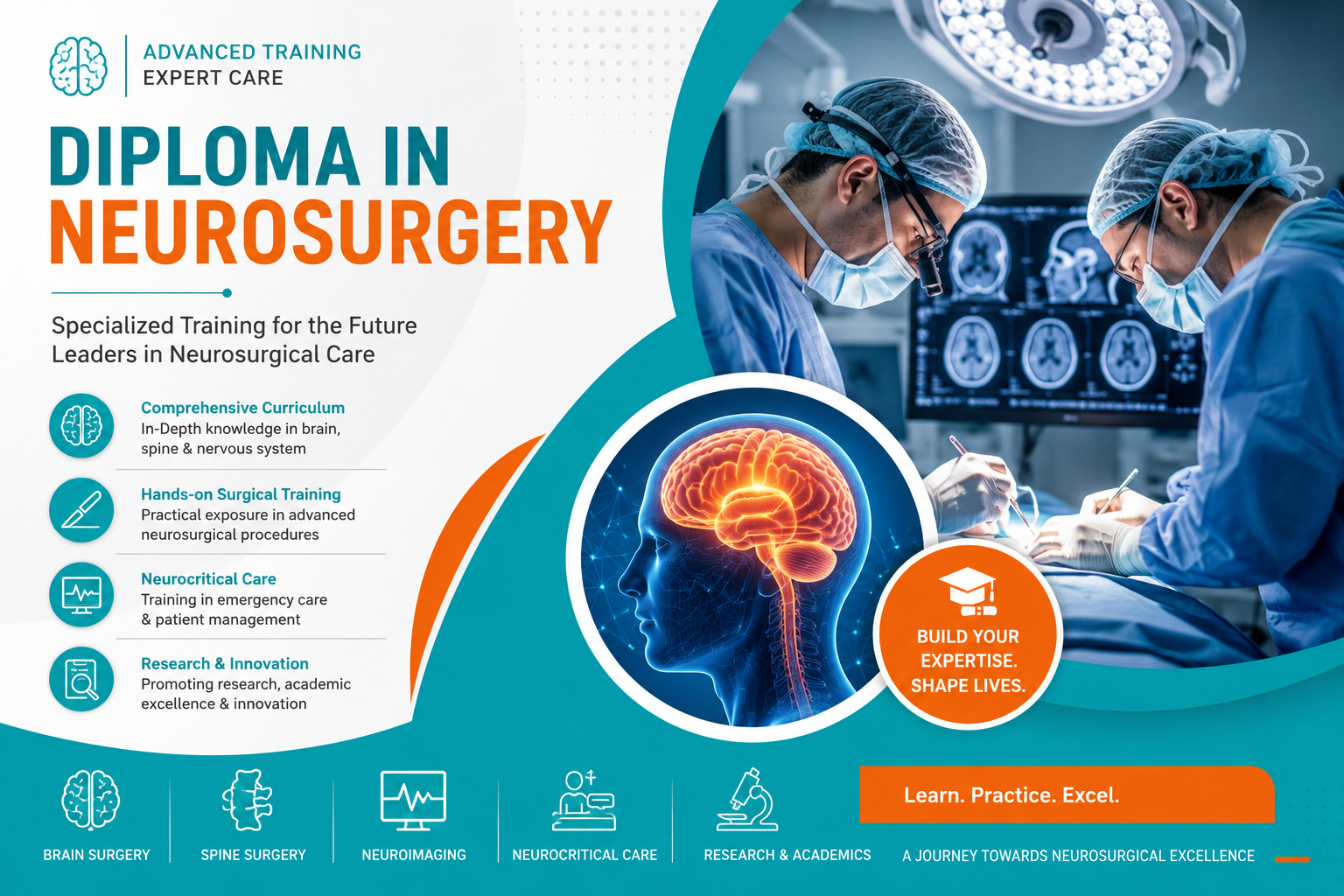

The Diploma in Neurosurgery is a specialized postgraduate program that provides advanced training in brain, spine, and nervous system disorders. The course combines theoretical learning, clinical exposure, surgical skills, neuroimaging, and emergency care management to prepare doctors for careers in neurosurgery and related specialties.
A Diploma in Neurosurgery is a highly specialized medical program designed for healthcare professionals who wish to develop advanced knowledge and practical expertise in the diagnosis, treatment, and surgical management of disorders affecting the brain, spine, nerves, and central nervous system. This program provides comprehensive training in neuroanatomy, neurosurgical procedures, neurocritical care, trauma management, and modern surgical technologies used in contemporary neurosurgical practice. It is ideal for medical graduates and practitioners aiming to enhance their clinical competence in one of the most challenging and rapidly evolving branches of medicine.
The curriculum of the Diploma in Neurosurgery combines theoretical learning with hands-on clinical exposure. Students gain a deep understanding of neurological diseases such as brain tumors, spinal disorders, stroke, traumatic brain injuries, congenital abnormalities, epilepsy, and degenerative neurological conditions. Training often includes exposure to microsurgical techniques, neuroimaging interpretation, operative planning, patient assessment, and postoperative care. Through practical workshops and supervised clinical practice, learners develop the precision, decision-making ability, and technical skills required for neurosurgical procedures.
One of the major strengths of this diploma program is its focus on real-world clinical experience. Participants frequently work alongside experienced neurosurgeons in hospitals and surgical units, observing and assisting in procedures involving cranial surgery, spinal surgery, minimally invasive neurosurgery, and emergency neurotrauma interventions. This practical approach helps students understand the complexities of patient management while improving their confidence in handling critical neurological cases. The program also emphasizes patient safety, ethical medical practice, and multidisciplinary collaboration within healthcare settings.
Modern neurosurgery heavily relies on advanced technologies, and the diploma program introduces students to innovative tools such as neuronavigation systems, endoscopic neurosurgery, stereotactic surgery, and robotic-assisted procedures. Learners also study neurophysiology, neuropathology, neuropharmacology, and intensive care techniques essential for treating critically ill neurological patients. The integration of technology and evidence-based medicine ensures that graduates remain updated with current developments and global standards in neurosurgical care.
A Diploma in Neurosurgery can open various career opportunities in hospitals, trauma centers, neurology clinics, research institutions, and academic settings. Graduates may work in surgical support roles, neurocritical care units, emergency medicine departments, or continue toward advanced neurosurgical specialization and research. The qualification is particularly valuable for doctors seeking to strengthen their expertise in neurological sciences and surgical disciplines while contributing to improved patient outcomes in complex neurological conditions.
As neurological disorders continue to increase worldwide due to aging populations, trauma cases, and lifestyle-related diseases, the demand for skilled neurosurgical professionals is growing significantly. This diploma equips learners with the clinical knowledge, surgical foundations, and professional skills necessary to meet the evolving challenges of neurological healthcare. By combining academic excellence, clinical training, and technological advancement, the Diploma in Neurosurgery serves as a strong foundation for a rewarding and impactful medical career in the field of neuroscience and surgical medicine.
- 16 Sections
- 111 Lessons
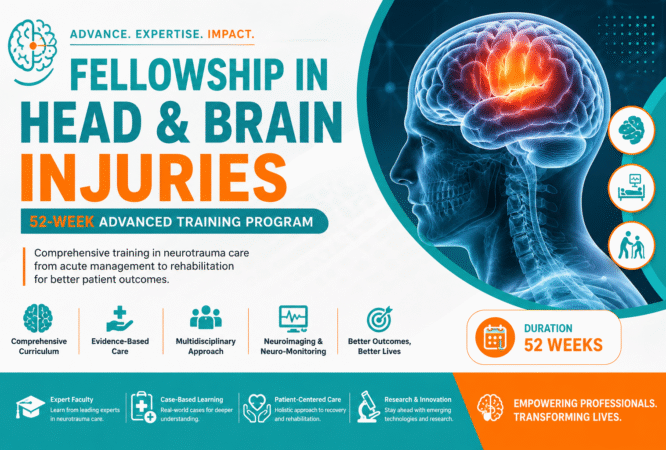
- 52 Weeks
- Introduction to NeurosurgeryThis module introduces the foundations of neurosurgery, including the evolution of the specialty, operating room protocols, ethical practice, and the role of modern neurosurgeons in patient care.6
- Neuroanatomy FundamentalsStudents develop a detailed understanding of neuroanatomy essential for neurosurgical diagnosis and procedures.8
- Neurophysiology and NeuropathologyThis module explains neural function, electrophysiology, and common pathological mechanisms affecting the nervous system.6
- Clinical Neurological ExaminationStudents learn systematic neurological examination techniques used in neurosurgical assessment.8
- Neuroimaging in NeurosurgeryThis module covers radiological techniques used for diagnosing neurosurgical conditions.6
- Neurotrauma ManagementStudents learn evaluation and management of traumatic brain and spinal injuries.8
- Brain Tumors and Neuro-OncologyThis module focuses on diagnosis, pathology, and treatment approaches for brain and spinal tumors.8
- Cerebrovascular NeurosurgeryStudents study vascular disorders of the nervous system and their surgical management.7
- Spine Surgery and DisordersThis module explores spinal disorders, diagnostic evaluation, and surgical interventions.8
- Pediatric NeurosurgeryStudents learn neurosurgical conditions unique to infants and children.7
- Functional and Stereotactic NeurosurgeryThis module introduces advanced neurosurgical techniques used for movement disorders, pain, and epilepsy.7
- Peripheral Nerve SurgeryStudents explore diagnosis and management of peripheral nerve injuries and entrapment syndromes.6
- Neurocritical CareThis module focuses on intensive care management of critically ill neurosurgical patients.7
- Neurosurgical Procedures and SkillsStudents gain practical knowledge of common neurosurgical procedures and operative techniques.7
- Research, Innovation, and Evidence-Based PracticeThis module teaches research methodology, scientific writing, and evidence-based neurosurgical practice.6
- Final Assessment and Capstone ProjectStudents complete final evaluations, case discussions, and a capstone research or clinical project.6
You might be intersted in
-
132 Students
-
52 Weeks
-
114 Students
-
52 Weeks
-
87 Students
-
52 Weeks
-
120 Students
-
52 Weeks