
Diploma in Cardiovascular Pathology
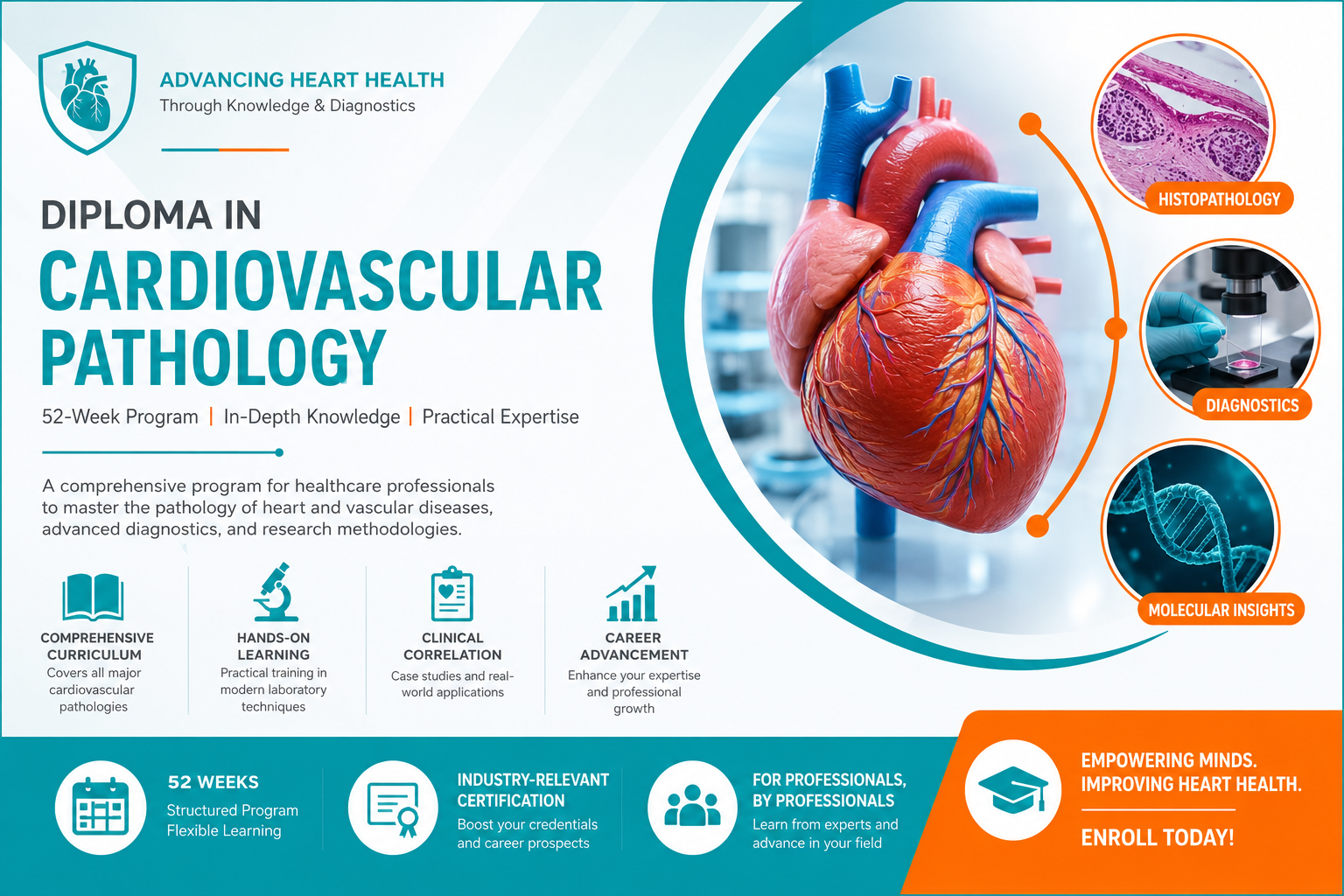

The Diploma in Cardiovascular Pathology is a comprehensive 52-week program designed to provide in-depth knowledge of heart and vascular diseases, their pathological mechanisms, diagnostic techniques, and laboratory practices. The course covers cardiovascular histology, congenital and acquired heart diseases, vascular disorders, molecular pathology, diagnostic methodologies, and research applications. Learners will develop the skills required to analyze cardiovascular specimens, interpret pathological findings, and support accurate diagnosis and patient management in clinical and research settings. This program is ideal for healthcare professionals, laboratory personnel, medical graduates, and individuals seeking specialized expertise in cardiovascular pathology.
The Diploma in Cardiovascular Pathology is a comprehensive 52-week academic and professional training program designed to provide learners with specialized knowledge of diseases affecting the heart, blood vessels, and circulatory system. As cardiovascular diseases remain one of the leading causes of morbidity and mortality worldwide, there is an increasing demand for healthcare professionals with expertise in the pathological mechanisms, diagnosis, and laboratory evaluation of cardiovascular disorders. This diploma equips students with the theoretical foundations and practical skills required to understand, investigate, and interpret cardiovascular pathology in clinical and research settings.
The program begins with an in-depth study of cardiovascular anatomy, physiology, and general pathological principles. Students develop a strong understanding of cellular injury, inflammation, tissue repair, and disease progression within cardiovascular tissues. The curriculum then explores cardiovascular histology, molecular pathology, genetic influences, and laboratory diagnostic techniques that form the basis of modern cardiovascular disease evaluation.
A significant portion of the course focuses on the pathology of major cardiovascular disorders. Learners examine congenital heart diseases, coronary artery disease, myocardial infarction, cardiomyopathies, valvular disorders, heart failure, vascular diseases, and thromboembolic conditions. Through detailed case studies and pathological assessments, students gain insight into disease mechanisms, morphological changes, clinical manifestations, and diagnostic findings associated with these conditions.
The diploma also emphasizes advanced laboratory practices used in cardiovascular pathology. Students learn specimen collection and processing, histological staining techniques, immunohistochemistry, molecular diagnostic methods, biomarker analysis, and quality assurance procedures. These practical competencies help learners understand how laboratory investigations contribute to accurate diagnosis and patient management.
In addition to traditional pathology concepts, the program introduces emerging areas such as precision medicine, cardiovascular genomics, molecular diagnostics, and advanced imaging correlations. Learners explore how technological innovations are transforming the diagnosis and treatment of cardiovascular diseases and improving patient outcomes. This forward-looking approach ensures graduates remain aligned with current and future developments in cardiovascular healthcare.
Research and evidence-based practice form an integral part of the curriculum. Students are trained in research methodology, scientific literature evaluation, data interpretation, and case-based learning. The capstone project allows learners to apply their knowledge to real-world cardiovascular pathology challenges, enhancing critical thinking, analytical skills, and professional competence.
This diploma is suitable for medical graduates, pathology professionals, laboratory technologists, biomedical scientists, healthcare practitioners, researchers, and individuals seeking specialized training in cardiovascular pathology. The flexible structure makes it ideal for both early-career professionals and experienced healthcare workers aiming to advance their expertise in cardiovascular diagnostics and disease investigation.
Upon successful completion of the Diploma in Cardiovascular Pathology, graduates will be able to identify and interpret pathological changes in cardiovascular tissues, perform and evaluate laboratory investigations, understand molecular and genetic aspects of cardiovascular disease, correlate pathological findings with clinical presentations, and contribute effectively to diagnostic, research, and healthcare environments. The program provides a strong foundation for career advancement in pathology laboratories, hospitals, academic institutions, cardiovascular research centers, and specialized diagnostic facilities.
- 12 Sections
- 72 Lessons
- 52 Weeks
- Introduction to Cardiovascular PathologyThis module introduces learners to the fundamentals of cardiovascular pathology, including the structure and function of the heart and blood vessels, basic pathological processes, and the significance of cardiovascular diseases in global health. Students will gain an understanding of the mechanisms of cellular injury, inflammation, repair, and adaptation within cardiovascular tissues.6
- Cardiovascular Histology and Molecular PathologyThis module focuses on the microscopic structure of cardiovascular tissues and the molecular mechanisms underlying cardiovascular diseases. Students will explore histopathological techniques, immunohistochemistry, molecular diagnostics, and genetic influences on cardiovascular disorders.6
- Congenital Heart DiseasesLearners will study congenital cardiovascular abnormalities, including their embryological origins, pathological features, clinical manifestations, and diagnostic approaches. The module covers common and rare congenital defects affecting cardiac structure and function.6
- Ischemic Heart Disease and Myocardial InfarctionThis module examines the pathology of coronary artery disease and myocardial infarction. Students will understand the progression of atherosclerosis, mechanisms of ischemia, infarct healing, complications, and laboratory diagnostic methods.6
- Cardiomyopathies and Myocardial DisordersThis module provides comprehensive knowledge of cardiomyopathies and myocardial diseases. Students will explore inherited and acquired disorders, pathological findings, molecular mechanisms, and current diagnostic approaches.6
- Valvular Heart DiseasesStudents will investigate pathological changes affecting cardiac valves, including degenerative, inflammatory, infectious, and congenital conditions. The module emphasizes histopathological diagnosis and disease progression.6
- Vascular PathologyThis module covers diseases affecting arteries, veins, and microvasculature. Learners will understand the pathological mechanisms of vascular injury, inflammation, thrombosis, and aneurysm formation.6
- Heart Failure and Hemodynamic DisordersThis module explores the pathology of heart failure and circulatory disturbances. Students will study mechanisms leading to cardiac dysfunction, compensatory responses, and systemic consequences of hemodynamic abnormalities.6
- Cardiac Tumors and Pericardial DiseasesLearners will examine benign and malignant cardiac tumors, pericardial disorders, and their pathological manifestations. Diagnostic methods and differential diagnosis will be emphasized.6
- Cardiovascular Pathology Laboratory TechniquesThis practical module introduces laboratory procedures used in cardiovascular pathology. Students will learn specimen handling, tissue processing, staining techniques, and quality assurance practices.6
- Advanced Diagnostic Cardiovascular PathologyThis module focuses on advanced diagnostic methodologies, integrating pathology with imaging, molecular studies, and clinical findings to improve diagnostic accuracy and patient management.6
- Research, Case Studies, and Capstone ProjectThe final module enables students to apply acquired knowledge through research activities, case-based discussions, and a comprehensive capstone project. Emphasis is placed on critical thinking, evidence-based practice, and professional development in cardiovascular pathology.6
You might be intersted in
-
133 Students
-
52 Weeks
-
123 Students
-
52 Weeks
-
142 Students
-
52 Weeks
-
126 Students
-
52 Weeks