
Fellowship in Preventive Cardiology
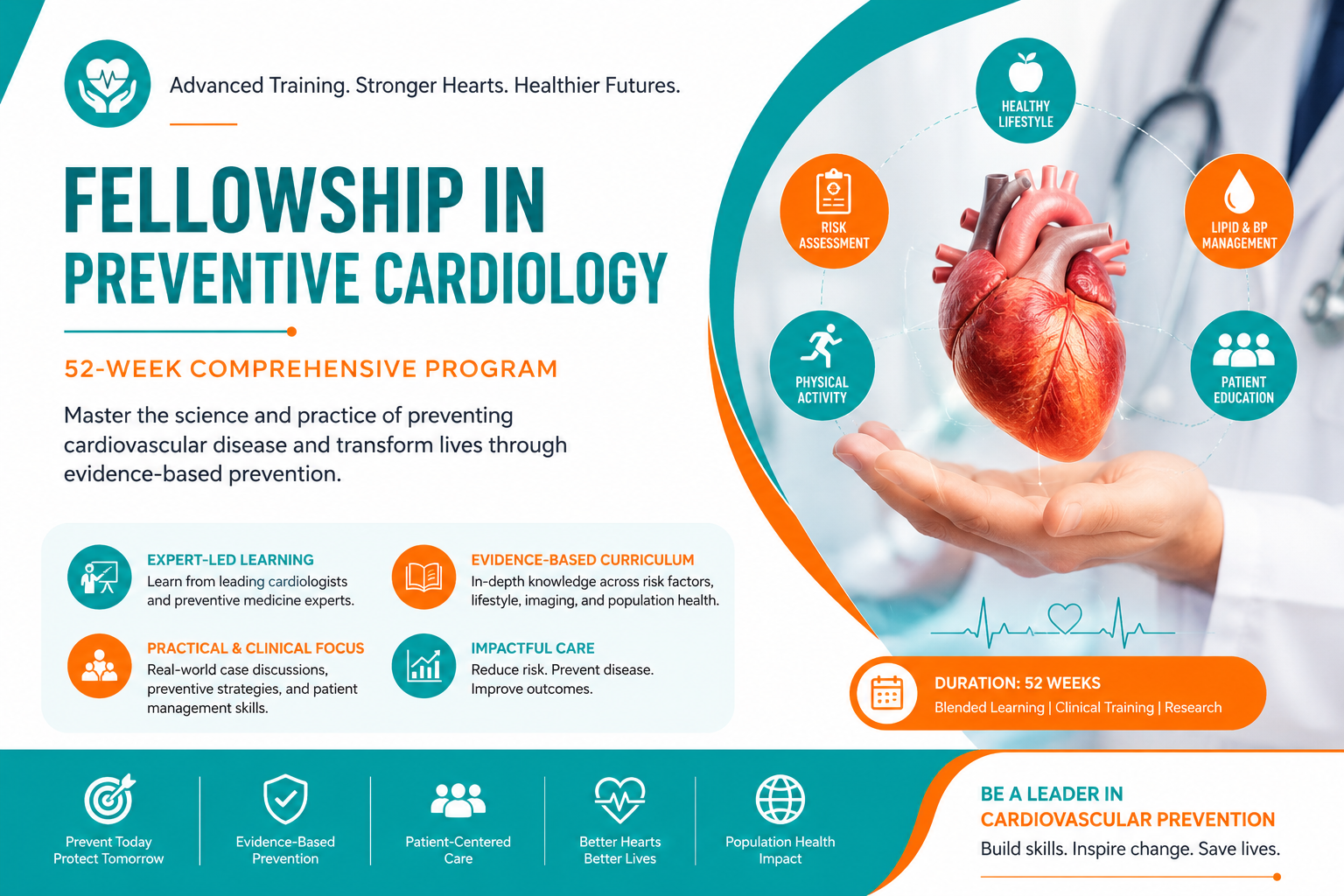

The Fellowship in Preventive Cardiology is a comprehensive 52-week advanced training program designed to equip healthcare professionals with the knowledge and skills needed to prevent, assess, and manage cardiovascular risk. The course covers cardiovascular risk assessment, lipid management, hypertension, diabetes, nutrition, lifestyle medicine, obesity, advanced imaging, and population health strategies. Through evidence-based learning, clinical case discussions, and practical training, participants will develop expertise in reducing cardiovascular disease burden and improving long-term patient outcomes through preventive care.
Cardiovascular disease remains the leading cause of morbidity and mortality worldwide, making prevention one of the most critical areas of modern healthcare. The Fellowship in Preventive Cardiology is a comprehensive 52-week advanced training program designed to equip healthcare professionals with the expertise needed to identify, assess, and reduce cardiovascular risk across diverse patient populations. This fellowship focuses on evidence-based strategies that prevent the onset and progression of heart disease through early intervention, lifestyle modification, risk factor management, and population-based approaches.
The program provides an in-depth understanding of cardiovascular epidemiology, risk assessment, and the pathophysiological mechanisms underlying atherosclerotic cardiovascular disease. Participants will learn how to evaluate traditional and emerging cardiovascular risk factors, utilize risk prediction models, and develop personalized prevention plans that improve long-term patient outcomes. The curriculum emphasizes a proactive approach to cardiovascular care, shifting the focus from disease treatment to disease prevention.
A major component of the fellowship is dedicated to the management of key cardiovascular risk factors, including dyslipidemia, hypertension, diabetes mellitus, metabolic syndrome, obesity, and tobacco use. Learners will gain advanced knowledge of lipid disorders, cholesterol management guidelines, antihypertensive therapies, and cardioprotective medications used in high-risk patients. The program also explores the latest developments in preventive pharmacology and evidence-based interventions that reduce cardiovascular events.
Lifestyle medicine forms a cornerstone of preventive cardiology. Participants will develop practical skills in nutritional counseling, exercise prescription, weight management, smoking cessation, stress reduction, and behavior change strategies. The fellowship examines dietary approaches such as the Mediterranean and DASH diets, the role of physical activity in cardiovascular health, and methods for improving patient adherence to healthy lifestyle modifications. These competencies enable healthcare professionals to guide patients toward sustainable cardiovascular wellness.
The curriculum also introduces advanced diagnostic and risk assessment tools, including coronary artery calcium scoring, vascular imaging, biomarker evaluation, and other emerging technologies used in cardiovascular prevention. Learners will understand how these tools support early detection of subclinical disease and help refine risk stratification and treatment decisions.
Special emphasis is placed on preventive care in diverse populations, including women, children, older adults, patients with chronic kidney disease, cancer survivors, and individuals from underserved communities. Participants will learn how social determinants of health, psychosocial factors, mental health conditions, and environmental influences affect cardiovascular outcomes and how to address these challenges through patient-centered care.
Beyond individual patient management, the fellowship explores public health and population-based prevention strategies. Learners will study cardiovascular screening programs, health promotion initiatives, policy development, and community interventions aimed at reducing the burden of cardiovascular disease at a broader level. This population health perspective prepares graduates to contribute to healthcare systems, public health organizations, and preventive cardiology programs.
The program incorporates clinical case discussions, evidence-based guideline reviews, multidisciplinary learning, and practical applications that bridge theory and clinical practice. Participants will gain experience in designing comprehensive prevention plans, interpreting clinical data, and implementing cardiovascular risk reduction strategies in real-world settings.
A dedicated research and capstone project component strengthens participants’ ability to critically evaluate scientific literature, interpret clinical trials, and apply research findings to preventive cardiology practice. Through scholarly activities, learners will develop the analytical and leadership skills required to advance cardiovascular prevention initiatives within their institutions and communities.
Upon successful completion of the Fellowship in Preventive Cardiology, graduates will possess advanced competencies in cardiovascular risk assessment, preventive therapeutics, lifestyle medicine, population health, and evidence-based cardiovascular care. They will be prepared to lead preventive cardiology services, improve patient outcomes, and contribute to the global effort to reduce the burden of cardiovascular disease through effective prevention strategies.
- 15 Sections
- 95 Lessons
- 52 Weeks
- Foundations of Preventive CardiologyThis module introduces the principles and scope of preventive cardiology, emphasizing the burden of cardiovascular disease and the importance of risk reduction strategies. Learners will gain a comprehensive understanding of epidemiology, cardiovascular risk factors, prevention models, and evidence-based approaches used to reduce morbidity and mortality associated with cardiovascular diseases.6
- Cardiovascular Risk Assessment and StratificationThis module focuses on identifying cardiovascular risk factors and applying validated risk assessment tools. Participants will learn to evaluate patients using clinical history, physical examination, laboratory findings, and imaging modalities to create personalized prevention plans.6
- Lipidology and Dyslipidemia ManagementThis module provides in-depth knowledge of lipid metabolism, dyslipidemia diagnosis, and management. Learners will understand current guidelines, pharmacological interventions, and lifestyle approaches aimed at reducing atherosclerotic cardiovascular disease risk.7
- Hypertension Prevention and ManagementThis module covers the epidemiology, pathophysiology, diagnosis, and management of hypertension. Learners will explore preventive measures, lifestyle interventions, and pharmacological therapies that reduce cardiovascular complications associated with elevated blood pressure.7
- Diabetes, Metabolic Syndrome, and Cardiovascular PreventionThis module examines the relationship between diabetes, metabolic syndrome, and cardiovascular disease. Participants will learn preventive strategies and evidence-based therapies that minimize cardiovascular complications in high-risk populations.6
- Nutrition and Cardiovascular HealthThis module focuses on dietary approaches for cardiovascular disease prevention. Learners will evaluate nutritional patterns, dietary guidelines, and counseling strategies that promote heart health and reduce cardiovascular risk factors.7
- Exercise and Lifestyle MedicineThis module emphasizes physical activity and lifestyle modification as pillars of preventive cardiology. Participants will learn exercise prescription, behavior change techniques, and strategies to improve long-term adherence to healthy lifestyles.7
- Smoking Cessation and Substance Use PreventionThis module addresses tobacco use, vaping, alcohol consumption, and other substance-related cardiovascular risks. Learners will develop skills to counsel patients and implement effective cessation programs.7
- Obesity and Weight ManagementThis module explores obesity as a major cardiovascular risk factor and reviews evidence-based weight management approaches. Participants will learn comprehensive strategies involving lifestyle modification, pharmacotherapy, and bariatric interventions.6
- Imaging and Advanced Cardiovascular Risk AssessmentThis module introduces imaging techniques and advanced diagnostic tools used in preventive cardiology. Learners will understand how imaging contributes to risk stratification and preventive decision-making.6
- Special Populations in Preventive CardiologyThis module examines preventive cardiovascular care in diverse populations, including women, elderly patients, children, and individuals with chronic diseases. Learners will develop tailored prevention strategies for unique patient groups.6
- Psychosocial Factors and Cardiovascular HealthThis module highlights the influence of psychological, social, and environmental factors on cardiovascular disease. Participants will learn strategies to identify and manage psychosocial risks in preventive care.6
- Population Health and Public Health CardiologyThis module explores public health approaches to cardiovascular disease prevention. Learners will study screening programs, health promotion campaigns, policy interventions, and community-based preventive strategies.6
- Preventive Cardiology Clinics and Patient ManagementThis module develops practical clinical skills required to establish and manage preventive cardiology services. Participants will learn multidisciplinary care models, patient education strategies, and quality improvement methods.6
- Research, Evidence-Based Practice, and Capstone ProjectThis final module equips learners with research skills and the ability to critically appraise cardiovascular prevention literature. Participants will complete a capstone project focused on implementing evidence-based preventive cardiology interventions.6
You might be intersted in
-
167 Students
-
52 Weeks
-
132 Students
-
52 Weeks
-
124 Students
-
52 Weeks
-
133 Students
-
52 Weeks