
Fellowship in Cellular Pathology
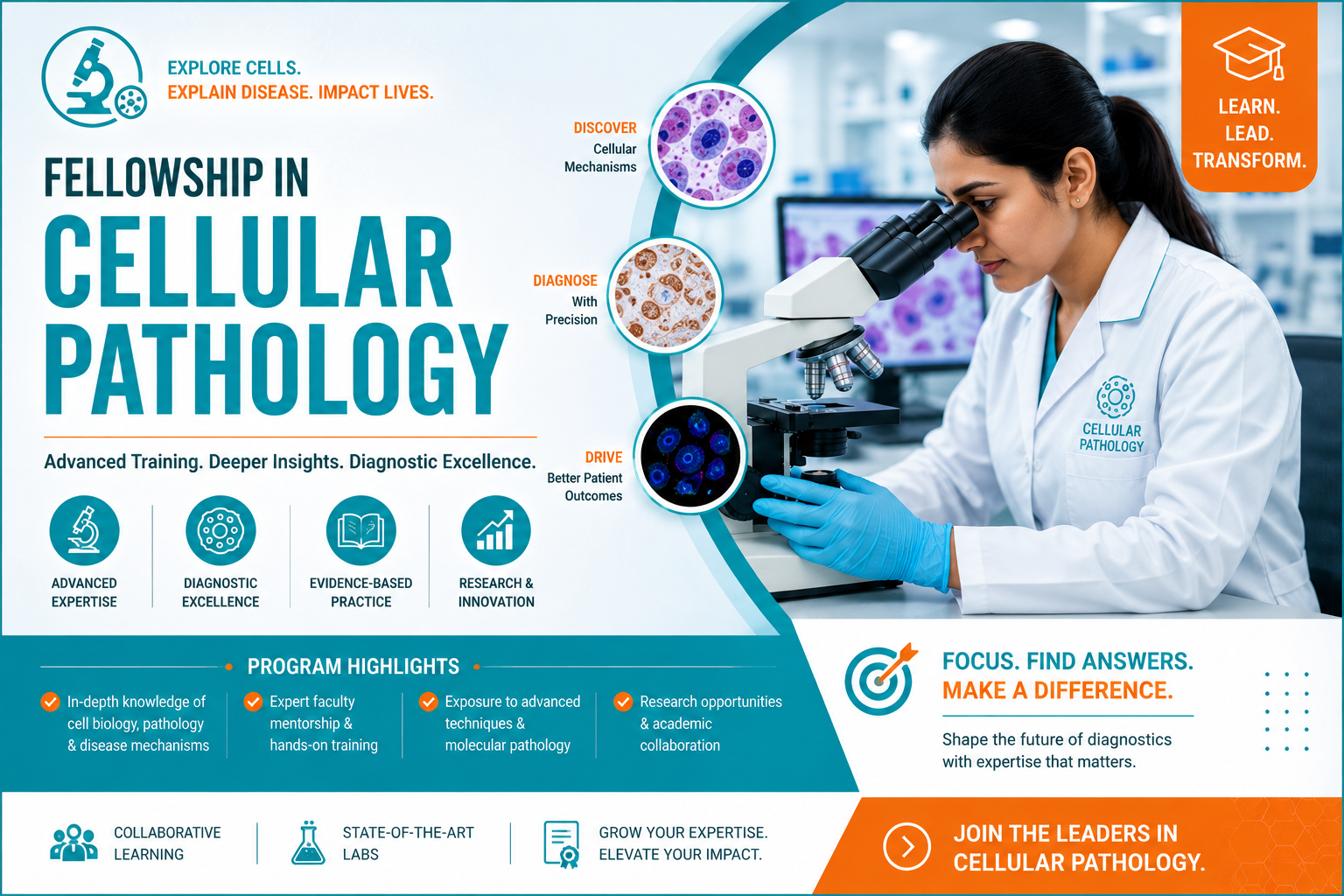

The Fellowship in Cellular Pathology is a comprehensive 52-week advanced training program designed to develop expertise in histopathology, cytopathology, molecular diagnostics, immunohistochemistry, and digital pathology. The course provides in-depth knowledge of disease mechanisms, tissue diagnosis, laboratory management, and modern diagnostic techniques, enabling healthcare professionals to accurately interpret pathological findings and contribute to evidence-based patient care. Through case-based learning, laboratory training, and research activities, participants gain the skills required for excellence in contemporary cellular pathology practice.
The Fellowship in Cellular Pathology is a comprehensive 52-week advanced training program designed for medical graduates, pathologists, laboratory professionals, and healthcare practitioners seeking specialized expertise in the diagnosis of diseases through the examination of cells and tissues. Cellular pathology forms the cornerstone of modern diagnostic medicine, providing critical information for the detection, classification, prognosis, and management of a wide range of diseases, including cancer, infectious diseases, inflammatory disorders, and genetic conditions.
This fellowship offers an in-depth understanding of cellular and tissue morphology, disease pathogenesis, histopathological techniques, cytological evaluation, immunohistochemistry, molecular pathology, and digital diagnostic technologies. Participants gain the knowledge and practical skills required to accurately interpret pathological specimens and contribute effectively to multidisciplinary patient care teams.
The curriculum begins with foundational concepts in cell biology, pathology principles, laboratory safety, and quality management systems. Learners are introduced to tissue processing, specimen handling, microscopic examination, staining techniques, and laboratory workflows that ensure accurate and reliable diagnostic outcomes. Special emphasis is placed on understanding cellular changes associated with disease and developing proficiency in recognizing normal and abnormal tissue architecture.
As the program progresses, participants explore organ-specific pathology, including gastrointestinal, respiratory, cardiovascular, renal, genitourinary, endocrine, breast, and hematological disorders. Detailed study of benign and malignant lesions enables learners to develop advanced diagnostic skills and clinicopathological correlation capabilities. Through case-based discussions and slide review sessions, participants learn to identify characteristic microscopic features and formulate precise diagnostic reports.
A significant component of the fellowship focuses on cytopathology, including exfoliative cytology and fine-needle aspiration cytology (FNAC). Learners gain expertise in specimen collection, preparation, staining, interpretation, and standardized reporting systems. Training emphasizes the role of cytological techniques in early disease detection, cancer screening, and minimally invasive diagnosis.
The program also provides extensive exposure to immunohistochemistry (IHC) and molecular diagnostics, which have become essential tools in contemporary pathology practice. Participants learn the principles and applications of diagnostic biomarkers, polymerase chain reaction (PCR), fluorescence in situ hybridization (FISH), next-generation sequencing (NGS), and other molecular techniques used in precision medicine. These advanced methodologies enable more accurate disease classification, prognostic assessment, and therapeutic decision-making.
Recognizing the rapid evolution of healthcare technology, the fellowship incorporates training in digital pathology, artificial intelligence applications, image analysis, and telepathology. Learners explore how digital platforms are transforming diagnostic workflows, enhancing collaboration, and improving access to expert pathology services worldwide.
Research and evidence-based practice are integral components of the program. Participants are trained in research methodology, scientific literature appraisal, data analysis, audit practices, and quality improvement initiatives. The fellowship encourages scholarly activity and supports the development of critical thinking skills necessary for lifelong learning and professional growth.
Upon successful completion of the fellowship, graduates will be equipped to perform advanced diagnostic evaluations, interpret histopathological and cytological findings, utilize modern molecular technologies, contribute to multidisciplinary clinical teams, and uphold the highest standards of laboratory quality and patient care. The program prepares professionals for leadership roles in pathology laboratories, academic institutions, research settings, and specialized diagnostic centers.
Whether pursuing career advancement, subspecialty expertise, or enhanced diagnostic competency, the Fellowship in Cellular Pathology provides a robust educational pathway for healthcare professionals committed to excellence in diagnostic medicine and pathology practice.
- 12 Sections
- 96 Lessons
- 52 Weeks
- Introduction to Cellular Pathology and Laboratory MedicineThis module provides a comprehensive introduction to the principles of cellular pathology, laboratory organization, specimen handling, quality assurance, and diagnostic workflows. Learners will understand the role of cellular pathology in disease diagnosis, patient management, and multidisciplinary healthcare delivery.8
- Cell Biology and Molecular Basis of DiseaseThis module focuses on normal cellular structure and function, molecular mechanisms regulating cellular activity, and pathological changes leading to disease. Students will develop a strong foundation in disease pathogenesis at the cellular level.8
- Histopathology Techniques and Tissue ProcessingLearners will acquire detailed knowledge of tissue handling, fixation, processing, embedding, sectioning, staining, and laboratory quality control. Emphasis is placed on producing high-quality diagnostic specimens.8
- Cytopathology FundamentalsThis module introduces cytopathology, specimen collection methods, cytological preparation, interpretation, and reporting. Students will learn to identify normal and abnormal cellular patterns.8
- General Pathology and Disease MechanismsThis module explores fundamental disease processes including inflammation, immune responses, vascular disorders, neoplasia, and tissue repair. Understanding these mechanisms is essential for diagnostic pathology practice.8
- Gastrointestinal and Hepatobiliary PathologyStudents will study pathological changes affecting the gastrointestinal tract, liver, gallbladder, and pancreas, including inflammatory, infectious, and neoplastic conditions.8
- Respiratory and Cardiovascular PathologyThis module covers diseases affecting the lungs, pleura, heart, and blood vessels. Learners will understand microscopic and gross pathological findings in common cardiopulmonary disorders.8
- Genitourinary and Renal PathologyThe module focuses on diseases of the kidneys, urinary tract, and male and female reproductive systems. Emphasis is placed on diagnostic interpretation and clinicopathological correlation.8
- Breast, Endocrine, and Soft Tissue PathologyStudents will examine pathological conditions affecting breast tissue, endocrine organs, bone, and soft tissues, with special attention to neoplastic disorders and differential diagnosis.8
- Hematopathology and Lymphoid NeoplasmsThis module provides in-depth knowledge of hematological disorders and lymphoid malignancies. Students will learn morphological evaluation and classification systems used in modern hematopathology.8
- Immunohistochemistry and Molecular DiagnosticsLearners will explore advanced diagnostic technologies including immunohistochemistry, molecular pathology, genetic testing, and biomarker analysis used in precision medicine.8
- Digital Pathology, Research, and Clinical ReportingThe final module integrates digital pathology, artificial intelligence applications, research methodology, audit practices, and professional reporting skills. Learners will develop competencies required for modern pathology practice.8
You might be intersted in
-
167 Students
-
52 Weeks
-
142 Students
-
52 Weeks
-
130 Students
-
52 Weeks
-
132 Students
-
52 Weeks