
Diploma in Ophthalmology
₹120,000.00₹108,999.00
100% positive reviews
4 lessons
Language: English
Skill level: All levels

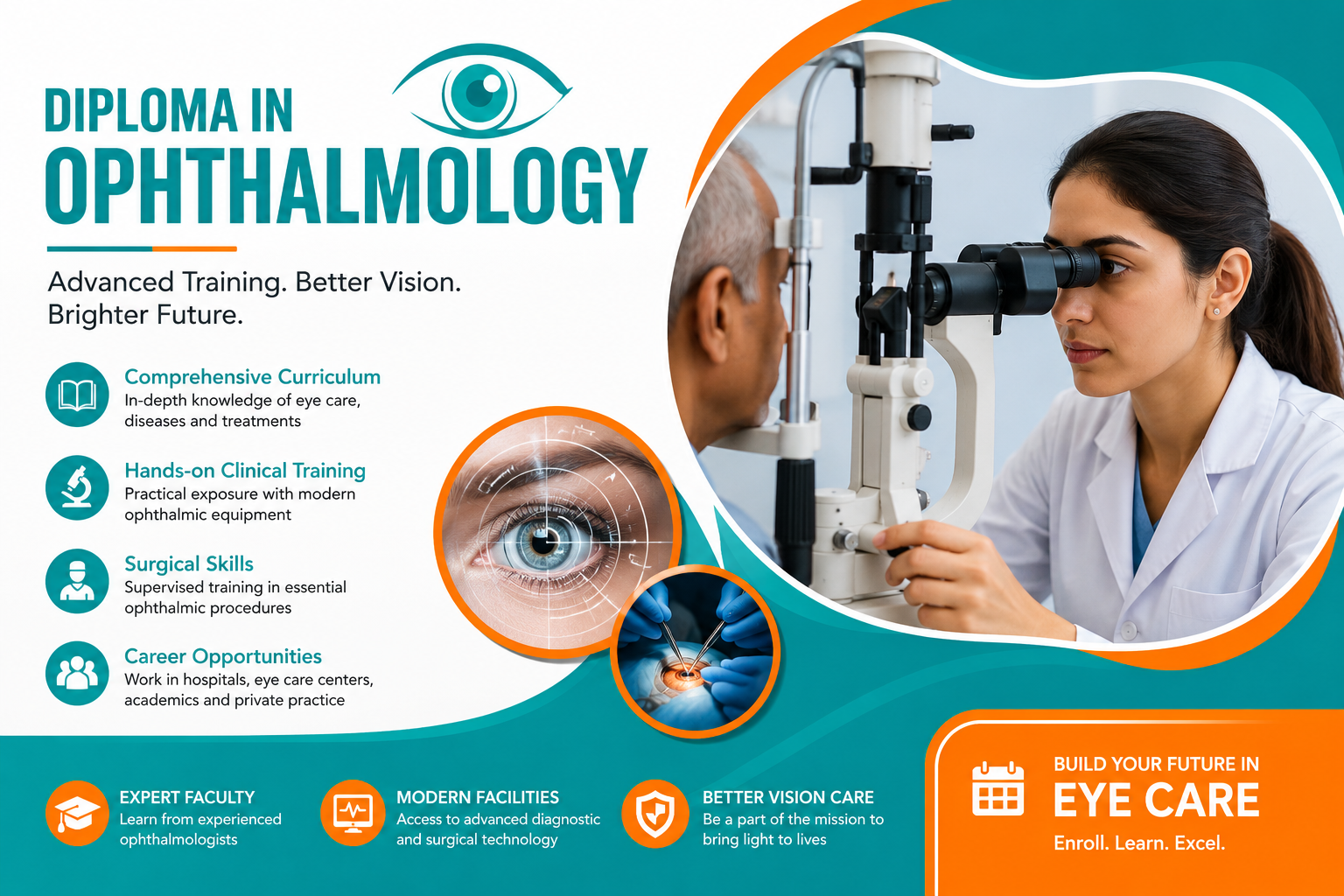
A Diploma in Ophthalmology provides specialized training in eye care, clinical diagnosis, ophthalmic procedures, and surgical skills, preparing doctors for careers in modern ophthalmology practice.
Description
Curriculum
FAQs
A Diploma in Ophthalmology is a specialized postgraduate medical program designed for doctors who wish to build expertise in the diagnosis, treatment, and management of eye diseases and vision-related disorders. This diploma provides comprehensive training in both medical and surgical ophthalmology, helping students develop strong clinical skills required for modern eye care practice. The course usually covers essential subjects such as ocular anatomy, physiology, pathology, optics, refraction, neuro-ophthalmology, glaucoma, cataract management, retinal disorders, corneal diseases, pediatric ophthalmology, and ocular emergencies. Students gain hands-on experience through clinical postings, patient examinations, diagnostic procedures, and supervised surgical training, allowing them to understand real-world ophthalmic practice. The program also emphasizes the use of advanced ophthalmic instruments and technologies such as slit-lamp examination, fundoscopy, tonometry, OCT imaging, and microsurgical techniques. A Diploma in Ophthalmology is ideal for medical graduates who want to pursue careers in hospitals, eye care centers, community health services, academic institutions, or private practice. With the increasing prevalence of vision disorders, diabetes-related eye diseases, cataracts, and age-related ocular conditions, the demand for qualified ophthalmologists continues to grow globally. This diploma not only strengthens clinical competence but also opens pathways for further specialization and advanced training in fields such as retina, cornea, glaucoma, pediatric ophthalmology, and refractive surgery.
- 6 Sections
- 4 Lessons
- 52 Weeks
Expand all sectionsCollapse all sections
- Basic Sciences in OphthalmologyStudents begin with the foundational subjects required for understanding eye diseases and visual function. These include: Ocular anatomy and embryology Physiology of the eye and visual pathways Ocular biochemistry Pathology and microbiology Pharmacology related to ophthalmic drugs Optics and refraction0
- Clinical OphthalmologyThis section focuses on diagnosing and managing common and complex eye disorders. Topics include: Cataract and lens disorders Glaucoma Corneal diseases and infections Retinal and vitreous disorders Uveitis and ocular inflammation Neuro-ophthalmology Pediatric ophthalmology and squint Oculoplasty and orbital diseases Refractive errors and low vision care0
- Diagnostic TechniquesStudents receive hands-on training in modern ophthalmic diagnostic procedures such as: Slit-lamp examination Fundoscopy Tonometry Visual acuity assessment Gonioscopy Perimetry and visual field testing OCT and retinal imaging Fluorescein staining and angiography0
- Surgical TrainingThe curriculum includes supervised surgical exposure and minor ophthalmic procedures, including: Cataract surgery observation and assistance Chalazion incision and curettage Foreign body removal Lacrimal procedures Suturing techniques Basic microsurgical skills0
- Ophthalmoscopy and Fundus EvaluationThis lesson introduces students to the techniques used to examine the interior structures of the eye, including the retina, optic disc, macula, and blood vessels. Learners will understand direct and indirect ophthalmoscopy methods, identify normal fundus anatomy, and recognize common retinal abnormalities associated with conditions such as diabetic retinopathy, glaucoma, hypertension, and macular degeneration. The module also emphasizes clinical interpretation and accurate documentation of fundus findings.0
- Ocular MicrobiologyBacterial eye infections Viral eye diseases Fungal keratitis Parasitic infections Sterilization techniques4
A Diploma in Ophthalmology is a postgraduate medical program that provides specialized training in the diagnosis, treatment, and management of eye diseases and vision disorders.
Candidates who have completed an MBBS degree from a recognized medical institution and fulfilled internship requirements are generally eligible to apply.
The Diploma in Ophthalmology course usually lasts 2 years, depending on the university or medical institution.
The curriculum includes ocular anatomy, physiology, pathology, glaucoma, cataract, retina, cornea, pediatric ophthalmology, optics, refraction, and ophthalmic surgery training.
₹120,000.00₹108,999.00