
Fellowship in Reproductive Pharmacology
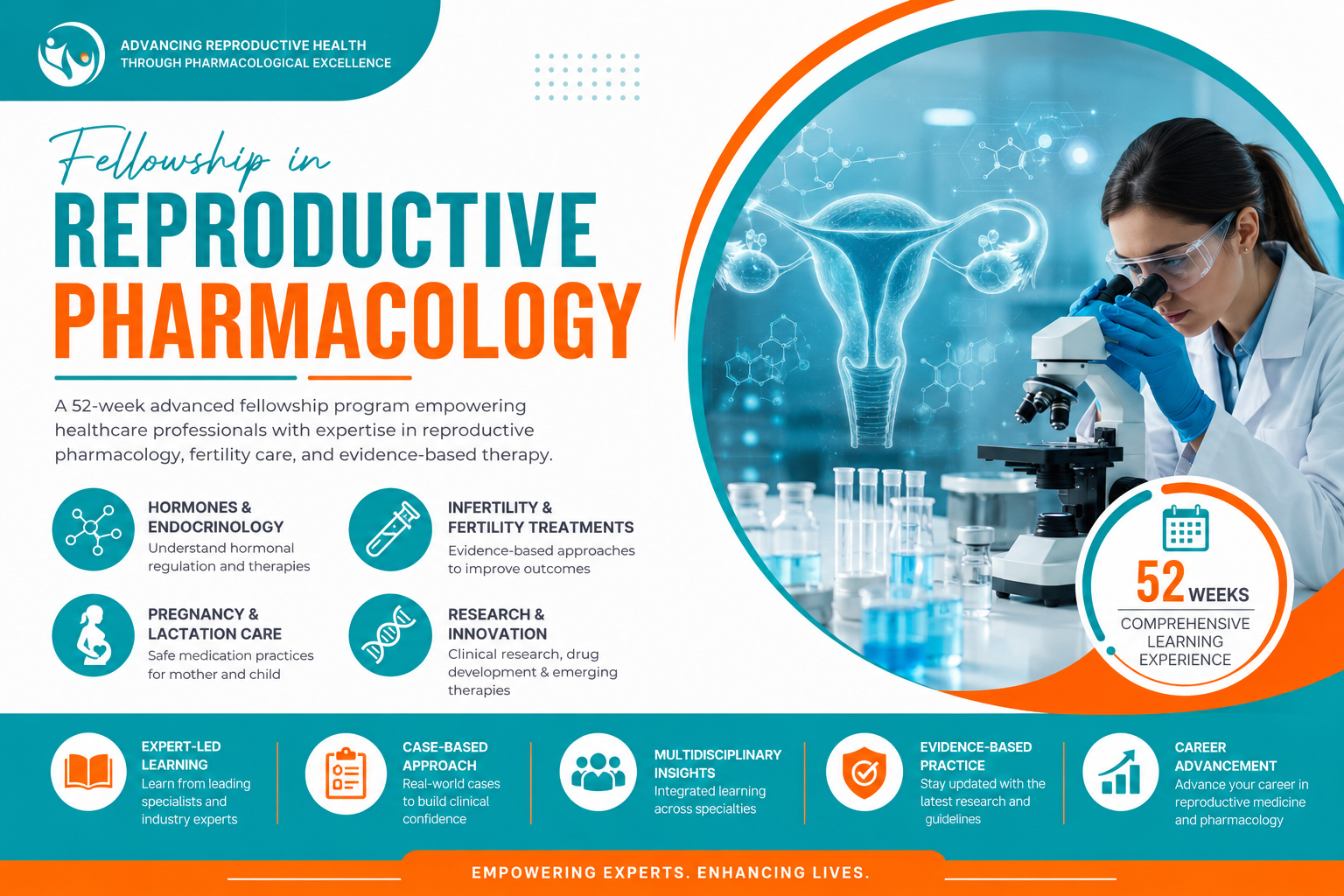

The Fellowship in Reproductive Pharmacology is a comprehensive 52-week advanced training program designed for healthcare professionals seeking specialized expertise in reproductive medicine and pharmacotherapy. The course covers reproductive endocrinology, hormonal therapies, contraception, infertility management, assisted reproductive technologies, pregnancy and lactation pharmacology, reproductive disorders, reproductive oncology, and clinical research. Through evidence-based learning, case studies, and practical applications, participants develop the knowledge and skills required to optimize drug therapy and improve reproductive health outcomes across diverse patient populations.
Course Overview
The Fellowship in Reproductive Pharmacology is a comprehensive 52-week advanced training program designed for physicians, pharmacists, clinical researchers, reproductive medicine specialists, obstetricians and gynecologists, endocrinologists, and healthcare professionals seeking specialized expertise in reproductive pharmacotherapy. This fellowship provides an in-depth understanding of the pharmacological principles governing reproductive health, fertility management, hormonal therapies, contraception, pregnancy care, and assisted reproductive technologies.
Reproductive pharmacology is a rapidly evolving field that plays a critical role in addressing infertility, hormonal disorders, reproductive diseases, maternal health, and reproductive oncology. Advances in reproductive medicine have significantly expanded treatment options, making it essential for healthcare professionals to understand the mechanisms, safety profiles, therapeutic applications, and clinical implications of medications used in reproductive care.
Throughout this fellowship, learners will explore the physiology and endocrinology of the male and female reproductive systems and examine how pharmacological agents interact with hormonal pathways to influence reproductive function. Participants will gain comprehensive knowledge of estrogens, progestins, androgens, gonadotropins, selective receptor modulators, and emerging therapies used in reproductive medicine.
The program provides detailed training in contraceptive pharmacology, including hormonal and non-hormonal methods, emergency contraception, patient counseling, and individualized contraceptive planning. Learners will also study infertility management strategies, focusing on ovulation induction, controlled ovarian stimulation, fertility-enhancing medications, and pharmacological interventions used in both male and female infertility.
A major component of the fellowship is dedicated to assisted reproductive technologies (ART), including in vitro fertilization (IVF), intrauterine insemination (IUI), and advanced fertility treatment protocols. Participants will develop expertise in medication regimens used during fertility procedures, monitoring strategies, and management of treatment-related complications.
Special emphasis is placed on medication use during pregnancy and lactation. Learners will understand maternal-fetal pharmacology, teratogenic risks, drug safety considerations, and evidence-based prescribing practices that ensure optimal outcomes for both mother and child. The curriculum also covers pharmacological approaches to managing common reproductive disorders such as polycystic ovary syndrome (PCOS), endometriosis, menstrual abnormalities, erectile dysfunction, and benign prostatic disorders.
The fellowship further explores reproductive oncology pharmacology, including hormonal therapies used in breast, ovarian, endometrial, and prostate cancers. Participants will gain insight into fertility preservation strategies, supportive care interventions, and emerging targeted therapies used in reproductive cancer management.
In addition to clinical applications, the program emphasizes research methodology, clinical trial design, drug development processes, regulatory considerations, and pharmacovigilance practices relevant to reproductive medicine. Learners will critically evaluate scientific literature and apply evidence-based approaches to clinical decision-making.
The final phase of the fellowship integrates knowledge through advanced case studies, multidisciplinary discussions, and a capstone research project. Participants will analyze complex reproductive health scenarios, develop therapeutic plans, and demonstrate competency in applying reproductive pharmacology principles to real-world clinical practice.
Key Learning Outcomes
Upon successful completion of the fellowship, participants will be able to:
- Understand the physiology and endocrinology of human reproduction.
- Explain the pharmacokinetics and pharmacodynamics of reproductive medications.
- Prescribe and monitor hormonal therapies safely and effectively.
- Evaluate and manage infertility using evidence-based pharmacological approaches.
- Apply medication protocols used in assisted reproductive technologies.
- Assess drug safety during pregnancy and breastfeeding.
- Manage reproductive disorders through targeted pharmacotherapy.
- Understand hormonal and targeted treatments used in reproductive cancers.
- Interpret clinical research and apply evidence-based medicine in reproductive care.
- Implement pharmacovigilance and medication safety strategies.
- Develop patient-centered treatment plans for reproductive health conditions.
- Contribute to research and innovation in reproductive pharmacology.
Who Should Enroll?
This fellowship is ideal for:
- Obstetricians and Gynecologists
- Reproductive Medicine Specialists
- Clinical Pharmacologists
- Endocrinologists
- Fertility Specialists
- Medical Practitioners
- Clinical Researchers
- Hospital Pharmacists
- Healthcare Professionals involved in reproductive care
- Medical Academicians and Educators
- Postgraduate Medical Trainees
Career Opportunities
Graduates of this fellowship may pursue roles such as:
- Reproductive Pharmacology Specialist
- Fertility and IVF Consultant
- Clinical Pharmacologist
- Reproductive Medicine Researcher
- Women’s Health Specialist
- Clinical Research Associate
- Medical Affairs Professional
- Drug Safety and Pharmacovigilance Specialist
- Pharmaceutical Industry Consultant
- Academic Faculty in Pharmacology and Reproductive Medicine
- Healthcare Policy and Reproductive Health Advisor
Program Highlights
- Comprehensive 52-week structured curriculum
- Advanced training in reproductive pharmacotherapy
- Focus on infertility, fertility treatments, and ART
- Evidence-based clinical practice and case discussions
- Coverage of pregnancy and lactation pharmacology
- Reproductive oncology and hormonal therapy training
- Research methodology and clinical trial education
- Capstone project and clinical case analysis
- Expert-led learning modules
- Industry-relevant and globally applicable competencies
The Fellowship in Reproductive Pharmacology equips healthcare professionals with advanced clinical, scientific, and research expertise required to address complex reproductive health challenges and contribute to improved patient outcomes in reproductive medicine and pharmacotherapy.
- 12 Sections
- 73 Lessons
- 52 Weeks
- Foundations of Reproductive PharmacologyThis module introduces the fundamental principles of reproductive pharmacology, including reproductive physiology, endocrinology, pharmacokinetics, and pharmacodynamics of drugs affecting the reproductive system. Learners will gain a comprehensive understanding of the hormonal regulation of reproduction and the mechanisms through which pharmacological agents influence reproductive health and disease.6
- Pharmacology of Female Reproductive HormonesThis module focuses on the pharmacological properties, mechanisms of action, therapeutic uses, and adverse effects of female reproductive hormones. Learners will explore estrogen, progesterone, gonadotropins, and hormone analogs used in gynecological and reproductive disorders.6
- Pharmacology of Male Reproductive HormonesThis module examines the pharmacology of androgens, anti-androgens, and related therapeutic agents used in male reproductive health. Participants will understand the management of hypogonadism, infertility, and androgen-related disorders.6
- Contraceptive PharmacologyThis module provides in-depth knowledge of contraceptive agents and their mechanisms. Learners will study hormonal and non-hormonal contraceptives, emergency contraception, and counseling approaches for contraceptive use.7
- Pharmacological Management of InfertilityThis module covers medications and treatment strategies used in the diagnosis and management of infertility. Learners will evaluate evidence-based pharmacological interventions for both male and female infertility.6
- Assisted Reproductive Technologies and PharmacologyThis module explores the role of pharmacology in assisted reproductive technologies (ART). Participants will understand medication protocols used during in vitro fertilization and other fertility procedures.6
- Pharmacology in PregnancyThis module focuses on drug therapy during pregnancy, emphasizing maternal-fetal safety, teratogenicity, and evidence-based medication use. Learners will understand risk-benefit assessments in prescribing medications during pregnancy.6
- Pharmacology During LactationThis module examines drug transfer into breast milk and safe medication practices during breastfeeding. Learners will develop skills to evaluate medication safety for lactating mothers and infants.6
- Pharmacotherapy of Reproductive DisordersThis module covers pharmacological interventions for common reproductive disorders affecting both men and women. Learners will study treatment guidelines, therapeutic outcomes, and emerging therapies.6
- Reproductive Oncology PharmacologyThis module introduces pharmacological approaches used in reproductive cancers. Learners will understand hormonal therapies, targeted treatments, and supportive care strategies in reproductive oncology.6
- Clinical Research and Drug Development in Reproductive PharmacologyThis module focuses on research methodologies, clinical trial design, and drug development processes specific to reproductive medicine. Learners will evaluate emerging therapies and evidence-based practices.6
- Advanced Practice, Case Studies, and Capstone ProjectThis final module integrates knowledge acquired throughout the fellowship through case-based learning, clinical decision-making exercises, and a capstone project. Participants will demonstrate competency in applying reproductive pharmacology principles to real-world clinical scenarios.6
You might be intersted in
-
167 Students
-
52 Weeks
-
132 Students
-
52 Weeks
-
133 Students
-
52 Weeks
-
123 Students
-
52 Weeks