
Fellowship in Pediatric Pulmonary & Respiratory
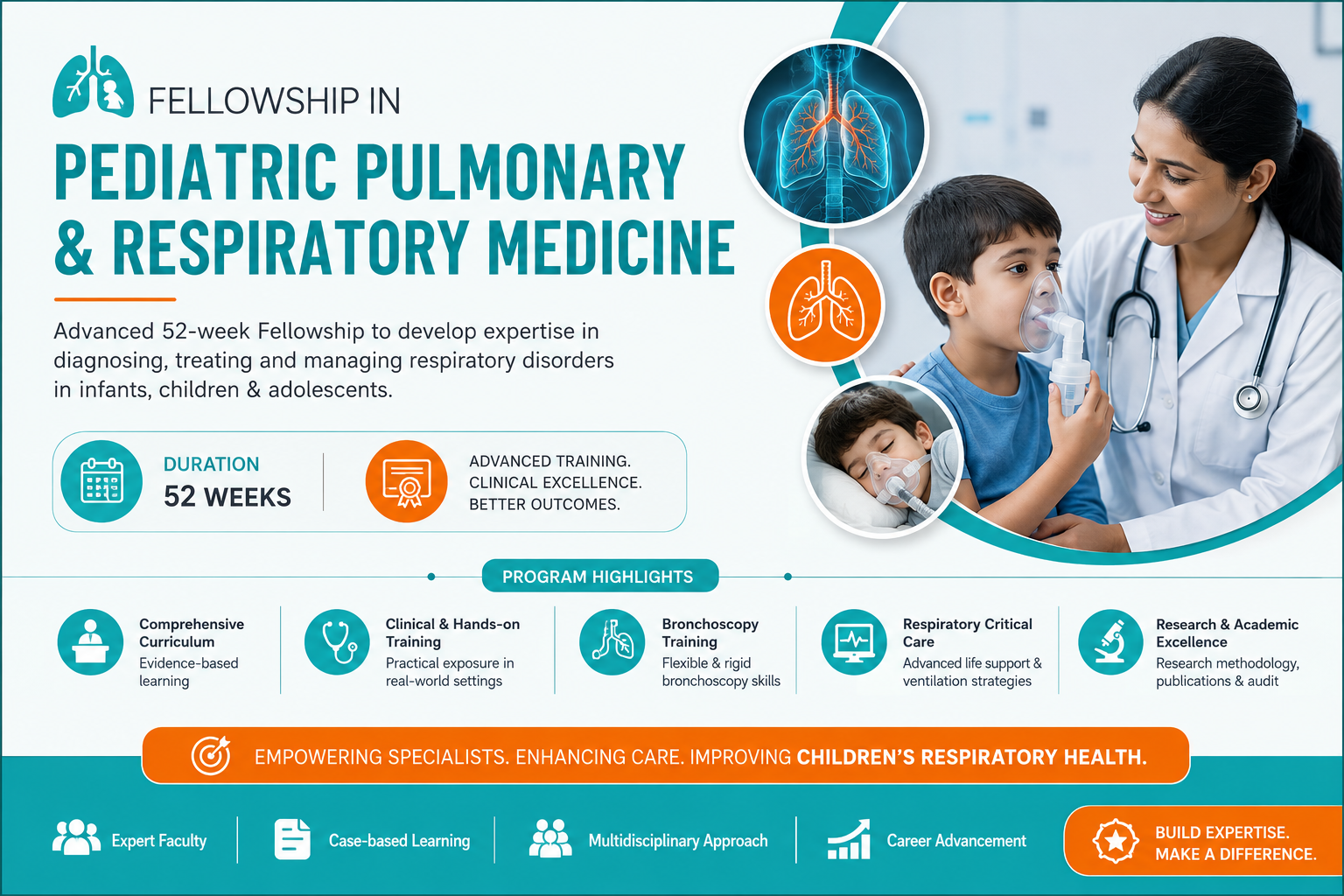

The Fellowship in Pediatric Pulmonary & Respiratory Medicine is a comprehensive 52-week advanced training program designed for healthcare professionals seeking expertise in the diagnosis, management, and prevention of respiratory disorders in infants, children, and adolescents. The curriculum covers pediatric asthma, chronic lung diseases, neonatal respiratory care, sleep-related breathing disorders, airway management, bronchoscopy, respiratory critical care, infectious lung diseases, and advanced pulmonary therapies. Through evidence-based learning, clinical case discussions, procedural training, and research activities, participants develop the specialized skills required to deliver high-quality pediatric respiratory care in diverse clinical settings.
The Fellowship in Pediatric Pulmonary & Respiratory Medicine is a comprehensive 52-week advanced training program designed for physicians and healthcare professionals seeking specialized expertise in the diagnosis, treatment, and long-term management of respiratory disorders affecting infants, children, and adolescents. With respiratory diseases remaining one of the leading causes of morbidity and hospitalization among children worldwide, the demand for skilled pediatric respiratory specialists continues to grow across hospitals, specialty clinics, academic institutions, and critical care settings.
This fellowship provides an in-depth understanding of pediatric respiratory physiology, pulmonary diagnostics, airway disorders, asthma management, chronic lung diseases, sleep-related breathing disorders, neonatal respiratory conditions, and pediatric respiratory critical care. The curriculum is structured to bridge theoretical knowledge with clinical application, enabling learners to confidently manage a wide spectrum of respiratory conditions ranging from common respiratory infections to complex pulmonary disorders requiring multidisciplinary care.
Participants begin by developing a strong foundation in pediatric respiratory anatomy, physiology, and diagnostic techniques. The program introduces pulmonary function testing, spirometry interpretation, radiological assessment, bronchoscopy fundamentals, and advanced respiratory investigations. Learners gain practical knowledge in evaluating respiratory symptoms, interpreting diagnostic findings, and formulating evidence-based treatment plans tailored to pediatric patients.
A significant portion of the fellowship focuses on the management of common and chronic respiratory diseases, including pediatric asthma, recurrent wheezing, bronchiolitis, pneumonia, bronchiectasis, cystic fibrosis, interstitial lung diseases, and primary ciliary dyskinesia. Special emphasis is placed on guideline-based care, long-term disease monitoring, patient education, and preventive strategies aimed at improving respiratory outcomes and quality of life.
The program also explores specialized areas of pediatric pulmonology, including neonatal respiratory disorders, bronchopulmonary dysplasia, respiratory distress syndrome, congenital airway abnormalities, pediatric sleep medicine, and obstructive sleep apnea. Learners acquire expertise in managing respiratory conditions in newborns, premature infants, and children with complex medical needs, ensuring comprehensive care throughout all stages of childhood.
Advanced training in pediatric airway management and bronchoscopy forms an integral component of the fellowship. Participants learn the principles and applications of flexible and rigid bronchoscopy, airway assessment, foreign body aspiration management, and respiratory interventions. These procedural skills enhance clinical competence and support the diagnosis and treatment of complex airway and pulmonary conditions.
The fellowship further emphasizes respiratory emergencies and critical care management. Learners develop the skills necessary to recognize and manage acute respiratory failure, pediatric acute respiratory distress syndrome (ARDS), severe asthma exacerbations, and life-threatening respiratory emergencies. Training includes oxygen therapy, non-invasive ventilation, mechanical ventilation strategies, and respiratory support in intensive care settings.
Recognizing the importance of infectious diseases in pediatric respiratory health, the curriculum includes dedicated training in pediatric tuberculosis, drug-resistant TB, viral respiratory infections, fungal lung diseases, and respiratory infections in immunocompromised children. Participants learn infection prevention strategies, vaccination practices, and public health approaches that contribute to improved respiratory health outcomes at both individual and community levels.
The fellowship also introduces learners to emerging developments in pediatric pulmonology, including pulmonary hypertension, genetic and rare lung diseases, pediatric lung transplantation, home ventilation programs, and precision medicine. Exposure to these advanced topics prepares graduates to manage increasingly complex cases and contribute to the advancement of pediatric respiratory care.
Research, evidence-based practice, and quality improvement are woven throughout the program. Participants gain experience in clinical research methodology, biostatistics, scientific literature appraisal, clinical audits, and academic writing. The fellowship culminates in a capstone project that allows learners to investigate a relevant topic in pediatric pulmonary medicine while demonstrating analytical and clinical expertise.
Upon successful completion of the Fellowship in Pediatric Pulmonary & Respiratory Medicine, graduates will possess the advanced knowledge, clinical judgment, and procedural competencies required to provide specialized respiratory care for children. They will be equipped to work in pediatric pulmonology departments, tertiary care hospitals, neonatal and pediatric intensive care units, academic institutions, specialty respiratory centers, and multidisciplinary healthcare teams dedicated to improving respiratory health outcomes for pediatric populations.
This fellowship serves as an ideal pathway for healthcare professionals seeking to advance their careers in pediatric respiratory medicine while making a meaningful impact on the lives of children affected by respiratory and pulmonary disorders.
- 12 Sections
- 96 Lessons
- 52 Weeks
- Foundations of Pediatric PulmonologyThis module introduces learners to the fundamental principles of pediatric pulmonary and respiratory medicine. Participants will explore the anatomy, physiology, and developmental aspects of the pediatric respiratory system, along with respiratory assessment techniques and diagnostic approaches. The module establishes the knowledge base required for understanding common and complex respiratory disorders in infants, children, and adolescents.8
- 1.1Anatomy of the Pediatric Respiratory System
- 1.2Developmental Lung Physiology
- 1.3Respiratory Function Across Childhood
- 1.4Pediatric Respiratory History Taking
- 1.5Clinical Examination of the Respiratory System
- 1.6Interpretation of Respiratory Signs and Symptoms
- 1.7Basic Respiratory Investigations
- 1.8Introduction to Pediatric Pulmonology Practice
- Pediatric Respiratory DiagnosticsThis module focuses on diagnostic tools and techniques used in pediatric respiratory medicine. Learners will gain expertise in pulmonary function testing, imaging modalities, laboratory investigations, and advanced diagnostic procedures. Emphasis is placed on accurate interpretation of findings to support clinical decision-making.8
- Common Respiratory Disorders in ChildrenThis module covers the epidemiology, pathophysiology, diagnosis, and management of frequently encountered respiratory disorders in pediatric practice. Learners will develop competency in recognizing and treating respiratory illnesses while understanding prevention and long-term care strategies.8
- Pediatric Asthma and Allergic Respiratory DiseasesThis module provides in-depth training in pediatric asthma and allergy-related respiratory conditions. Learners will study disease mechanisms, severity assessment, guideline-based management, and long-term monitoring of affected children.8
- Chronic Pediatric Lung DiseasesThis module explores chronic respiratory disorders affecting children. Learners will understand disease progression, multidisciplinary management, rehabilitation strategies, and quality-of-life considerations for children with long-term pulmonary conditions.8
- Neonatal and Infant Respiratory DisordersThis module focuses on respiratory diseases affecting neonates and infants. Participants will gain knowledge of respiratory adaptation at birth, neonatal pulmonary disorders, and specialized respiratory support strategies for vulnerable populations.8
- Pediatric Sleep Medicine and Breathing DisordersThis module examines sleep-related breathing disorders in children. Learners will understand the evaluation and management of sleep disturbances, obstructive sleep apnea, and other conditions that impact respiratory health and development.8
- Pediatric Airway Disorders and BronchoscopyThis module provides comprehensive knowledge of congenital and acquired airway disorders. Learners will develop skills in airway assessment, bronchoscopy techniques, and management of airway emergencies and structural abnormalities.8
- Respiratory Emergencies and Critical CareThis module equips learners with skills required to manage respiratory emergencies and critically ill pediatric patients. Emphasis is placed on stabilization, intensive care interventions, and advanced respiratory support techniques.8
- Infectious and Tuberculosis-Related Respiratory DiseasesThis module focuses on infectious respiratory conditions, including tuberculosis and emerging respiratory pathogens. Learners will study diagnostic pathways, treatment strategies, infection control measures, and public health considerations.8
- Advanced Pediatric Pulmonology and Specialized CareThis advanced module addresses rare and complex pulmonary disorders. Learners will explore multidisciplinary management approaches, transplantation medicine, genetics, and innovations in pediatric respiratory care.8
- Research, Ethics, and Clinical Practice ProjectThe final module integrates clinical knowledge with research methodology, evidence-based practice, ethics, and professional development. Learners will complete a capstone project demonstrating their competency in pediatric pulmonary and respiratory medicine.8
- 12.1Research Methodology in Pediatric Pulmonology
- 12.2Biostatistics and Data Interpretation
- 12.3Evidence-Based Clinical Practice
- 12.4Medical Ethics and Professionalism
- 12.5Clinical Audit and Quality Improvement
- 12.6Academic Writing and Publication
- 12.7Case Presentation and Grand Rounds
- 12.8Capstone Project and Fellowship Assessment
You might be intersted in
-
167 Students
-
52 Weeks
-
132 Students
-
52 Weeks
-
133 Students
-
52 Weeks
-
123 Students
-
52 Weeks