
Fellowship in Ophthalmology
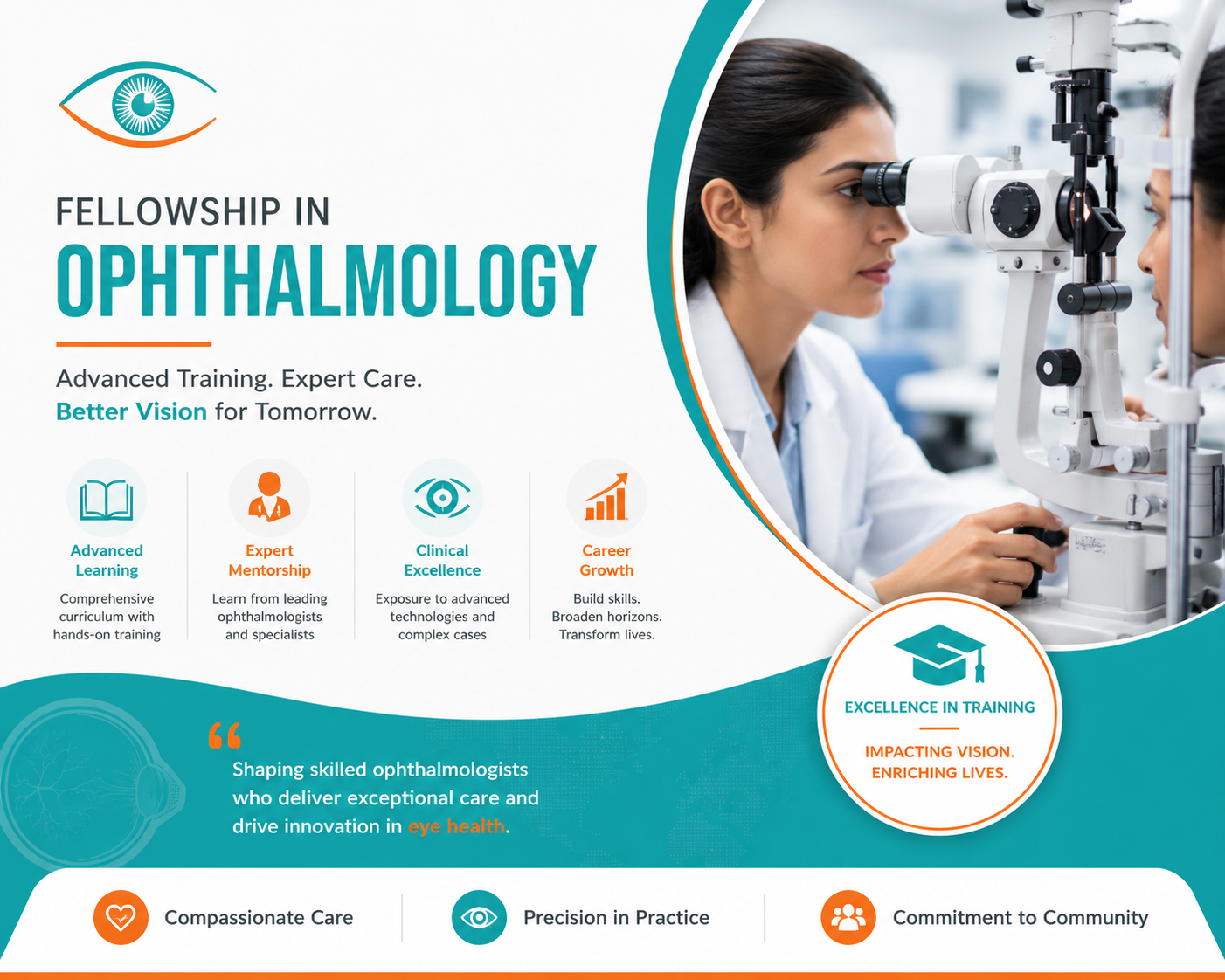

Ophthalmology is a highly specialized branch of medicine dedicated to the diagnosis, treatment, and prevention of diseases and disorders affecting the eyes and visual system. With the increasing prevalence of vision-related conditions such as cataracts, glaucoma, diabetic retinopathy, age-related macular …
Ophthalmology is a highly specialized branch of medicine dedicated to the diagnosis, treatment, and prevention of diseases and disorders affecting the eyes and visual system. With the increasing prevalence of vision-related conditions such as cataracts, glaucoma, diabetic retinopathy, age-related macular degeneration, and refractive errors, the demand for skilled ophthalmologists continues to grow worldwide. A Fellowship in Ophthalmology is designed to provide medical professionals with advanced clinical knowledge, specialized diagnostic skills, and hands-on expertise required to manage complex eye conditions and deliver high-quality patient care.
This fellowship serves as an excellent opportunity for doctors who wish to enhance their understanding of eye diseases, modern diagnostic technologies, surgical procedures, and evidence-based treatment approaches. It bridges the gap between foundational medical education and specialized ophthalmic practice, helping healthcare professionals stay updated with the latest advancements in eye care.
What is a Fellowship in Ophthalmology?
A Fellowship in Ophthalmology is an advanced training program that focuses on the comprehensive study of eye anatomy, physiology, pathology, diagnostics, and therapeutic interventions. The program equips participants with the skills necessary to diagnose and manage a wide range of ophthalmic conditions affecting patients of all age groups.
The fellowship emphasizes both theoretical knowledge and practical application, enabling learners to develop expertise in patient evaluation, ophthalmic investigations, treatment planning, and disease management. It also introduces participants to emerging technologies and innovations that are transforming the field of ophthalmology.
The primary goal of the fellowship is to prepare healthcare professionals to deliver accurate diagnoses, effective treatments, and patient-centered eye care while improving clinical outcomes and preserving vision.
Why Pursue a Fellowship in Ophthalmology?
The field of ophthalmology is evolving rapidly due to advancements in imaging technologies, minimally invasive surgical techniques, artificial intelligence-assisted diagnostics, and innovative treatment modalities. Healthcare professionals who pursue specialized training gain a competitive advantage and improve their ability to manage increasingly complex ophthalmic cases.
Some key reasons to pursue a Fellowship in Ophthalmology include:
- Enhance clinical expertise in eye care and disease management
- Improve diagnostic and treatment capabilities
- Gain exposure to advanced ophthalmic technologies
- Stay updated with evidence-based clinical practices
- Expand professional and career opportunities
- Improve patient outcomes and quality of care
- Develop specialized skills in ophthalmic procedures
- Strengthen academic and research capabilities
The fellowship provides a structured pathway for continuous professional development and lifelong learning within the field of eye care.
Key Areas Covered in the Fellowship
A comprehensive Fellowship in Ophthalmology typically covers a wide range of topics essential for modern ophthalmic practice.
Anatomy and Physiology of the Eye
Participants gain an in-depth understanding of ocular anatomy, visual pathways, ocular physiology, and the mechanisms responsible for normal vision and eye function.
Cataract and Lens Disorders
The curriculum explores the diagnosis, evaluation, and management of cataracts, one of the leading causes of blindness worldwide. Learners study surgical techniques, intraocular lens selection, and postoperative care.
Glaucoma
The fellowship covers the pathophysiology, diagnosis, monitoring, and treatment of glaucoma, including medical, laser, and surgical management strategies.
Retina and Vitreous Diseases
Participants learn about retinal disorders such as diabetic retinopathy, retinal detachment, macular degeneration, retinal vascular diseases, and vitreoretinal conditions.
Corneal and External Eye Diseases
Training includes the diagnosis and management of corneal infections, keratoconus, dry eye disease, ocular surface disorders, and corneal transplantation principles.
Neuro-Ophthalmology
This section focuses on visual pathway disorders, optic nerve diseases, neurological causes of visual impairment, and neuro-ophthalmic examination techniques.
Pediatric Ophthalmology
Learners develop expertise in managing childhood eye disorders, including strabismus, amblyopia, congenital cataracts, and developmental visual abnormalities.
Refractive Errors and Vision Correction
The fellowship covers refractive errors, contact lens management, refractive surgery principles, and modern vision correction techniques.
Ocular Emergencies
Participants learn to identify and manage urgent ophthalmic conditions such as ocular trauma, acute glaucoma, retinal emergencies, and severe infections.
Ophthalmic Imaging and Diagnostics
Modern ophthalmology relies heavily on advanced diagnostic technologies. Training often includes:
- Optical Coherence Tomography (OCT)
- Fundus Photography
- Fluorescein Angiography
- Corneal Topography
- Visual Field Testing
- Ultrasound Imaging
Skills Developed During the Fellowship
A Fellowship in Ophthalmology helps healthcare professionals develop both clinical and professional competencies.
Key skills include:
- Comprehensive eye examination techniques
- Clinical decision-making
- Differential diagnosis of ophthalmic disorders
- Interpretation of ophthalmic investigations
- Patient counseling and communication
- Evidence-based treatment planning
- Multidisciplinary collaboration
- Surgical and procedural understanding
- Management of chronic eye diseases
- Emergency ophthalmic care
These skills contribute significantly to improved patient outcomes and enhanced professional confidence.
Career Opportunities After Completing the Fellowship
The growing burden of eye diseases and vision impairment has increased the demand for trained ophthalmology professionals across healthcare settings.
Career opportunities may include:
Hospitals and Medical Centers
Fellowship-trained professionals can work in government hospitals, private hospitals, multispecialty healthcare centers, and tertiary eye care institutions.
Specialized Eye Hospitals
Dedicated ophthalmology centers often seek professionals with advanced training in eye disease management and ophthalmic diagnostics.
Academic and Teaching Institutions
Healthcare professionals can contribute to medical education, clinical teaching, and mentoring future healthcare providers.
Clinical Research
The fellowship provides a foundation for participation in ophthalmic research, clinical trials, and evidence-generation initiatives.
Teleophthalmology and Digital Healthcare
The growth of digital health has created opportunities in remote eye screening, telemedicine, artificial intelligence-assisted diagnostics, and healthcare technology platforms.
Public Health and Community Eye Care
Professionals can contribute to blindness prevention programs, vision screening initiatives, and public health campaigns aimed at improving eye health.
Benefits of a Fellowship in Ophthalmology
Completing a Fellowship in Ophthalmology offers numerous professional advantages.
Advanced Clinical Expertise
Participants develop specialized knowledge that enables them to diagnose and manage a broader range of ophthalmic conditions effectively.
Improved Patient Care
Enhanced diagnostic accuracy and evidence-based treatment approaches contribute to better visual outcomes and patient satisfaction.
Professional Recognition
Advanced training demonstrates commitment to excellence and continuous professional development.
Career Advancement
The fellowship can open doors to leadership roles, specialist positions, academic appointments, and research opportunities.
Lifelong Learning
Participants remain updated with evolving technologies, clinical guidelines, and treatment innovations in ophthalmology.
Future Scope of Ophthalmology
The future of ophthalmology is exceptionally promising. Rapid advancements in artificial intelligence, robotic-assisted surgery, gene therapy, stem cell treatments, retinal imaging, and personalized medicine are transforming the field. The increasing prevalence of diabetes, aging populations, and rising awareness of eye health continue to drive demand for ophthalmic services worldwide.
Healthcare systems are investing heavily in vision care programs, advanced diagnostic technologies, and digital healthcare solutions. As a result, professionals with advanced ophthalmology training will be well-positioned to contribute to innovation, research, patient care, and healthcare leadership.
The integration of teleophthalmology, AI-driven screening systems, and precision medicine is expected to create new opportunities for ophthalmology professionals in both clinical and non-clinical roles.
Conclusion
A Fellowship in Ophthalmology is an excellent choice for healthcare professionals seeking to advance their expertise in eye care and vision sciences. The program provides comprehensive training in diagnosing, managing, and treating a wide range of ophthalmic conditions while introducing learners to modern technologies and evidence-based practices. With growing global demand for eye care services and continuous advancements in ophthalmic medicine, fellowship-trained professionals can enjoy rewarding career opportunities in clinical practice, research, education, healthcare management, and digital health. By investing in specialized ophthalmology training, healthcare professionals can enhance patient outcomes, strengthen their professional profile, and contribute meaningfully to the future of vision care.
- 5 Sections
- 42 Lessons
- 52 Weeks
- Introduction to Ophthalmology7
- 1.1Review of Anatomy of the Eye
- 1.2Lacrimal Apparatus and Extraocular Muscles – Anatomy Review
- 1.3Innervation of the Ocular Muscles – Anatomy Review
- 1.4Emmetropia and Ametropia – Anatomy and Physiology Review
- 1.5Saggital Section of the Eye – Anatomy Review
- 1.6Anterior Segment of the Eye – Anatomy Review
- 1.7Posterior Segment of the Eye and Fundoscopic Exam– Anatomy Review
- External Eye Diseases8
- Diseases of the Anterior Chamber and Uvea9
- 3.1Corneal Diseases
- 3.2Pupillary Control – Physiology Review
- 3.3Marcus Gunn Pupil and Argyll Robertson Pupil – Pupillary Disorders
- 3.4Intraocular Pressure – Physiology Review
- 3.5Glaucoma: Types
- 3.6Glaucoma: Signs, Symptoms, and Diagnosis
- 3.7Uveitis: Types
- 3.8Uveitis: Etiologies
- 3.9Uveitis: Signs, Diagnosis, and Treatment
- Posterior Segment Eye Diseases12
- 4.1Optic Disorders and Visual Field
- 4.2Diabetic Retinopathy: Classification and Pathophysiology
- 4.3Diabetic Retinopathy: Signs and Diagnosis
- 4.4Retinopathy of Prematurity
- 4.5Hypertensive Retinopathy
- 4.6Retinal Vessel Occlusion
- 4.7Age-Related Macular Degeneration
- 4.8Macular Degeneration
- 4.9Retinal Detachment
- 4.10Retinitis Pigmentosa and Optic Neuritis
- 4.11Cataracts
- 4.12Endophthalmitis
- Trauma and Neoplasms of the Eye6