
Fellowship in Family Nurse Practice
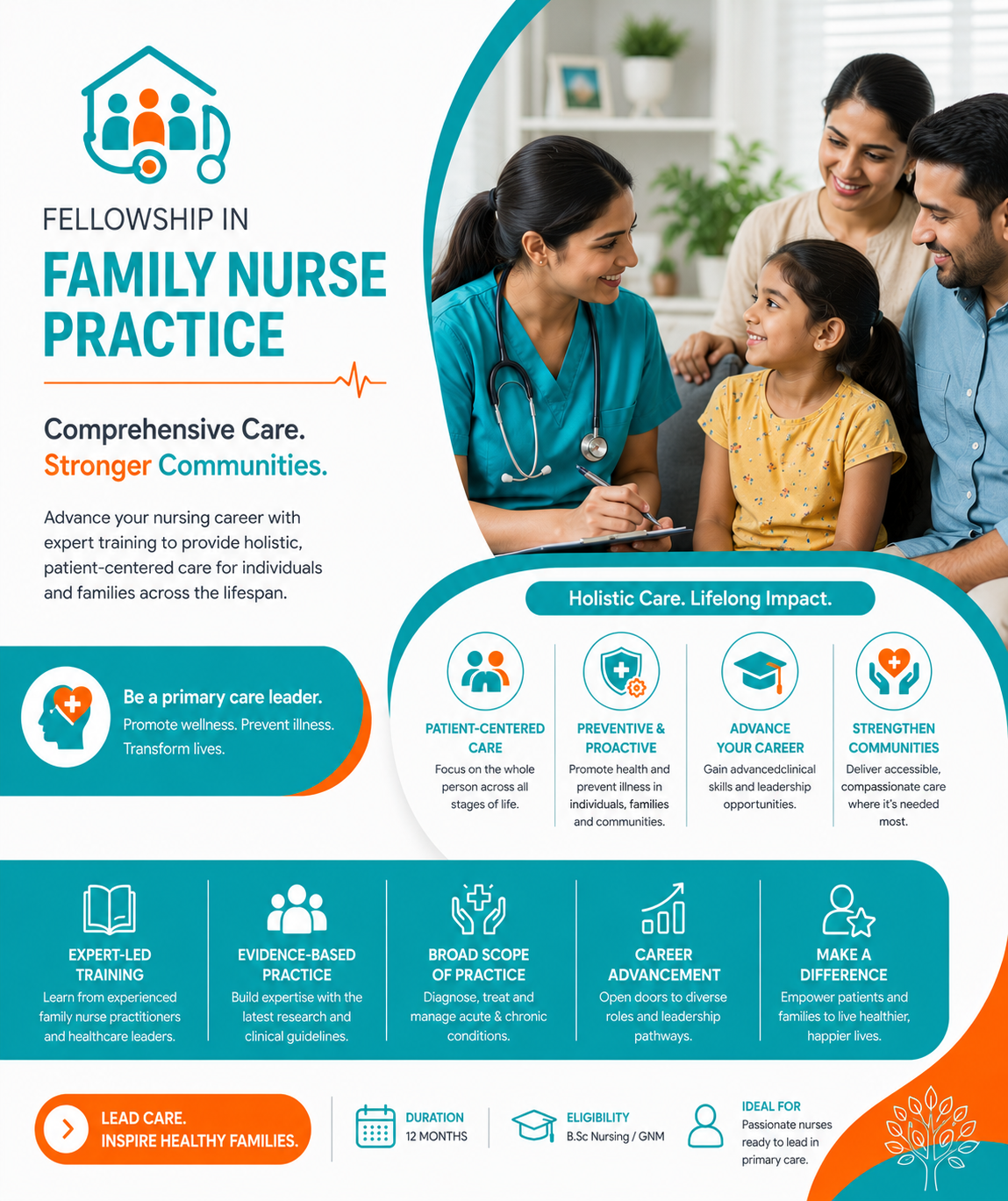

The Fellowship in Family Nurse Practice is a comprehensive 52-week advanced training program designed to prepare nurses for delivering high-quality primary healthcare across the lifespan. The course covers advanced health assessment, pharmacology, pathophysiology, chronic disease management, pediatric and women’s health, mental health, acute care, diagnostic decision-making, and community health. Through evidence-based learning and clinical practice, participants develop the skills required to provide holistic, patient-centered care to individuals and families in diverse healthcare settings.
Program Overview
The Fellowship in Family Nurse Practice is a comprehensive 52-week advanced nursing program designed to prepare registered nurses for expanded roles in primary healthcare, family-centered care, preventive medicine, and chronic disease management. This fellowship equips nurses with the clinical knowledge, diagnostic reasoning, leadership abilities, and evidence-based practice skills required to provide high-quality healthcare services to patients across all age groups, from infants to older adults.
Family Nurse Practitioners play a critical role in modern healthcare systems by delivering accessible, patient-centered care, promoting health and wellness, preventing disease, managing acute and chronic conditions, and coordinating care across multidisciplinary healthcare teams. This program provides a strong foundation in advanced health assessment, pharmacology, pathophysiology, clinical decision-making, and population health, enabling learners to address the healthcare needs of individuals, families, and communities.
The curriculum combines theoretical learning with practical clinical training to ensure participants gain hands-on experience in patient assessment, diagnosis, treatment planning, health education, and healthcare management. By the end of the fellowship, learners will be capable of providing holistic and evidence-based care in primary care clinics, family practice settings, community health centers, hospitals, outpatient facilities, and telehealth environments.
Program Objectives
Upon successful completion of the Fellowship in Family Nurse Practice, participants will be able to:
- Conduct comprehensive health assessments across the lifespan.
- Apply advanced clinical reasoning and diagnostic decision-making skills.
- Develop individualized treatment and care plans for patients and families.
- Manage common acute and chronic health conditions in primary care settings.
- Prescribe and monitor pharmacological therapies safely and effectively.
- Promote disease prevention and health promotion initiatives.
- Deliver family-centered and culturally competent care.
- Assess and manage mental health concerns within primary care practice.
- Coordinate care with interdisciplinary healthcare teams.
- Utilize evidence-based practices to improve patient outcomes.
- Demonstrate leadership and professional accountability in advanced nursing practice.
- Contribute to quality improvement and community health initiatives.
Why Choose This Fellowship?
The growing demand for advanced practice nurses has created significant opportunities for professionals who possess specialized skills in family healthcare. This fellowship is designed to bridge the gap between traditional nursing practice and advanced clinical roles by offering an integrated learning experience focused on real-world healthcare challenges.
Participants benefit from:
- A structured 52-week curriculum aligned with modern healthcare needs.
- Comprehensive training across pediatric, adult, women’s, and geriatric care.
- Advanced instruction in pharmacology and disease management.
- Practical exposure to primary care and community health settings.
- Evidence-based learning and clinical case discussions.
- Development of leadership, communication, and patient education skills.
- Training in preventive care and population health management.
- Enhanced career opportunities in primary healthcare and advanced nursing practice.
Key Areas of Study
Foundations of Family Nurse Practice
Learners develop an understanding of professional standards, healthcare ethics, legal responsibilities, evidence-based nursing, patient-centered care, communication strategies, and cultural competence necessary for advanced practice nursing.
Advanced Health Assessment
Students gain expertise in comprehensive patient evaluations, physical examinations, risk assessments, health screenings, and clinical documentation to support accurate diagnosis and treatment planning.
Advanced Pathophysiology
This component focuses on disease mechanisms and physiological changes affecting various body systems, enabling learners to recognize clinical manifestations and understand disease progression.
Advanced Pharmacology
Participants study pharmacotherapeutics, medication management, prescribing principles, adverse drug reactions, medication safety, and monitoring strategies for diverse patient populations.
Primary Care Across the Lifespan
The fellowship prepares nurses to deliver preventive, diagnostic, and therapeutic care to pediatric, adolescent, adult, and geriatric populations while addressing family healthcare needs.
Chronic Disease Management
Learners acquire skills in managing diabetes, hypertension, cardiovascular diseases, respiratory disorders, obesity, arthritis, and other chronic conditions commonly encountered in primary care.
Women’s Health and Reproductive Care
This section covers reproductive health, family planning, prenatal and postnatal care, menopause management, gynecological disorders, and preventive health screening.
Pediatric and Adolescent Care
Students learn growth and development assessment, immunization protocols, pediatric disease management, behavioral health concerns, and adolescent healthcare principles.
Mental Health in Primary Care
The curriculum emphasizes the identification, assessment, and management of common mental health disorders including anxiety, depression, substance use disorders, and behavioral health conditions.
Acute Care and Minor Illness Management
Participants develop skills to assess and manage common acute conditions, infections, minor injuries, and urgent health concerns while recognizing referral and escalation requirements.
Diagnostic Procedures and Clinical Decision Making
Learners strengthen diagnostic reasoning through laboratory interpretation, imaging review, point-of-care testing, differential diagnosis development, and evidence-based clinical decisions.
Community Health, Leadership and Clinical Practicum
The final phase integrates community health principles, public health initiatives, nursing leadership, healthcare quality improvement, interdisciplinary collaboration, and supervised clinical practice.
Clinical Training Component
A significant portion of the fellowship is dedicated to practical learning and supervised clinical experiences. Participants engage in patient assessments, case presentations, care planning, health education activities, and multidisciplinary collaboration. Clinical training provides opportunities to apply theoretical knowledge in real healthcare settings and develop confidence in advanced nursing practice.
Clinical exposure may include:
- Primary care clinics
- Family medicine practices
- Community health centers
- Outpatient departments
- Women’s health clinics
- Pediatric healthcare settings
- Geriatric care facilities
- Public health programs
- Telehealth services
Career Opportunities
Graduates of the Fellowship in Family Nurse Practice can pursue advanced nursing roles in a variety of healthcare environments, including:
- Family Health Clinics
- Primary Care Centers
- Community Health Organizations
- Hospitals and Healthcare Systems
- Outpatient Medical Practices
- Rural Health Programs
- Preventive Healthcare Services
- Occupational Health Settings
- Telehealth and Virtual Care Services
- Public Health Departments
- Academic and Clinical Education Institutions
Potential job roles include:
- Family Nurse Practitioner
- Advanced Practice Nurse
- Primary Care Nurse Specialist
- Community Health Nurse Leader
- Chronic Disease Management Coordinator
- Women’s Health Nurse
- Pediatric Primary Care Nurse
- Clinical Nurse Educator
- Healthcare Quality Improvement Coordinator
- Population Health Nurse
Learning Methodology
The fellowship employs a blended learning approach that combines:
- Interactive lectures
- Case-based discussions
- Evidence-based clinical learning
- Practical skill workshops
- Clinical simulations
- Diagnostic reasoning exercises
- Patient care planning activities
- Community health projects
- Supervised clinical rotations
- Capstone assessments
This methodology ensures participants gain both theoretical expertise and practical competency required for modern family nurse practice.
Certification
Upon successful completion of all academic modules, clinical training requirements, assessments, and the final capstone project, participants will receive a Fellowship in Family Nurse Practice certification, recognizing their advanced competencies in comprehensive family-centered healthcare and primary care nursing practice.
Conclusion
The Fellowship in Family Nurse Practice is an advanced professional development program designed for nurses seeking to expand their clinical expertise and leadership capabilities in primary healthcare. Through comprehensive training in assessment, diagnosis, treatment, prevention, and health promotion, the program prepares graduates to provide exceptional care to individuals and families across the lifespan. With a strong emphasis on evidence-based practice, patient-centered care, and clinical excellence, this fellowship serves as a pathway toward advanced nursing roles and meaningful contributions to healthcare delivery systems.
- 12 Sections
- 96 Lessons
- 52 Weeks
- Foundations of Family Nurse PracticeThis module introduces learners to the principles, scope, and professional responsibilities of Family Nurse Practitioners (FNPs). Students develop a strong understanding of patient-centered care, evidence-based practice, healthcare ethics, legal responsibilities, communication skills, and the role of FNPs in primary care settings. The module establishes the foundation for delivering comprehensive care across all age groups and healthcare environments.8
- 1.1Introduction to Family Nurse Practice
- 1.2Scope of Practice and Professional Standards
- 1.3Evidence-Based Nursing Practice
- 1.4Healthcare Ethics and Legal Considerations
- 1.5Patient-Centered Care Models
- 1.6Communication and Interpersonal Skills
- 1.7Cultural Competence in Healthcare
- 1.8Documentation and Clinical Record Keeping
- Advanced Health AssessmentThis module focuses on comprehensive health assessment techniques required for family nurse practitioners. Learners develop skills in patient interviewing, history taking, physical examination, diagnostic reasoning, and interpretation of assessment findings. The module emphasizes identifying health risks and formulating appropriate care plans.8
- Advanced PathophysiologyThis module provides in-depth knowledge of disease mechanisms affecting various body systems. Students learn how physiological changes contribute to disease development, progression, and clinical manifestations. The module strengthens diagnostic reasoning and supports effective clinical decision-making.8
- Advanced PharmacologyThis module develops competencies in pharmacotherapeutics, medication management, and safe prescribing practices. Learners gain knowledge of drug classifications, indications, contraindications, adverse effects, and monitoring requirements across different patient populations.8
- Primary Care Across the LifespanThis module prepares learners to provide comprehensive primary healthcare services to individuals and families throughout the lifespan. Emphasis is placed on health promotion, disease prevention, early diagnosis, and management of common conditions.8
- Chronic Disease ManagementThis module focuses on the assessment, treatment, and long-term management of chronic illnesses commonly encountered in primary care settings. Students learn patient education strategies, care coordination, and disease monitoring techniques.8
- Women's Health and Reproductive CareThis module covers comprehensive healthcare needs of women throughout different life stages. Learners gain expertise in reproductive health, preventive screening, prenatal care, and management of common gynecological conditions.8
- Pediatric and Adolescent CareThis module focuses on healthcare delivery for infants, children, and adolescents. Students learn developmental assessment, immunization protocols, common pediatric illnesses, and family-centered approaches to pediatric care.8
- Mental Health in Primary CareThis module equips learners with the knowledge and skills required to assess, diagnose, and manage common mental health conditions in primary care settings. The emphasis is on early intervention and integrated care approaches.8
- Acute Care and Minor Illness ManagementThis module focuses on recognizing and managing acute illnesses and minor injuries frequently encountered in family practice. Students develop rapid assessment and treatment planning skills.8
- Diagnostic Procedures and Clinical Decision MakingThis module develops proficiency in ordering, interpreting, and utilizing diagnostic tests to support clinical decision-making. Learners integrate assessment findings with laboratory and imaging results to formulate accurate diagnoses.8
- Community Health, Leadership and Clinical PracticumThe final module integrates theoretical knowledge with supervised clinical practice. Learners develop leadership, quality improvement, healthcare management, and community health skills while providing direct patient care in primary healthcare settings.8
You might be intersted in
-
167 Students
-
52 Weeks
-
124 Students
-
52 Weeks
-
133 Students
-
52 Weeks
-
123 Students
-
52 Weeks