

The fellowship is intended for medical graduates, life science graduates, and healthcare professionals interested in reproductive medicine and fertility laboratory science. Upon successful completion of the program, participants will be awarded the Fellowship in Embryology from Medova Medical Academy, recognizing their advanced training in reproductive biology and embryology laboratory techniques.
Fellowship in Embryology
₹115,000.00₹111,999.00
100% positive reviews
84 lessons
Language: English
Skill level: All levels
The fellowship is intended for medical graduates, life science graduates, and healthcare professionals interested in reproductive medicine and fertility laboratory science. Upon successful completion of the program, participants will be awarded the Fellowship in Embryology from Medova Medical Academy, recognizing their advanced training in reproductive biology and embryology laboratory techniques.
Description
Curriculum
FAQs
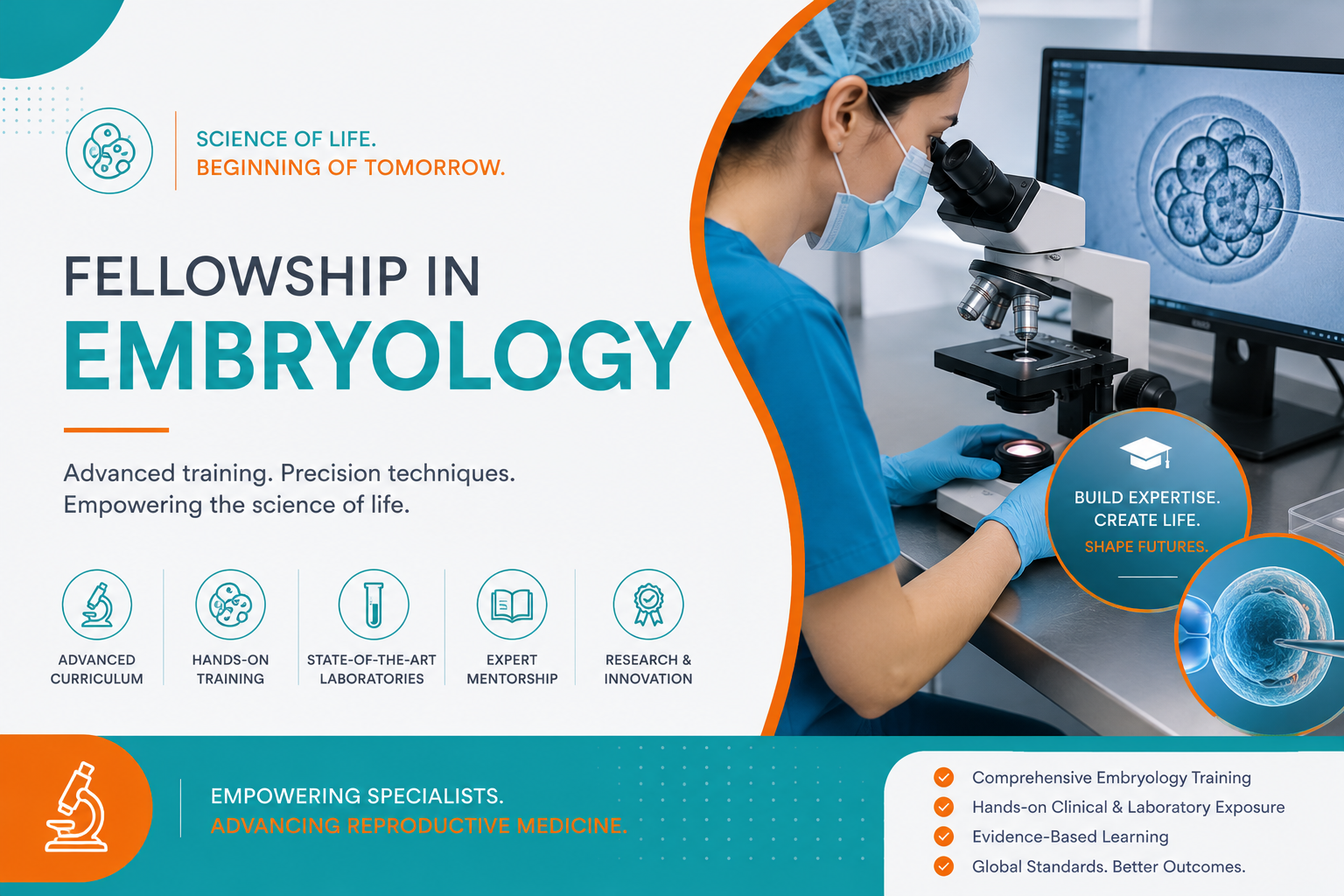
The Fellowship in Embryology offered by Medova Medical Academy is a specialized training program designed to provide comprehensive knowledge and practical understanding of human embryology and assisted reproductive technologies (ART). The program focuses on the scientific and clinical aspects of reproductive biology, embryo development, and modern fertility laboratory techniques.
This fellowship provides structured academic learning combined with practical exposure to laboratory procedures used in reproductive medicine. Participants will gain knowledge in gametogenesis, fertilization, embryo culture, embryo grading, cryopreservation, and laboratory quality control within assisted reproduction laboratories.
This fellowship provides structured academic learning combined with practical exposure to laboratory procedures used in reproductive medicine. Participants will gain knowledge in gametogenesis, fertilization, embryo culture, embryo grading, cryopreservation, and laboratory quality control within assisted reproduction laboratories.
Through academic sessions, laboratory demonstrations, and case-based learning, the fellowship aims to develop skilled professionals capable of supporting fertility specialists and contributing to successful assisted reproduction outcomes.
- 7 Sections
- 84 Lessons
- 52 Weeks
Expand all sectionsCollapse all sections
- Early Development and the Organogenic Period7
- 1.1Introduction and Early Development
- 1.2Fertilization to Bilaminar Embryo
- 1.3Gastrulation and the Trilaminar Embryo
- 1.4Ectoderm Derivatives and Neurulation
- 1.5Mesoderm Derivatives: Paraxial and Intermediate Mesoderm
- 1.6Mesoderm Derivatives:Lateral Plate Mesodermand Body Wall
- 1.7Endoderm Derivatives and Gut Tube
- Development of Musculoskeletal System and Skin7
- Development of the Nervous System, Head, and Neck15
- 3.1The Neural Tube and Neural Crest Cells
- 3.2The Neural Tube and Ventricular System
- 3.3Development of Spinal Cord and Brainstem
- 3.4Malformations in Cerebellar Development
- 3.5Development of the Midbrain and Thalamus
- 3.6Development of Cerebral Cortex
- 3.7Development of Eye
- 3.8Development of Ear
- 3.9Ossification of Skull
- 3.10Malformations in Skull Development
- 3.11Pharyngeal Arches
- 3.12Development of Tongue and Thyroid Gland
- 3.13Pharyngeal Grooves and Pouches
- 3.14Development of the Face
- 3.15Development of Palate
- Development of Sutures and Fontanelles0
- Development of Thoracic Region and Vasculature21
- 5.1Early Development of the Heart
- 5.2Formation of the Right and Left Atria
- 5.3Atrial Septal Defects
- 5.4Formation of AV Canals
- 5.5Separation of Ventricles
- 5.6Formation of the Outflow Tracts
- 5.7Development Defects of Conotruncal Ridges
- 5.8Shunts Present in Congenital Heart Diseases
- 5.9Aortic Arches and Large Arteries: Introduction
- 5.10Aortic Arches :Morphologic Changes
- 5.11Recurrent Laryngeal Nerves and Anomalies of Arterial Development
- 5.12Formation of the Large Veins
- 5.13Development of the Subcardinal Anastomosis
- 5.14Fetal Circulation and Transition to Mature Circulation
- 5.15Upper Airway Development
- 5.16Tracheal Development
- 5.17Development of Larynx and Large Airways
- 5.18Development of Small Airways and Lungs
- 5.19Derivatives of Lateral Plate Mesoderm: Body Wall and Cavities
- 5.20Formation of Diaphragm: Separating Peritoneal and Pericardial Cavities
- 5.21Separating the Pericardial and Pleural Cavities
- Development of the Abdominopelvic Region14
- 6.1Early Gastrointestinal Development
- 6.2Esophagus, Stomach Dilation and Rotation, Duodenal Development
- 6.3Liver, Gall Bladder, Pancreas and Spleen Development
- 6.4Migration of Foregut Organs and Mesenteries
- 6.5Development of the Midgut
- 6.6Separation of Cloaca into Urogenital Sinus and Rectum
- 6.7Derivatives of the Intermediate Mesoderm: Kidneys and Suprarenal Glands
- 6.8Development of the Kidneys and the Adrenal Glands
- 6.9Partitioning and Malformations of the Urogenital Sinus
- 6.10Development of the Indifferent Gonad and Ducts
- 6.11Ovaries and Paramesonephric Ducts
- 6.12Testes and Mesonephric Ducts
- 6.13Development of External Genitalia
- 6.14Hormonal Effects on External Genitalia
- Conception, Implantation and Fetal Development20
- 7.1Germ Cells,Mitosis and Meiosis
- 7.2Chromosomal Abnormalities: Trisomy 21, Trisomy18 and Trisomy13
- 7.3Chromosomal Abnormalities: Turner Syndrome, Klinefelter Syndrome, Trisomy X and XYY,Mosaics, Chimeras and Structural Defects
- 7.4Spermatogenesis
- 7.5Oogenesis
- 7.6Ovarian Cycle, Ovulation and Uterine Changes
- 7.7Fertilization and Implantation
- 7.8Infertility Treatments
- 7.9Implantation and Trophoblast
- 7.10Placenta and Fetal Membranes
- 7.11Abnormalities of the Amnion, Placenta, and Umbilical Cord – Part1
- 7.12Abnormalities of the Amnion, Placenta, and Umbilical Cord – Part 2
- 7.13Twinning and Fetal Membranes
- 7.14Timeline of Embryonic Development: Weeks 1 and 2
- 7.15Timeline of Embryonic Development: Weeks 3 and 4
- 7.16Timeline of Embryonic Development: Weeks 5 and 6
- 7.17Timeline of Embryonic Development: Weeks 7 and 8
- 7.18Fetal Period: First Trimester
- 7.19Fetal Period: Second Trimester
- 7.20Fetal Period: Third Trimester and Premature Birth
A Fellowship in Embryology is an advanced training program designed for healthcare and life science professionals who wish to specialize in reproductive biology and assisted reproductive technology (ART). The program provides in-depth knowledge of human embryology, gamete biology, fertilization techniques, embryo culture, cryopreservation, and laboratory procedures used in fertility treatment. It prepares participants to work in IVF laboratories and reproductive medicine settings.
Eligibility requirements vary by institution, but the fellowship is generally open to graduates in medicine, biotechnology, life sciences, zoology, microbiology, genetics, biochemistry, embryology, and related disciplines. Healthcare professionals seeking specialization in fertility sciences and assisted reproduction may also be eligible to apply.
The curriculum typically includes reproductive physiology, reproductive endocrinology, human gametogenesis, fertilization, embryo development, embryo grading, IVF laboratory techniques, intracytoplasmic sperm injection (ICSI), cryopreservation, quality control, laboratory management, genetics in reproduction, and ethical considerations in assisted reproductive technology.
This fellowship provides specialized expertise in one of the fastest-growing fields of reproductive medicine. It enhances technical and laboratory skills, improves understanding of fertility treatments, increases career opportunities in IVF and fertility centers, and equips professionals with the knowledge needed to contribute to successful reproductive outcomes.
Yes, practical training is a core component of the program. Participants gain hands-on experience in sperm preparation, oocyte handling, embryo culture, embryo assessment, cryopreservation techniques, laboratory quality assurance, and other essential embryology procedures performed in IVF laboratories.
The duration of the fellowship depends on the institution and training format. Most programs are completed within 6 months to 2 years and may combine online learning, classroom instruction, laboratory training, and clinical exposure to provide comprehensive professional development.
Graduates can pursue careers as clinical embryologists, IVF laboratory specialists, reproductive science researchers, fertility clinic consultants, laboratory managers, and academic educators. Opportunities are available in fertility centers, reproductive medicine clinics, research institutions, hospitals, and assisted reproduction laboratories.
Participants develop expertise in embryo culture, IVF laboratory procedures, gamete handling, embryo grading, cryopreservation, quality management systems, reproductive genetics, laboratory documentation, and patient-centered fertility support. These skills are essential for maintaining high standards in assisted reproductive technology laboratories.
Yes, embryology is a rapidly expanding field due to the increasing demand for fertility treatments and assisted reproductive technologies worldwide. Qualified embryologists are highly valued in fertility clinics and IVF centers, making it a rewarding career path with strong growth potential and opportunities for specialization.
Embryology is central to assisted reproductive technology and fertility treatment. Embryologists play a crucial role in handling reproductive cells, monitoring embryo development, selecting viable embryos, and ensuring laboratory excellence throughout the IVF process. Their expertise significantly contributes to successful pregnancy outcomes and advances in reproductive healthcare.
₹115,000.00₹111,999.00