
Fellowship in Diabetes Mellitus
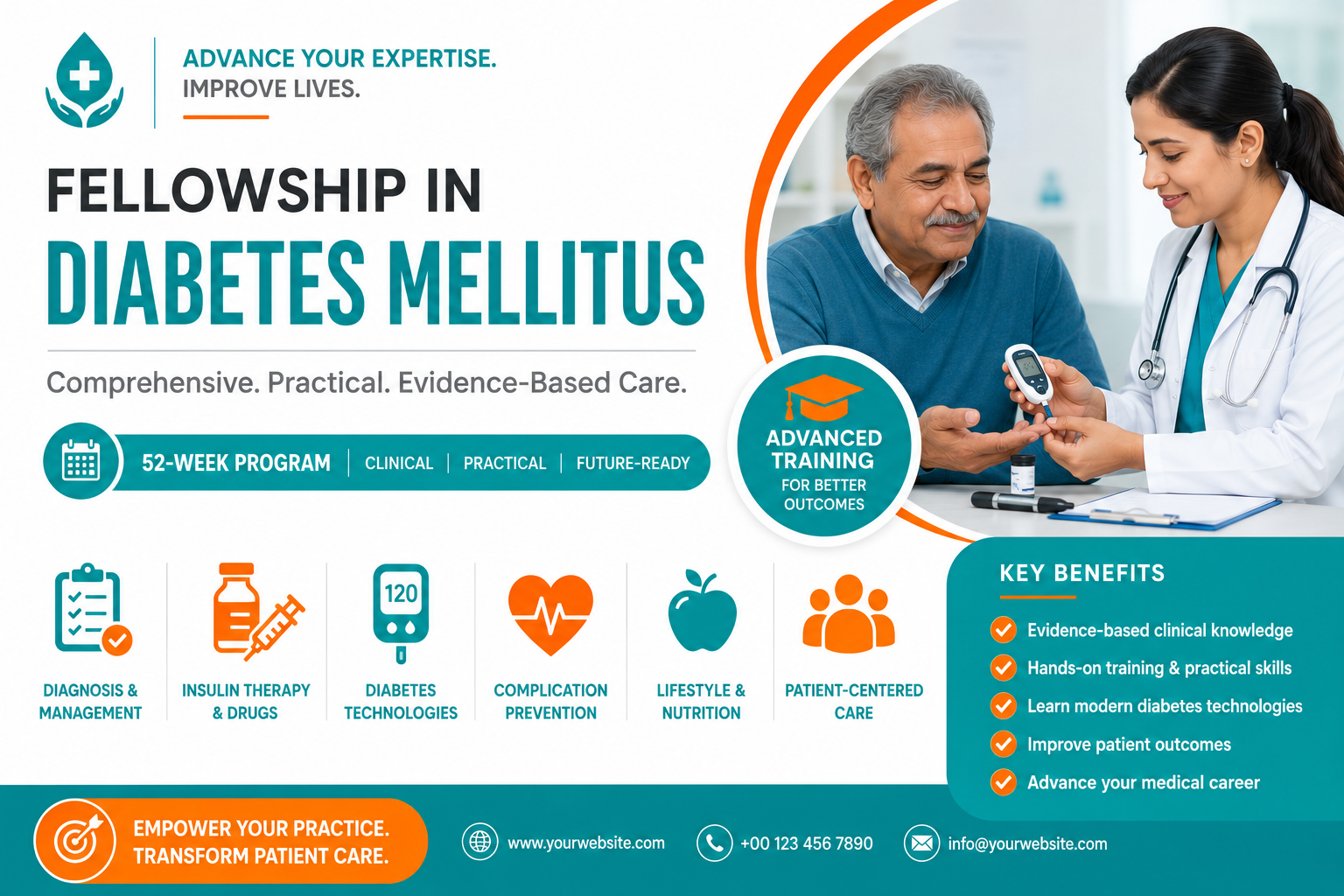

The Fellowship in Diabetes Mellitus is a comprehensive 52-week advanced training program designed for medical graduates, physicians, and healthcare professionals seeking specialized expertise in the prevention, diagnosis, treatment, and long-term management of diabetes and its associated metabolic disorders. With the …
The Fellowship in Diabetes Mellitus is a comprehensive 52-week advanced training program designed for medical graduates, physicians, and healthcare professionals seeking specialized expertise in the prevention, diagnosis, treatment, and long-term management of diabetes and its associated metabolic disorders. With the global prevalence of diabetes continuing to rise, healthcare providers require advanced clinical knowledge and evidence-based skills to deliver effective, patient-centered care across diverse healthcare settings. This fellowship equips participants with the competencies necessary to manage patients with Type 1 Diabetes, Type 2 Diabetes, Gestational Diabetes, prediabetes, and other endocrine and metabolic conditions through an integrated, multidisciplinary approach.
The program begins with a strong foundation in the epidemiology, pathophysiology, genetics, and classification of diabetes mellitus. Participants develop a thorough understanding of glucose metabolism, insulin physiology, insulin resistance, beta-cell dysfunction, and the mechanisms contributing to hyperglycemia and diabetes-related complications. The curriculum explores current diagnostic criteria, laboratory investigations, glycemic assessment, and risk stratification while emphasizing evidence-based clinical guidelines and individualized patient care.
A significant component of the fellowship focuses on the diagnosis and comprehensive management of Type 1 and Type 2 Diabetes. Learners gain expertise in selecting appropriate treatment strategies based on patient characteristics, disease progression, comorbidities, and lifestyle factors. The curriculum covers oral antidiabetic medications, insulin therapy, GLP-1 receptor agonists, SGLT2 inhibitors, DPP-4 inhibitors, and emerging pharmacological therapies. Participants learn insulin initiation, dose adjustment, basal-bolus regimens, insulin pumps, continuous glucose monitoring (CGM), and advanced technologies that improve glycemic control and patient outcomes.
The fellowship also provides extensive training in lifestyle medicine and preventive diabetes care. Participants learn to develop personalized nutrition plans, exercise prescriptions, weight management strategies, behavioral interventions, and patient education programs that promote long-term glycemic control. The curriculum emphasizes motivational interviewing, patient empowerment, self-monitoring of blood glucose, medication adherence, and strategies to improve health literacy among diverse patient populations.
Special attention is given to diabetes-related complications and their prevention. Learners study diabetic nephropathy, retinopathy, neuropathy, diabetic foot disease, cardiovascular disease, cerebrovascular disease, peripheral vascular disease, and diabetic emergencies including diabetic ketoacidosis (DKA) and hyperosmolar hyperglycemic state (HHS). The program emphasizes early detection, routine screening protocols, multidisciplinary management, and evidence-based interventions that reduce morbidity and improve quality of life.
The curriculum includes specialized modules on diabetes management across different patient populations. Participants gain expertise in managing gestational diabetes, diabetes during pregnancy, pediatric diabetes, adolescent diabetes, diabetes in older adults, and diabetes in critically ill or hospitalized patients. The fellowship also explores the management of diabetes in patients with chronic kidney disease, heart failure, obesity, hypertension, dyslipidemia, and other metabolic disorders requiring individualized treatment approaches.
Modern diabetes technology forms an integral part of the program. Participants learn the clinical application of continuous glucose monitoring systems, insulin pumps, hybrid closed-loop systems, digital diabetes management platforms, telemedicine, wearable health technologies, and remote patient monitoring. The curriculum prepares healthcare professionals to integrate technological innovations into routine clinical practice while enhancing patient engagement and long-term disease management.
The fellowship emphasizes evidence-based medicine, clinical decision-making, and quality improvement. Learners critically evaluate current diabetes guidelines, landmark clinical trials, and emerging therapeutic advances. Participants develop skills in interpreting laboratory investigations, assessing cardiovascular risk, optimizing pharmacotherapy, and implementing multidisciplinary care pathways that align with international standards of diabetes management.
Preventive healthcare and population-based diabetes management are key components of the program. Participants explore screening strategies for high-risk populations, community diabetes prevention initiatives, public health interventions, obesity management, and lifestyle modification programs. The curriculum also addresses health promotion, chronic disease prevention, and strategies for reducing the growing burden of diabetes through early intervention and coordinated care.
Clinical communication and patient counseling are integrated throughout the fellowship. Participants strengthen their ability to educate patients and families about diabetes self-management, medication adherence, nutrition, physical activity, foot care, insulin administration, hypoglycemia recognition, sick-day management, and long-term complication prevention. The program emphasizes culturally sensitive communication and shared decision-making to improve patient satisfaction and treatment outcomes.
Throughout the 52-week program, participants engage in structured case-based discussions, clinical scenarios, evidence-based learning activities, interactive assessments, and practical applications that reinforce theoretical knowledge with real-world clinical decision-making. The fellowship fosters critical thinking, multidisciplinary collaboration, and lifelong learning, enabling healthcare professionals to confidently manage complex diabetes cases across outpatient, inpatient, primary care, specialty clinics, and community healthcare settings.
Upon successful completion of the Fellowship in Diabetes Mellitus, graduates possess advanced clinical knowledge and practical expertise in comprehensive diabetes care. They are well-prepared to diagnose and manage diabetes across all stages of the disease, prevent complications, implement personalized treatment plans, utilize modern diabetes technologies, and deliver high-quality, patient-centered care. This fellowship supports career advancement for physicians, general practitioners, family medicine specialists, internists, endocrinology professionals, and other healthcare providers dedicated to improving outcomes for individuals living with diabetes through evidence-based, compassionate, and comprehensive clinical practice.
- 7 Sections
- 56 Lessons
- 52 Weeks
- Diabetes Mellitus: Introduction6
- 1.1Overview of Diabetes Mellitus – Hyperglycemia
- 1.2Type 1 Diabetes Mellitus – Hyperglycemia
- 1.3Type 1 DiabetesMellitus – Hyperglycemia Type 2 DiabetesMellitus – Hyperglycemia
- 1.4Gestational Diabetes – Hyperglycemia
- 1.5Secondary Diabetes – Hyperglycemia
- 1.6Pathogenesis of Diabetes Mellitus – Hyperglycemia
- Diabetes Complications6
- 2.1Acute and Chronic Diabetes Complications
- 2.2Chronic Diabetes Complications
- 2.3Diabetes Microvascular Disease – Diabetes Complications
- 2.4Diabetic Nephropathy(Diabetic Kidney Disease) – Diabetes Complications
- 2.5Diabetic Neuropathy(Diabetic Nerve Damage) – Diabetes Complications
- 2.6Diabetic Retinopathy(Diabetic Eye Disease) – Diabetes Complications
- Diabetic Ketoacidosis (DKA) & Hyperosmolar Hyperglycemic State (HHS)0
- Diabetic Ketoacidosis – Anesthesia Segment and IntravenousInjection – Diabetes Complications8
- 4.1Hyperosmolar Hyperglycemic State (HHS) – Diabetes Complications
- 4.2Diabetic “Prevention With Eyes” – Treatment of DiabetesMellitus
- 4.3Insulin Therapy – Treatment of Diabetes Mellitus
- 4.4Oral Medications for Diabetes Treatment
- 4.5Insulin: Good, Bad, Ugly for Students(Part1) – Treatment of Diabetes Mellitus
- 4.6Insulin: Good, Bad, Ugly for Students(Part 2) – Treatment of Diabetes Mellitus
- 4.7GlycemicMonitoring: Glucometer and Hemoglobin A1c – Treatment of Diabetes Mellitus
- 4.8Diabetes Mellitus Screening Guidelines/How to Screen
- Type 1 Diabetes Mellitus5
- Type 2 Diabetes Mellitus17
- 6.1Diabetes Education
- 6.2Diabetic Ketoacidosis For Students
- 6.3Diabetic Ketoacidosis Overview for Students —2
- 6.4Inpatient Hyperglycemia State (HHS)
- 6.5Diabetic Hyperglycemia State—Signs
- 6.6Diabetes: Hyperglycemia Diagnosis & Management
- 6.7Diabetes Guidelines: Pathophysiology, Physical Exam& Diagnosis
- 6.8Diabetes Guidelines: Treatment
- 6.9Hyperosmolar Hyperglycemic State (HHS)
- 6.10Hypoglycemia
- 6.11Diabetes Mellitus: Signs and Symptoms – Diabetes Mellitus
- 6.12Glycogenesis and Glycogenolysis – Diabetes Metabolism
- 6.13Mobilizing Amino Acids: Gluconeogenesis and Transamination – Diabetes Metabolism
- 6.14Serotonin and Dopamine Dysfunction – Diabetes Metabolism
- 6.15GIP, Incretins and GLP-1 Agonists – Diabetes Metabolism
- 6.16DKA Pathophysiology – Diabetes Metabolism
- 6.17Case Studies – Diabetes Metabolism
- Type 2 Diabetes Continued14
- 7.1Type 2 Diabetes(Juvenile Onset) Case Study
- 7.2Type 2 Diabetes Mellitus(Juvenile Onset): Family Presentation
- 7.3Type 2 Diabetes Mellitus: Clinical Clues for Experts
- 7.4Type 2 Diabetes Mellitus: Diagnosis and Management
- 7.5Signs and Clues for Type 2 Diabetes
- 7.6Type 2 Diabetes Mellitus(DM)
- 7.7Risks of Adult Diabetes
- 7.8Type 2 Diabetes: HbA1c
- 7.9Type 2 DiabetesMellitus: Patient Education and Self-monitoring of Blood Glucose
- 7.10Type 2 DiabetesMellitus: Hemoglobin A1c (HbA1c)Monitoring and Non-pharmacologic Approaches
- 7.11Approaches Type 2 DiabetesMellitus:Management(Diet & Exercise)
- 7.12Type 2 Diabetes Mellitus:Follow-up Management
- 7.13Management Type 2 Diabetes Mellitus: Hospital Management
- 7.14Type 2 Diabetes Mellitus: Outpatient Care
You might be intersted in
-
0 Students
-
52 Weeks
-
133 Students
-
52 Weeks
-
129 Students
-
52 Weeks
-
139 Students
-
52 Weeks