
Fellowship in cardiovascular Pharmacology
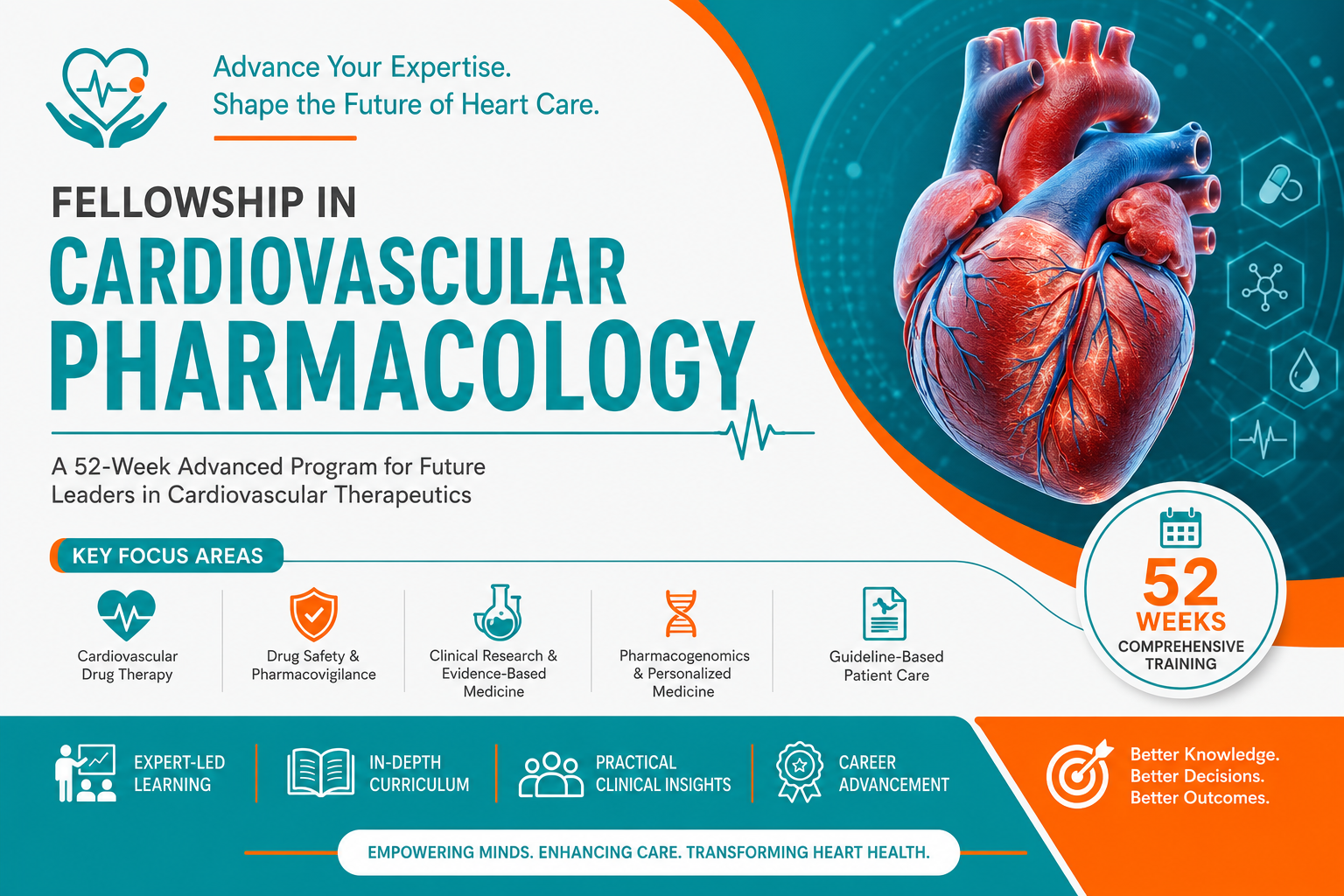

The Fellowship in Cardiovascular Pharmacology is a comprehensive 52-week advanced training program designed for healthcare professionals seeking specialized expertise in cardiovascular drug therapy. The course covers the pharmacological management of hypertension, heart failure, arrhythmias, ischemic heart disease, dyslipidemia, and thromboembolic disorders, while emphasizing evidence-based practice, drug safety, pharmacovigilance, and clinical research. Through in-depth study of cardiovascular therapeutics and emerging treatment strategies, participants develop the knowledge and skills required to optimize patient outcomes and contribute to advancements in cardiovascular medicine.
The Fellowship in Cardiovascular Pharmacology is a comprehensive 52-week advanced academic and professional training program designed for physicians, pharmacists, clinical researchers, healthcare professionals, and medical graduates seeking specialized expertise in cardiovascular drug therapy and therapeutics. As cardiovascular diseases continue to be the leading cause of morbidity and mortality worldwide, there is an increasing demand for healthcare professionals who possess in-depth knowledge of cardiovascular pharmacology, evidence-based prescribing practices, and emerging therapeutic innovations.
This fellowship provides an extensive understanding of the pharmacological principles that underpin the prevention, diagnosis, and treatment of cardiovascular disorders. Participants will gain advanced knowledge of drug mechanisms, pharmacokinetics, pharmacodynamics, pharmacogenomics, and personalized medicine approaches that influence cardiovascular patient care. The curriculum integrates foundational science with real-world clinical applications, enabling learners to make informed therapeutic decisions and optimize patient outcomes.
Throughout the program, learners will explore the pharmacological management of major cardiovascular conditions, including hypertension, heart failure, ischemic heart disease, arrhythmias, dyslipidemia, thromboembolic disorders, and acute coronary syndromes. The fellowship also covers contemporary treatment guidelines, novel drug therapies, adverse drug reaction monitoring, and the role of precision medicine in cardiovascular therapeutics.
A strong emphasis is placed on clinical research, drug safety, pharmacovigilance, and evidence-based medicine. Participants will develop the skills necessary to critically evaluate clinical trial data, interpret scientific literature, and contribute to advancements in cardiovascular pharmacotherapy. The program culminates in a capstone research project that allows learners to apply their knowledge to a practical research or clinical problem in cardiovascular medicine.
Program Objectives
The fellowship aims to:
- Develop advanced expertise in cardiovascular pharmacology and therapeutics.
- Strengthen understanding of cardiovascular physiology and drug mechanisms.
- Enhance clinical decision-making related to cardiovascular medication management.
- Promote safe and effective prescribing practices.
- Build competency in evaluating adverse drug reactions and drug interactions.
- Introduce pharmacogenomics and personalized approaches to cardiovascular treatment.
- Develop research and analytical skills through evidence-based medicine.
- Prepare healthcare professionals for leadership roles in cardiovascular care, research, and education.
Key Learning Areas
Participants will gain in-depth knowledge in:
Cardiovascular Drug Mechanisms
Understand how cardiovascular medications interact with receptors, enzymes, ion channels, and physiological pathways to produce therapeutic effects.
Hypertension Management
Study the pharmacology of antihypertensive agents, including diuretics, ACE inhibitors, ARBs, beta-blockers, calcium channel blockers, and combination therapies.
Heart Failure Pharmacotherapy
Explore contemporary treatment strategies using RAAS inhibitors, beta-blockers, SGLT2 inhibitors, diuretics, and emerging heart failure medications.
Antiarrhythmic Therapy
Examine cardiac electrophysiology and the clinical use of antiarrhythmic agents in rhythm management.
Ischemic Heart Disease and Angina
Learn the pharmacological approaches used in coronary artery disease, chronic angina, and acute coronary syndromes.
Anticoagulant and Antiplatelet Therapy
Gain expertise in thrombosis prevention and treatment using anticoagulants, antiplatelet agents, and thrombolytic therapies.
Lipid Management
Study cholesterol metabolism and advanced lipid-lowering therapies for cardiovascular risk reduction.
Pharmacovigilance and Drug Safety
Develop skills in monitoring medication safety, preventing adverse events, and implementing pharmacovigilance practices.
Clinical Research and Evidence-Based Medicine
Learn research methodology, clinical trial interpretation, systematic reviews, and evidence-based therapeutic decision-making.
Career Opportunities
Graduates of the Fellowship in Cardiovascular Pharmacology can pursue roles in:
- Cardiovascular Clinical Pharmacology
- Cardiology Research and Development
- Pharmaceutical Industry
- Clinical Trial Management
- Drug Safety and Pharmacovigilance
- Academic and Medical Education
- Hospital and Healthcare Systems
- Regulatory Affairs
- Healthcare Consulting
- Medical Affairs and Scientific Communication
The fellowship also serves as an excellent pathway for professionals seeking advanced specialization in cardiovascular therapeutics, translational research, and precision medicine.
Who Should Enroll?
This program is ideal for:
- Medical Graduates (MBBS or Equivalent)
- Physicians and Cardiologists
- Pharmacists and Clinical Pharmacists
- Clinical Researchers
- Healthcare Professionals
- Medical Educators
- Pharmaceutical Industry Professionals
- Postgraduate Medical Trainees
- Allied Health Professionals involved in cardiovascular care
Program Highlights
- 52-Week Comprehensive Fellowship Program
- Advanced Cardiovascular Pharmacology Curriculum
- Evidence-Based Therapeutic Approaches
- Focus on Contemporary Clinical Guidelines
- Pharmacogenomics and Personalized Medicine
- Drug Safety and Pharmacovigilance Training
- Clinical Research and Trial Evaluation
- Case-Based Learning Methodology
- Capstone Research Project
- Industry-Relevant and Career-Oriented Training
Learning Outcomes
Upon successful completion of the Fellowship in Cardiovascular Pharmacology, participants will be able to:
- Apply advanced pharmacological principles in cardiovascular medicine.
- Design evidence-based treatment strategies for cardiovascular diseases.
- Evaluate the efficacy and safety of cardiovascular medications.
- Manage complex drug interactions and adverse effects.
- Interpret cardiovascular clinical research and trial outcomes.
- Implement personalized therapeutic approaches using pharmacogenomic insights.
- Contribute to cardiovascular research, education, and healthcare innovation.
- Deliver high-quality, patient-centered cardiovascular pharmacotherapy.
This fellowship provides a robust foundation for healthcare professionals seeking advanced knowledge and practical expertise in cardiovascular drug therapy, empowering them to improve patient outcomes and contribute to the evolving field of cardiovascular medicine.
- 12 Sections
- 72 Lessons
- 52 Weeks
- Foundations of Cardiovascular PharmacologyThis module introduces the fundamental principles of cardiovascular pharmacology, including pharmacokinetics, pharmacodynamics, receptor pharmacology, and the physiological basis of cardiovascular drug action. Learners will develop a strong understanding of how medications influence cardiovascular function and therapeutic outcomes.6
- Autonomic Nervous System and Cardiovascular RegulationThis module explores the autonomic regulation of cardiovascular function and the pharmacological agents that modulate sympathetic and parasympathetic pathways. Students will understand how autonomic drugs are used in cardiovascular disease management.6
- Antihypertensive PharmacologyThis module focuses on the pharmacological management of hypertension. Learners will study various antihypertensive drug classes, mechanisms of action, therapeutic indications, and evidence-based treatment strategies.6
- Pharmacology of Heart FailureThis module provides comprehensive training in the pharmacological treatment of heart failure. Students will evaluate traditional and novel therapeutic approaches aimed at improving cardiac function and patient outcomes.6
- Antianginal and Anti-Ischemic PharmacologyThis module examines drugs used to manage ischemic heart disease and angina. Learners will understand mechanisms, clinical indications, and therapeutic optimization in coronary artery disease.6
- Antiarrhythmic PharmacologyThis module covers the classification, mechanisms, and clinical applications of antiarrhythmic drugs. Students will learn evidence-based management strategies for various cardiac rhythm disorders.6
- Antithrombotic and Anticoagulant PharmacologyThis module focuses on drugs that prevent and treat thromboembolic disorders. Participants will gain expertise in anticoagulants, antiplatelet agents, and thrombolytic therapies.6
- Lipid-Lowering PharmacologyThis module examines the pharmacological management of dyslipidemia and cardiovascular risk reduction. Learners will review current guidelines and emerging lipid-modifying therapies.6
- Pharmacology of Acute Coronary SyndromesThis module provides advanced knowledge of pharmacotherapy used in acute coronary syndromes. Students will analyze treatment protocols, evidence-based practices, and emergency cardiovascular care.6
- Cardiovascular Pharmacology in Special PopulationsThis module explores cardiovascular drug therapy in special populations, including pediatric, geriatric, pregnant, and critically ill patients. Emphasis is placed on individualized treatment approaches.6
- Drug Safety, Adverse Effects, and PharmacovigilanceThis module develops competency in identifying, monitoring, and managing adverse drug reactions associated with cardiovascular medications. Learners will explore pharmacovigilance systems and medication safety strategies.6
- Research, Clinical Practice, and Capstone ProjectThis final module integrates pharmacological knowledge with clinical practice and research methodologies. Students will conduct a capstone project demonstrating advanced competency in cardiovascular pharmacology.6
You might be intersted in
-
167 Students
-
52 Weeks
-
132 Students
-
52 Weeks
-
133 Students
-
52 Weeks
-
123 Students
-
52 Weeks