
Fellowship in Cardiovascular Pathology
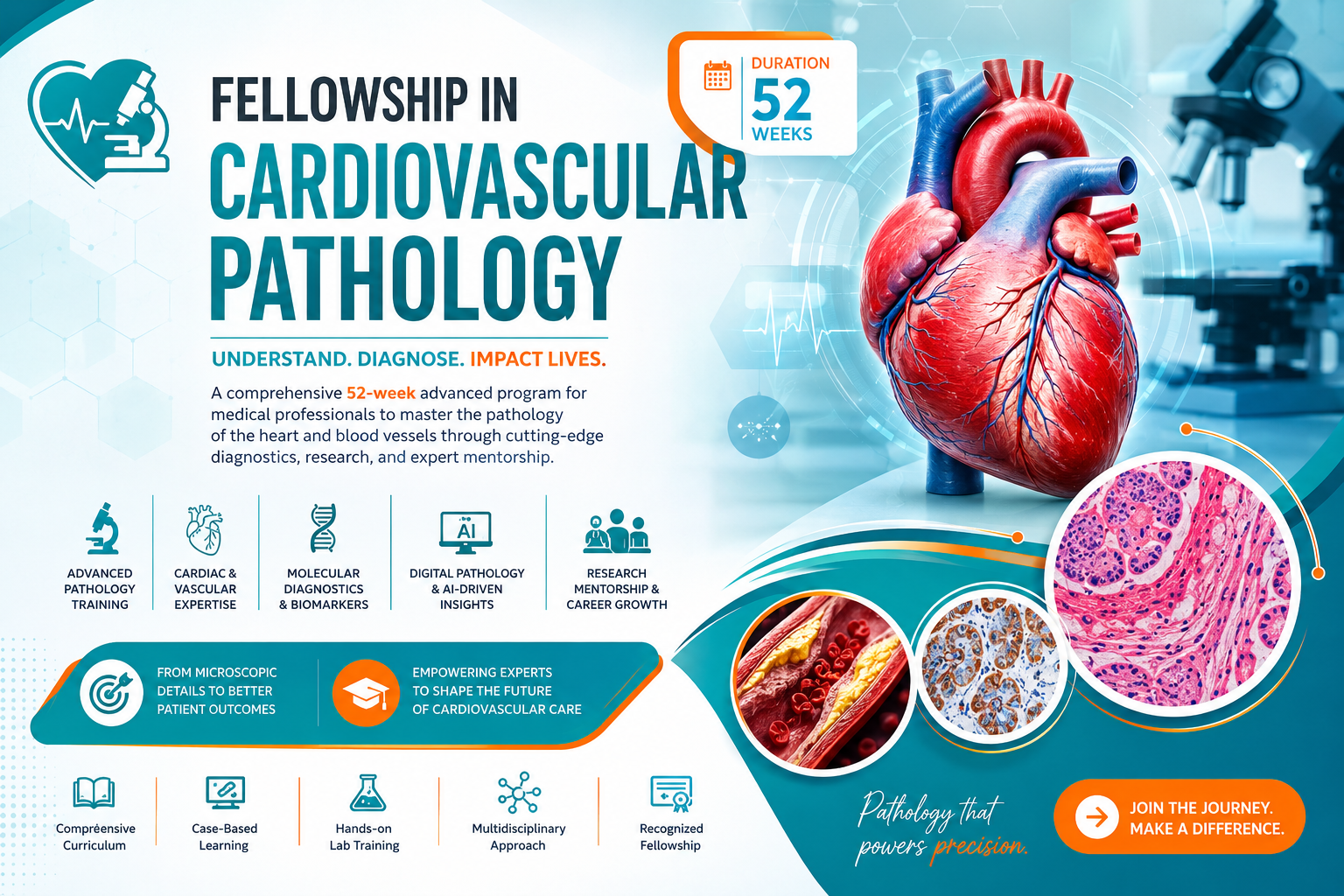

The Fellowship in Cardiovascular Pathology is a comprehensive 52-week advanced training program designed to provide in-depth knowledge of heart and vascular diseases. The course covers cardiovascular anatomy, histopathology, congenital and acquired cardiac disorders, vascular pathology, molecular diagnostics, autopsy techniques, and emerging digital pathology technologies. Through a combination of theoretical learning, case-based discussions, and research-focused training, participants develop the expertise required to diagnose, analyze, and interpret complex cardiovascular diseases in clinical, academic, and diagnostic pathology settings.
The Fellowship in Cardiovascular Pathology is a comprehensive 52-week advanced training program designed for medical graduates, pathologists, laboratory professionals, researchers, and healthcare practitioners seeking specialized expertise in the diagnosis and study of cardiovascular diseases. This fellowship provides in-depth knowledge of the pathological processes affecting the heart, blood vessels, and circulatory system, equipping learners with the skills required to interpret complex cardiovascular disorders in clinical and diagnostic settings.
Cardiovascular diseases remain one of the leading causes of morbidity and mortality worldwide, making specialized pathology expertise increasingly important. This fellowship offers a detailed exploration of cardiovascular anatomy, physiology, histopathology, molecular pathology, and modern diagnostic techniques. Participants gain a strong understanding of the mechanisms underlying coronary artery disease, myocardial infarction, cardiomyopathies, congenital heart defects, valvular disorders, vascular diseases, inflammatory conditions, and cardiac tumors.
The curriculum combines foundational sciences with advanced clinical applications, enabling learners to accurately evaluate cardiovascular specimens and correlate pathological findings with clinical outcomes. Students will develop competency in tissue processing, microscopic interpretation, immunohistochemistry, molecular diagnostics, biomarker analysis, and digital pathology technologies used in contemporary cardiovascular pathology laboratories.
A significant component of the program focuses on ischemic heart disease and atherosclerosis, examining plaque development, coronary artery pathology, myocardial injury, and mechanisms leading to sudden cardiac death. Learners will also explore congenital heart diseases, understanding embryological development and structural abnormalities that affect cardiac function from birth.
The fellowship further addresses inflammatory and infectious cardiovascular disorders, including myocarditis, infective endocarditis, rheumatic heart disease, and pericardial diseases. Through case-based learning and specimen evaluation, participants will gain practical experience in identifying pathological changes associated with these conditions and understanding their clinical implications.
Advanced modules cover vascular pathology, including aneurysms, dissections, vasculitis, thrombosis, pulmonary vascular disorders, and hypertension-related vascular changes. Students will also study cardiac neoplasms, metastatic involvement of the heart, and rare cardiovascular tumors, learning diagnostic approaches and reporting standards used in pathology practice.
The program emphasizes modern developments in cardiovascular pathology, including genomic medicine, molecular diagnostics, artificial intelligence, biomarker discovery, and digital pathology systems. Learners will understand how these technologies are transforming disease diagnosis, risk assessment, and personalized treatment strategies in cardiovascular medicine.
Practical training in cardiovascular autopsy pathology forms an essential part of the fellowship. Participants will learn systematic heart examination techniques, cause-of-death determination, forensic considerations, and pathological evaluation of sudden cardiac death cases. These skills are highly valuable for both clinical and forensic pathology professionals.
Throughout the fellowship, learners engage in multidisciplinary case discussions, research methodology training, scientific writing, and evidence-based practice. The program culminates in a capstone research project that encourages critical thinking, academic development, and contribution to the growing field of cardiovascular pathology.
Upon successful completion, graduates will possess advanced knowledge and practical competencies in cardiovascular pathology, enabling them to work effectively in diagnostic laboratories, hospitals, academic institutions, cardiovascular research centers, and specialized pathology services. They will be prepared to contribute to improved patient outcomes through accurate diagnosis, research innovation, and expert interpretation of cardiovascular diseases.
Key Learning Outcomes
- Understand the pathology of cardiovascular diseases and disorders.
- Interpret histopathological findings in cardiac and vascular tissues.
- Diagnose congenital and acquired heart diseases.
- Evaluate atherosclerosis, coronary artery disease, and myocardial infarction.
- Analyze cardiomyopathies, myocarditis, and inflammatory heart diseases.
- Assess valvular heart diseases and vascular abnormalities.
- Apply molecular pathology and biomarker-based diagnostic techniques.
- Perform and interpret cardiovascular autopsy examinations.
- Utilize digital pathology and emerging diagnostic technologies.
- Conduct research and contribute to advancements in cardiovascular pathology.
- Integrate pathological findings with clinical cardiovascular medicine.
- Develop professional expertise for advanced pathology and research careers.
Career Opportunities
Graduates of the Fellowship in Cardiovascular Pathology may pursue roles such as:
- Cardiovascular Pathology Specialist
- Cardiac Pathologist
- Diagnostic Pathologist
- Histopathology Consultant
- Cardiovascular Research Scientist
- Molecular Pathology Specialist
- Academic Faculty in Pathology
- Clinical Laboratory Director
- Forensic Pathology Consultant
- Biomedical Research Professional
- Cardiovascular Diagnostics Expert
- Medical Education and Training Specialist
This fellowship provides a robust academic and practical foundation for healthcare professionals seeking advanced specialization in one of the most critical and rapidly evolving areas of modern pathology.
- 14 Sections
- 83 Lessons
- 52 Weeks
- Introduction to Cardiovascular PathologyThis module provides a comprehensive introduction to cardiovascular pathology, including the structure and function of the heart and vascular system, fundamental disease mechanisms, and the role of pathology in cardiovascular diagnosis. Learners will gain a strong foundation in cardiovascular anatomy, physiology, and pathological terminology essential for advanced study.5
- Cardiovascular Histology and Laboratory TechniquesThis module focuses on the microscopic structure of cardiovascular tissues and introduces laboratory methodologies used in cardiovascular pathology. Students will learn specimen handling, tissue processing, staining methods, immunohistochemistry, and molecular diagnostic approaches relevant to cardiovascular diseases.6
- Congenital Heart Disease PathologyThis module explores developmental abnormalities of the heart and great vessels. Students will study embryological development, congenital malformations, pathological classification systems, and diagnostic approaches used in evaluating congenital cardiovascular disorders.6
- Atherosclerosis and Coronary Artery DiseaseThis module examines the pathology of atherosclerosis and coronary artery disease, emphasizing mechanisms of plaque formation, progression, instability, and complications. Learners will understand the pathological basis of ischemic heart disease and sudden cardiac death.6
- Ischemic Heart Disease and Myocardial InfarctionThis module provides detailed knowledge of myocardial ischemia and infarction. Students will study pathological changes occurring during acute and chronic infarction, infarct healing, complications, and clinicopathological correlations.6
- Cardiomyopathies and Myocardial DisordersThis module covers inherited and acquired diseases affecting the myocardium. Learners will explore diagnostic criteria, genetic factors, histopathological findings, and clinical implications of cardiomyopathies and myocardial disorders.6
- Inflammatory Heart DiseasesThis module focuses on inflammatory conditions affecting the myocardium, endocardium, and pericardium. Students will study infectious and non-infectious causes, diagnostic techniques, and pathological features of inflammatory cardiovascular diseases.6
- Valvular Heart Disease PathologyThis module examines the pathology of native and prosthetic heart valves. Learners will study degenerative, inflammatory, congenital, and infectious valve diseases and their impact on cardiac function.6
- Vascular PathologyThis module explores diseases affecting arteries, veins, and microvasculature. Students will learn the pathological mechanisms underlying aneurysms, vasculitis, thrombosis, and vascular tumors.6
- Pulmonary Circulation and Cardiac-Lung InteractionsThis module addresses diseases involving the pulmonary circulation and their effects on cardiac structure and function. Students will understand the pathology of pulmonary hypertension and right heart disease.6
- Cardiac Tumors and Pericardial DiseasesThis module focuses on neoplastic and non-neoplastic lesions affecting the heart and pericardium. Learners will study primary and metastatic tumors, diagnostic criteria, and pathological evaluation methods.6
- Cardiovascular Autopsy and Forensic PathologyThis module provides practical training in cardiovascular autopsy procedures. Students will learn systematic examination techniques, cause-of-death determination, and forensic aspects of cardiovascular pathology.6
- Advanced Molecular and Digital Cardiovascular PathologyThis module introduces emerging technologies in cardiovascular pathology, including genomics, proteomics, digital pathology, artificial intelligence, and precision medicine applications.6
- Clinical Integration, Research, and Capstone ProjectThe final module integrates pathological findings with clinical cardiovascular medicine. Students will complete a research project, review complex case studies, and develop professional competencies required for advanced practice in cardiovascular pathology.6
You might be intersted in
-
124 Students
-
52 Weeks
-
133 Students
-
52 Weeks
-
123 Students
-
52 Weeks
-
142 Students
-
52 Weeks