
Diploma in Respiratory Pathology
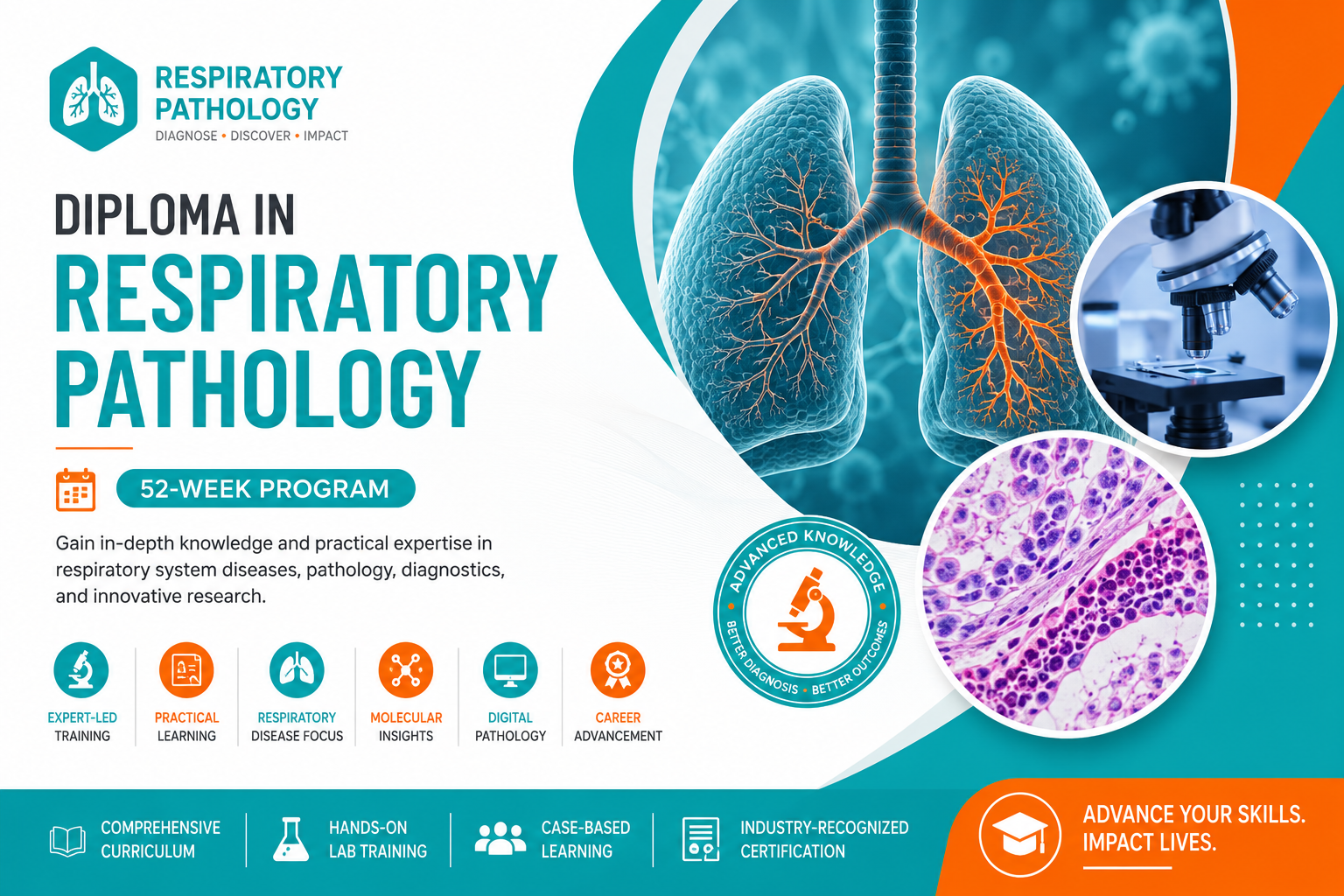

The Diploma in Respiratory Pathology is a comprehensive 52-week program designed to provide in-depth knowledge of respiratory diseases, pulmonary pathology, laboratory diagnostics, and molecular testing. The course covers infectious, inflammatory, interstitial, vascular, pediatric, and neoplastic lung disorders while developing practical skills in histopathology, cytopathology, and diagnostic reporting. Through case-based learning, laboratory training, and research exposure, learners gain the expertise required to accurately diagnose and evaluate respiratory system diseases in modern pathology practice.
The Diploma in Respiratory Pathology is a comprehensive 52-week academic and professional training program designed for healthcare professionals, laboratory scientists, pathologists, medical graduates, and allied health practitioners seeking specialized expertise in the diagnosis and evaluation of respiratory diseases. This program provides an in-depth understanding of pathological processes affecting the respiratory system, combining foundational knowledge with advanced diagnostic techniques used in modern pathology laboratories.
Respiratory diseases remain among the leading causes of morbidity and mortality worldwide, making accurate pathological diagnosis essential for effective patient management. This diploma equips learners with the knowledge and practical skills required to identify, classify, and interpret a wide range of respiratory conditions, including infectious diseases, inflammatory disorders, chronic obstructive pulmonary diseases, interstitial lung diseases, occupational lung disorders, pulmonary vascular diseases, and respiratory tract neoplasms.
The curriculum begins with the fundamentals of respiratory anatomy, physiology, histology, and disease mechanisms, establishing a strong scientific foundation for understanding pathological changes. Students then progress to specialized modules covering laboratory techniques, specimen processing, histopathological examination, cytopathology, immunohistochemistry, and molecular diagnostics. Particular emphasis is placed on correlating microscopic findings with clinical presentations and radiological features to ensure accurate and evidence-based diagnoses.
A significant component of the program focuses on pulmonary infections, including bacterial pneumonia, tuberculosis, viral respiratory diseases, fungal infections, and opportunistic infections. Learners develop the ability to recognize characteristic pathological patterns and understand the role of laboratory investigations in confirming diagnoses. The course also explores chronic respiratory disorders such as asthma, chronic bronchitis, emphysema, and chronic obstructive pulmonary disease (COPD), highlighting their pathogenesis and histopathological manifestations.
Advanced modules address interstitial and occupational lung diseases, pulmonary hypertension, thromboembolic disorders, and pulmonary vascular pathology. Students gain a comprehensive understanding of disease progression, tissue alterations, and the impact of environmental and occupational exposures on respiratory health. The program further examines benign and malignant respiratory tumors, including adenocarcinoma, squamous cell carcinoma, small cell lung carcinoma, and mesothelioma, with detailed instruction in tumor classification, grading, staging, and biomarker analysis.
Specialized training in pediatric respiratory pathology enables learners to evaluate congenital abnormalities, neonatal respiratory conditions, and childhood pulmonary disorders. Additionally, the course introduces modern molecular diagnostic technologies such as next-generation sequencing, genomic profiling, and precision medicine approaches that are transforming respiratory disease diagnosis and treatment planning.
Practical learning is integrated throughout the diploma through case studies, laboratory exercises, slide interpretation sessions, diagnostic reporting workshops, and multidisciplinary discussions. Students develop critical thinking and diagnostic reasoning skills while gaining hands-on experience with contemporary pathology workflows and quality assurance practices. Exposure to digital pathology platforms and artificial intelligence applications further prepares graduates for evolving trends in healthcare diagnostics.
The final phase of the program emphasizes clinical integration and professional competency through comprehensive case analysis, research methodology, scientific literature review, and a capstone project. This experience allows learners to apply their knowledge to real-world respiratory pathology challenges while strengthening their analytical and communication skills.
Upon successful completion of the Diploma in Respiratory Pathology, graduates will possess the competencies required to contribute effectively to pathology laboratories, hospitals, diagnostic centers, research institutions, and academic settings. They will be equipped to support accurate diagnosis, disease monitoring, and clinical decision-making across a broad spectrum of respiratory conditions.
Key Learning Outcomes
- Understand normal and pathological respiratory anatomy and histology.
- Identify and diagnose infectious, inflammatory, and neoplastic respiratory diseases.
- Perform and interpret histopathological and cytopathological examinations.
- Apply immunohistochemistry and molecular diagnostic techniques in pulmonary pathology.
- Evaluate interstitial, occupational, vascular, and pediatric respiratory disorders.
- Correlate pathological findings with clinical and radiological data.
- Develop expertise in laboratory quality assurance and diagnostic reporting.
- Utilize digital pathology and emerging technologies in respiratory diagnostics.
- Conduct pathology-based research and evidence-based case evaluations.
- Demonstrate professional competency in respiratory pathology practice.
Career Opportunities
Graduates may pursue roles such as:
- Respiratory Pathology Technician
- Histopathology Technologist
- Cytopathology Technologist
- Pathology Laboratory Specialist
- Pulmonary Research Associate
- Diagnostic Laboratory Scientist
- Clinical Pathology Assistant
- Medical Laboratory Consultant
- Healthcare Quality Analyst
- Academic and Research Professional
This diploma provides a strong foundation for advanced study and professional growth in respiratory pathology while supporting the increasing demand for skilled specialists in pulmonary disease diagnosis and laboratory medicine.
- 12 Sections
- 84 Lessons
- 52 Weeks
- Foundations of Respiratory PathologyThis module introduces learners to the fundamental principles of respiratory pathology, including the anatomy, physiology, and histology of the respiratory system. Students will develop an understanding of normal lung structure and function as a basis for recognizing pathological changes. The module also covers basic concepts of disease mechanisms, tissue injury, inflammation, and repair processes affecting the respiratory tract.7
- Respiratory Pathology Laboratory TechniquesThis module focuses on laboratory methodologies used in respiratory pathology. Students will learn specimen collection, processing, staining techniques, cytological examination, histopathology procedures, and quality assurance practices. Emphasis is placed on maintaining diagnostic accuracy and laboratory safety.7
- Infectious Diseases of the Respiratory SystemThis module examines infectious conditions affecting the respiratory tract. Students will study bacterial, viral, fungal, and parasitic respiratory diseases, their pathological manifestations, diagnostic approaches, and clinical significance. Correlation between microbiological findings and tissue pathology is emphasized.7
- Inflammatory and Obstructive Lung DiseasesThis module explores inflammatory and obstructive pulmonary disorders, including asthma, chronic bronchitis, emphysema, and chronic obstructive pulmonary disease (COPD). Students will understand disease mechanisms, histopathological features, and diagnostic criteria used in respiratory pathology practice.7
- Interstitial and Occupational Lung DiseasesThis module covers diffuse parenchymal lung diseases and occupational respiratory disorders. Students will learn about pulmonary fibrosis, pneumoconiosis, hypersensitivity pneumonitis, and other interstitial lung conditions. The relationship between environmental exposure and pathological changes is highlighted.7
- Pulmonary Vascular DiseasesThis module examines diseases affecting the pulmonary vasculature. Students will study pulmonary hypertension, thromboembolic disease, vascular malformations, and associated pathological changes. Diagnostic techniques and clinicopathological correlation are emphasized.7
- Neoplastic Disorders of the Respiratory SystemThis module focuses on benign and malignant respiratory tract tumors. Students will gain comprehensive knowledge of lung cancer classification, molecular pathology, tumor grading, staging, and modern diagnostic techniques used in oncologic pathology.7
- Pediatric Respiratory PathologyThis module addresses respiratory disorders occurring during infancy and childhood. Students will learn congenital anomalies, neonatal respiratory disorders, pediatric infections, and developmental abnormalities affecting the respiratory system.7
- Cytopathology and Molecular DiagnosticsThis module provides advanced training in respiratory cytology and molecular diagnostic techniques. Students will learn the interpretation of respiratory cytology specimens and the role of genomic and molecular testing in modern respiratory pathology.7
- Autopsy Pathology of the Respiratory SystemThis module focuses on postmortem examination of respiratory diseases. Students will learn autopsy techniques, gross and microscopic examination of lung tissues, determination of disease cause, and documentation standards in respiratory pathology.7
- Emerging Technologies and Research in Respiratory PathologyThis module introduces current advances in respiratory pathology, including digital pathology, artificial intelligence, biomarker discovery, and translational research. Students will develop research literacy and understand future trends in diagnostic pathology.7
- Clinical Integration, Case Studies, and Capstone ProjectThis final module integrates knowledge gained throughout the diploma. Students will analyze complex respiratory pathology cases, develop diagnostic reasoning skills, participate in multidisciplinary discussions, and complete a capstone project demonstrating professional competency.7
You might be intersted in
-
133 Students
-
52 Weeks
-
123 Students
-
52 Weeks
-
142 Students
-
52 Weeks
-
130 Students
-
52 Weeks