
Diploma in Oral Surgery
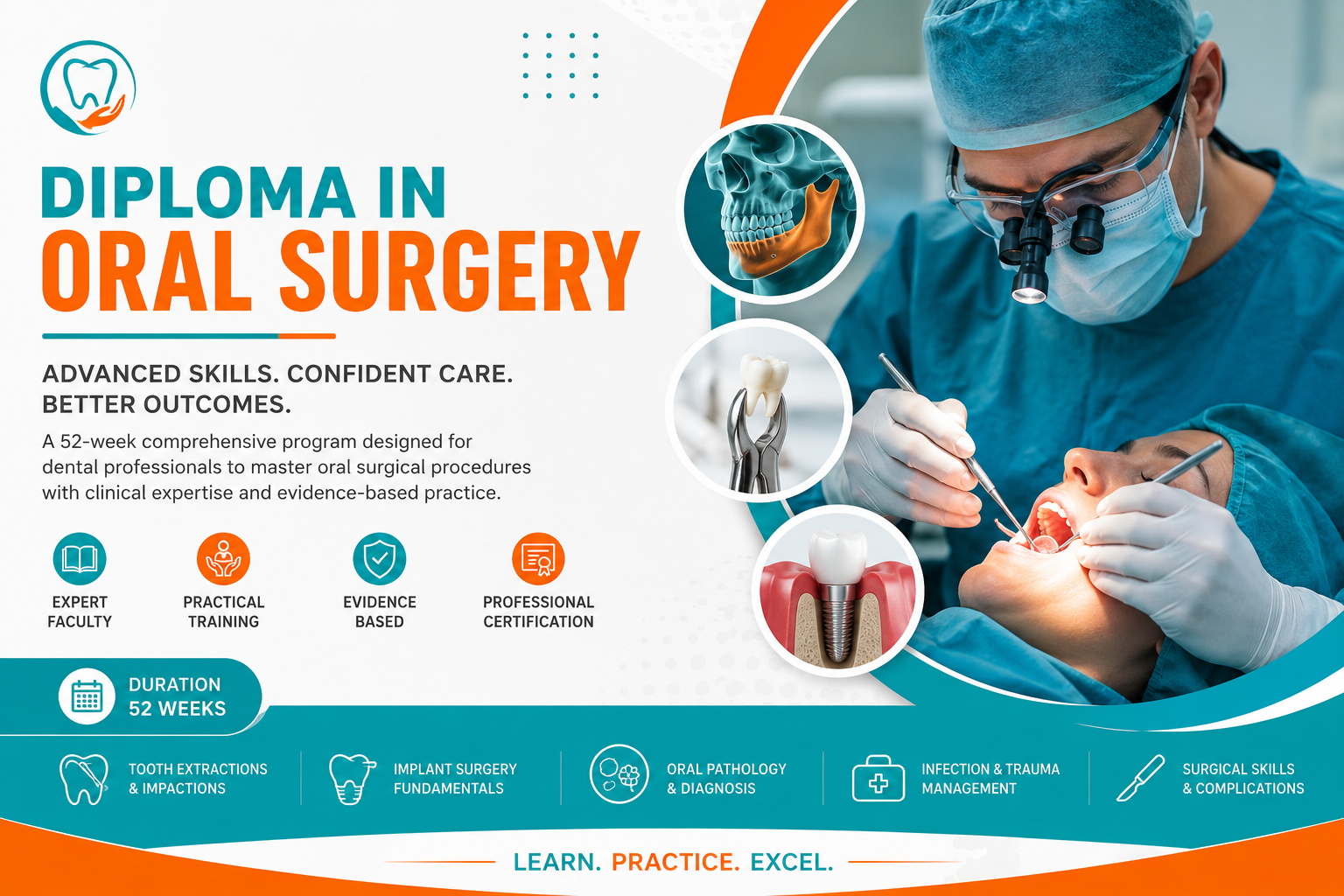

The Diploma in Oral Surgery is a comprehensive 52-week program designed for dental professionals seeking advanced knowledge and practical skills in oral surgical procedures. The course covers applied anatomy, oral pathology, patient assessment, local anesthesia, tooth extractions, impacted tooth surgery, infection management, oral trauma, cysts and tumors, implant-related procedures, and surgical complication management. Through a structured curriculum and case-based learning approach, participants develop the clinical competence required to diagnose, plan, and perform a wide range of oral surgical treatments while adhering to modern standards of patient safety and evidence-based practice.
The Diploma in Oral Surgery is a comprehensive 52-week advanced training program designed for dental professionals who wish to develop specialized knowledge and clinical skills in the diagnosis, treatment, and surgical management of oral and maxillofacial conditions. This program provides a strong foundation in oral surgical principles while equipping learners with the practical competencies required to perform a wide range of minor and intermediate oral surgical procedures safely and effectively.
Oral surgery plays a vital role in modern dental practice, encompassing procedures such as tooth extractions, management of impacted teeth, treatment of oral infections, surgical management of cysts and benign lesions, pre-prosthetic surgery, and implant-related procedures. As the demand for specialized dental care continues to grow, clinicians with advanced oral surgery training are increasingly sought after in hospitals, dental clinics, academic institutions, and specialty practices.
The curriculum begins with an in-depth study of head and neck anatomy, oral pathology, patient assessment, diagnostic techniques, and treatment planning. Learners gain a thorough understanding of the anatomical structures and physiological principles that underpin safe and successful surgical practice. Emphasis is placed on evidence-based diagnosis, clinical decision-making, and comprehensive patient evaluation to ensure optimal treatment outcomes.
A significant portion of the program focuses on local anesthesia, pain control, and surgical asepsis. Participants learn various anesthesia techniques, infection control protocols, sterilization procedures, and patient safety measures essential for modern oral surgical practice. These foundational skills prepare learners to perform surgical procedures with confidence while minimizing complications and ensuring patient comfort.
The diploma also provides extensive training in exodontia and surgical tooth removal, including routine extractions, surgical extractions, root retrieval procedures, and management of impacted teeth. Students explore flap design, bone removal techniques, tooth sectioning methods, suturing procedures, and postoperative care protocols. Special attention is given to third molar surgery and the prevention and management of associated complications.
Advanced modules cover the diagnosis and treatment of odontogenic infections, fascial space infections, jaw cysts, benign tumors, and oral soft tissue lesions. Learners gain practical knowledge of biopsy techniques, specimen handling, histopathological interpretation, and surgical management strategies for a variety of oral pathological conditions. This integrated approach enhances clinical competence and diagnostic accuracy.
The program further explores oral trauma management, including dentoalveolar injuries, soft tissue trauma, and fracture assessment. Participants learn emergency management principles, stabilization techniques, and rehabilitation protocols for patients presenting with traumatic oral and maxillofacial injuries. These skills are invaluable for clinicians working in emergency, hospital, and surgical settings.
Modern concepts in implant dentistry and pre-prosthetic surgery are also incorporated into the curriculum. Learners are introduced to implant treatment planning, ridge preservation, bone grafting procedures, sinus augmentation techniques, and soft tissue management. These modules provide an understanding of how oral surgery supports comprehensive restorative and rehabilitative dental care.
Throughout the course, students engage in case-based discussions, clinical scenario analysis, and evidence-based learning activities that bridge theory and practice. The curriculum emphasizes ethical practice, patient communication, risk management, and interdisciplinary collaboration, ensuring graduates are prepared to deliver high-quality patient-centered care.
Upon successful completion of the Diploma in Oral Surgery, participants will possess the knowledge and skills necessary to assess surgical patients, formulate treatment plans, perform oral surgical procedures, manage complications, and contribute effectively to multidisciplinary dental and healthcare teams. The program serves as an excellent pathway for dental professionals seeking career advancement, enhanced clinical expertise, and specialization in the field of oral surgery.
- 12 Sections
- 120 Lessons
- 52 Weeks
- Introduction to Oral Surgery and Applied AnatomyThis module introduces learners to the scope, principles, and clinical applications of oral surgery. Students will gain a comprehensive understanding of head and neck anatomy, oral tissues, craniofacial structures, neurovascular supply, and anatomical landmarks essential for surgical practice. The module establishes the foundational knowledge required for safe diagnosis and surgical intervention.10
- 1.1Introduction to Oral and Maxillofacial Surgery
- 1.2Scope and Responsibilities of an Oral Surgeon
- 1.3Osteology of the Skull and Facial Bones
- 1.4Anatomy of the Oral Cavity
- 1.5Muscles of Mastication and Facial Expression
- 1.6Blood Supply of the Head and Neck
- 1.7Cranial Nerves and Their Clinical Significance
- 1.8Temporomandibular Joint Anatomy
- 1.9Salivary Glands and Duct Systems
- 1.10Surgical Anatomy Review
- Oral Pathology and Disease DiagnosisThis module focuses on recognizing oral diseases, pathological conditions, and abnormalities requiring surgical management. Learners will develop diagnostic skills through clinical examination, differential diagnosis, and interpretation of pathological findings to formulate appropriate treatment plans.10
- 2.1Principles of Oral Pathology
- 2.2Developmental Oral Lesions
- 2.3Inflammatory Oral Diseases
- 2.4Oral Cysts and Tumors
- 2.5Potentially Malignant Disorders
- 2.6Benign and Malignant Oral Lesions
- 2.7Biopsy Techniques and Specimen Handling
- 2.8Histopathological Correlation
- 2.9Diagnostic Workup of Oral Lesions
- 2.10Clinical Case Discussions
- Patient Assessment and Treatment PlanningStudents will learn systematic approaches to patient evaluation, history taking, risk assessment, and treatment planning. The module emphasizes evidence-based decision-making, patient safety, and interdisciplinary coordination for optimal surgical outcomes.10
- 3.1Comprehensive Patient Evaluation
- 3.2Medical History Assessment
- 3.3Dental History and Examination
- 3.4Risk Assessment in Oral Surgery
- 3.5Treatment Planning Principles
- 3.6Informed Consent and Documentation
- 3.7Surgical Case Selection
- 3.8Patient Communication Skills
- 3.9Ethical Decision-Making
- 3.10Clinical Record Management
- Infection Control and Surgical AsepsisThis module covers infection prevention strategies, sterilization techniques, surgical asepsis, and occupational safety standards. Students will understand how to maintain a sterile surgical environment and reduce postoperative complications.10
- 4.1Principles of Infection Control
- 4.2Sterilization and Disinfection
- 4.3Surgical Hand Preparation
- 4.4Personal Protective Equipment
- 4.5Operatory Preparation
- 4.6Instrument Sterilization Protocols
- 4.7Biomedical Waste Management
- 4.8Occupational Hazards
- 4.9Cross-Infection Prevention
- 4.10Surgical Safety Checklists
- Local Anesthesia and Pain ManagementLearners will master the pharmacology, administration techniques, and complications of local anesthesia. Pain management strategies, sedation principles, and patient comfort measures are also emphasized.10
- 5.1Pharmacology of Local Anesthetics
- 5.2Vasoconstrictors in Dentistry
- 5.3Nerve Block Techniques
- 5.4Maxillary Anesthesia Techniques
- 5.5Mandibular Anesthesia Techniques
- 5.6Supplemental Injection Techniques
- 5.7Management of Anesthetic Complications
- 5.8Postoperative Pain Control
- 5.9Sedation Principles
- 5.10Analgesic Pharmacology
- Exodontia and Minor Oral Surgical ProceduresThis module provides detailed training in tooth extraction techniques and minor oral surgical procedures. Students will learn indications, contraindications, instrumentation, and postoperative care protocols.10
- 6.1Principles of Tooth Extraction
- 6.2Extraction Instruments and Usage
- 6.3Simple Extraction Techniques
- 6.4Surgical Extraction Procedures
- 6.5Management of Fractured Teeth
- 6.6Root Retrieval Techniques
- 6.7Alveoloplasty Procedures
- 6.8Suturing Techniques
- 6.9Post-Extraction Care
- 6.10Management of Extraction Complications
- Impaction SurgeryThis module focuses on the diagnosis and surgical management of impacted teeth, particularly third molars. Students will learn treatment planning, flap design, bone removal, and complication management.10
- 7.1Classification of Impacted Teeth
- 7.2Radiographic Assessment of Impactions
- 7.3Third Molar Surgery Planning
- 7.4Surgical Flap Design
- 7.5Bone Removal Techniques
- 7.6Tooth Sectioning Procedures
- 7.7Surgical Extraction of Impacted Canines
- 7.8Postoperative Management
- 7.9Nerve Injury Prevention
- 7.10Complication Management
- Oral Infections and ManagementStudents will study odontogenic infections, fascial space infections, and emergency management protocols. The module emphasizes early diagnosis and evidence-based treatment approaches.10
- Cysts and Benign Lesions of the JawsThis module introduces jaw cysts and benign lesions requiring surgical intervention. Students will learn diagnosis, surgical techniques, and postoperative management.10
- Pre-Prosthetic and Implant SurgeryLearners will explore surgical procedures that facilitate prosthetic rehabilitation and dental implant placement. The module covers bone preservation and augmentation principles.10
- 10.1Principles of Pre-Prosthetic Surgery
- 10.2Ridge Preservation Techniques
- 10.3Vestibuloplasty Procedures
- 10.4Frenectomy and Soft Tissue Surgery
- 10.5Fundamentals of Dental Implantology
- 10.6Implant Treatment Planning
- 10.7Bone Grafting Techniques
- 10.8Sinus Lift Procedures
- 10.9Implant Surgical Protocols
- 10.10Implant Complications
- Oral Trauma ManagementThis module focuses on the diagnosis and treatment of dental and maxillofacial trauma. Students will develop skills in emergency assessment and surgical stabilization.10
- Oral Surgery Complications and Clinical PracticeThe final module integrates all knowledge and skills acquired throughout the program. Students will learn to identify, prevent, and manage surgical complications while applying evidence-based principles in clinical practice through case discussions and capstone assessments.10
- 12.1Intraoperative Complications
- 12.2Postoperative Complications
- 12.3Hemorrhage Control
- 12.4Dry Socket Management
- 12.5Nerve Injury Management
- 12.6Medico-Legal Aspects of Oral Surgery
- 12.7Evidence-Based Oral Surgery
- 12.8Clinical Audit and Quality Assurance
- 12.9Comprehensive Case Presentations
- 12.10Final Clinical Competency Assessment