Diploma in HIV & AIDS
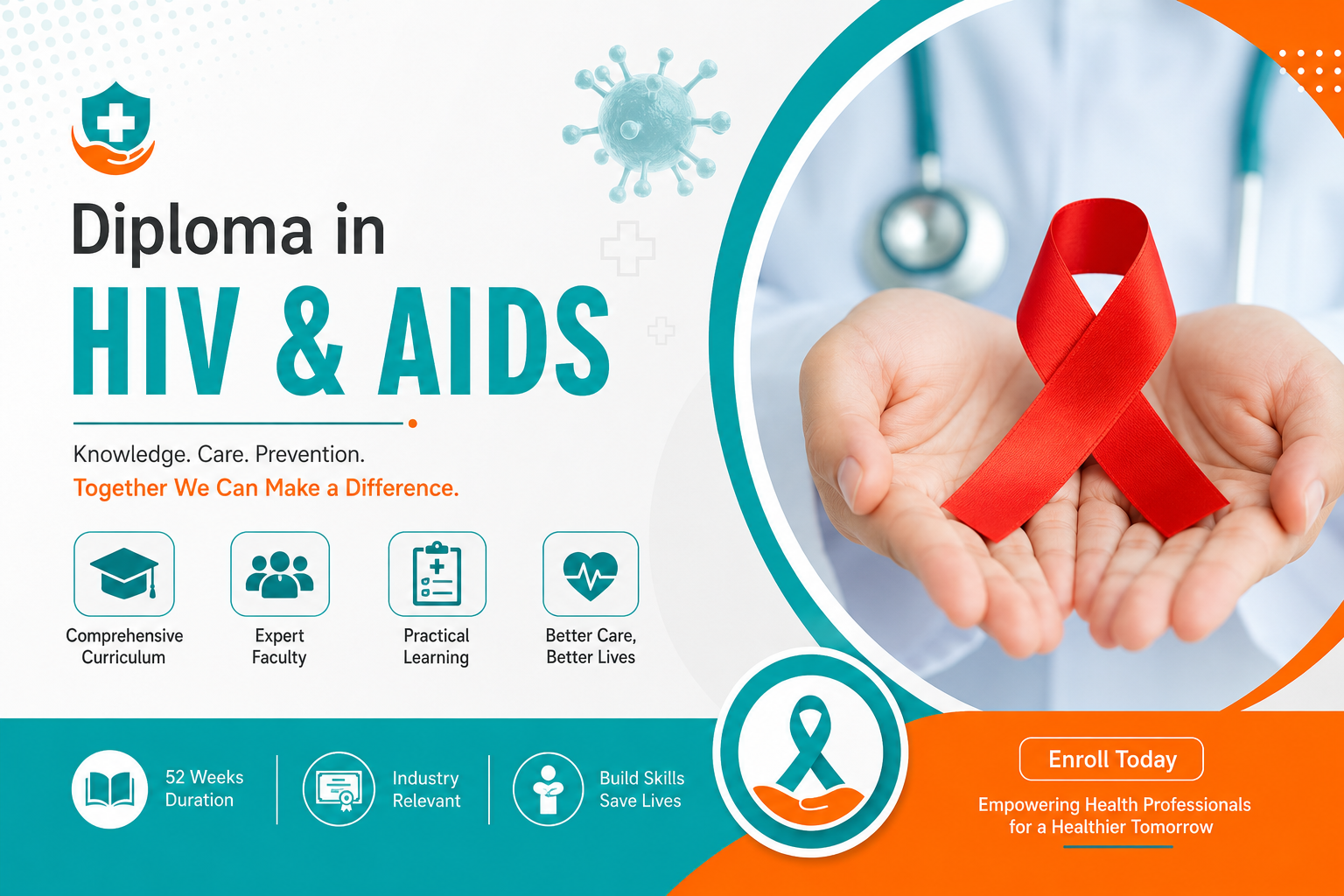

The Diploma in HIV & AIDS is a comprehensive 52-week program designed to provide healthcare professionals and aspiring medical practitioners with in-depth knowledge of HIV infection, AIDS management, antiretroviral therapy (ART), opportunistic infections, prevention strategies, counseling, and public health interventions. The course combines scientific principles, clinical practice, patient-centered care, and research methodologies to prepare learners for effective roles in HIV/AIDS prevention, diagnosis, treatment, and long-term care management.
The Diploma in HIV & AIDS is a comprehensive 52-week academic and professional training program designed to equip healthcare professionals, medical graduates, nurses, allied health practitioners, public health workers, and healthcare administrators with advanced knowledge and practical skills in HIV prevention, diagnosis, treatment, and long-term patient management. As HIV/AIDS continues to be a major global public health concern, healthcare providers require specialized training to deliver evidence-based, patient-centered, and multidisciplinary care to individuals living with HIV.
This diploma program provides an in-depth understanding of the biological, clinical, epidemiological, and social aspects of HIV infection. Students begin by exploring the fundamentals of HIV virology, immunology, modes of transmission, disease progression, and the global burden of HIV/AIDS. The curriculum then advances to diagnostic techniques, including HIV screening, confirmatory testing, viral load monitoring, CD4 count assessment, and resistance testing, enabling learners to accurately diagnose and monitor patients throughout the course of their treatment.
A significant focus of the program is on Antiretroviral Therapy (ART), the cornerstone of modern HIV management. Learners gain detailed knowledge of antiretroviral drug classes, treatment initiation guidelines, adherence strategies, drug interactions, resistance patterns, and treatment monitoring. The course emphasizes the importance of achieving viral suppression while improving patient quality of life and reducing transmission risks.
The diploma also provides extensive training in the recognition, prevention, and management of opportunistic infections and HIV-associated complications. Students learn to identify and treat conditions such as tuberculosis, cryptococcal meningitis, pneumocystis pneumonia, candidiasis, hepatitis co-infections, and other common complications that affect immunocompromised individuals. Special attention is given to the management of HIV in women, pregnant individuals, children, adolescents, older adults, and key populations who may face unique healthcare challenges.
Beyond clinical management, the program addresses the psychosocial dimensions of HIV care. Learners develop skills in HIV counseling, mental health support, stigma reduction, patient education, and community engagement. These competencies are essential for fostering treatment adherence, improving health outcomes, and creating supportive healthcare environments for people living with HIV.
The curriculum also explores public health strategies and preventive interventions, including HIV testing programs, behavioral prevention approaches, Pre-Exposure Prophylaxis (PrEP), Post-Exposure Prophylaxis (PEP), harm reduction initiatives, and community-based awareness campaigns. Students gain insight into national and international HIV policies, healthcare regulations, ethical considerations, and program management practices that guide effective HIV service delivery.
To bridge theory and practice, the course incorporates case studies, clinical assessments, evidence-based practice exercises, research methodology, and a capstone project. These components allow learners to apply their knowledge to real-world scenarios, strengthen clinical decision-making skills, and contribute to quality improvement and research initiatives within HIV care settings.
Upon successful completion of the Diploma in HIV & AIDS, graduates will possess the expertise required to support HIV prevention programs, provide comprehensive patient care, manage antiretroviral therapy, address opportunistic infections, deliver counseling services, and contribute to public health efforts aimed at reducing the impact of HIV/AIDS. This qualification enhances career opportunities in hospitals, infectious disease clinics, HIV treatment centers, public health organizations, non-governmental organizations (NGOs), research institutions, community health programs, and international healthcare agencies.
Whether working in clinical practice, public health, education, or research, graduates of this program will be well-prepared to play a meaningful role in improving the lives of individuals affected by HIV/AIDS and advancing global efforts toward HIV prevention, treatment, and care.
- 12 Sections
- 120 Lessons
- 52 Weeks
- Fundamentals of HIV & AIDSThis module introduces learners to the history, epidemiology, virology, and global impact of HIV/AIDS. Students will gain a foundational understanding of HIV infection, transmission pathways, disease progression, and the social and public health significance of the epidemic. The module establishes the scientific basis required for advanced study and clinical practice in HIV care.10
- Human Immunology and HIVThis module explores the human immune system and examines how HIV affects immune function. Learners will understand the interactions between HIV and host immunity, mechanisms of immune suppression, and factors contributing to opportunistic infections and disease progression.10
- HIV Diagnosis and Laboratory TestingThis module focuses on diagnostic methods and laboratory investigations used in HIV care. Students will learn principles of HIV testing, interpretation of results, quality assurance measures, and monitoring tools used for disease management.10
- Clinical Manifestations of HIV InfectionThis module provides comprehensive knowledge of the clinical presentation of HIV infection. Learners will identify signs and symptoms across various stages of disease and recognize common HIV-related conditions.10
- Antiretroviral Therapy (ART)This module covers the principles and practice of antiretroviral therapy. Students will learn about ART classes, treatment guidelines, monitoring, adherence strategies, and management of treatment-related complications.10
- Opportunistic Infections in HIVThis module examines opportunistic infections associated with HIV-induced immunosuppression. Learners will understand prevention, diagnosis, treatment, and management approaches for common opportunistic diseases.10
- HIV in Special PopulationsThis module addresses HIV management in diverse populations with unique clinical and psychosocial needs. Students will learn specialized approaches to diagnosis, treatment, and care delivery.10
- HIV Prevention and Public HealthThis module focuses on evidence-based prevention strategies and public health interventions aimed at reducing HIV transmission. Learners will examine community programs, policy initiatives, and preventive technologies.10
- HIV Counseling and Psychosocial CareThis module develops counseling and communication skills essential for HIV care. Students will learn to address psychological, social, ethical, and emotional challenges experienced by people living with HIV.10
- HIV-Associated ComorbiditiesThis module examines chronic diseases and complications commonly encountered among individuals living with HIV. Learners will understand integrated care approaches for long-term disease management.10
- Ethics, Law, and Healthcare Management in HIVThis module explores legal, ethical, and policy issues relevant to HIV care. Students will learn patient rights, confidentiality requirements, healthcare regulations, and program management principles.10
- Clinical Practicum, Research, and Capstone ProjectThis final module integrates theoretical knowledge with practical application. Learners will participate in case-based learning, clinical exposure, research activities, and a capstone project focused on HIV/AIDS care and management.10
You might be intersted in
-
167 Students
-
52 Weeks
-
133 Students
-
52 Weeks
-
123 Students
-
52 Weeks
-
142 Students
-
52 Weeks