
Diploma in Endocrinology
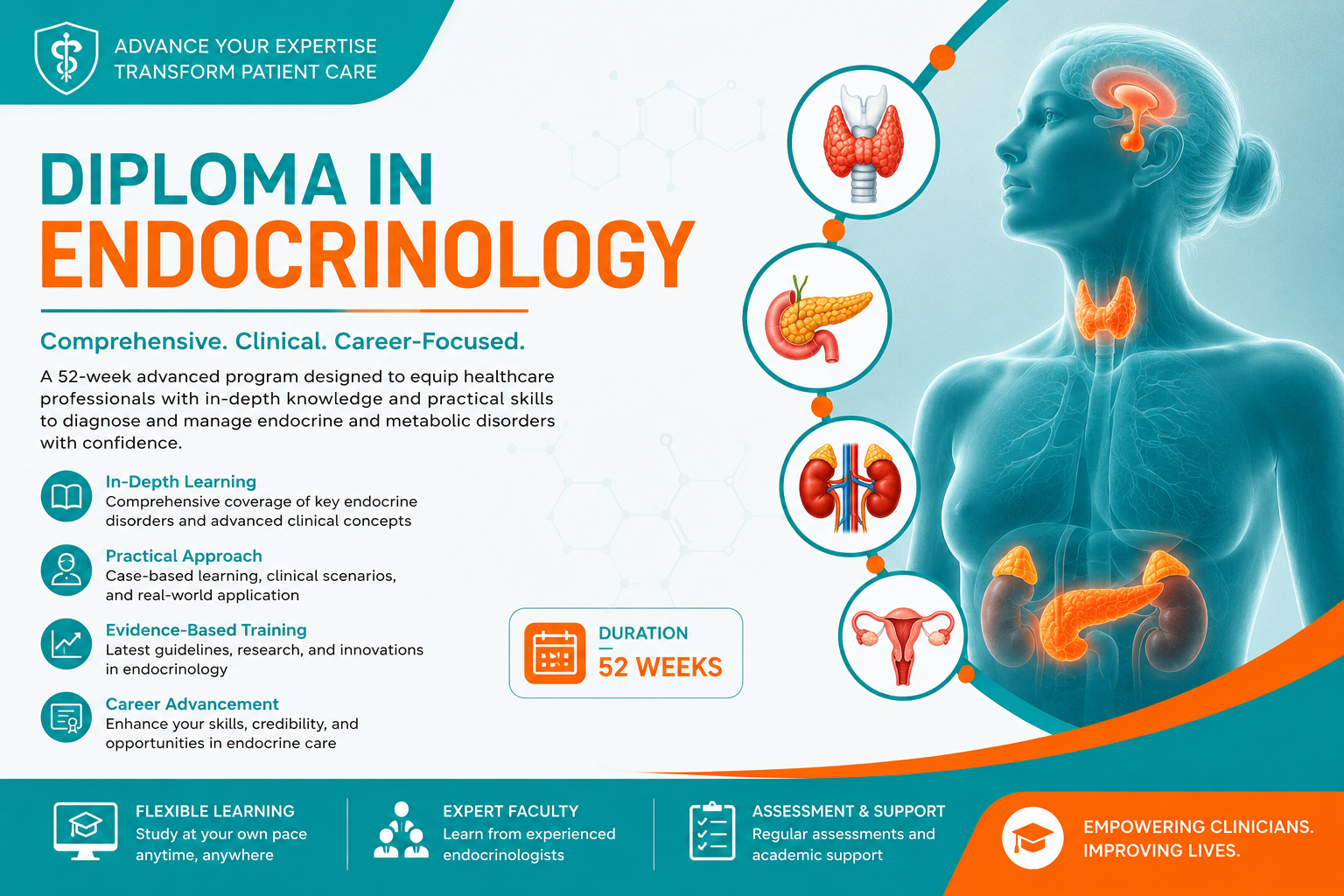

The Diploma in Endocrinology is a comprehensive 52-week program designed for healthcare professionals seeking advanced knowledge in the diagnosis and management of endocrine disorders. The course covers key areas including diabetes mellitus, thyroid diseases, pituitary and adrenal disorders, reproductive endocrinology, obesity, metabolic syndrome, calcium and bone metabolism, pediatric endocrinology, and endocrine emergencies. Through a blend of theoretical learning, clinical case discussions, diagnostic interpretation, and evidence-based practice, participants will develop the skills required to provide high-quality endocrine care and improve patient outcomes in diverse healthcare settings.
The Diploma in Endocrinology is a comprehensive 52-week advanced training program designed for medical professionals, physicians, general practitioners, and healthcare providers who wish to develop specialized expertise in the diagnosis, treatment, and long-term management of endocrine and metabolic disorders. As endocrine diseases continue to rise globally, particularly diabetes, obesity, thyroid disorders, and metabolic syndrome, there is an increasing demand for healthcare professionals equipped with the knowledge and skills to provide evidence-based endocrine care.
This diploma program offers an in-depth understanding of the endocrine system, including the physiology and pathology of the pituitary, thyroid, adrenal, parathyroid, pancreatic, and reproductive glands. Learners will gain a strong foundation in hormonal regulation, endocrine feedback mechanisms, and the interpretation of laboratory investigations used in endocrine practice. The curriculum combines theoretical concepts with practical clinical applications, enabling participants to confidently evaluate and manage patients with a wide range of endocrine conditions.
A major focus of the program is diabetes mellitus, covering its epidemiology, pathophysiology, diagnosis, treatment strategies, insulin therapy, continuous glucose monitoring, and the prevention and management of acute and chronic complications. Participants will also explore modern advances in diabetes care, including personalized treatment approaches, digital health technologies, and emerging therapeutic options.
The course provides extensive training in thyroid disorders, including hypothyroidism, hyperthyroidism, Graves’ disease, thyroid nodules, and thyroid cancer. Learners will develop proficiency in thyroid function testing, imaging techniques, and evidence-based management strategies. Similarly, the program addresses disorders of the pituitary and adrenal glands, including hypopituitarism, acromegaly, Cushing syndrome, adrenal insufficiency, pheochromocytoma, and hyperaldosteronism.
Another important component of the diploma is reproductive endocrinology, where participants study hormonal regulation of fertility, polycystic ovary syndrome (PCOS), hypogonadism, menstrual disorders, menopause, and infertility. The curriculum also covers pediatric endocrinology, focusing on growth disorders, pubertal abnormalities, congenital endocrine conditions, and endocrine issues affecting children and adolescents.
The program further explores obesity, metabolic syndrome, and bone health, addressing the growing burden of lifestyle-related endocrine diseases. Learners will understand the mechanisms of weight regulation, obesity management strategies, bariatric interventions, osteoporosis, calcium metabolism, and metabolic bone disorders. These topics are particularly relevant in modern healthcare due to the increasing prevalence of obesity and associated metabolic complications.
Throughout the course, participants will engage in clinical case discussions, endocrine emergency management, interpretation of hormonal assays, and advanced diagnostic approaches. Emphasis is placed on developing critical thinking, clinical reasoning, and decision-making skills that are essential for managing complex endocrine disorders in real-world clinical settings. Learners will also gain exposure to current clinical guidelines, research methodologies, and evidence-based practice principles that support high-quality patient care.
The Diploma in Endocrinology is structured to provide flexibility for working healthcare professionals through online learning, self-paced study materials, interactive assessments, and practical case-based learning. By integrating foundational science with clinical application, the program ensures that graduates are prepared to address the evolving challenges of endocrine and metabolic healthcare.
Upon successful completion, participants will possess the knowledge and confidence to diagnose endocrine disorders, interpret hormonal investigations, formulate individualized treatment plans, and contribute effectively to multidisciplinary patient care teams. Whether working in primary care, hospital settings, specialty clinics, or academic environments, graduates will be equipped with the advanced competencies needed to enhance patient outcomes and advance their professional careers in the field of endocrinology.
- 12 Sections
- 102 Lessons
- 52 Weeks
- Foundations of EndocrinologyThis module introduces the structure and function of the endocrine system, hormonal regulation, feedback mechanisms, and the physiological basis of endocrine disorders.8
- Pituitary DisordersFocuses on the anatomy, physiology, and pathology of the pituitary gland, including diagnostic and therapeutic approaches.8
- Thyroid DisordersCovers thyroid physiology, common thyroid diseases, diagnostic tools, and management strategies.8
- Adrenal DisordersProvides comprehensive knowledge of adrenal gland disorders and their clinical management.8
- Diabetes MellitusExamines the pathophysiology, diagnosis, treatment, and complications of diabetes mellitus.12
- 5.1Classification of Diabetes Mellitus
- 5.2Pathophysiology of Type 1 Diabetes
- 5.3Pathophysiology of Type 2 Diabetes
- 5.4Diagnosis and Screening of Diabetes
- 5.5Oral Antidiabetic Medications
- 5.6Insulin Therapy
- 5.7Continuous Glucose Monitoring
- 5.8Diabetic Ketoacidosis
- 5.9Hyperosmolar Hyperglycemic State
- 5.10Chronic Diabetes Complications
- 5.11Diabetes Prevention Strategies
- 5.12Patient Education and Lifestyle Management
- Obesity and Metabolic SyndromeFocuses on obesity, metabolic syndrome, and associated endocrine and cardiovascular risks.8
- Calcium and Bone MetabolismExplores calcium homeostasis, bone health, and metabolic bone diseases.8
- Reproductive EndocrinologyIntroduces hormonal regulation of reproduction and endocrine disorders affecting fertility.8
- Pediatric EndocrinologyCovers endocrine disorders commonly encountered in infants, children, and adolescents.8
- Endocrine EmergenciesFocuses on the recognition and management of life-threatening endocrine conditions.6
- Neuroendocrinology and Rare Endocrine DisordersExamines complex endocrine syndromes, neuroendocrine tumors, and uncommon hormonal disorders.8
- Clinical Endocrinology Practice and ResearchDevelops practical clinical skills, research competencies, and professional expertise in endocrinology.12
- 12.1Endocrine Case Discussions
- 12.2Interpretation of Hormonal Assays
- 12.3Advanced Endocrine Imaging
- 12.4Clinical Audit in Endocrinology
- 12.5Research Methodology
- 12.6Biostatistics for Endocrinologists
- 12.7Evidence-Based Clinical Practice
- 12.8Capstone Project and Final Assessment
- 12.9Dissertation Submission
- 12.10Viva Voce Preparation
- 12.11Clinical Portfolio Development
- 12.12Career Pathways in Endocrinology
You might be intersted in
-
167 Students
-
52 Weeks
-
132 Students
-
52 Weeks
-
124 Students
-
52 Weeks
-
133 Students
-
52 Weeks