
Certificate in clinical Counseling
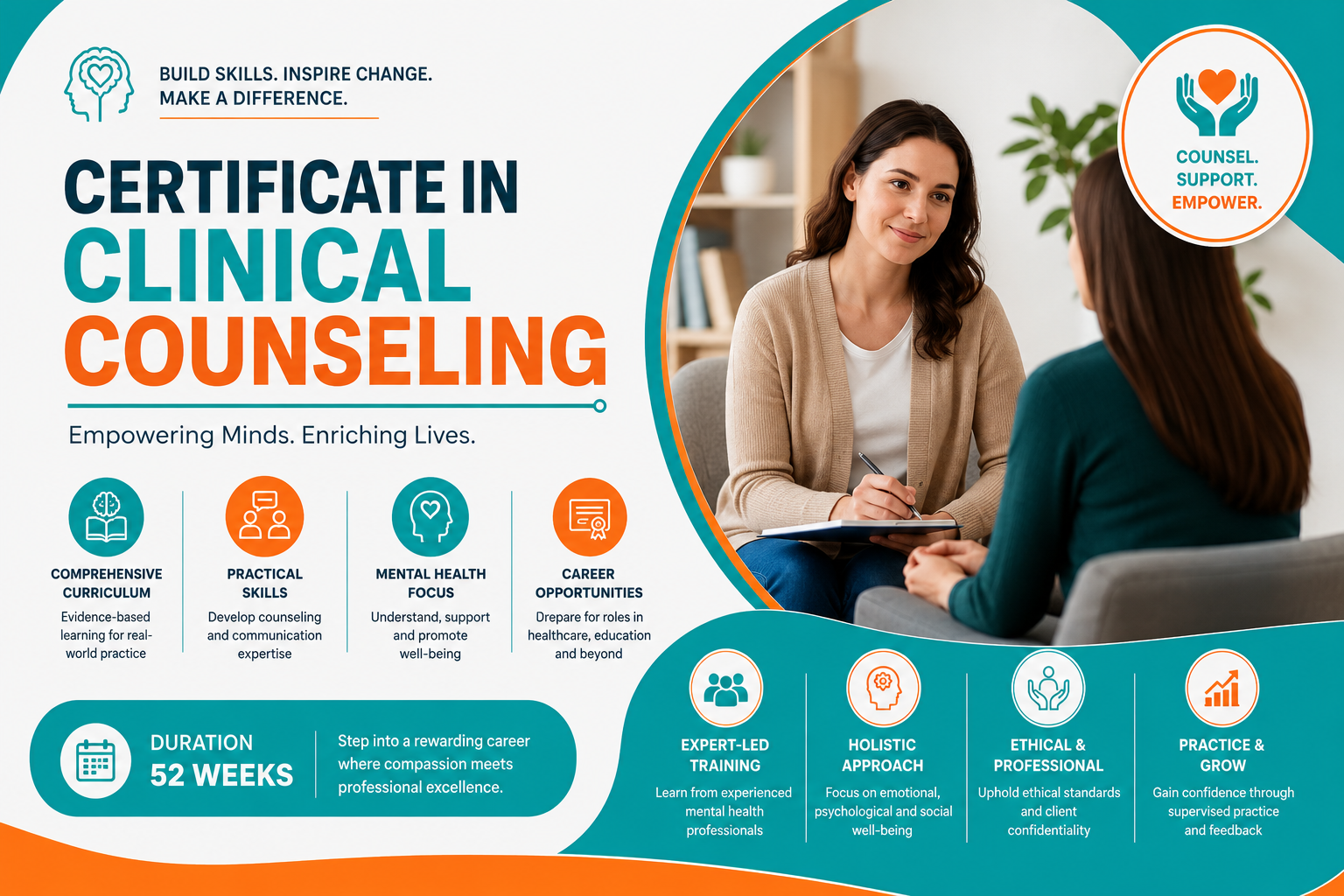

The Certificate in Clinical Counseling is a comprehensive 52-week program designed to equip learners with essential counseling knowledge, therapeutic communication skills, psychological assessment techniques, and evidence-based intervention strategies. The course covers counseling theories, mental health disorders, crisis intervention, family and group counseling, multicultural practice, and supervised clinical training, preparing healthcare professionals and aspiring counselors to provide compassionate, ethical, and client-centered mental health support in diverse clinical and community settings.
The Certificate in Clinical Counseling is a comprehensive 52-week professional training program designed to equip learners with the knowledge, practical skills, and ethical foundation required to provide effective psychological support across diverse healthcare and community settings. The program combines evidence-based counseling theories with hands-on clinical practice, enabling learners to build strong therapeutic relationships, assess client needs, develop treatment plans, and implement appropriate counseling interventions.
As mental health awareness continues to grow worldwide, the demand for qualified counseling professionals has increased across hospitals, rehabilitation centers, educational institutions, corporate organizations, community mental health services, and private practice. This certificate program prepares learners to work confidently with individuals experiencing emotional, behavioral, psychological, and interpersonal challenges while maintaining the highest standards of professionalism and confidentiality.
Throughout the course, students explore the foundations of clinical counseling, human growth and development, counseling theories, communication skills, psychological assessment, mental health disorders, crisis intervention, trauma-informed care, family and group counseling, multicultural counseling, and evidence-based therapeutic techniques. The curriculum emphasizes practical learning through case discussions, simulated counseling sessions, supervised clinical practice, and reflective exercises that help learners develop confidence and competence in real-world counseling situations.
The program also highlights the importance of cultural sensitivity, ethical decision-making, empathy, and client-centered care. Learners gain valuable experience in working with clients across different age groups, backgrounds, and life circumstances while understanding the impact of social, cultural, and environmental factors on mental health and well-being.
By the end of the 52-week program, graduates will be able to conduct comprehensive client assessments, establish therapeutic relationships, apply appropriate counseling techniques, manage crisis situations, collaborate effectively with multidisciplinary healthcare teams, and provide compassionate support that promotes emotional resilience and psychological well-being.
Learning Outcomes
Upon successful completion of the course, learners will be able to:
- Understand the principles, ethics, and professional responsibilities of clinical counseling.
- Apply major counseling theories and evidence-based therapeutic approaches.
- Build effective therapeutic relationships through advanced communication and interpersonal skills.
- Conduct psychological assessments and develop individualized counseling plans.
- Recognize common mental health disorders and provide appropriate counseling interventions.
- Deliver crisis intervention and trauma-informed psychological support.
- Facilitate individual, family, couples, and group counseling sessions.
- Practice culturally competent and inclusive counseling for diverse populations.
- Maintain accurate clinical documentation while adhering to ethical and legal standards.
- Collaborate with psychologists, psychiatrists, physicians, nurses, social workers, and other healthcare professionals.
- Utilize research findings and evidence-based practices to improve counseling outcomes.
- Demonstrate professional competence through supervised clinical practice and a capstone project.
Who Should Enroll?
This program is suitable for:
- Psychology graduates
- Healthcare professionals
- Nurses and allied health professionals
- Social workers
- Teachers and school counselors
- Human resource professionals
- Community health workers
- Rehabilitation professionals
- NGO and public health professionals
- Individuals aspiring to build a career in clinical counseling and mental health services
Career Opportunities
Graduates of the Certificate in Clinical Counseling can pursue opportunities in:
- Hospitals and healthcare organizations
- Mental health clinics
- Rehabilitation and de-addiction centers
- Schools, colleges, and universities
- Community counseling centers
- Corporate wellness and employee assistance programs
- Non-governmental organizations (NGOs)
- Child and family welfare organizations
- Geriatric care facilities
- Private counseling practices (subject to local regulations and licensing requirements)
Why Choose This Course?
This 52-week certificate program combines academic learning with practical clinical experience to prepare learners for the evolving field of mental health care. The curriculum is aligned with current counseling practices and emphasizes ethical conduct, client-centered care, effective communication, and evidence-based interventions. Through expert-led instruction, case-based learning, supervised practice, and continuous assessment, participants develop the confidence and competence needed to make a meaningful impact on the emotional and psychological well-being of individuals, families, and communities.
- 12 Sections
- 72 Lessons
- 52 Weeks
- Foundations of Clinical CounselingThis module introduces learners to the principles, scope, and professional responsibilities of clinical counseling. Students explore the history of counseling, major counseling theories, ethical standards, communication fundamentals, and the role of counselors in various healthcare and mental health settings. The module establishes the foundation for evidence-based counseling practice while promoting professionalism, empathy, and cultural sensitivity.6
- Human Growth and DevelopmentThis module focuses on physical, cognitive, emotional, and psychosocial development across the lifespan. Students learn developmental theories and their application in counseling children, adolescents, adults, and older adults while recognizing developmental challenges that influence mental health and behavior.6
- Counseling Theories and ApproachesLearners gain comprehensive knowledge of major counseling theories and therapeutic models. The module emphasizes selecting evidence-based interventions based on client needs while integrating multiple approaches into effective counseling practice.6
- Counseling Skills and TechniquesThis module develops practical counseling competencies required for successful therapeutic interactions. Students practice interviewing, assessment, rapport building, active listening, questioning, empathy, and intervention techniques through supervised exercises and case scenarios.6
- Psychological AssessmentStudents learn assessment methods used in clinical counseling to understand client concerns, strengths, risks, and treatment needs. Emphasis is placed on ethical assessment practices and interpretation of screening tools.6
- Common Mental Health DisordersThis module provides an overview of common mental health conditions encountered in counseling practice. Students develop skills to recognize symptoms, understand treatment approaches, and collaborate with multidisciplinary healthcare professionals.6
- Crisis Intervention and Trauma CounselingLearners develop competencies in crisis assessment, psychological first aid, suicide prevention, trauma-informed care, and emergency intervention strategies to support individuals experiencing acute emotional distress.6
- Family, Couples, and Group CounselingThis module introduces counseling strategies for families, couples, and groups. Students learn communication dynamics, conflict resolution, relationship counseling, and facilitation techniques that enhance therapeutic outcomes.6
- Counseling Diverse PopulationsStudents develop culturally competent counseling skills while working with clients from diverse backgrounds, including different age groups, cultures, genders, socioeconomic conditions, and individuals with disabilities.6
- Health, Rehabilitation, and Behavioral CounselingThis module explores counseling interventions that promote healthy behaviors, chronic disease adjustment, rehabilitation, and lifestyle modification. Students understand the counselor's role within multidisciplinary healthcare teams.6
- Professional Practice and Clinical InternshipStudents integrate theoretical knowledge into supervised clinical practice. The module emphasizes ethical decision-making, professional documentation, interdisciplinary collaboration, case presentations, and reflective learning in real or simulated counseling settings.6
- Research, Evidence-Based Practice, and Capstone ProjectThe final module prepares learners to critically evaluate counseling research, apply evidence-based interventions, and complete a capstone project demonstrating comprehensive clinical counseling knowledge and practical competence.6