
Fellowship in Biochemistry
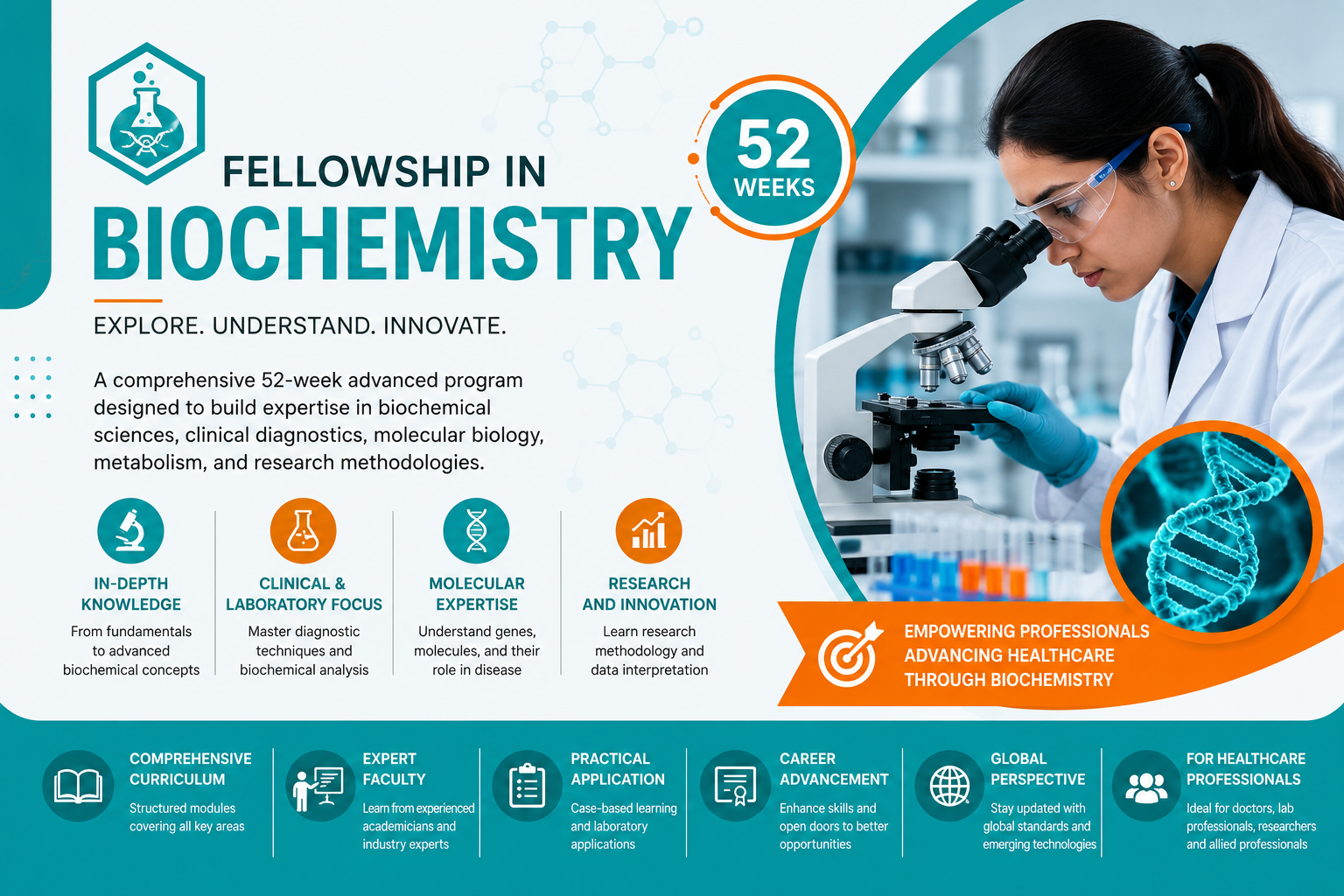

The Fellowship in Biochemistry is a comprehensive 52-week advanced training program designed to provide in-depth knowledge of biochemical principles, molecular biology, clinical diagnostics, metabolism, laboratory medicine, and research methodologies. The program equips healthcare professionals, laboratory scientists, medical graduates, and researchers with the skills required to understand disease mechanisms, interpret biochemical investigations, and apply modern diagnostic technologies in clinical and research settings. Through a blend of theoretical learning, case-based discussions, and practical applications, learners gain expertise in clinical biochemistry and emerging advancements in laboratory medicine.
The Fellowship in Biochemistry is a comprehensive 52-week advanced academic and professional training program designed to provide healthcare professionals, medical graduates, laboratory scientists, researchers, and allied health practitioners with in-depth knowledge of biochemical sciences and their application in modern healthcare. Biochemistry forms the foundation of medical science by explaining the molecular mechanisms that govern normal physiological functions and disease processes. This fellowship equips learners with the expertise required to understand, analyze, and apply biochemical principles in clinical diagnosis, disease management, laboratory medicine, research, and healthcare innovation.
The program begins with a strong foundation in the structure and function of biomolecules, including carbohydrates, proteins, lipids, nucleic acids, enzymes, and cellular components. Learners gain a detailed understanding of biochemical reactions, metabolic pathways, energy production, and molecular interactions that sustain life. Through a systematic exploration of human metabolism, participants develop the ability to understand the biochemical basis of health and disease and appreciate how alterations in metabolic pathways contribute to various clinical conditions.
A major focus of the fellowship is the study of carbohydrate, lipid, and protein metabolism. Participants explore glycolysis, gluconeogenesis, glycogen metabolism, fatty acid oxidation, cholesterol metabolism, amino acid catabolism, and nitrogen balance. The curriculum highlights the clinical significance of these pathways and their association with disorders such as diabetes mellitus, obesity, metabolic syndrome, dyslipidemia, inherited metabolic diseases, and endocrine abnormalities. Learners acquire the skills needed to interpret metabolic changes and understand their implications in patient care.
The fellowship provides extensive training in molecular biology and genetics, enabling participants to understand the molecular basis of inherited and acquired diseases. Topics such as DNA replication, transcription, translation, gene regulation, genetic mutations, epigenetics, and genomic medicine are covered in detail. Learners explore how advances in molecular diagnostics and genomics are transforming healthcare through personalized medicine, targeted therapies, and precision diagnostics.
Clinical biochemistry forms a core component of the program. Participants learn the principles and applications of biochemical investigations used in diagnosing and monitoring diseases. The course covers enzyme analysis, cardiac biomarkers, liver function tests, renal function tests, endocrine assays, tumor markers, and emerging laboratory biomarkers. Learners develop expertise in interpreting laboratory reports, understanding reference ranges, and correlating biochemical findings with clinical presentations to support evidence-based decision-making.
The program also explores endocrine and hormonal biochemistry, providing insights into hormone synthesis, secretion, metabolism, and mechanisms of action. Learners study disorders affecting the thyroid gland, adrenal glands, pancreas, reproductive organs, and other endocrine systems. Special emphasis is placed on diabetes mellitus, thyroid disorders, metabolic bone diseases, and reproductive endocrinology, allowing participants to understand the biochemical aspects of endocrine dysfunction and patient management.
Nutrition and metabolic health are addressed comprehensively throughout the fellowship. Participants gain knowledge of nutritional biochemistry, vitamin and mineral metabolism, nutritional deficiencies, obesity, and chronic lifestyle-related diseases. The curriculum emphasizes the role of nutrition in disease prevention, health promotion, and therapeutic interventions. Learners explore the biochemical impact of diet, nutritional assessment methods, and evidence-based approaches to managing metabolic disorders.
The fellowship further introduces advanced laboratory techniques and diagnostic technologies used in modern clinical biochemistry laboratories. Participants learn about spectroscopy, chromatography, electrophoresis, immunoassays, molecular diagnostics, flow cytometry, and point-of-care testing. Training in laboratory quality management, quality control, accreditation standards, and laboratory information systems ensures that learners understand the operational and regulatory aspects of diagnostic laboratories.
Research and innovation are integral components of the program. Learners are introduced to research methodology, study design, biostatistics, data analysis, scientific writing, publication ethics, and evidence-based medicine. Through guided research activities and project work, participants develop critical thinking skills and gain practical experience in conducting and evaluating scientific research. These competencies prepare graduates to contribute to academic research, healthcare innovation, and quality improvement initiatives.
The curriculum also examines emerging developments in biochemistry, including proteomics, metabolomics, genomics, systems biology, artificial intelligence in laboratory medicine, and precision healthcare. Learners explore how advanced technologies are reshaping diagnostics, disease prediction, drug development, and personalized treatment strategies. Exposure to these innovations ensures that participants remain current with evolving trends in biomedical science and clinical practice.
Throughout the fellowship, case-based discussions and practical applications bridge the gap between theoretical knowledge and real-world clinical scenarios. Participants learn to apply biochemical concepts to patient diagnosis, disease monitoring, treatment planning, and healthcare decision-making. The program encourages analytical reasoning, interdisciplinary collaboration, and lifelong learning, enabling graduates to function effectively in clinical, academic, research, and laboratory environments.
Upon successful completion of the Fellowship in Biochemistry, graduates will possess advanced expertise in biochemical sciences, laboratory diagnostics, molecular medicine, and biomedical research. They will be well prepared for leadership roles in clinical laboratories, hospitals, research institutions, academic organizations, pharmaceutical industries, biotechnology companies, public health programs, and healthcare administration. The fellowship serves as an excellent pathway for professionals seeking to advance their careers while contributing to the growing fields of laboratory medicine, precision diagnostics, and translational biomedical research.
- 12 Sections
- 72 Lessons
- 52 Weeks
- Foundations of Medical BiochemistryThis module introduces the fundamental principles of biochemistry and their application in medicine and healthcare. Learners will develop a strong understanding of biomolecules, cellular organization, biochemical reactions, and the molecular basis of life. The module establishes the foundation required for advanced biochemical studies and clinical applications throughout the fellowship program.6
- Carbohydrate MetabolismThis module explores the biochemical pathways involved in carbohydrate metabolism and their physiological significance. Participants will learn how glucose is utilized, stored, and regulated within the body, along with understanding metabolic disorders associated with carbohydrate metabolism.6
- Lipid MetabolismThis module focuses on the structure, function, and metabolism of lipids. Learners will gain knowledge about lipid digestion, transport, storage, and utilization, while examining disorders such as dyslipidemia, obesity, and cardiovascular diseases.6
- Protein and Amino Acid MetabolismThis module provides comprehensive knowledge of protein synthesis, amino acid metabolism, nitrogen balance, and related metabolic pathways. Participants will understand inherited and acquired disorders affecting protein metabolism.6
- Molecular Biology and GeneticsThis module examines the molecular basis of genetic information flow and regulation. Learners will understand DNA replication, transcription, translation, gene expression, and genetic disorders that impact human health.6
- Clinical Enzymology and BiomarkersThis module focuses on the clinical significance of enzymes and biomarkers used in disease diagnosis and monitoring. Participants will learn how laboratory biochemical markers aid in evaluating organ function and pathological conditions.6
- Hormones and Endocrine BiochemistryThis module explores the biochemical mechanisms underlying hormonal regulation and endocrine function. Learners will understand hormone synthesis, action, and laboratory evaluation of endocrine disorders.6
- Nutrition and Metabolic DisordersThis module examines nutritional biochemistry and its impact on health and disease. Participants will learn about macro- and micronutrients, metabolic syndromes, obesity, diabetes, and nutritional deficiencies.6
- Clinical Laboratory BiochemistryThis module provides practical knowledge of laboratory biochemistry, analytical techniques, quality control, and interpretation of biochemical investigations used in clinical practice.6
- Immunochemistry and Advanced DiagnosticsThis module introduces immunochemical principles and modern diagnostic technologies. Learners will understand immunoassays, antigen-antibody interactions, and their applications in disease diagnosis and monitoring.6
- Research Methodology and BiostatisticsThis module equips learners with essential research skills necessary for scientific investigation and evidence-based practice. Participants will learn study design, data analysis, scientific writing, and ethical considerations.6
- Recent Advances, Case Studies, and Fellowship ProjectThis capstone module integrates knowledge gained throughout the fellowship through advanced topics, case-based discussions, and a supervised research project. Learners will critically evaluate emerging developments in biochemistry and demonstrate competency through practical applications.6
You might be intersted in
-
167 Students
-
52 Weeks
-
133 Students
-
52 Weeks
-
123 Students
-
52 Weeks
-
130 Students
-
52 Weeks