
Fellowship In Family Medicine
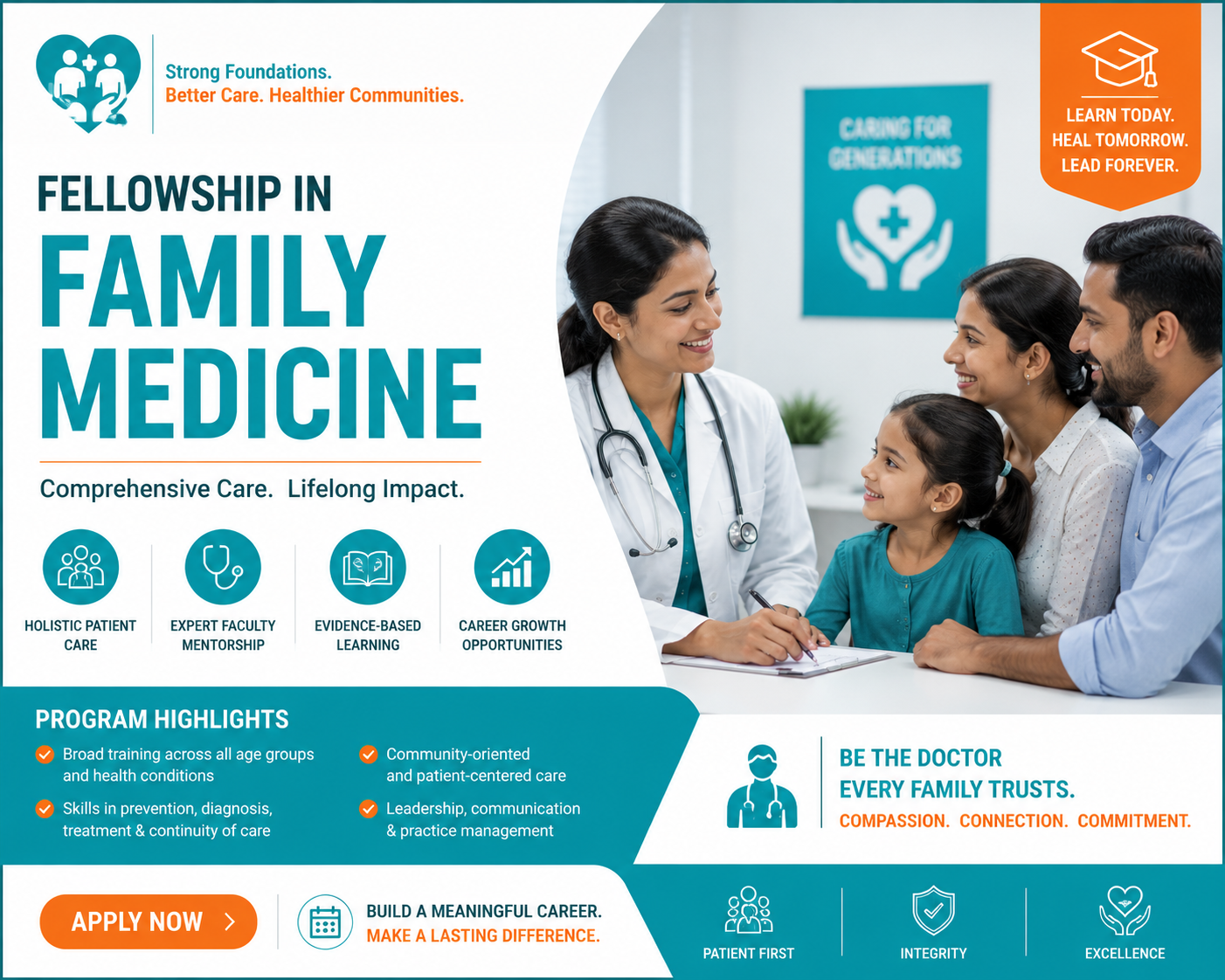

The Fellowship in Family Medicine is a comprehensive 52-week advanced training program designed to equip healthcare professionals with the knowledge, clinical skills, and competencies required for delivering holistic, patient-centered primary care. The program covers preventive medicine, chronic disease management, women’s health, pediatric care, geriatric medicine, mental health, community healthcare, and practice management, preparing clinicians to provide comprehensive healthcare services across all age groups and clinical settings.
Overview
The Fellowship in Family Medicine is a comprehensive 52-week advanced training program designed for medical professionals seeking to develop expertise in primary healthcare and holistic patient management. Family medicine serves as the cornerstone of healthcare systems worldwide, providing continuous, comprehensive, and patient-centered care to individuals and families across all age groups, genders, and disease conditions.
This fellowship equips healthcare practitioners with the clinical knowledge, diagnostic skills, and professional competencies required to manage a broad spectrum of acute and chronic medical conditions in community, outpatient, and primary care settings. The program emphasizes preventive healthcare, health promotion, disease management, continuity of care, and evidence-based clinical practice.
Participants will gain in-depth exposure to adult medicine, pediatrics, women’s health, geriatric medicine, mental health, chronic disease management, community medicine, and preventive healthcare while developing strong communication and leadership skills essential for modern family physicians.
Program Objectives
Upon completion of the fellowship, participants will be able to:
- Deliver comprehensive and patient-centered primary healthcare services.
- Diagnose and manage common acute and chronic medical conditions.
- Apply evidence-based approaches in clinical decision-making.
- Conduct preventive health assessments and screening programs.
- Manage patients across all stages of life, from infancy to old age.
- Provide effective counseling for lifestyle modification and disease prevention.
- Recognize and manage mental health conditions in primary care settings.
- Coordinate multidisciplinary healthcare services for improved patient outcomes.
- Implement community-based healthcare interventions.
- Demonstrate professionalism, ethical practice, and effective communication skills.
Why Choose Family Medicine?
Family medicine is one of the most dynamic and rewarding medical specialties because it focuses on the whole patient rather than a single disease or organ system. Family physicians play a critical role in maintaining community health by serving as the first point of contact for patients and coordinating ongoing healthcare needs.
Benefits of specialization in family medicine include:
- Broad clinical exposure across multiple medical disciplines.
- Opportunities to build long-term patient relationships.
- Increased demand for primary care physicians globally.
- Strong career opportunities in hospitals, clinics, community health centers, and telemedicine platforms.
- Ability to contribute significantly to preventive healthcare and public health initiatives.
- Enhanced clinical autonomy and decision-making capabilities.
Comprehensive Curriculum
The fellowship curriculum is carefully structured to provide balanced theoretical knowledge and practical clinical training.
Foundations of Family Medicine
Participants begin by understanding the principles, philosophy, and scope of family medicine. Topics include patient-centered care, communication skills, professionalism, healthcare ethics, evidence-based medicine, and continuity of care.
Clinical Assessment and Diagnostic Skills
This section develops competency in clinical history taking, physical examination, diagnostic reasoning, interpretation of investigations, and clinical documentation.
Preventive Medicine and Public Health
Learners gain expertise in health promotion, disease prevention, immunization programs, screening guidelines, nutrition counseling, occupational health, and community-based interventions.
Acute Care Management
The fellowship covers diagnosis and management of common acute illnesses such as respiratory infections, gastrointestinal disorders, urinary tract infections, allergic reactions, trauma, and medical emergencies frequently encountered in primary care practice.
Chronic Disease Management
Participants learn evidence-based management strategies for hypertension, diabetes mellitus, cardiovascular diseases, chronic respiratory illnesses, obesity, thyroid disorders, arthritis, and chronic kidney disease.
Women’s Health and Reproductive Medicine
This component focuses on adolescent health, family planning, contraception, menstrual disorders, antenatal care, menopause management, and preventive screening for gynecological and breast conditions.
Child and Adolescent Health
Participants develop skills in growth and developmental assessment, childhood nutrition, immunization, pediatric infections, behavioral health, and adolescent medicine.
Geriatric Medicine and Palliative Care
The program addresses the unique healthcare needs of older adults, including frailty assessment, dementia care, polypharmacy management, chronic disease care, and end-of-life support.
Mental Health in Primary Care
Training includes recognition and management of depression, anxiety disorders, stress-related conditions, substance use disorders, sleep disorders, and suicide risk assessment.
Musculoskeletal and Dermatological Conditions
Participants learn diagnosis and treatment of common orthopedic, rheumatologic, and dermatological disorders frequently encountered in family practice.
Community and Rural Health
The fellowship explores healthcare delivery in community and rural settings, health equity, social determinants of health, telemedicine, disaster preparedness, and outreach programs.
Practice Management and Research
The final phase focuses on healthcare administration, quality improvement, clinical audits, research methodology, leadership development, legal aspects of practice, and professional growth.
Clinical Training Experience
A key strength of this fellowship is its strong emphasis on practical learning. Participants engage in a variety of clinical activities designed to enhance real-world competency.
Clinical exposure includes:
- Family medicine outpatient clinics
- Primary care consultations
- Chronic disease management clinics
- Preventive health screening programs
- Women’s health services
- Pediatric and adolescent clinics
- Geriatric care settings
- Mental health consultations
- Community outreach programs
- Telemedicine services
- Case-based discussions
- Clinical audits and quality improvement projects
This hands-on training ensures participants develop confidence in managing diverse patient populations and clinical scenarios.
Skills Acquired During the Fellowship
Graduates of the program will develop expertise in:
- Comprehensive patient assessment
- Diagnostic reasoning
- Evidence-based clinical practice
- Chronic disease management
- Preventive healthcare planning
- Health education and counseling
- Mental health assessment
- Women’s and child healthcare
- Geriatric patient management
- Community healthcare delivery
- Telemedicine consultation
- Leadership and healthcare management
- Clinical research and audit
Career Opportunities
The Fellowship in Family Medicine opens pathways to diverse career opportunities in healthcare.
Graduates may pursue roles such as:
- Family Physician
- Primary Care Consultant
- General Practitioner
- Community Health Specialist
- Rural Healthcare Practitioner
- Preventive Medicine Specialist
- Telemedicine Physician
- Corporate Healthcare Physician
- Occupational Health Physician
- Clinical Educator
- Healthcare Administrator
- Public Health Consultant
The growing emphasis on preventive healthcare and community-based medicine has significantly increased the demand for trained family medicine professionals worldwide.
Who Should Enroll?
This fellowship is ideal for:
- MBBS graduates
- General practitioners
- Primary care physicians
- Medical officers
- Community healthcare professionals
- Physicians seeking career advancement in family medicine
- Healthcare professionals interested in preventive and holistic patient care
Program Outcomes
Upon successful completion, participants will possess the knowledge, skills, and confidence to independently deliver comprehensive primary healthcare services. They will be capable of managing patients across all age groups, coordinating multidisciplinary care, implementing preventive health strategies, and contributing to improved community health outcomes.
The Fellowship in Family Medicine prepares healthcare professionals to become highly competent primary care providers who can address the evolving healthcare needs of individuals, families, and communities while promoting lifelong health and well-being.
- 12 Sections
- 97 Lessons
- 52 Weeks
- Foundations of Family MedicineThis module introduces the principles, philosophy, and scope of family medicine. Learners will understand patient-centered care, continuity of care, comprehensive healthcare delivery, ethical practice, communication skills, and the role of family physicians in community health. The module emphasizes holistic care across all age groups and healthcare settings.8
- 1.1Introduction to Family Medicine
- 1.2Principles of Patient-Centered Care
- 1.3Family-Oriented Healthcare Approach
- 1.4Communication Skills in Clinical Practice
- 1.5Medical Ethics and Professionalism
- 1.6Evidence-Based Medicine in Primary Care
- 1.7Health Promotion and Disease Prevention
- 1.8Role of Family Physicians in Healthcare Systems
- Clinical Assessment and Diagnostic SkillsThis module focuses on developing comprehensive history-taking, physical examination, diagnostic reasoning, and clinical decision-making skills. Learners will gain confidence in evaluating common symptoms and conditions encountered in primary care settings.8
- 2.1Comprehensive History Taking
- 2.2Physical Examination Techniques
- 2.3Clinical Reasoning and Decision Making
- 2.4Diagnostic Investigations in Primary Care
- 2.5Symptom-Based Approach to Diagnosis
- 2.6Interpretation of Laboratory Tests
- 2.7Radiological Assessment in Family Practice
- 2.8Documentation and Medical Records
- Preventive Medicine and Public HealthThis module explores preventive healthcare strategies, public health principles, screening programs, immunization schedules, and health education. Learners will understand how prevention and early intervention improve patient outcomes and community health.8
- Management of Common Acute ConditionsThis module covers the diagnosis and management of acute illnesses frequently encountered in family practice. Learners will develop practical skills for handling infections, injuries, emergencies, and acute medical presentations.8
- Chronic Disease ManagementThis module focuses on long-term management of chronic diseases. Learners will understand patient monitoring, lifestyle interventions, medication management, and multidisciplinary approaches to improving outcomes.8
- Women's Health and Reproductive MedicineThis module addresses comprehensive healthcare needs of women across the lifespan. Topics include reproductive health, contraception, antenatal care, menopause, and common gynecological conditions managed in family medicine.8
- Child and Adolescent HealthThis module equips learners with skills to manage pediatric and adolescent health concerns. Emphasis is placed on growth monitoring, developmental assessment, immunization, nutrition, and common childhood illnesses.8
- Geriatric Medicine and Palliative CareThis module focuses on healthcare needs of older adults, including chronic disease management, functional assessment, frailty, dementia, and end-of-life care. Learners will develop skills for delivering compassionate geriatric and palliative care.8
- Mental Health in Family MedicineThis module provides knowledge and practical skills for recognizing, diagnosing, and managing common mental health conditions within primary care settings. Learners will understand referral pathways and collaborative care models.8
- Musculoskeletal and Dermatological DisordersThis module covers common musculoskeletal and skin conditions encountered in family practice. Learners will gain skills in diagnosis, treatment, and appropriate referral of patients.8
- Community and Rural Family MedicineThis module explores family medicine practice in community and rural settings. Learners will understand population health management, outreach services, health disparities, and resource-limited healthcare delivery.7
- Practice Management, Research and Clinical IntegrationThis capstone module integrates clinical knowledge with healthcare management, quality improvement, leadership, and research skills. Learners will apply evidence-based practices and develop competencies necessary for independent family medicine practice.10
- 12.1Practice Management Fundamentals
- 12.2Healthcare Quality Improvement
- 12.3Clinical Audit and Risk Management
- 12.4Research Methodology
- 12.5Biostatistics for Clinicians
- 12.6Leadership and Team Management
- 12.7Legal Aspects of Medical Practice
- 12.8Capstone Case Presentations
- 12.9Integrated Clinical Rotations
- 12.10Final Competency Assessment
You might be intersted in
-
167 Students
-
52 Weeks
-
132 Students
-
52 Weeks
-
124 Students
-
52 Weeks
-
133 Students
-
52 Weeks