
Fellowship In Geriatric Medicine
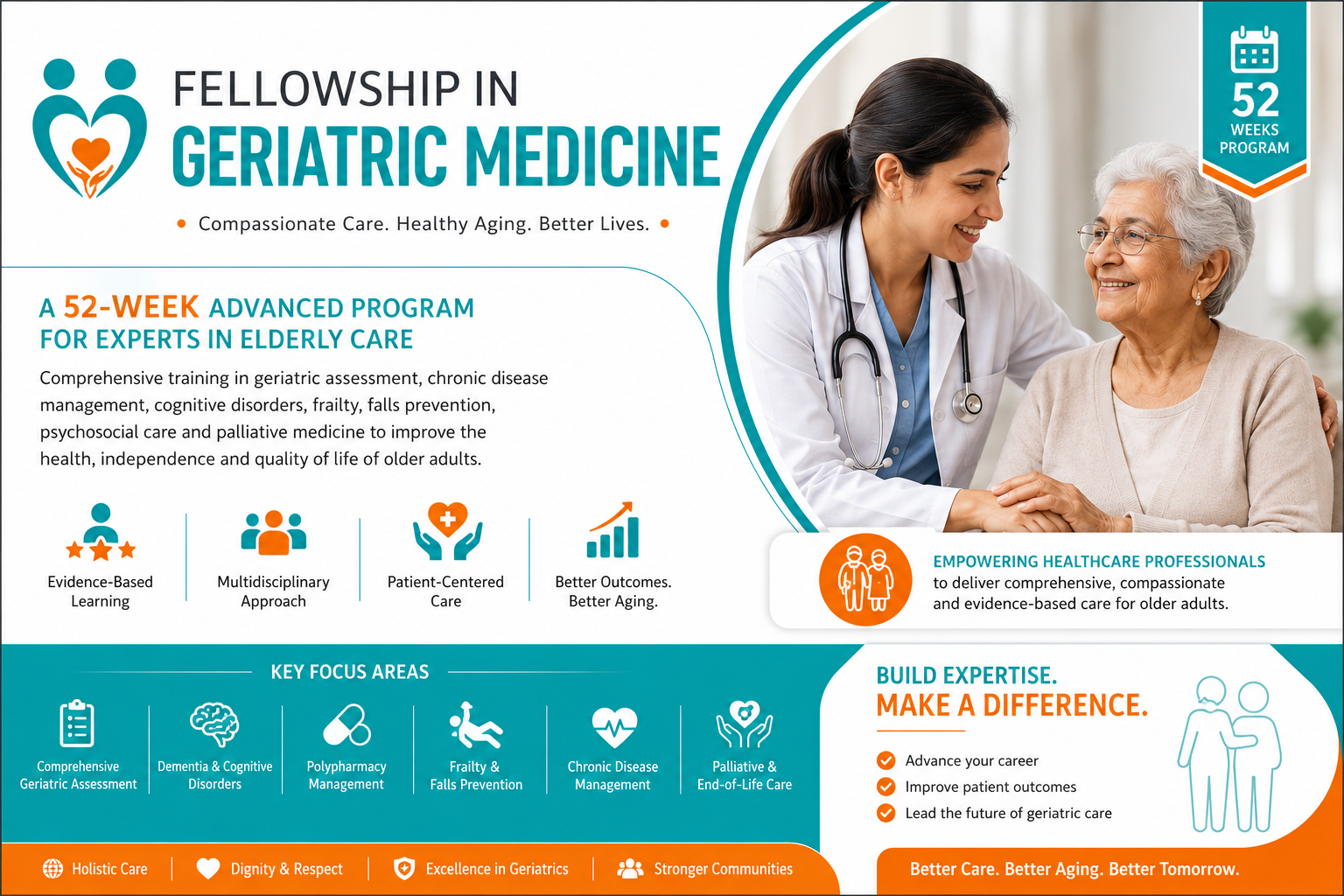

The Fellowship in Geriatric Medicine is a comprehensive 52-week advanced training program designed for healthcare professionals seeking expertise in the care of older adults. The course provides in-depth knowledge of age-related physiological changes, comprehensive geriatric assessment, chronic disease management, cognitive disorders, frailty, falls prevention, palliative care, and multidisciplinary approaches to elderly care. Through evidence-based learning and clinical practice, participants develop the skills required to deliver high-quality, patient-centered healthcare that promotes healthy aging, functional independence, and improved quality of life for geriatric populations.
Course Overview
The Fellowship in Geriatric Medicine is a comprehensive 52-week advanced training program designed to equip healthcare professionals with specialized knowledge and clinical skills required to provide high-quality care for older adults. As populations age globally, the demand for healthcare providers trained in the complex medical, functional, psychological, and social needs of elderly patients continues to grow. This fellowship addresses these evolving healthcare challenges by offering an evidence-based curriculum focused on healthy aging, disease prevention, comprehensive assessment, and multidisciplinary management of geriatric patients.
The program provides an in-depth understanding of the physiological changes associated with aging and their impact on disease presentation, diagnosis, and treatment. Participants gain expertise in managing common geriatric syndromes such as frailty, falls, cognitive impairment, dementia, polypharmacy, incontinence, malnutrition, and functional decline. The fellowship emphasizes patient-centered care that promotes independence, dignity, quality of life, and healthy aging.
Through a combination of theoretical learning, case-based discussions, clinical practice, and research activities, learners develop the competencies necessary to assess and manage older adults across various healthcare settings, including hospitals, outpatient clinics, rehabilitation centers, long-term care facilities, and community-based programs.
Course Objectives
Upon successful completion of the Fellowship in Geriatric Medicine, participants will be able to:
- Understand the biological, physiological, psychological, and social aspects of aging.
- Perform comprehensive geriatric assessments to identify medical, functional, cognitive, and psychosocial needs.
- Diagnose and manage common geriatric syndromes and age-related disorders.
- Develop individualized care plans that address multimorbidity and complex healthcare needs.
- Optimize medication management and reduce risks associated with polypharmacy.
- Assess and manage cognitive disorders, including dementia and delirium.
- Implement evidence-based strategies for falls prevention and frailty management.
- Address mental health concerns in older adults, including depression and anxiety.
- Provide nutritional assessment and interventions for elderly patients.
- Deliver compassionate palliative and end-of-life care.
- Collaborate effectively within multidisciplinary healthcare teams.
- Apply research findings and quality improvement principles to geriatric practice.
Why Choose This Fellowship?
The healthcare needs of older adults are often complex, requiring specialized knowledge and coordinated care approaches. This fellowship prepares clinicians to address these challenges by combining clinical expertise with a holistic understanding of aging.
Key benefits include:
- Comprehensive coverage of geriatric medicine principles and practices.
- Training in evidence-based assessment and management techniques.
- Focus on maintaining functional independence and quality of life.
- Emphasis on multidisciplinary and patient-centered care models.
- Development of leadership skills in elderly healthcare services.
- Exposure to preventive, rehabilitative, and palliative care approaches.
- Opportunities to engage in research and quality improvement initiatives.
- Enhanced career prospects in hospitals, community care, rehabilitation, and academic settings.
Curriculum Highlights
Foundations of Aging and Geriatric Medicine
Learners explore the science of aging, demographic trends, healthy aging concepts, and the principles of geriatric healthcare. The module establishes a strong foundation for understanding age-related physiological changes and healthcare delivery models.
Comprehensive Geriatric Assessment
Participants learn structured approaches to evaluating physical health, cognitive function, emotional well-being, social circumstances, nutritional status, and functional abilities. Emphasis is placed on creating individualized care plans.
Geriatric Pharmacology and Polypharmacy
The program examines medication safety in older adults, age-related pharmacological changes, adverse drug reactions, medication optimization, and deprescribing strategies.
Cardiovascular and Chronic Disease Management
Learners develop expertise in managing common chronic conditions affecting older adults, including hypertension, heart failure, diabetes, chronic kidney disease, chronic respiratory disorders, and multimorbidity.
Cognitive and Neurological Disorders
The fellowship provides detailed training in the assessment and management of dementia, Alzheimer’s disease, Parkinson’s disease, delirium, and other neurological conditions commonly encountered in geriatric practice.
Mental Health in Older Adults
Participants learn to identify and manage depression, anxiety, sleep disorders, behavioral disturbances, and psychosocial challenges affecting elderly populations.
Musculoskeletal Health and Mobility
This section focuses on osteoporosis, osteoarthritis, sarcopenia, fracture prevention, mobility disorders, and rehabilitation strategies that support independence and reduce disability.
Frailty and Falls Prevention
Learners acquire practical skills in identifying frailty, assessing fall risk, implementing prevention programs, and managing post-fall rehabilitation.
Nutrition and Preventive Care
The curriculum highlights nutritional assessment, management of malnutrition, vaccination strategies, health screenings, and lifestyle interventions aimed at promoting healthy aging.
Palliative and End-of-Life Care
Participants gain expertise in symptom management, advance care planning, ethical decision-making, communication skills, and compassionate end-of-life care for elderly patients and their families.
Research and Clinical Practice
The fellowship integrates evidence-based medicine, quality improvement methodologies, healthcare policy, and research principles to support continuous professional development and improved patient outcomes.
Career Opportunities
Graduates of the Fellowship in Geriatric Medicine can pursue rewarding careers in various healthcare environments, including:
- Geriatric Medicine Departments
- Multispecialty Hospitals
- Primary Care and Family Medicine Clinics
- Rehabilitation Centers
- Long-Term Care Facilities
- Nursing Homes and Assisted Living Facilities
- Community Health Programs
- Home Healthcare Services
- Palliative Care Centers
- Academic and Teaching Institutions
- Research Organizations
- Public Health and Aging Programs
Potential roles include:
- Geriatric Physician
- Senior Care Specialist
- Elderly Care Consultant
- Rehabilitation Physician
- Long-Term Care Medical Officer
- Community Geriatrics Practitioner
- Clinical Educator
- Research Associate in Aging and Geriatrics
- Palliative Care Specialist
- Healthcare Program Manager
Who Should Enroll?
This fellowship is ideal for:
- MBBS Graduates
- MD General Medicine Practitioners
- Family Medicine Physicians
- Internal Medicine Specialists
- Community Medicine Practitioners
- Primary Care Physicians
- Healthcare Professionals Interested in Elderly Care
- Medical Officers Working with Aging Populations
- Clinicians Seeking Advanced Geriatric Training
Learning Outcomes
By the end of the program, participants will possess advanced competencies in geriatric assessment, diagnosis, treatment planning, rehabilitation, preventive healthcare, and palliative care. They will be equipped to manage complex elderly patients with confidence, lead multidisciplinary care teams, improve healthcare outcomes for older adults, and contribute to the advancement of geriatric medicine within their organizations and communities.
The Fellowship in Geriatric Medicine provides a strong foundation for healthcare professionals committed to improving the health, independence, dignity, and quality of life of older adults through evidence-based, compassionate, and comprehensive care.
- 12 Sections
- 96 Lessons
- 52 Weeks
- Introduction to Geriatric Medicine and Healthy AgingThis module introduces learners to the principles and practice of geriatric medicine. Participants will explore the biological, psychological, and social aspects of aging, demographic trends, and the unique healthcare needs of older adults. The module emphasizes healthy aging, age-related physiological changes, and the role of geriatricians in delivering patient-centered care. Learners will develop a foundational understanding of comprehensive geriatric assessment and multidisciplinary care models.8
- Geriatric Assessment and Functional EvaluationThis module focuses on evaluating the functional, cognitive, emotional, and social health of older adults. Learners will gain expertise in standardized geriatric assessment tools and methods used to identify frailty, disability, and care needs. The module emphasizes individualized care planning and monitoring of functional outcomes.8
- Geriatric Pharmacology and Polypharmacy ManagementThis module examines age-related pharmacokinetic and pharmacodynamic changes that influence medication use in older adults. Learners will understand the challenges of polypharmacy, medication reconciliation, adverse drug reactions, and deprescribing strategies. Evidence-based prescribing practices will be emphasized to improve patient safety and outcomes.8
- Cardiovascular Disorders in Older AdultsThis module covers the diagnosis and management of common cardiovascular diseases affecting older adults. Learners will explore age-related cardiovascular changes and evidence-based approaches to managing hypertension, heart failure, ischemic heart disease, and arrhythmias in geriatric populations.8
- Neurology and Cognitive DisordersThis module focuses on neurological conditions commonly encountered in elderly patients. Learners will develop skills in assessing cognitive impairment, dementia, Parkinson’s disease, and other neurodegenerative disorders. Management strategies for maintaining quality of life and caregiver support are also addressed.8
- Geriatric Psychiatry and Mental HealthThis module addresses the psychological and psychiatric challenges faced by older adults. Learners will explore depression, anxiety, sleep disorders, substance misuse, and behavioral symptoms associated with dementia. The importance of psychosocial interventions and multidisciplinary management is emphasized.8
- Musculoskeletal Health and Mobility DisordersThis module focuses on maintaining mobility and musculoskeletal health in aging populations. Participants will learn about osteoporosis, osteoarthritis, sarcopenia, fractures, and rehabilitation strategies that help preserve independence and reduce disability.8
- Falls, Frailty, and RehabilitationFalls and frailty are major contributors to morbidity in older adults. This module provides comprehensive training in risk assessment, prevention strategies, post-fall evaluation, and rehabilitation programs designed to restore function and reduce recurrent falls.8
- Chronic Disease Management in GeriatricsThis module explores the management of chronic diseases commonly affecting older adults. Learners will integrate patient-centered approaches to optimize treatment plans while considering multimorbidity, functional status, and quality of life.8
- Nutrition, Metabolism, and Preventive GeriatricsThis module highlights the importance of nutrition and preventive healthcare in aging populations. Learners will assess nutritional status, identify deficiencies, and implement preventive strategies including vaccination, screening, and health promotion.8
- Palliative Care, End-of-Life Care, and EthicsThis module prepares learners to manage serious illness and end-of-life issues in older adults. Participants will learn principles of palliative care, symptom management, ethical decision-making, advance care planning, and communication with patients and families.8
- Clinical Practice, Research, and Capstone ProjectThe final module integrates theoretical knowledge with practical clinical application. Learners will participate in geriatric case discussions, evidence-based practice activities, quality improvement projects, and research initiatives. The module culminates in a capstone project demonstrating competency in geriatric medicine.8
You might be intersted in
-
167 Students
-
52 Weeks
-
132 Students
-
52 Weeks
-
133 Students
-
52 Weeks
-
123 Students
-
52 Weeks