
Fellowship in Vascular Medicine
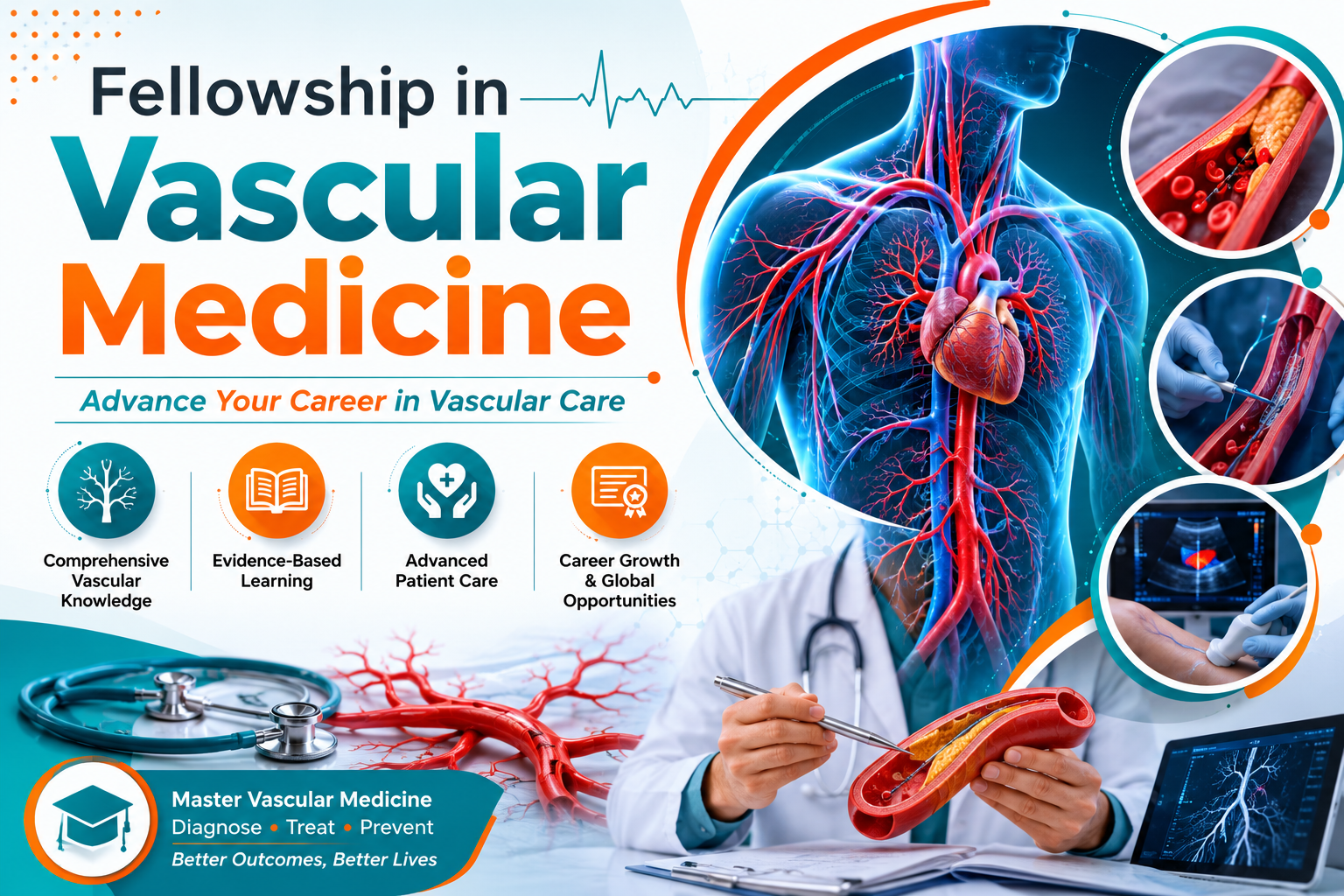

The Fellowship in Vascular Medicine is a comprehensive 52-week advanced training program designed for healthcare professionals seeking expertise in the prevention, diagnosis, and management of vascular diseases. The curriculum covers arterial, venous, and lymphatic disorders, vascular imaging, endovascular therapies, thrombosis management, diabetic vascular complications, limb preservation, and evidence-based vascular care. Participants will develop clinical skills to assess vascular conditions, interpret diagnostic studies, and implement multidisciplinary treatment strategies to improve patient outcomes. This fellowship equips learners with the knowledge and practical competencies required for excellence in modern vascular medicine practice.
Course Overview
The Fellowship in Vascular Medicine is a comprehensive 52-week advanced training program designed for physicians, healthcare professionals, and medical graduates seeking specialized expertise in the prevention, diagnosis, and management of vascular diseases. Vascular medicine is a rapidly evolving subspecialty that focuses on disorders affecting arteries, veins, and the lymphatic system, with an emphasis on improving circulation, preventing complications, and enhancing patient outcomes.
This fellowship provides an in-depth understanding of vascular biology, hemodynamics, atherosclerosis, thrombosis, vascular imaging, and evidence-based therapeutic approaches. Participants will gain advanced knowledge of peripheral arterial disease, venous thromboembolism, carotid artery disease, aortic disorders, diabetic vascular complications, and lymphatic diseases. The curriculum integrates clinical medicine, diagnostic technologies, pharmacological management, and interventional principles to prepare learners for the challenges of modern vascular care.
Through structured modules, case-based discussions, evidence-based learning, and research-oriented activities, participants will develop the clinical competence required to assess complex vascular conditions, interpret diagnostic investigations, formulate treatment strategies, and collaborate effectively within multidisciplinary vascular teams.
Course Objectives
Upon completion of this fellowship, participants will be able to:
- Understand the anatomy, physiology, and pathophysiology of the vascular and lymphatic systems.
- Diagnose and manage arterial, venous, and lymphatic disorders using evidence-based approaches.
- Perform comprehensive vascular risk assessments and preventive care strategies.
- Interpret vascular diagnostic tests, including Doppler studies, duplex ultrasonography, CT angiography, and MR angiography.
- Manage peripheral arterial disease, chronic venous disease, and thromboembolic disorders.
- Develop treatment plans for diabetic vascular complications and limb-threatening ischemia.
- Understand indications, outcomes, and complications of endovascular and surgical vascular interventions.
- Apply pharmacological therapies, including antiplatelet, anticoagulant, lipid-lowering, and antihypertensive treatments.
- Evaluate and manage vascular emergencies and complex vascular syndromes.
- Conduct clinical research and quality improvement initiatives in vascular medicine.
Why Choose This Fellowship?
Vascular diseases remain among the leading causes of morbidity and mortality worldwide. With the increasing prevalence of diabetes, hypertension, obesity, and aging populations, healthcare professionals with expertise in vascular medicine are in growing demand. This fellowship offers a unique opportunity to gain specialized knowledge that bridges cardiovascular medicine, internal medicine, radiology, surgery, and preventive healthcare.
The program emphasizes practical clinical decision-making and contemporary management strategies aligned with international standards of vascular care. Learners will gain exposure to both traditional medical therapies and emerging advances in vascular diagnostics and intervention.
Key Learning Areas
Vascular Biology and Pathophysiology
Develop a strong foundation in vascular anatomy, physiology, endothelial function, hemodynamics, and the mechanisms underlying vascular diseases.
Diagnostic Vascular Medicine
Learn comprehensive vascular assessment techniques and interpretation of non-invasive and advanced imaging modalities used in vascular diagnosis.
Peripheral Arterial Disease
Understand the diagnosis, evaluation, risk stratification, and management of peripheral arterial disease, including critical limb ischemia and claudication.
Venous and Thrombotic Disorders
Gain expertise in the management of deep vein thrombosis, pulmonary embolism, chronic venous insufficiency, varicose veins, and thrombophilia.
Aortic and Arterial Disorders
Study aneurysms, dissections, vasculitis, mesenteric ischemia, renal artery disease, and other complex arterial pathologies.
Lymphatic Diseases
Explore the diagnosis and management of lymphedema and related lymphatic disorders using multidisciplinary treatment approaches.
Diabetic Vascular Care and Limb Preservation
Learn advanced strategies for diabetic foot management, wound care, infection control, and limb salvage.
Cerebrovascular Disease
Understand carotid artery disease, stroke prevention, cerebrovascular assessment, and current treatment options.
Vascular Pharmacology
Master the safe and effective use of antiplatelet agents, anticoagulants, lipid-lowering medications, and emerging vascular therapies.
Endovascular Medicine
Gain knowledge of angioplasty, stenting, thrombectomy, thrombolysis, and other minimally invasive vascular interventions.
Research and Evidence-Based Practice
Develop critical appraisal skills, research methodology expertise, and quality improvement competencies relevant to vascular healthcare.
Who Should Enroll?
This fellowship is ideal for:
- MBBS graduates seeking specialization in vascular medicine
- Internal Medicine physicians
- Cardiologists
- Vascular Surgeons
- General Practitioners
- Emergency Medicine Physicians
- Critical Care Specialists
- Diabetologists
- Healthcare professionals involved in vascular patient care
- Medical educators and researchers
Career Opportunities
Graduates of this fellowship can pursue opportunities in:
- Vascular Medicine Clinics
- Multispecialty Hospitals
- Cardiovascular Centers
- Vascular Diagnostic Laboratories
- Endovascular and Interventional Units
- Diabetic Foot and Limb Preservation Programs
- Academic and Teaching Institutions
- Clinical Research Organizations
- Public Health and Preventive Care Programs
Potential roles include:
- Vascular Medicine Specialist
- Vascular Consultant
- Clinical Vascular Physician
- Vascular Diagnostics Specialist
- Endovascular Program Coordinator
- Research Associate in Vascular Sciences
- Academic Faculty in Vascular Medicine
- Preventive Cardiovascular and Vascular Health Consultant
Program Features
- Comprehensive 52-week structured curriculum
- Industry-relevant and evidence-based content
- Expert-developed learning modules
- Case-based clinical discussions
- Advanced vascular imaging interpretation
- Focus on preventive and interventional vascular care
- Research and quality improvement training
- Flexible online learning format
- Continuous assessments and evaluations
- Fellowship Certification upon successful completion
Certification
Participants who successfully complete all coursework, assessments, assignments, and the final capstone project will receive a Fellowship in Vascular Medicine Certification, demonstrating advanced competence in the diagnosis, prevention, and management of vascular diseases and supporting professional growth in this specialized field.
Conclusion
The Fellowship in Vascular Medicine provides a comprehensive and practical pathway for healthcare professionals seeking advanced expertise in vascular health. Covering the full spectrum of arterial, venous, and lymphatic disorders, this program equips learners with the knowledge, clinical skills, and evidence-based approaches necessary to deliver high-quality vascular care. By integrating diagnostics, pharmacology, intervention, prevention, and research, the fellowship prepares graduates to become leaders in the evolving field of vascular medicine.
- 12 Sections
- 94 Lessons
- 52 Weeks
- Fundamentals of Vascular MedicineThis module introduces the foundational concepts of vascular medicine, including vascular anatomy, physiology, hemodynamics, and the pathophysiology of arterial, venous, and lymphatic disorders. Learners will gain a comprehensive understanding of vascular biology and the mechanisms underlying vascular diseases.7
- Diagnostic Evaluation in Vascular MedicineThis module focuses on clinical assessment and diagnostic modalities used in vascular medicine. Participants will learn history taking, physical examination techniques, non-invasive vascular testing, and interpretation of diagnostic imaging studies.8
- Peripheral Arterial DiseaseThis module provides an in-depth understanding of peripheral arterial disease (PAD), including risk factors, clinical presentation, diagnosis, and treatment approaches. Emphasis is placed on evidence-based management and prevention strategies.8
- Aortic and Arterial DisordersThis module explores diseases affecting the aorta and major arteries. Participants will learn about aneurysms, dissections, vasculitis, and other arterial disorders, including diagnostic and therapeutic strategies.8
- Venous Disorders and Venous ThromboembolismThis module covers the diagnosis and management of venous diseases, including deep vein thrombosis, pulmonary embolism, chronic venous insufficiency, and varicose veins. Current anticoagulation strategies are discussed extensively.8
- Lymphatic DisordersThis module focuses on lymphatic anatomy, physiology, and disorders. Participants will develop expertise in diagnosing and managing primary and secondary lymphedema and related conditions.7
- Diabetic Vascular Disease and Limb PreservationThis module examines vascular complications of diabetes mellitus and emphasizes multidisciplinary approaches to limb preservation, wound care, and prevention of amputations.8
- Cerebrovascular and Carotid Artery DiseaseThis module addresses vascular conditions affecting cerebral circulation. Learners will understand stroke prevention, carotid artery disease evaluation, and treatment modalities.8
- Vascular Pharmacology and Medical ManagementThis module provides comprehensive training in pharmacological therapies used in vascular medicine, including antiplatelet agents, anticoagulants, lipid-lowering drugs, and emerging therapies.8
- Endovascular and Interventional Vascular MedicineThis module introduces minimally invasive vascular interventions. Participants will learn indications, techniques, complications, and outcomes of various endovascular procedures.8
- Special Populations and Advanced Vascular DisordersThis module focuses on vascular diseases in special patient populations and rare vascular disorders. Participants will develop skills in managing complex vascular conditions.8
- Research, Quality Improvement, and Capstone ProjectThis final module develops research competency, critical appraisal skills, and quality improvement expertise. Participants will complete a capstone project integrating knowledge acquired throughout the fellowship.8
- 12.1Principles of Clinical Research
- 12.2Research Methodology in Vascular Medicine
- 12.3Biostatistics and Data Analysis
- 12.4Evidence-Based Medicine
- 12.5Clinical Guidelines and Practice Standards
- 12.6Quality Improvement in Vascular Care
- 12.7Capstone Project Development
- 12.8Final Project Presentation and Assessment
You might be intersted in
-
167 Students
-
52 Weeks
-
132 Students
-
52 Weeks
-
124 Students
-
52 Weeks
-
133 Students
-
52 Weeks