
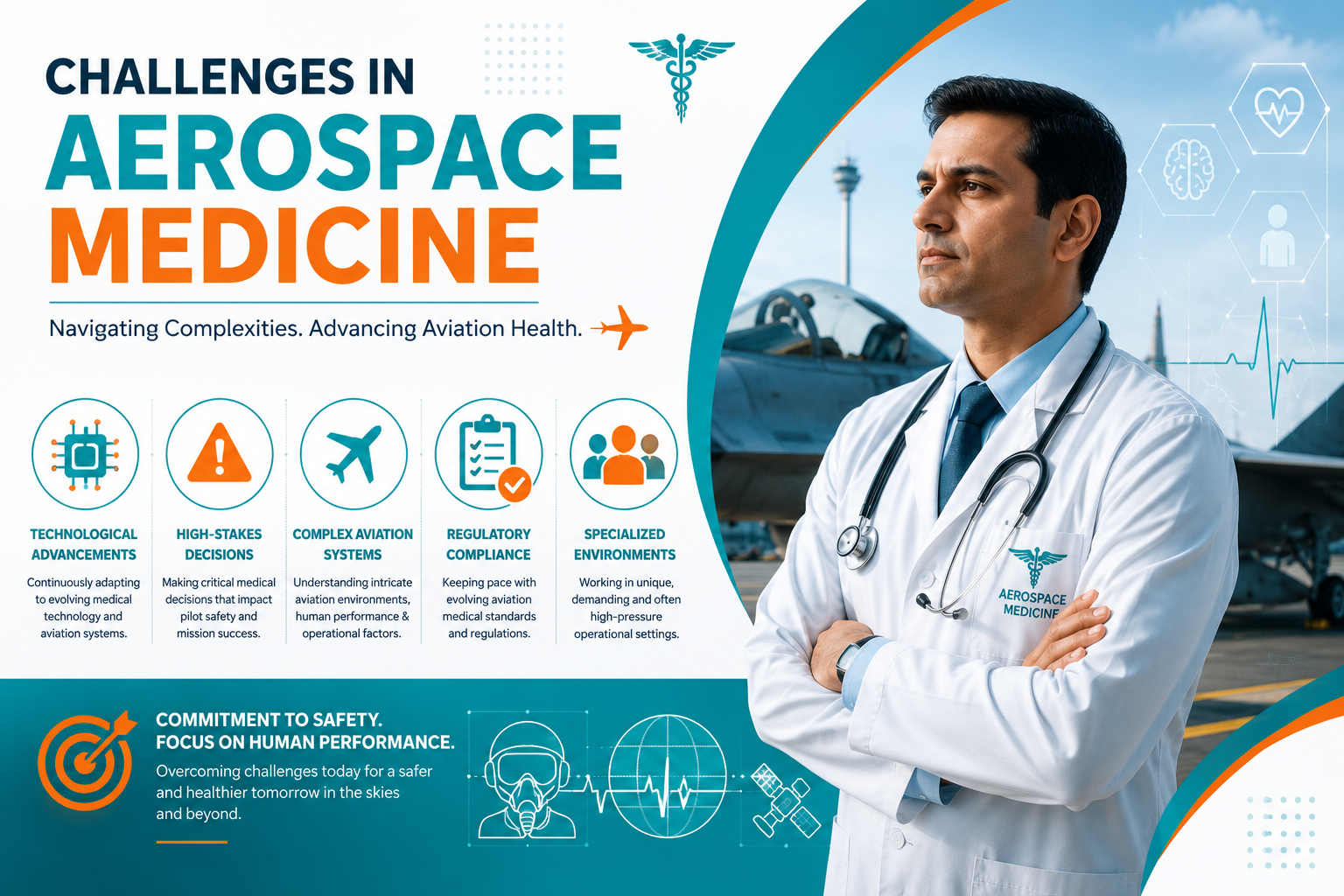
The field of Aerospace Medicine is a unique and rapidly evolving medical specialty that focuses on the health, safety, and performance of individuals involved in aviation and space travel. Aerospace and Aeronautic Doctors play a crucial role in ensuring that pilots, aircrew members, astronauts, and aviation personnel remain physically and mentally fit to perform their duties in challenging environments.
With the growth of the aviation industry in India, increasing defense aviation activities, and emerging opportunities in space research through organizations such as ISRO, the demand for qualified Aerospace Medicine specialists is steadily rising. This career combines clinical medicine, physiology, aviation science, and cutting-edge research, making it an exciting choice for medical professionals seeking a specialized and prestigious career path.
This guide provides a comprehensive roadmap to becoming an Aerospace and Aeronautic Doctor in India, including educational requirements, training pathways, career opportunities, and future prospects.
What is an Aerospace and Aeronautic Doctor?
An Aerospace and Aeronautic Doctor, also known as an Aerospace Medicine Specialist, is a medical professional who specializes in the prevention, diagnosis, treatment, and management of health conditions related to aviation and space travel. These physicians focus on understanding how the unique environments encountered during flight and space missions affect the human body and mind. Their primary responsibility is to ensure that pilots, aircrew members, astronauts, air traffic personnel, and other aviation professionals remain medically fit and capable of performing their duties safely and effectively.
Unlike traditional medical practitioners who primarily treat patients in hospitals or clinics, Aerospace Doctors work at the intersection of medicine, aviation, physiology, engineering, and human performance. They study the effects of factors such as high altitude, reduced oxygen levels, rapid acceleration and deceleration forces, changes in atmospheric pressure, vibration, fatigue, radiation exposure, and prolonged confinement. By understanding these physiological and psychological challenges, they help minimize health risks associated with flight operations and space exploration.
Aerospace Medicine Specialists conduct comprehensive medical examinations for pilots and aviation personnel to determine their fitness for flying duties. They assess vision, hearing, cardiovascular health, neurological function, mental health, and overall physical condition according to established aviation medical standards. These evaluations are essential because even minor medical issues can significantly impact safety during flight operations.
In addition to medical certification, Aerospace Doctors play a vital role in accident prevention and aviation safety. They participate in investigations of aviation incidents and accidents, analyze human performance factors, and recommend measures to reduce risks. Their expertise helps aviation organizations develop safety protocols, fatigue management programs, emergency response procedures, and occupational health policies that protect both crew members and passengers.
The specialty also encompasses space medicine, an emerging field dedicated to understanding how the human body responds to microgravity, cosmic radiation, isolation, and extended space missions. As space exploration advances and human spaceflight programs expand, Aerospace Doctors contribute to astronaut selection, health monitoring, mission planning, and research aimed at maintaining human health in space environments.
Aerospace and Aeronautic Doctors work in a variety of settings, including commercial airlines, military aviation organizations, aerospace research centers, government regulatory agencies, space agencies, academic institutions, and occupational health departments. In India, specialists may find opportunities with airlines, aviation authorities, defense services, aerospace industries, and organizations involved in space research and human spaceflight initiatives.
The field requires a strong foundation in clinical medicine along with specialized knowledge of aviation physiology, aviation psychology, environmental medicine, aerospace engineering principles, and flight safety. Professionals in this specialty often collaborate with pilots, engineers, scientists, psychologists, and aviation regulators to address complex challenges related to human performance and operational safety.
As the global aviation industry continues to expand and space exploration enters a new era of innovation, the importance of Aerospace and Aeronautic Doctors is growing rapidly. These specialists are essential for ensuring that humans can safely operate aircraft, participate in space missions, and perform effectively in some of the most demanding environments known to science. Their unique combination of medical expertise and aviation knowledge makes Aerospace Medicine one of the most specialized and exciting career paths within modern healthcare.
Educational Pathway to Become an Aerospace Doctor in India
The journey to becoming an Aerospace and Aeronautic Doctor in India begins with obtaining an MBBS degree from a medical college recognized by the National Medical Commission (NMC). During undergraduate medical education, aspiring aerospace physicians should build a strong foundation in subjects such as physiology, internal medicine, emergency medicine, neurology, and preventive medicine. These disciplines provide essential knowledge about human health, body systems, and environmental factors that later become crucial in understanding the medical challenges associated with aviation and space travel.
After successfully completing the MBBS program, candidates must undergo the compulsory rotating medical internship, which provides practical clinical experience across various medical specialties. Upon completion of the internship, graduates are required to obtain registration with the State Medical Council or the National Medical Commission, enabling them to practice medicine legally in India. This registration is also a mandatory requirement for pursuing postgraduate medical education and specialized training programs.
The next step involves pursuing postgraduate education in Aerospace Medicine. Eligible MBBS graduates can appear for relevant entrance examinations and apply for advanced training programs such as MD in Aerospace Medicine, Fellowship Programs in Aerospace Medicine, or specialized Aerospace Medicine training offered through the Defence Services. These programs provide in-depth knowledge of aviation physiology, aerospace environmental medicine, aviation psychology, flight safety, aeromedical certification, and human performance in extreme environments. One of the most renowned institutions for aerospace medical training in India is the Institute of Aerospace Medicine (IAM), Bengaluru, which has played a pioneering role in developing aerospace medicine specialists for both military and civilian aviation sectors. Through rigorous academic training, research exposure, and practical aviation-related experience, these programs prepare doctors to address the unique healthcare challenges faced by pilots, aircrew members, astronauts, and other aviation professionals.
Gain Specialized Aviation Medical Knowledge
After completing postgraduate training in Aerospace Medicine, doctors develop specialized knowledge that enables them to understand the complex relationship between human health and the aviation environment. This advanced training covers key areas such as aviation physiology, aviation psychology, aerospace environmental medicine, flight safety, and human performance. Specialists learn how factors such as high altitude, reduced atmospheric pressure, hypoxia, acceleration forces, vibration, fatigue, circadian rhythm disruption, and spatial disorientation can affect the physical and mental performance of pilots and aircrew members.
In addition to understanding the physiological effects of flight, Aerospace Medicine professionals are trained in aeromedical certification, aviation pathology, accident investigation, occupational health, and emergency response planning. They gain expertise in assessing the medical fitness of pilots, identifying health conditions that may compromise flight safety, and implementing preventive strategies to reduce aviation-related health risks. Training also includes exposure to aerospace research, simulator-based learning, and operational aviation environments, helping physicians develop a comprehensive understanding of the medical, technical, and regulatory aspects of aviation and space medicine. This specialized knowledge enables Aerospace Doctors to contribute effectively to flight safety, crew health, mission success, and the advancement of aerospace healthcare.
Essential Skills Required
A successful career in Aerospace Medicine requires a unique combination of medical expertise, technical knowledge, analytical thinking, and interpersonal skills. Aerospace and Aeronautic Doctors must possess strong clinical expertise to accurately diagnose medical conditions, assess the fitness of pilots and aircrew members, and make critical decisions that directly impact aviation safety. Since even minor health issues can affect a person’s ability to operate an aircraft safely, specialists must have a thorough understanding of clinical medicine and preventive healthcare.
In addition to medical proficiency, Aerospace Doctors need a solid understanding of aviation systems and flight operations. Knowledge of aircraft performance, cockpit environments, flight dynamics, aviation regulations, and the physiological challenges associated with flying is essential for evaluating how various medical conditions may influence operational performance. This specialized understanding enables physicians to make informed recommendations regarding flight fitness and risk management.
Research and analytical skills are equally important in this field. Aerospace Medicine involves the study of human performance under unique environmental conditions such as high altitude, reduced oxygen levels, acceleration forces, fatigue, and spaceflight. Specialists often participate in research projects, analyze medical and operational data, investigate aviation incidents, and contribute to the development of evidence-based safety protocols. The ability to interpret complex information and apply scientific principles is crucial for advancing aviation healthcare and safety standards.
Effective communication and leadership skills are also fundamental to the role. Aerospace physicians regularly collaborate with pilots, engineers, air traffic personnel, aviation authorities, military officers, and healthcare teams. They must be able to communicate medical findings clearly, provide guidance on health and safety matters, and work efficiently within multidisciplinary teams. Strong leadership abilities help them manage aeromedical programs, contribute to policy development, and support organizational decision-making in both civilian and military aviation environments.
Indian Air Force
The Indian Air Force (IAF) offers one of the most prestigious and rewarding career pathways for Aerospace and Aeronautic Doctors in India. Aerospace Medicine specialists in the IAF play a critical role in maintaining the health, safety, and operational readiness of pilots, aircrew members, and other aviation personnel. Their responsibilities include conducting medical examinations, assessing flying fitness, monitoring the effects of high-altitude and high-performance flight on the human body, and providing medical support during aviation operations. These specialists also contribute to pilot selection processes, aeromedical certification, flight safety programs, and the management of aviation-related medical conditions.
In addition to clinical responsibilities, Aerospace Doctors in the Indian Air Force are actively involved in research related to aviation physiology, human performance, fatigue management, spatial disorientation, acceleration forces, and environmental stressors encountered during flight. They collaborate with aviation experts, engineers, and military leadership to develop strategies that enhance pilot performance and mission effectiveness. The IAF also provides opportunities for advanced training, specialized research, and leadership roles within military aviation medicine. For medical professionals who are passionate about aviation, defense services, and cutting-edge medical science, a career in the Indian Air Force offers a unique opportunity to serve the nation while contributing to the advancement of aerospace medicine.
Salary and Career Growth
Salaries vary depending on experience, qualifications, and employer. Entry-level aerospace medicine specialists can earn competitive salaries, while experienced professionals working with defense organizations, airlines, regulatory agencies, or international aerospace institutions can achieve highly rewarding compensation packages.
As India’s aviation and space sectors continue to expand, opportunities for advancement into leadership, research, and policy-making roles are expected to grow significantly.
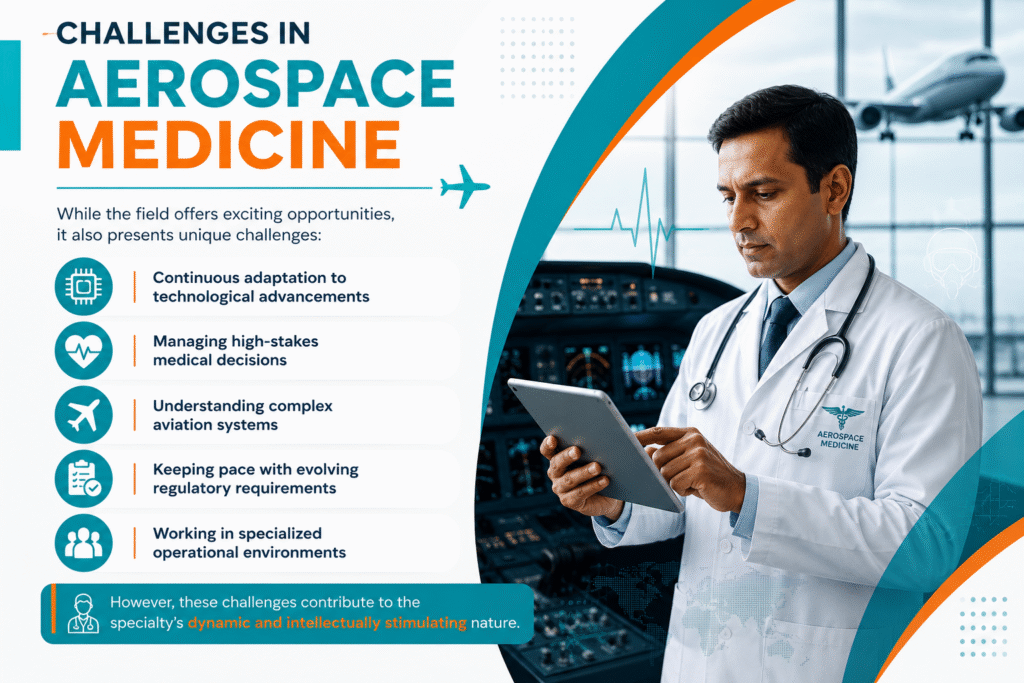
Challenges in Aerospace Medicine
Future Scope of Aerospace Medicine in India
The future of Aerospace Medicine in India is exceptionally promising. The expansion of commercial aviation, advancements in defense aviation technology, and ambitious space missions are increasing the need for qualified specialists. Emerging fields such as space tourism, human spaceflight programs, and advanced aerospace research are expected to create new career opportunities over the coming decades.
Doctors entering this specialty today are likely to play a significant role in shaping the future of aviation and space medicine in India.
Conclusion
Becoming an Aerospace and Aeronautic Doctor in India is an excellent career choice for medical professionals who are passionate about aviation, space science, and human performance. The journey begins with an MBBS degree, followed by specialized training in Aerospace Medicine and continuous professional development. With growing opportunities in civil aviation, defense services, research institutions, and space programs, Aerospace Medicine offers a rewarding, prestigious, and future-oriented medical career.
For aspiring doctors who dream of combining medicine with aviation and space exploration, Aerospace Medicine provides a unique opportunity to contribute to the safety, health, and success of those who push the boundaries of human flight.