
Fellowship in Respiratory Pharmacology
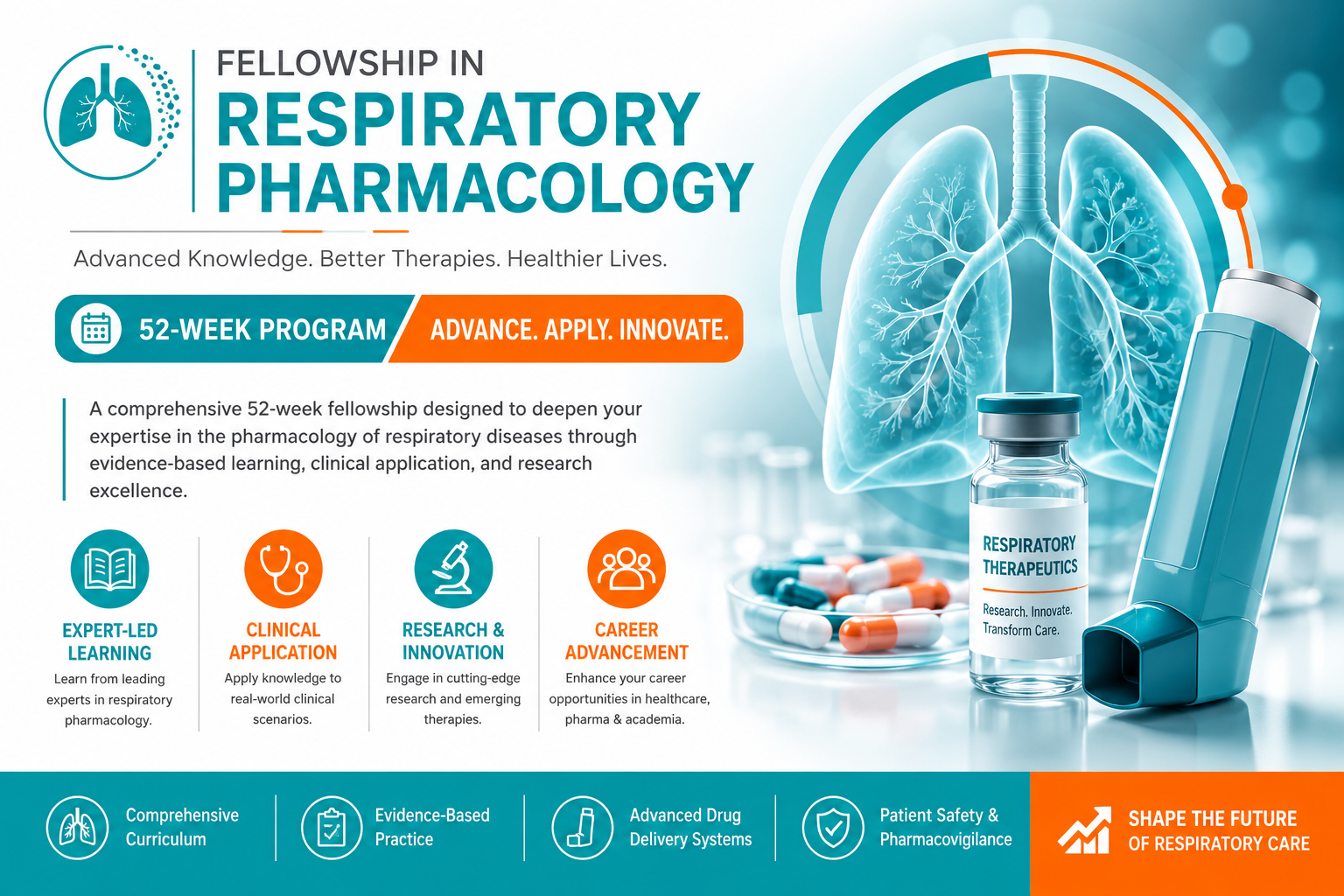

The Fellowship in Respiratory Pharmacology is a comprehensive 52-week advanced training program designed to provide in-depth knowledge of respiratory drug therapies, pharmacological mechanisms, and evidence-based treatment strategies for pulmonary diseases. The program covers asthma, COPD, respiratory infections, interstitial lung diseases, pulmonary hypertension, critical care pharmacology, inhalation drug delivery systems, and emerging therapeutics. Through a combination of theoretical learning, clinical applications, and research training, participants develop the expertise required to optimize respiratory pharmacotherapy, evaluate novel treatments, and contribute to advancements in respiratory medicine and pharmaceutical sciences.
The Fellowship in Respiratory Pharmacology is a comprehensive 52-week advanced training program designed for healthcare professionals, pharmacists, clinical researchers, pharmaceutical scientists, and medical graduates seeking specialized expertise in the pharmacological management of respiratory diseases. The program provides an in-depth understanding of respiratory therapeutics, drug mechanisms, clinical applications, and emerging innovations that are transforming pulmonary healthcare.
Respiratory diseases such as asthma, chronic obstructive pulmonary disease (COPD), pulmonary hypertension, interstitial lung diseases, respiratory infections, and acute respiratory distress syndrome continue to represent significant global health challenges. Effective pharmacological interventions play a critical role in improving patient outcomes, reducing disease burden, and enhancing quality of life. This fellowship equips learners with the knowledge and practical skills required to evaluate, prescribe, monitor, and optimize respiratory drug therapies across diverse clinical settings.
The curriculum begins with foundational concepts in respiratory anatomy, physiology, pharmacokinetics, pharmacodynamics, and receptor pharmacology. Participants gain a solid understanding of how respiratory medications interact with biological systems and how drug responses vary among individuals. Building on this foundation, the program explores disease-specific pharmacological approaches for common and complex pulmonary disorders.
A major focus of the fellowship is the study of bronchodilators, corticosteroids, leukotriene modifiers, biologic agents, immunomodulators, and antimicrobial therapies. Learners will examine the mechanisms of action, therapeutic indications, dosage considerations, adverse effects, and monitoring requirements associated with these medications. The program also emphasizes evidence-based treatment guidelines and contemporary approaches to asthma and COPD management.
Advanced modules address emerging areas of respiratory pharmacology, including targeted biologic therapies, personalized medicine, pharmacogenomics, antifibrotic treatments, and novel molecular targets. Participants will explore how advances in biotechnology and precision medicine are reshaping respiratory care and creating new opportunities for individualized treatment strategies.
The fellowship also provides extensive training in inhalation therapy and respiratory drug delivery systems. Students will develop expertise in the use of metered-dose inhalers, dry powder inhalers, nebulizers, aerosol technologies, and innovative drug delivery platforms designed to maximize therapeutic effectiveness and improve patient adherence.
Critical care respiratory pharmacology is another key component of the program. Learners will study pharmacological interventions used in respiratory emergencies, intensive care units, mechanical ventilation, acute respiratory failure, and severe pulmonary infections. This knowledge enables participants to make informed clinical decisions in high-acuity healthcare environments.
Research and innovation are integral to the fellowship experience. Participants are introduced to clinical trial methodology, pharmacovigilance, biostatistics, evidence-based medicine, and translational research. They will learn how to critically evaluate scientific literature, interpret clinical data, and contribute to the advancement of respiratory pharmacotherapy through research initiatives.
The program concludes with a capstone project that allows learners to apply their knowledge to a real-world clinical, research, or pharmaceutical challenge. Through case studies, project development, and scholarly presentations, participants demonstrate their ability to integrate scientific principles with practical therapeutic decision-making.
Upon completion of the Fellowship in Respiratory Pharmacology, graduates will possess advanced competencies in respiratory drug therapy, clinical pharmacology, therapeutic optimization, patient safety, and research methodology. They will be prepared to pursue leadership roles in healthcare institutions, pharmaceutical industries, academic organizations, research centers, and specialized respiratory care settings.
Who Should Enroll?
- Medical Graduates (MBBS or equivalent)
- Pharmacists and Clinical Pharmacists
- Pulmonologists and Respiratory Physicians
- Healthcare Professionals involved in respiratory care
- Clinical Researchers and Research Associates
- Pharmaceutical Industry Professionals
- Medical Educators and Academicians
- Postgraduate Students in Pharmacology or Respiratory Medicine
Key Learning Outcomes
By the end of the program, participants will be able to:
- Understand advanced principles of respiratory pharmacology and therapeutics.
- Evaluate pharmacological treatments for asthma, COPD, and other pulmonary diseases.
- Apply evidence-based guidelines to respiratory disease management.
- Assess the efficacy, safety, and adverse effects of respiratory medications.
- Utilize advanced inhalation and drug delivery technologies effectively.
- Interpret clinical research and pharmacological data.
- Implement pharmacovigilance and medication safety practices.
- Explore personalized medicine and pharmacogenomic approaches.
- Contribute to respiratory pharmacology research and innovation.
- Optimize patient outcomes through rational and effective drug therapy.
Career Opportunities
Graduates of the Fellowship in Respiratory Pharmacology may pursue careers as:
- Respiratory Pharmacology Specialist
- Clinical Pharmacologist
- Pulmonary Research Associate
- Pharmaceutical Medical Advisor
- Clinical Research Scientist
- Drug Safety and Pharmacovigilance Officer
- Medical Affairs Specialist
- Academic Faculty in Pharmacology
- Respiratory Therapeutics Consultant
- Healthcare Research and Development Professional
This fellowship offers a unique blend of scientific knowledge, clinical application, and research expertise, making it an ideal program for professionals seeking to advance their careers in respiratory medicine, pharmacology, and pharmaceutical sciences.
- 12 Sections
- 74 Lessons
- 52 Weeks
- Foundations of Respiratory PharmacologyThis module introduces the fundamental principles of respiratory pharmacology, including respiratory system anatomy and physiology, pharmacokinetics, pharmacodynamics, receptor pharmacology, and mechanisms of drug action. Learners will gain a strong scientific foundation for understanding therapeutic interventions used in respiratory diseases.6
- Respiratory Pathophysiology and Therapeutic TargetsThis module explores the pathophysiological mechanisms underlying respiratory disorders and their pharmacological targets. Students will learn how molecular and cellular changes contribute to disease progression and how pharmacological agents modify these pathways.6
- Bronchodilators and Airway Management DrugsThis module focuses on bronchodilators and related medications used to manage airway obstruction. Students will study mechanisms of action, clinical applications, dosage considerations, and safety profiles.6
- Pharmacology of AsthmaThis module provides comprehensive coverage of pharmacological approaches to asthma management. Learners will evaluate evidence-based treatment strategies across different asthma phenotypes and severity levels.6
- Pharmacology of Chronic Obstructive Pulmonary DiseaseStudents will examine pharmacological treatments for COPD, including maintenance therapies, exacerbation management, and novel interventions. The module emphasizes evidence-based decision-making.6
- Anti-inflammatory and Immunomodulatory TherapiesThis module examines anti-inflammatory and immunomodulatory agents used in respiratory diseases. Learners will understand therapeutic mechanisms, clinical indications, and safety monitoring.6
- Pharmacology of Respiratory InfectionsThis module covers antimicrobial therapies used in respiratory infections. Students will learn principles of antimicrobial stewardship and management of common pulmonary infections.6
- Pulmonary Vascular and Interstitial Lung Disease PharmacologyThis module focuses on pharmacological management of pulmonary hypertension and interstitial lung diseases. Students will explore current and emerging therapeutic options.6
- Critical Care Respiratory PharmacologyThis module addresses pharmacological management of critically ill respiratory patients. Topics include sedation, analgesia, mechanical ventilation-related medications, and emergency interventions.6
- Advanced Drug Delivery Systems and Inhalation TherapyStudents will learn about advanced respiratory drug delivery technologies and inhalation devices. The module emphasizes optimization of therapeutic efficacy and patient adherence.6
- Clinical Research and Translational Respiratory PharmacologyThis module introduces clinical research methodologies and translational approaches in respiratory pharmacology. Learners will develop skills in evidence appraisal and study design.6
- Emerging Therapies, Capstone Project and Clinical ApplicationsThe final module integrates knowledge gained throughout the fellowship. Students will explore innovative therapies, precision medicine approaches, and complete a capstone research or clinical project demonstrating advanced competency in respiratory pharmacology.8
You might be intersted in
-
167 Students
-
52 Weeks
-
132 Students
-
52 Weeks
-
133 Students
-
52 Weeks
-
123 Students
-
52 Weeks