
diploma in Cellular Pathology
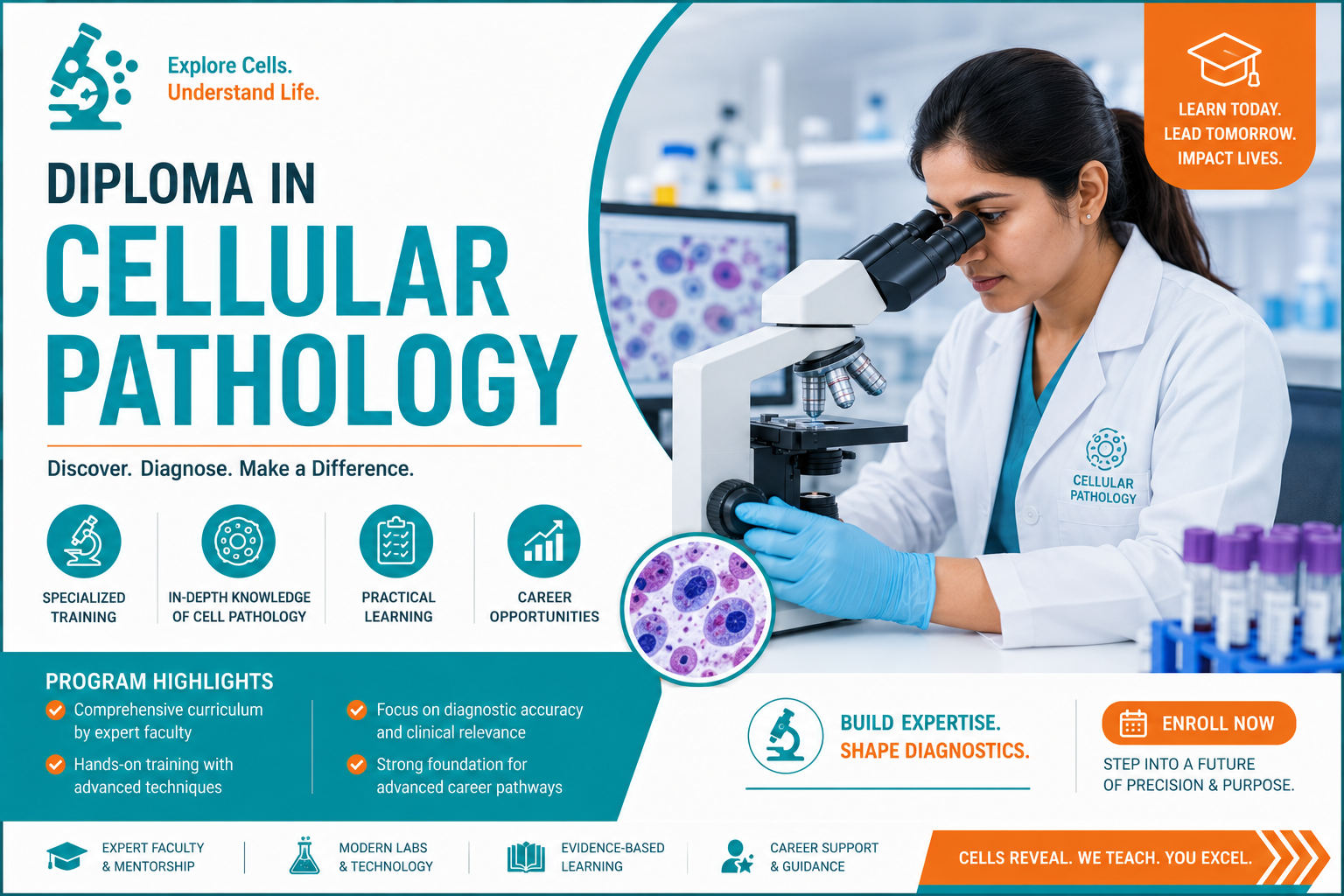

The Diploma in Cellular Pathology is a comprehensive 52-week program designed to provide in-depth knowledge of histopathology, cytopathology, molecular diagnostics, and laboratory techniques. The course equips healthcare professionals with the skills required to analyze cellular changes, diagnose diseases accurately, and contribute to modern pathology and diagnostic services. Through theoretical learning and practical case-based training, learners gain expertise in specimen processing, microscopic interpretation, immunohistochemistry, and advanced diagnostic technologies.
The Diploma in Cellular Pathology is a comprehensive 52-week advanced training program designed for healthcare professionals, laboratory scientists, pathologists, medical graduates, and allied healthcare practitioners seeking specialized knowledge in the diagnosis and study of diseases at the cellular and tissue level. This program provides a thorough understanding of the structural, functional, and molecular changes that occur in cells and tissues during disease processes, enabling learners to contribute effectively to modern diagnostic pathology services.
Cellular pathology forms the foundation of disease diagnosis and plays a critical role in identifying infections, inflammatory conditions, genetic abnormalities, precancerous lesions, and malignant tumors. Through this diploma, learners gain in-depth expertise in histopathology, cytopathology, molecular pathology, immunohistochemistry, and advanced laboratory diagnostic techniques. The curriculum is designed to bridge the gap between theoretical knowledge and practical application, ensuring participants develop the analytical and technical skills required in contemporary pathology laboratories.
The program begins with the fundamentals of cellular biology, disease mechanisms, and general pathology, providing a strong scientific foundation for understanding pathological processes. Students then progress to learning specimen collection, tissue processing, fixation, embedding, microtomy, staining procedures, and quality control measures essential for accurate laboratory diagnosis. Special emphasis is placed on laboratory safety, specimen handling, and adherence to international quality standards.
A significant component of the course focuses on cytopathology and histopathology, where learners study microscopic examination techniques used to evaluate cellular abnormalities and tissue architecture. Participants gain knowledge of fine needle aspiration cytology (FNAC), exfoliative cytology, cervical screening methods, and interpretation of cytological specimens. Histopathological training includes examination of biopsies and surgical specimens from various organ systems, helping learners understand disease patterns and diagnostic criteria.
The diploma also explores molecular pathology and genetic diagnostics, which have transformed modern medicine by enabling precise disease classification and personalized treatment planning. Students are introduced to techniques such as polymerase chain reaction (PCR), fluorescence in situ hybridization (FISH), biomarker analysis, and next-generation sequencing. These technologies are increasingly used in cancer diagnostics, infectious disease detection, and genetic disorder evaluation.
Comprehensive coverage of systemic pathology allows learners to study diseases affecting major organ systems, including the gastrointestinal tract, liver, respiratory system, cardiovascular system, kidneys, endocrine glands, reproductive organs, nervous system, musculoskeletal tissues, and hematopoietic system. Through case-based discussions and diagnostic exercises, participants learn to correlate clinical findings with pathological observations and formulate accurate diagnostic interpretations.
Advanced topics include immunohistochemistry (IHC), digital pathology, artificial intelligence applications in diagnostics, laboratory management, accreditation standards, and research methodology. Students learn how diagnostic markers assist in identifying specific disease processes and how digital technologies are reshaping pathology practice worldwide. Training in research principles and biostatistics further prepares learners to participate in academic, clinical, and translational research initiatives.
Throughout the program, learners engage with real-world case studies, diagnostic scenarios, and pathology reporting exercises that strengthen clinical reasoning and decision-making skills. The curriculum emphasizes evidence-based practice and current international guidelines to ensure graduates remain aligned with evolving healthcare standards.
Upon successful completion of the Diploma in Cellular Pathology, graduates will be able to perform and interpret histopathological and cytopathological investigations, apply molecular diagnostic techniques, utilize immunohistochemical methods, maintain laboratory quality standards, and contribute effectively to multidisciplinary healthcare teams. The qualification enhances career opportunities in hospitals, diagnostic laboratories, academic institutions, research organizations, cancer centers, and healthcare industries involved in pathology and laboratory medicine.
This diploma serves as an excellent pathway for professionals seeking to advance their expertise in diagnostic pathology and play a vital role in disease detection, patient management, and medical research. By combining foundational science, practical laboratory skills, and advanced diagnostic technologies, the program prepares learners for the rapidly evolving field of cellular pathology and precision medicine.
- 12 Sections
- 87 Lessons
- 52 Weeks
- Fundamentals of Cellular PathologyThis module introduces learners to the principles of cellular pathology, including the study of cellular structure, function, injury, adaptation, and disease processes. Students will gain a strong foundation in pathological mechanisms and the role of cellular pathology in modern diagnostic medicine.7
- Histopathology Techniques and Laboratory SafetyThis module focuses on laboratory practices, specimen handling, tissue processing, and safety standards. Students will learn the procedures necessary to prepare and preserve specimens for microscopic examination while maintaining quality and safety in pathology laboratories.8
- Cytopathology PrinciplesThis module provides comprehensive training in cytological examination, specimen collection, staining methods, and interpretation of cellular abnormalities. Students will understand the role of cytopathology in screening and diagnosing diseases.8
- General Pathology and Disease MechanismsStudents will explore the cellular and molecular basis of disease, including inflammation, immunity, genetic disorders, and neoplastic transformation. The module establishes the scientific foundation necessary for diagnostic interpretation.7
- Molecular Pathology and GeneticsThis module introduces molecular diagnostic techniques used in cellular pathology. Students will learn how genetic and molecular alterations contribute to disease diagnosis, prognosis, and treatment planning.7
- HematopathologyThis module covers the pathological evaluation of blood, bone marrow, and lymphoid tissues. Students will learn to identify hematological disorders through microscopic examination and laboratory investigations.7
- Gastrointestinal and Hepatobiliary PathologyStudents will study pathological changes affecting the gastrointestinal tract, liver, pancreas, and biliary system. Emphasis is placed on diagnosis, classification, and reporting of common and complex disorders.7
- Respiratory System PathologyThis module focuses on diseases of the respiratory tract and lungs, including inflammatory, infectious, and neoplastic conditions. Students will develop skills in microscopic diagnosis and interpretation.7
- Cardiovascular and Renal PathologyThis module examines diseases affecting the heart, blood vessels, and kidneys. Students will learn pathological mechanisms and diagnostic features of major cardiovascular and renal disorders.7
- Endocrine and Reproductive System PathologyStudents will explore diseases of endocrine glands and reproductive organs. The module emphasizes histopathological diagnosis and classification of benign and malignant lesions.7
- Neuropathology and Musculoskeletal PathologyThis module covers pathological conditions affecting the nervous system, bones, joints, and soft tissues. Students will understand diagnostic criteria and histological features of neurological and musculoskeletal diseases.7
- Immunohistochemistry, Advanced Diagnostics and Research ProjectThe final module integrates advanced diagnostic techniques with research methodology. Students will learn immunohistochemistry, digital pathology, laboratory management, and complete a capstone project demonstrating competency in cellular pathology.8
You might be intersted in
-
133 Students
-
52 Weeks
-
123 Students
-
52 Weeks
-
142 Students
-
52 Weeks
-
130 Students
-
52 Weeks