Diploma in Pulmonary
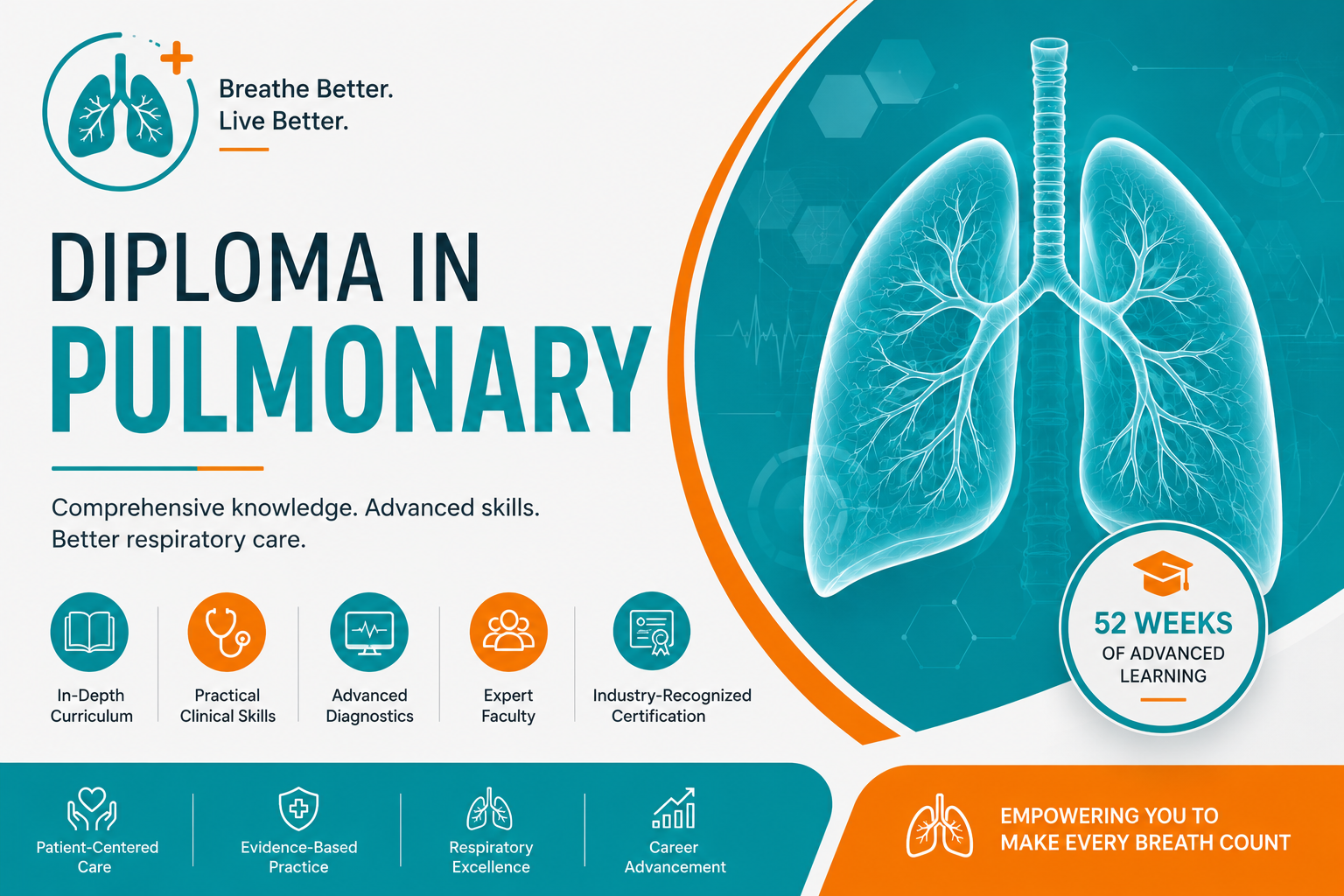

The Diploma in Pulmonary Medicine is a comprehensive 52-week program designed for healthcare professionals seeking advanced knowledge and clinical expertise in respiratory medicine. The course covers respiratory anatomy and physiology, pulmonary diagnostics, obstructive and restrictive lung diseases, respiratory infections, sleep medicine, pulmonary oncology, critical care pulmonology, and interventional pulmonary procedures. Through a structured curriculum combining theoretical learning, clinical case discussions, and evidence-based practice, learners develop the skills required to diagnose, manage, and prevent a wide range of pulmonary disorders. This program prepares participants to deliver high-quality respiratory care and advance their careers in pulmonary and respiratory medicine.
The Diploma in Pulmonary Medicine is a comprehensive 52-week advanced training program designed for medical professionals, healthcare practitioners, and aspiring specialists who wish to develop in-depth expertise in the diagnosis, treatment, and management of respiratory and pulmonary disorders. With respiratory diseases remaining one of the leading causes of morbidity and mortality worldwide, the demand for healthcare professionals trained in pulmonary medicine continues to grow. This diploma equips learners with the knowledge, clinical skills, and evidence-based practices necessary to provide high-quality respiratory care across diverse healthcare settings.
The program begins with a strong foundation in respiratory anatomy, physiology, pulmonary circulation, and the mechanisms of breathing and gas exchange. Students gain a clear understanding of normal respiratory function before progressing to the study of common and complex pulmonary diseases. Through detailed modules, learners explore obstructive airway diseases such as asthma, chronic obstructive pulmonary disease (COPD), and bronchiectasis, gaining insights into their pathophysiology, diagnosis, treatment protocols, and long-term management strategies.
A significant component of the course focuses on pulmonary diagnostics and investigations. Participants learn to interpret pulmonary function tests, spirometry results, arterial blood gas analyses, chest radiographs, and high-resolution CT scans. The curriculum also introduces advanced diagnostic procedures including bronchoscopy, pleural fluid analysis, and other investigative techniques that are essential for accurate respiratory disease assessment. This diagnostic proficiency enables healthcare professionals to make informed clinical decisions and improve patient outcomes.
The diploma provides extensive coverage of respiratory infections, including community-acquired pneumonia, hospital-acquired pneumonia, tuberculosis, multidrug-resistant tuberculosis, viral respiratory infections, and fungal lung diseases. Learners examine current treatment guidelines, antimicrobial stewardship principles, and preventive strategies, ensuring they are well-prepared to manage both routine and complex infectious respiratory conditions.
Students also gain expertise in interstitial lung diseases, occupational lung disorders, and environmental respiratory conditions. These modules emphasize early recognition, diagnostic evaluation, and multidisciplinary management approaches. By understanding the impact of workplace exposures and environmental factors on respiratory health, participants become better equipped to address emerging challenges in pulmonary medicine.
The program further explores pleural diseases, pulmonary vascular disorders, and sleep-related breathing conditions. Topics such as pleural effusion, pneumothorax, pulmonary embolism, pulmonary hypertension, and obstructive sleep apnea are covered in detail. Learners acquire practical knowledge of sleep studies, CPAP therapy, and modern management strategies for patients with sleep-disordered breathing and pulmonary vascular complications.
Pulmonary oncology forms another critical component of the curriculum. Students learn about lung cancer screening, diagnosis, staging, treatment planning, and palliative care. The course emphasizes multidisciplinary collaboration and patient-centered approaches to managing thoracic malignancies, ensuring learners understand the complexities of modern pulmonary oncology care.
A key highlight of the diploma is its focus on critical care pulmonology and respiratory emergencies. Participants develop competence in managing acute respiratory failure, acute respiratory distress syndrome (ARDS), oxygen therapy, non-invasive ventilation, mechanical ventilation, and intensive care monitoring. These skills are invaluable for healthcare professionals working in emergency departments, intensive care units, and respiratory care settings.
The curriculum also introduces learners to interventional pulmonology, including flexible bronchoscopy, endobronchial ultrasound (EBUS), thoracoscopy, airway stenting, and other minimally invasive pulmonary procedures. Understanding these advanced techniques enhances clinical decision-making and broadens professional capabilities in modern respiratory medicine.
In addition to clinical expertise, the diploma emphasizes evidence-based practice, medical ethics, research methodology, and quality improvement initiatives. Learners are encouraged to critically evaluate medical literature, apply research findings to clinical care, and participate in continuous professional development. Case-based learning, clinical discussions, and capstone projects help bridge the gap between theoretical knowledge and real-world practice.
Upon successful completion of the Diploma in Pulmonary Medicine, graduates will possess a comprehensive understanding of respiratory diseases and advanced pulmonary care. They will be able to confidently assess respiratory patients, interpret diagnostic investigations, formulate evidence-based treatment plans, manage respiratory emergencies, and contribute effectively to multidisciplinary healthcare teams. This program serves as an excellent pathway for career advancement in pulmonology, respiratory therapy, critical care medicine, internal medicine, and allied healthcare specialties.
Whether working in hospitals, specialty clinics, intensive care units, academic institutions, or community healthcare settings, graduates of this diploma will be equipped with the advanced skills and clinical knowledge required to improve respiratory health outcomes and meet the growing demands of modern pulmonary medicine.
- 12 Sections
- 96 Lessons
- 52 Weeks
- Foundations of Pulmonary MedicineThis module introduces learners to the fundamentals of respiratory medicine, including respiratory anatomy, physiology, pulmonary function, gas exchange mechanisms, and the clinical approach to respiratory diseases. Students develop a strong foundation for understanding pulmonary disorders and patient assessment.8
- Pulmonary Diagnostics and InvestigationsThis module focuses on diagnostic tools and investigations used in pulmonary practice. Learners gain practical knowledge of pulmonary function testing, imaging modalities, laboratory investigations, and interpretation of diagnostic findings.8
- Obstructive Airway DiseasesThis module covers the epidemiology, pathophysiology, diagnosis, and management of obstructive airway diseases. Emphasis is placed on evidence-based treatment strategies and long-term patient care.8
- Respiratory InfectionsStudents explore common and complex respiratory infections, including bacterial, viral, fungal, and mycobacterial diseases. Diagnostic pathways and antimicrobial management are discussed extensively.8
- Interstitial and Occupational Lung DiseasesThis module focuses on diffuse parenchymal lung diseases and occupational respiratory disorders. Learners understand diagnostic criteria, imaging findings, and therapeutic approaches.8
- Pleural Diseases and Thoracic DisordersStudents learn the diagnosis and treatment of pleural and thoracic disorders, including pleural effusions, pneumothorax, and chest wall abnormalities.8
- Pulmonary Vascular DiseasesThis module addresses pulmonary hypertension, pulmonary embolism, and vascular abnormalities affecting respiratory function. Diagnostic algorithms and treatment protocols are emphasized.8
- Sleep Medicine and Breathing DisordersLearners gain expertise in sleep-related respiratory disorders, sleep studies, and therapeutic interventions including positive airway pressure therapies.8
- Pulmonary OncologyThis module examines lung cancers and thoracic malignancies, including diagnostic pathways, staging, multidisciplinary treatment approaches, and palliative care.8
- Critical Care PulmonologyStudents develop competency in managing critically ill respiratory patients, mechanical ventilation, respiratory failure, and intensive care protocols.8
- Interventional PulmonologyThis module introduces advanced diagnostic and therapeutic pulmonary procedures. Students learn indications, techniques, and safety considerations for interventional procedures.8
- Advanced Pulmonary Practice and ResearchThe final module integrates clinical knowledge, evidence-based medicine, research methodology, ethics, and professional development. Learners complete case studies and a capstone project.8
You might be intersted in
-
124 Students
-
52 Weeks
-
133 Students
-
52 Weeks
-
123 Students
-
52 Weeks
-
142 Students
-
52 Weeks