

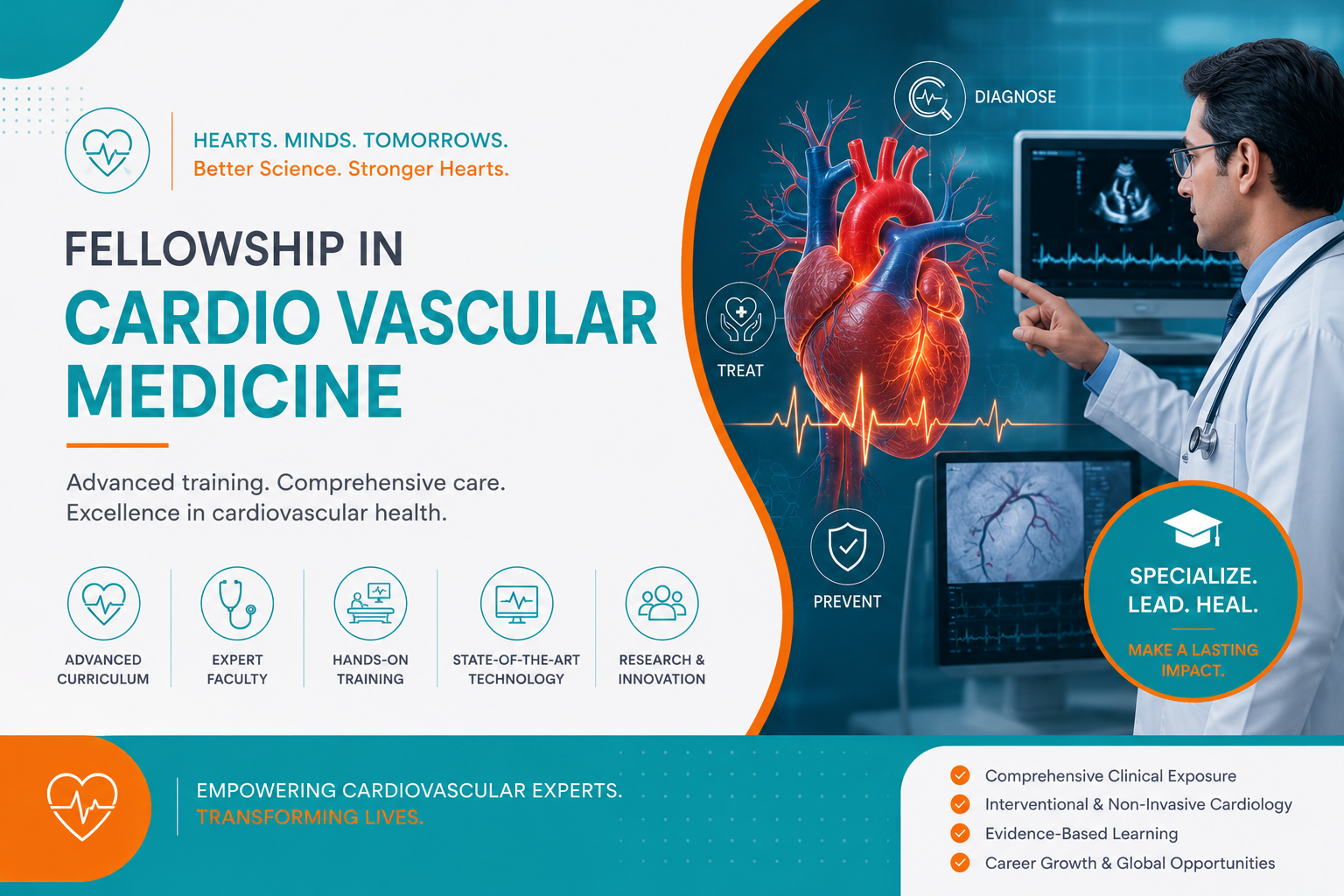
The fellowship is intended for medical graduates and postgraduate physicians who wish to expand their clinical knowledge in cardiovascular medicine and improve patient outcomes in cardiac care. Upon successful completion of the program, participants will be awarded the Fellowship in Cardiovascular Medicine from Medova Medical Academy, recognizing their advanced training in cardiovascular health and clinical cardiology.
Fellowship in Cardio Vascular Medicine
₹115,000.00₹108,999.00
100% positive reviews
79 lessons
Language: English
Skill level: All levels
The fellowship is intended for medical graduates and postgraduate physicians who wish to expand their clinical knowledge in cardiovascular medicine and improve patient outcomes in cardiac care. Upon successful completion of the program, participants will be awarded the Fellowship in Cardiovascular Medicine from Medova Medical Academy, recognizing their advanced training in cardiovascular health and clinical cardiology.
Description
Curriculum
FAQs
The Fellowship in Cardiovascular Medicine offered by Medova Medical Academy is an advanced clinical training program designed to provide physicians with comprehensive knowledge and practical understanding of cardiovascular diseases and their management. The program focuses on developing expertise in the diagnosis, prevention, and treatment of disorders affecting the heart and blood vessels.
This fellowship provides structured academic training combined with clinical exposure to modern cardiology practices. Participants will gain knowledge in cardiovascular physiology, cardiac risk factors, and the evaluation of common cardiovascular conditions such as coronary artery disease, hypertension, heart failure, arrhythmias, and valvular heart diseases.
The program includes training in the interpretation of essential cardiovascular diagnostic tools such as electrocardiography (ECG), echocardiography, stress testing, and other non-invasive cardiac investigations. Fellows will also learn principles of preventive cardiology, lifestyle modification, and evidence-based treatment approaches for cardiovascular conditions.
Through case discussions, academic sessions, and supervised clinical learning, the fellowship aims to strengthen clinical decision-making and enhance the physician’s ability to manage cardiovascular diseases effectively.
- 5 Sections
- 79 Lessons
- 52 Weeks
Expand all sectionsCollapse all sections
- Arterial Diseases39
- 1.1Atherosclerosis: Definition
- 1.2Atherosclerosis: Etiology
- 1.3Atherosclerosis: Pathogenesis
- 1.4Atherosclerosis: Histopathologic Consequences
- 1.5Atherosclerosis: Diagnosis
- 1.6Atherosclerosis: Therapy
- 1.7Atherosclerosis: Summary
- 1.8Buerger’s Disease: Definition and Etiology
- 1.9Buerger’s Disease: Symptoms and Therapy
- 1.10Raynaud’s Disease: Definition & Pathogenesis
- 1.11Raynaud’s Disease: Symptoms, Diagnosis and Therapy
- 1.12Buerger’s and Raynaud’s Diseases: Summary
- 1.13Peripheral Artery Disease: Definition
- 1.14Peripheral Artery Disease: Pathogenesis
- 1.15Peripheral Artery Disease: Summary
- 1.16Aortic Aneurysm: Example
- 1.17Aortic Aneurysm: Definition
- 1.18Aortic Aneurysm: Etiology
- 1.19Aortic Aneurysm: Diagnosis
- 1.20Aortic Aneurysm: Summary
- 1.21Dissection of the Aorta: Etiology
- 1.22Dissection of the Aorta: Symptoms
- 1.23Dissection of the Aorta: Therapy
- 1.24Dissection of the Aorta: Summary
- 1.25Renal Stenosis and Renovascular Dysplasia
- 1.26Dissection and Renal Artery Stenosis: Summary
- 1.27Hypertension: Example
- 1.28Hypertension: Definition & Forms
- 1.29Hypertension: Definition & Forms Hypertension: Pathogenesis and Symptoms
- 1.30Hypertension: Etiology(Neural Blood Pressure Control Mechanism)
- 1.31Hypertension: Etiology(Humoral Blood Pressure Control Mechanism)
- 1.32Hypertension: Etiology(Risk Factors)
- 1.33Hypertension: Symptoms
- 1.34Hypertension: Epidemiology
- 1.35Hypertension: Summary
- 1.36Hypotension and Shock: Definition
- 1.37Hypotension and Shock: Pathogenesis
- 1.38Hypotension and Shock: Therapy
- 1.39Hypotension and Shock: Summary
- Venous Diseases22
- 2.1Venous Disease: Overview
- 2.2Thrombosis: Examples
- 2.3Thrombosis: Consequences of Venous Thromboembolism
- 2.4Thrombosis: Summary
- 2.5Varicose Veins: Definition
- 2.6Varicose Veins: Etiology
- 2.7Varicose Veins: Pathogenesis
- 2.8Varicose Veins: Symptoms
- 2.9Varicose Veins: Diagnosis
- 2.10Varicose Veins: Summary
- 2.11Deep Vein Thrombosis: Definition
- 2.12Deep Vein Thrombosis: Epidemiology
- 2.13Deep Vein Thrombosis: Etiology
- 2.14Deep Vein Thrombosis: Risk Factors
- 2.15Deep Vein Thrombosis: Pathogenesis
- 2.16Deep Vein Thrombosis: Symptoms
- 2.17Deep Vein Thrombosis: Therapy
- 2.18Deep Vein Thrombosis: Summary
- 2.19Pulmonary Embolism: Definition
- 2.20Pulmonary Embolism: Diagnosis
- 2.21Pulmonary Embolism: Pulmonary Contrast Angiogram
- 2.22Pulmonary Embolism: Summary
- Inflammatory Vascular Diseases6
- Vascular Malformations5
- Diseases of the Lymphatic System7
A Fellowship in Cardiovascular Medicine is an advanced medical training program that focuses on the prevention, diagnosis, and management of diseases affecting the heart and blood vessels. The fellowship provides in-depth knowledge of cardiovascular physiology, cardiac imaging, vascular disorders, preventive cardiology, and evidence-based treatment strategies. It is designed to enhance the clinical expertise of healthcare professionals involved in cardiovascular care.
Eligibility requirements vary among institutions, but the program is generally intended for MBBS graduates, physicians, internal medicine specialists, cardiology trainees, and healthcare professionals with a relevant medical background. Candidates with experience in managing cardiovascular conditions may particularly benefit from this specialized training.
The curriculum typically includes cardiac anatomy and physiology, hypertension, coronary artery disease, heart failure, arrhythmias, valvular heart disease, peripheral vascular disease, preventive cardiology, cardiac pharmacology, electrocardiography (ECG), echocardiography basics, cardiovascular risk assessment, and emerging advances in cardiovascular medicine. Many programs also incorporate case-based discussions and clinical decision-making exercises.
This fellowship helps healthcare professionals develop advanced knowledge and practical skills in cardiovascular care. It improves the ability to diagnose and manage complex cardiac conditions, enhances patient outcomes, strengthens clinical confidence, and supports career advancement in cardiology-related fields. The program also helps practitioners stay updated with the latest developments in cardiovascular medicine.
Yes, many fellowship programs include clinical exposure, case reviews, and practical training components. Participants may gain experience in cardiovascular assessment, ECG interpretation, cardiac imaging techniques, patient management strategies, and evidence-based treatment planning under expert supervision.
The duration of the fellowship varies depending on the institution and learning format. Most programs can be completed within 6 months to 2 years and may include online learning, classroom instruction, clinical training, workshops, and self-directed study to accommodate working healthcare professionals.
Graduates can pursue opportunities in hospitals, cardiology clinics, multispecialty healthcare centers, academic institutions, research organizations, and preventive healthcare programs. The fellowship can also enhance the professional profile of physicians who manage patients with cardiovascular diseases in their daily clinical practice.
Participants develop expertise in cardiovascular risk assessment, interpretation of diagnostic tests, management of cardiac and vascular disorders, preventive cardiology, patient counseling, treatment planning, and evidence-based clinical decision-making. These skills are essential for delivering comprehensive cardiovascular care.
Yes, cardiovascular medicine remains one of the most important and rapidly evolving specialties in healthcare. With the increasing prevalence of heart disease, hypertension, diabetes, and lifestyle-related risk factors worldwide, there is a growing demand for healthcare professionals with specialized knowledge in cardiovascular prevention, diagnosis, and treatment.
Cardiovascular diseases are among the leading causes of illness and mortality globally. Effective cardiovascular care plays a critical role in preventing complications, reducing healthcare burdens, and improving quality of life. Professionals trained in cardiovascular medicine contribute significantly to early diagnosis, timely intervention, long-term disease management, and patient education, helping achieve better health outcomes.
₹115,000.00₹108,999.00